
The honest answer for most of Colorado is that nothing goes into open ground yet in February. With Denver’s average last spring frost falling between May 1 and May 11, the soil is still weeks from workable across the Front Range and plains, and mountain zones lag further behind. What decides the calendar isn’t the date on the wall, it’s soil temperature and that frost window, and this month, in most of the state, both are still against you.
What goes in the ground in February

Soil temperature, not air temperature, is what tells a seed or a root when to grow. A mild 55-degree afternoon in Colorado Springs or Grand Junction means nothing if the ground six inches down is still frozen or near-freezing. With the last frost window sitting at May 1 to May 11 for the Denver area, February is roughly nine to ten weeks out from safe planting for anything tender. That’s the mechanism worth remembering all season: count from the ground’s temperature and the frost range, never from the month itself.
So what actually goes in? For most of the state, the direct-sow answer is: nothing safely, not yet. But a handful of tasks belong to this exact window.
- Garlic and shallots — if fall planting was missed and the ground is workable in a lower-elevation, south-facing bed, they can still go in now, though yields usually run smaller than fall-planted crops.
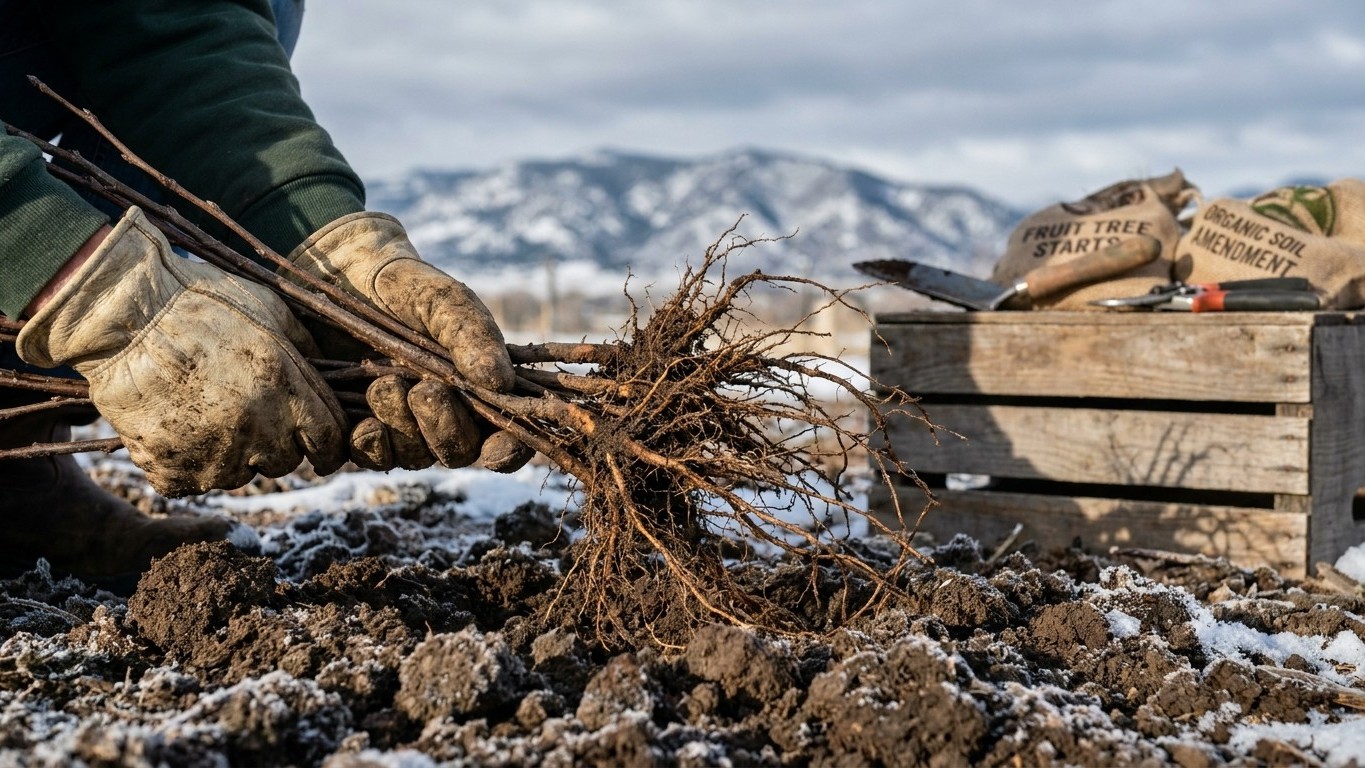
- Bare-root and dormant plantings — fruit trees, brambles, roses, and other bare-root stock can be planted while they’re still dormant, as long as the ground isn’t frozen solid.
- Cold frames and low tunnels — these buy several weeks of soil warming and can host the very first hardy greens toward the end of the month in warmer pockets of the state.
- Forced rhubarb or chicory — roots dug and brought into a dark, cool space indoors will push tender stalks and shoots weeks before anything similar happens outside.
Colorado’s USDA hardiness zones span 3b to 7b across the state, a range built on one measurement, average annual extreme minimum temperature, so a gardener in a 7b pocket near Grand Junction has more room to experiment than someone in a 4b mountain valley. Denver itself sits in the middle of that range, which is why it’s used here as the reference point rather than the extremes.
What to start under cover
This is where February earns its keep. Seed-starting timing is normally counted backward from the last frost window, and with Denver’s frost falling May 1 to May 11, that arithmetic points squarely at this month for several crops.
Onions and leeks are typically started indoors about ten to twelve weeks before transplanting outside. Counting back from early May lands that sowing date in mid-to-late February, which makes them the signature indoor start for the month. Slower alliums benefit from the extra runway; they’re forgiving of a slightly early start because they don’t get leggy the way nightshades do.
Peppers and eggplant follow a shorter countdown, usually eight to ten weeks before the last frost, which pushes their start toward the very end of February or into early March depending on the county. Tomatoes run shorter still, closer to six to eight weeks out, and starting them now, this early, is one of the more common mistakes gardeners make.
Both directions of error cost something. Start too early and by the time the ground and air are actually safe, in early May, plants are rootbound, stretched, and stressed before they ever see the garden. Start too late and there isn’t enough runway before the first fall frost, which arrives September 30 to October 12 in the Denver area, to bring a long-season crop to full maturity. February’s job is threading that needle for the slower growers while holding off on the fast ones.
What is ready to pick
Little to nothing comes out of open Colorado ground in February, and that’s simply the season, not a failure of planning. What keeps a household fed this month comes from what was tucked away earlier or grown under cover.
Kale, leeks, and other cold-hardy crops left in the ground through fall often survive under snow cover and can be dug or cut as needed, sometimes tasting sweeter after repeated freezes. A cold frame started in fall may still be holding spinach, mache, or arugula, slow-growing but alive, ready to harvest a few leaves at a time rather than all at once.
Indoors, sprouts and microgreens are the fastest payoff in the whole gardening year, ready in a week to ten days from a windowsill tray, and they fill the gap when nothing else is producing.
This is also the month to walk the root cellar or pantry shelf and check stored crops before small problems become big losses. A few things to look for:
- Winter squash going soft near the stem end, a sign it’s turning and should be used soon.
- Potatoes sprouting eyes or showing green skin, both signals to sort out and use first.
- Onions with soft necks or a sprouting center, which spread rot to neighbors if left in the pile.
The jobs that matter this month
A quiet-looking garden in February is still full of deadlines. Dormant pruning tops the list: fruit trees, grapes, and cane berries are pruned while they’re leafless and the plant’s structure is easy to see, and doing it now, before sap starts moving, reduces stress on the plant and disease risk compared to pruning after growth resumes.
Seed ordering belongs here too, and it’s more time-sensitive than it looks. Popular varieties, especially disease-resistant tomatoes and regionally adapted corn and bean varieties, sell out from seed companies weeks before planting season actually starts. Ordering now means having what’s wanted rather than settling for what’s left.
Soil doesn’t wait for the growing season to need attention. A soil test done now gives results back in time to amend before spring planting, and turning a compost pile, even a half-frozen one, keeps decomposition moving and prevents it from going anaerobic and sour by the time it’s needed.
Planning next season’s crop rotation is a February desk job with real consequences: nightshades, alliums, and brassicas each pull different nutrients and attract different pests, and moving beds around breaks pest and disease cycles that build up when the same family grows in the same soil year after year.
Tool maintenance rounds out the list. Cleaning and sharpening pruners, shovels, and hoes now, rather than reaching for a dull, rusty blade in April, saves both time and plant tissue once cutting season starts. Fences, raised bed frames, and cold frame glazing are also easier to repair now, before they’re loaded with soil, plants, and snow.
What not to do in February
Colorado’s front range is known for sudden warm spells, chinook winds that can push a February afternoon into the 60s or 70s even while overnight lows drop back below freezing. That swing is the source of most February mistakes.
The biggest one is treating a warm afternoon as permission to plant warm-season crops outdoors. Air temperature lies; soil temperature tells the truth, and with the last frost window still eight to ten weeks away in most of the state, a warm day in February changes nothing about when it’s actually safe to set out tomatoes, peppers, or squash.
A close second is uncovering cold frames or removing winter mulch too early after one of those mild spells. Plants that harden off under a warm frame lid, only to have the lid stay open into the next cold snap, take real damage. The mulch and covers exist for the whole cold season, not just the cold-looking days.
Feeding nitrogen too early is a quieter mistake. Fertilizing dormant fruit trees or perennial beds now can push tender new growth right before a hard freeze, and that new growth is exactly what gets killed, weakening the plant more than doing nothing would have. Wait until growth is already underway before feeding.
Starting tomatoes and other fast growers indoors this early falls into the same trap as the onion timing done right: good arithmetic run backward from the wrong crop. Save the six-to-eight-week countdown crops for next month.
Checking this against your own county
Everything above is built around Denver’s climate normals, and Colorado is too vertical a state for one city to speak for all of it. Elevation alone can shift a frost window by weeks in either direction, mountain towns can see frost in July, and the western slope runs on a different pattern than the Front Range or eastern plains entirely.
Treat this page as a starting point, then check it against local numbers. The Colorado State University Extension service publishes county-level guidance and planting calendars that account for these elevation and regional differences far than a statewide average ever can.
Common questions
Can I plant grass seed in Colorado in February?
No. Cool-season lawn grasses need soil temperatures well above what February typically offers across the state, and seed sown into frozen or near-frozen ground simply sits without germinating, often washing away or rotting before spring.
Is it too early to start tomato seeds indoors in February?
For most of Colorado, yes. Tomatoes are usually started six to eight weeks before the last frost, and with Denver’s last frost window falling May 1 to May 11, a February start runs several weeks too early and risks leggy, rootbound seedlings by transplant time.
What vegetables survive a Colorado winter in the ground?
Kale, leeks, and some hardy root crops can survive under snow cover and mulch through winter in many parts of the state, though survival depends heavily on elevation and how deep the cold goes in a given location.
When should I prune fruit trees in Colorado?
Late winter, while trees are still dormant and leafless, is the standard window, and February fits that timing well across most of the state. Pruning before sap starts moving in spring reduces stress on the tree and lowers the risk of disease entering fresh cuts.