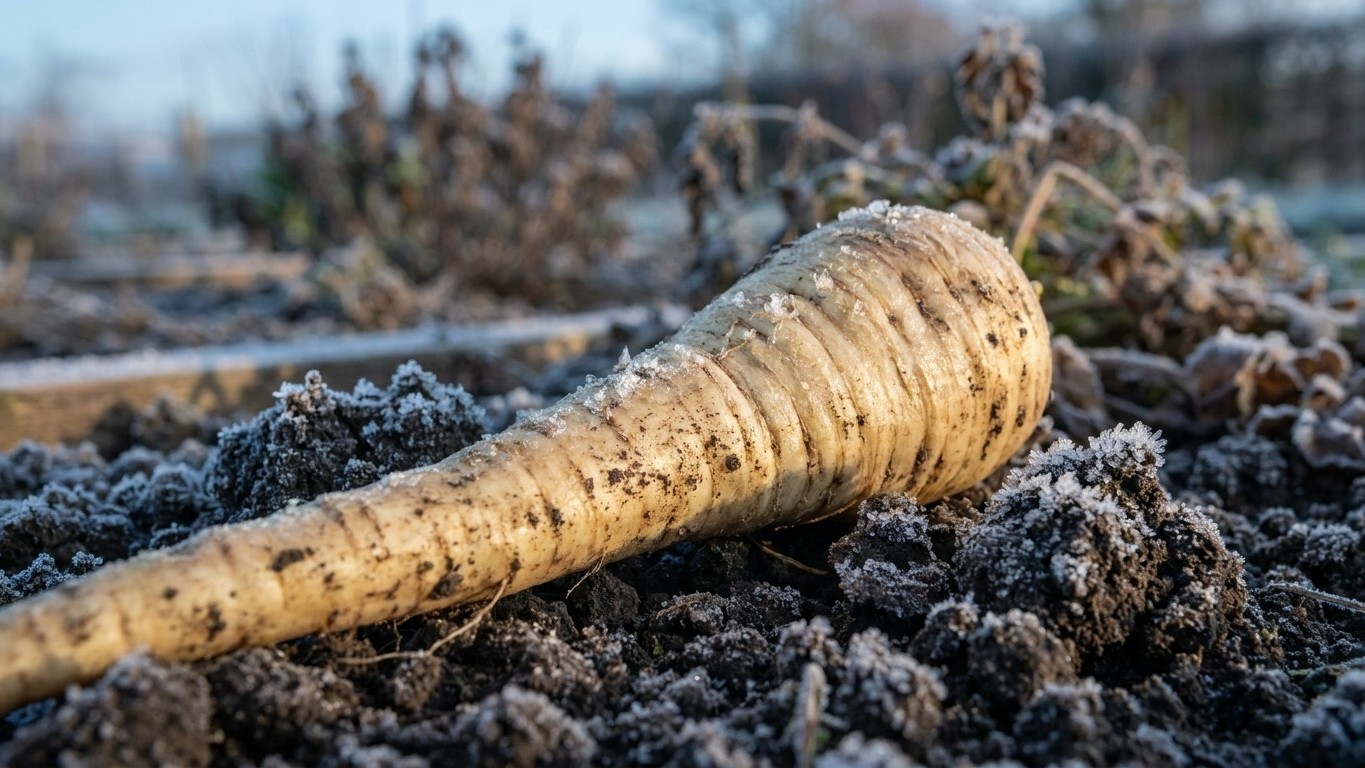

Yes, in most of Arkansas parsnips will sweeten, but the effect isn’t uniform across the state. The Little Rock reference station records a mean minimum of 30.9°F in its coldest month, and the region sees its first fall frost between November 7 and November 20. That’s enough cold exposure to trigger the starch-to-sugar conversion parsnips need. Gardens in the milder southern and Delta counties may see a weaker version of that effect.
The short answer

The question that actually decides this isn’t which hardiness zone your county falls into. It’s whether the ground here gets cold enough, for long enough, to push a parsnip root through the chemical shift that turns stored starch into sugar. That shift is triggered by sustained frost exposure, not by a zone number on a map, and the two are easy to confuse.
What the coldest-month number really tells you
NOAA’s 1991-2020 Climate Normals put the mean minimum temperature of the coldest month, referenced to Little Rock, at 30.9°F. That figure is an average nightly low across the whole month, not a record cold snap and not a daytime reading. A mean that sits just under the freezing line means a large share of nights during that month drop below 32°F, and some drop well below it. Spread that across December, January, and the tail end of November and early March, and you get a real run of frosty nights, not a single event.
Why the answer isn’t uniform statewide
That 30.9°F figure comes from one reference station in central Arkansas. The Ozarks and the northern tier of counties run colder, often with more consistent hard freezes. The Delta lowlands and the far south run milder, with shorter stretches of sub-freezing weather. A parsnip left in the ground through a central Arkansas winter should sweeten reliably. One left in a warm Delta garden bed may finish the season tasting merely earthy rather than genuinely sweet, because the frost exposure it got was thinner. The plant will still grow perfectly well in either spot. The sweetening is the part that depends on where in the state you’re standing.
Does the season fit?
Parsnips need 100 to 120 days from the day they’re seeded, sown directly in place rather than started indoors, and germination alone takes 14 to 21 days before you’ll see a single leaf. Here’s how that timeline lines up against Arkansas’s frost calendar.
- Sowing window: Seed goes in 2 to 3 weeks before the last spring frost. With the last spring frost falling between March 12 and March 28, that puts sowing somewhere in the last third of February through mid-March.
- Germination: Add the 14 to 21 days parsnip seed typically takes to emerge. A late-February sowing won’t show green until roughly mid-March; a mid-March sowing may not emerge until early April. Dig up nothing before that window closes, or you’ll disturb seed that simply hasn’t sprouted yet.
- Maturity: Count 100 to 120 days from the seeding date, not from emergence. A late-February sowing matures around early June; a mid-March sowing matures around mid-July.
- First fall frost: Arkansas’s first fall frost arrives between November 7 and November 20.
- The gap: Between a July maturity date and a November frost, there are roughly three to four months of slack. That’s a comfortable fit, wider than most parsnip-growing regions get, and it leaves room to sow later than the earliest recommended date if a gardener wants the roots reaching full size closer to the first cold snap rather than sitting mature through the peak of summer heat.
What goes wrong here
- Forked roots in heavy or stony ground: Arkansas clay and rocky Ozark soils are common causes of forked, split roots, because the taproot hits resistance and branches around it. Utah State University Extension recommends deep, sandy soil, and says heavy ground has to be double dug before sowing to loosen it well below the depth the root will reach.
- Forked roots from overwatering: This is a separate cause from soil texture. Excess moisture, especially inconsistent watering that alternates soaked and dry soil, can also split the root even in ground that isn’t heavy. Even watering on a steady schedule avoids this.
- Sowing too late and running out of season: With the 100 to 120 day clock starting at seeding, a sowing pushed into late spring or early summer can still reach maturity before frost in most of Arkansas, but pushing it further, into June or later, risks the root not sizing up before the first fall frost arrives.
- A winter too mild to sweeten: In the warmer southern and Delta counties, a mild winter with only brief, shallow frost may leave the root grown but flat-tasting, because the starch-to-sugar conversion needs sustained cold exposure, not a single light frost.
- Giving up on germination too soon: Because parsnip seed can take 14 to 21 days to show, impatient re-sowing into what looks like bare soil is a common, avoidable mistake.
Every part of a parsnip plant carries a compound that can burn skin, and it’s the part of growing this crop that most garden guides skip entirely. NC State Extension’s Plant Toolbox states it directly: “All parts of this plant contain furocoumarins which can make skin sensitive to light causing burns so be sure to wear gloves, long sleeves and long pants when dealing with it.”
The mechanism is what makes this catch people off guard. Furocoumarins don’t burn skin on contact. The reaction needs sap on the skin and sunlight hitting that same skin, together. That’s why the burns tend to show up after a bright, sunny afternoon spent pulling tops or harvesting roots, and why they often don’t appear until hours later, well after the person has gone inside and forgotten about the wet patch on a forearm. It also explains why the sensible protection is covering up before you start, not scrubbing your hands afterward. Gloves, long sleeves, and long pants during harvest and handling are the actual defense, because once sap and sun have met on bare skin, washing after the fact doesn’t undo the exposure.
Checking this against your own county
The numbers here come from a single reference station near Little Rock, and Arkansas is a large, climatically varied state. A garden in the Ozark highlands or the Arkansas River Valley will see a different frost calendar than one in the Delta or the far south. Before committing a bed to parsnips, it’s worth checking local frost dates and soil guidance against the University of Arkansas Cooperative Extension Service, which publishes county-level planting information and can confirm how closely your own garden matches, or diverges from, the figures used on this page.
Common questions
Can I harvest parsnips before the first frost in Arkansas?
Yes, the root is edible as soon as it reaches size, but the sugar content that gives parsnips their characteristic sweetness only develops after sustained exposure to frost, so an early harvest trades flavor for convenience.
Do parsnips need to be dug up before winter in Arkansas?
No, leaving them in the ground through the frost period is exactly what develops the sweetness. They can typically stay in place through the cold months and be harvested as needed.
Why did my parsnip roots come out forked?
Forking has two separate causes worth telling apart: ground that’s heavy, compacted, or full of stones deflecting the taproot, and inconsistent or excess watering. Loosening the soil deeply before sowing addresses the first; steady, even watering addresses the second.
Is parsnip sap dangerous to touch without gloves?
The sap itself isn’t the whole story. The danger comes from sap combined with sunlight on exposed skin, which is why long sleeves, long pants, and gloves during harvest matter more than washing up afterward.