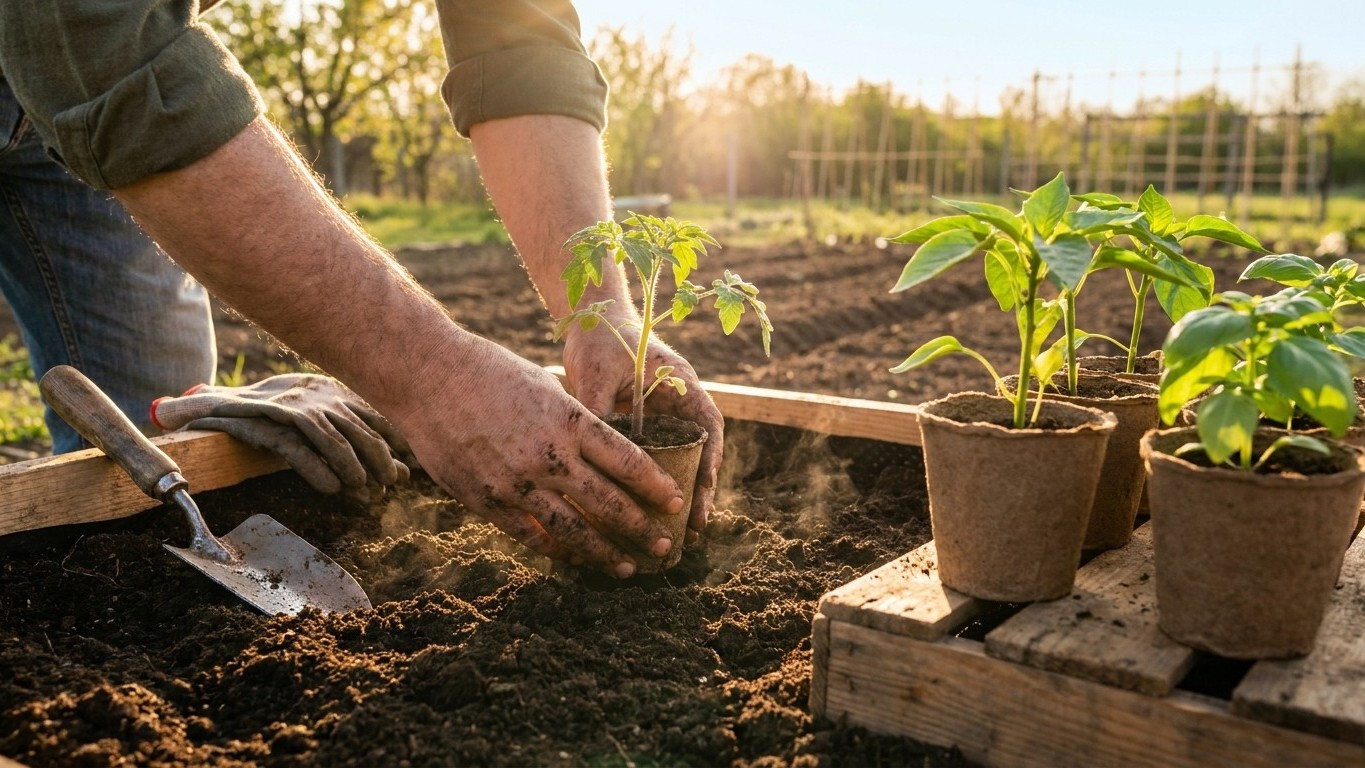

May is Kentucky’s green light month. The frost window that runs March 24 to April 4 has closed weeks earlier, soil has had time to warm, and this is when tomatoes, peppers, beans, corn, squash, and cucumbers move into open ground with real confidence instead of a gamble. Only the most heat-hungry crops, like okra and melons, do better waiting until the back half of the month.
What goes in the ground in May

The last frost date range for the Louisville area, March 24 to April 4, has already closed for weeks by the time May opens. That gap matters more than the calendar page itself: soil that sat cold in early spring has had four to six additional weeks of sun and warmer nights to climb into the range where warm-season roots and seeds actually germinate instead of sitting and rotting. Rural Jefferson County and cooler valleys typically run an earlier, tighter frost window than this urban station, so early May deserves a bit more caution outside city limits.
What’s safe to plant now
Direct-sow beans, sweet corn, summer and winter squash, and cucumbers once the first week or two of the month has passed. These seeds germinate slowly, or not at all, in soil that hasn’t warmed enough, so the extra weeks past the frost window pay off directly. Tomato, pepper, and eggplant transplants started indoors weeks earlier can go into the ground now, as can sweet potato slips, which need consistently warm soil to root. Basil and other tender herbs move outside alongside them.
What’s still a gamble
Melons and okra are the two crops most likely to sulk if pushed into the ground during the first week of May, especially at higher elevations in the eastern part of the state where nights stay cooler longer. Waiting until overnight lows hold reliably above the mid-50s gives these crops a real head start instead of weeks of stalled growth. Gardeners with peas and cool-season alliums already in from earlier spring should let them finish rather than replanting; peas decline fast once daytime heat sets in.
What to start under cover
The fall frost window, November 2 to November 12, is the number that actually matters for anything started under cover in May. Work backward from it: broccoli, cabbage, and other fall brassicas need roughly 10 to 12 weeks from seed to a transplant ready for the garden, plus several more weeks in the ground before frost ends the season. Counting back from the earliest fall frost date puts the seed-starting window for many of these crops squarely in May, long before most gardeners think about fall harvest at all.
Starting too early creates its own problem. Brassica seedlings held too long indoors or under a cold frame get rootbound and leggy, stretching for light and never fully recovering once transplanted; six weeks under cover is usually the practical ceiling. Starting too late is the opposite failure: with roughly seven months between the last spring frost and the first fall one, a fall crop that goes in even two or three weeks behind schedule can run out of warm days before it matures, especially at the northern edge of the state’s 6a zone.
May is also a reasonable month to start a second round of cucumbers or summer squash under cover for a mid-summer succession, rather than direct-sowing everything in one pass and losing the whole patch to squash bugs or powdery mildew at once. A few starts held in pots on a porch buy insurance against exactly that kind of single-point failure.
What is ready to pick
Asparagus hits its stride in May, and the harvest window is short: spears should be cut once they reach roughly 6 to 8 inches, before the tips begin to loosen and fern out, because a spear left a day too long turns woody fast. Beds established in prior seasons can be cut hard through the month; beds in their first or second season should be left alone to build root reserves instead.
Spring-planted lettuce, spinach, and radishes from March or April sowings are ready throughout May, and the practical test is simple: pull one radish or cut one lettuce leaf and taste it before the whole bed bolts in the first real heat spell. Rhubarb stalks thick as a thumb and at least 10 to 12 inches long are ready to pull, never cut, twisting gently at the base rather than slicing through the crown.
Strawberries planted the previous fall or in early spring begin coloring up toward the end of the month in much of the state, and green onions started from sets earlier in spring are ready any time the tops reach pencil thickness. Anyone with kale or leeks that overwintered under mulch should check them now too: both push new growth hard once temperatures climb, and older leaves turn bitter fast if left past their prime.
The jobs that matter this month
Staking and caging tomatoes belongs at the top of the May list, and the reason is timing, not preference: a cage set over a plant already sprawling on the ground damages roots and snaps stems, while the same cage set the week of transplanting costs nothing but a few minutes. The same logic applies to trellising for cucumbers, pole beans, and peas still finishing their run.
Mulching pays off differently depending on when it goes down. Applied too early, mulch keeps soil cold and slows the very warming that makes May planting possible in the first place; applied once soil has visibly warmed, typically after the first week or two of the month, it locks in moisture before early-summer heat arrives and cuts down on watering frequency later.
Succession sowing keeps beans, corn, and summer squash coming steadily rather than all at once. Dropping a new short row of bush beans or a few hills of squash every two to three weeks through May and into June spreads out both the harvest and the risk, since a single planting wiped out by squash bugs or a hailstorm leaves an empty spot rather than a lost season.
Pest scouting matters more in May than almost any other month, because this is when Colorado potato beetles, squash bugs, and flea beetles establish their first generation. Checking the undersides of leaves weekly and crushing egg clusters by hand before they hatch works far better than spraying an established infestation later. Watering rhythm shifts this month too: young transplants need frequent shallow watering to establish roots, while established beds do better with deeper, less frequent soaking that pushes roots downward instead of keeping them near the surface where they dry out fast.
What not to do in May
The most common May mistake is planting warm-season crops on the strength of a warm afternoon rather than actual soil conditions. A string of 75-degree days can make garden soil feel ready weeks before it is, and seeds like corn or beans dropped into soil still cold a few inches down simply sit and rot instead of germinating, no matter how pleasant the air feels.
Removing row covers or mulch too early after a mild stretch is the second classic error. A run of warm nights in early May can tempt gardeners into pulling protection off tender transplants, right before a late cold snap settles into low-lying areas and frost pockets that run several degrees colder than the surrounding land. Keeping a floating row cover on hand through at least the first half of the month costs nothing and saves a full round of transplants if the weather turns.
Nitrogen timing trips people up too. Heavy nitrogen feeding once tomatoes, peppers, and squash begin flowering pushes lush green growth at the direct expense of fruit set, since the plant puts its energy into leaves rather than blossoms. A balanced feed, or none at all beyond what was worked into the soil at planting, serves fruiting crops better through May than a nitrogen-heavy boost meant for leafy greens.
Overwatering newly set transplants is the last trap worth naming: soggy soil around a root ball that hasn’t spread yet encourages rot far more than it helps the plant establish.
Checking this against your own county
A statewide frost window is a starting point, not an instruction for a specific garden. Kentucky spans real elevation changes between the mountains in the east and the lower Purchase region in the west, and those differences shift planting windows by two weeks or more in either direction. A garden in a low valley or a frost pocket will also run colder than the surrounding area regardless of region, sometimes by several degrees on a still, clear night.
The University of Kentucky’s Cooperative Extension Service publishes county-level guidance that accounts for these local variations far better than any statewide date range can. Checking a county’s extension office page at extension.ca.uky.edu before finalizing a planting schedule is worth the ten minutes it takes.
Common questions
Is it too late to plant tomatoes in Kentucky in May?
No. May is the prime month for setting out tomato transplants across most of the state, since the last frost window of March 24 to April 4 has already passed and soil has had weeks to warm. Transplants can go in throughout the month.
Can I still direct-sow peas in May in Kentucky?
Peas planted this late will struggle once daytime heat arrives, since they’re a cool-season crop that bolts and stops producing in warm weather. Peas already growing from an earlier spring sowing should be left to finish rather than replanted in May.
What USDA hardiness zone is Kentucky in?
Kentucky spans USDA Plant Hardiness Zones 6a to 7a, based on the 2023 USDA Plant Hardiness Zone Map, which uses average annual extreme minimum temperature as its only variable. This is a statewide range rather than a single zone, and it doesn’t by itself set planting dates.
When should I stop worrying about frost in Kentucky?
The last spring frost typically falls between March 24 and April 4 for the Louisville area, based on NOAA’s 1991-2020 climate normals, though rural areas outside the city tend to see an earlier, tighter window. By the time May opens, frost risk is low across most of the state.