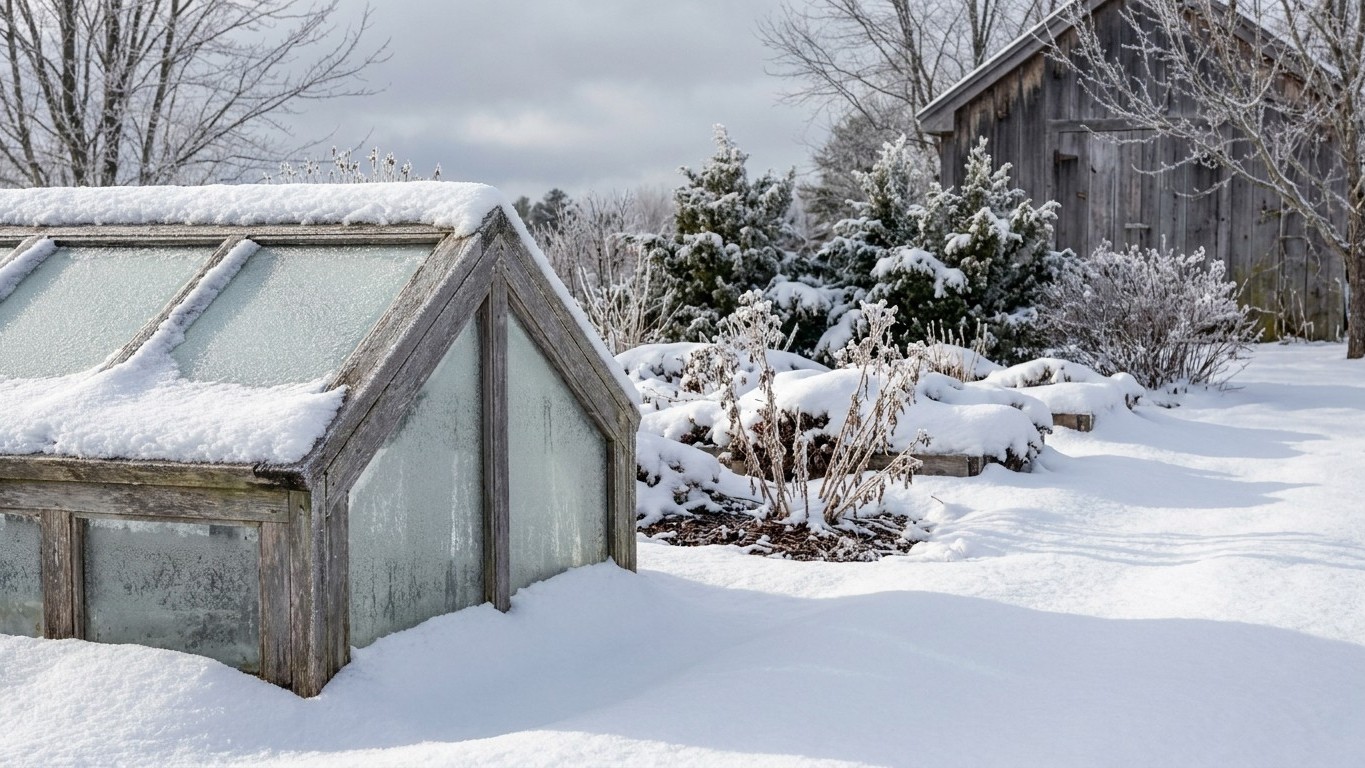

Nothing goes into open ground in Maine in January. The soil sits frozen solid from Kittery to Fort Kent, buried under snow more often than not. But that doesn’t mean the garden is idle: this is the month for dormant pruning, soil testing, seed orders, and starting the slow growers indoors that need a ten-week head start before spring even thinks about arriving.
What goes in the ground in January

The short answer is nothing, and it’s worth saying plainly instead of dancing around it. Maine’s last spring frost falls somewhere between April 22 and May 1, depending on where you sit in the state, and January is three full months out from that window. Soil temperature, not the calendar, decides what survives outdoors, and frozen ground has no soil temperature worth measuring. Direct-sown seed won’t germinate in it. Transplants won’t root in it. Even the toughest overwintering greens aren’t going in now, because they’re either already in the ground from a fall planting or they’re not going anywhere until the thaw.
What’s actually happening below the mulch
Garlic and shallots planted in the fall are still down there, dormant, waiting under a few inches of straw or shredded leaves. That’s not a January planting task, it’s a fall one already finished, and the job now is to leave it alone. Cold frames and unheated hoop houses are the one exception worth chasing: if you built one in the fall and stocked it with spinach, mache, or claytonia, those plants are hanging on in a semi-dormant state and can be harvested lightly on milder days. Bare-root fruit trees and canes occasionally get planted this early in warmer parts of the country, but in Maine the ground is rarely workable enough to make that practical.
| Fact | Value |
|---|---|
| Last spring frost (32°F) | April 22 to May 1 |
| First fall frost (32°F) | October 9 to October 21 |
| USDA Hardiness Zone (statewide range) | 3b to 6a |
Indoors, the more productive move is forcing: rhubarb crowns and Belgian endive (witloof chicory) can be dug or potted and forced in a dark, cool spot for a harvest that has nothing to do with outdoor soil temperature at all.
What to start under cover
Count backward from the last frost window rather than forward from any fixed date, and January starts to make sense. If the last frost lands between April 22 and May 1, then counting back 10 to 12 weeks lands you in mid-January to early February. That’s the arithmetic that matters here, and it applies to a short list of slow, cold-tolerant crops: onions, leeks, and celery or celeriac. These are the plants that need a long runway indoors under grow lights because they’re small and slow for weeks before they do anything visible.
The two ways this goes wrong
Start too early, and you end up with onion seedlings that are rootbound in their cell trays by the time the ground is workable, flopping over and stressed weeks before they should be transplanted. Start too late, and leeks in particular never bulk up to a usable size before the growing season runs out on the other end, since they’re slow from seed to harvest all the way through. Splitting the difference and hitting that 10-to-12-week mark from your own local frost date, not a statewide average, is the whole trick. Peppers and eggplant, by contrast, only need 8 to 10 weeks and are usually started later, closer to late February or March; starting them alongside onions in January almost guarantees leggy, light-starved plants under a typical home grow light setup.
A heat mat helps germination for the alliums, but once they’re up, cool temperatures and strong light matter more than warmth. Weak winter daylight through a window isn’t enough on its own this far north; supplemental lighting run 14 to 16 hours a day keeps the seedlings stocky instead of stretched.
What is ready to pick
Outdoors, next to nothing. That’s the honest state of a Maine garden in January, and there’s no point pretending otherwise. But the kitchen doesn’t have to run empty. Kale and leeks left in the ground under a snow cover often survive and sweeten with the cold, and can be dug out with some effort on a day when the snowpack isn’t frozen into ice. Cold frames stocked in the fall keep producing small pickings of spinach, mache, and mustard greens on the milder days between storms.
Indoors is where the real action is. Sprouts and microgreens are the fastest fresh food a Maine household can grow this month, ready in a week to ten days from a jar or a tray on the counter, no soil temperature or daylight math required. It’s also the month to go through the root cellar or basement shelves. Squash should be firm with no soft spots; any give near the stem end means it’s starting to break down and should be used first. Potatoes that have sprouted eyes or gone soft and onions that have started to sprout green shoots or feel mushy at the neck need to be pulled and used before they spread rot to the rest of the bin. A weekly check through the stored crops now saves losing a whole bin later.
The jobs that matter this month
A garden with nothing planted still has real deadlines, and January carries more of them than most gardeners expect.
Pruning and structure
Dormant pruning of apple and pear trees, along with raspberry and blueberry canes, is best done now while the plants are fully dormant and the branch structure is easy to see without leaves in the way. Cutting now, before any sap starts moving, reduces stress on the plant and lowers the risk of disease entering through fresh cuts compared with pruning closer to bud break. Skip it during a deep cold snap; wait for a day above freezing so the wood isn’t brittle.
Ordering, testing, and planning
Seed catalogs move fast, and the more unusual or popular varieties sell out well before spring, so ordering now protects the plan instead of forcing a last-minute substitute. It’s also the ideal window to send a soil sample to the University of Maine Cooperative Extension’s testing service, since results take time to come back and any lime or amendment recommended needs weeks to work into frozen or just-thawed ground before planting starts. Sketching out crop rotation for the coming season, turning the compost pile if it isn’t frozen solid, sharpening and oiling pruners and hoes, and repairing raised bed frames or fencing while nothing is in the way all belong on this month’s list. None of it feels urgent in the moment, but skipping it here means scrambling for it in April when there’s suddenly no spare time left.
What not to do in January
The classic January mistake is starting warm-season crops, tomatoes especially, indoors far too early because a stretch of mild weather makes spring feel closer than it is. Tomatoes only need 6 to 8 weeks before transplanting outdoors, which lands in March, not January; start them now and you’ll be nursing leggy, stressed plants on a windowsill for two extra months before the ground is anywhere near ready for them.
A midwinter thaw creates a second trap: pulling mulch off garlic beds or perennial crowns because the air finally feels warm enough to work outside. Underneath that mulch, the soil is still frozen or close to it, and a hard refreeze after exposure can damage crowns and roots that the mulch was protecting in the first place. Leave winter mulch in place until there’s a real, sustained pattern of warming, not one comfortable afternoon.
Feeding nitrogen this early is the third common misstep. Dormant plants aren’t taking up nutrients, and fertilizer applied to frozen or nearly frozen soil is more likely to wash away with snowmelt than to reach any root. Save the feeding for active spring growth, once plants are visibly putting out new leaves and actually able to use what’s applied.
Checking this against your own county
A statewide January picture is a starting point, not a set of instructions for your specific yard. Maine’s frost windows shift by weeks depending on elevation, distance from the coast, and how far north you are: coastal areas near Portland sit at the mild end of the state’s range, while interior valleys and the northern counties run colder and hold their freeze longer. The USDA hardiness zone map spans 3b to 6a across the state precisely because these local differences are large, and that map is built on one measure, average annual extreme minimum temperature, not a full picture of your growing season. For a planting calendar tuned to your actual county, the University of Maine Cooperative Extension is the right next stop.
Common questions
Can you plant garlic in Maine in January? No. Garlic goes into the ground in the fall, roughly six weeks before the ground freezes hard, so that it can establish roots before dormancy. By January it’s already planted and mulched; the job now is leaving it undisturbed, not planting more.
Is January the coldest month for gardening in Maine? It’s typically one of the two coldest, along with February, and the only month where outdoor planting of any kind is essentially off the table statewide, from the coast to the northern counties.
When should I start seeds indoors for a Maine garden? Count backward from your local last frost date rather than using a fixed month. With a statewide last frost window of April 22 to May 1, slow crops like onions, leeks, and celery that need 10 to 12 weeks fall into a January to early February start, while tomatoes and peppers, needing only 6 to 8 weeks, wait until closer to March.
Does Maine’s hardiness zone affect what I can start indoors in January? Not directly. The USDA zone range of 3b to 6a reflects extreme winter minimum temperatures and mainly determines what perennials survive outdoors over winter, not indoor seed-starting timing, which follows the frost window instead.