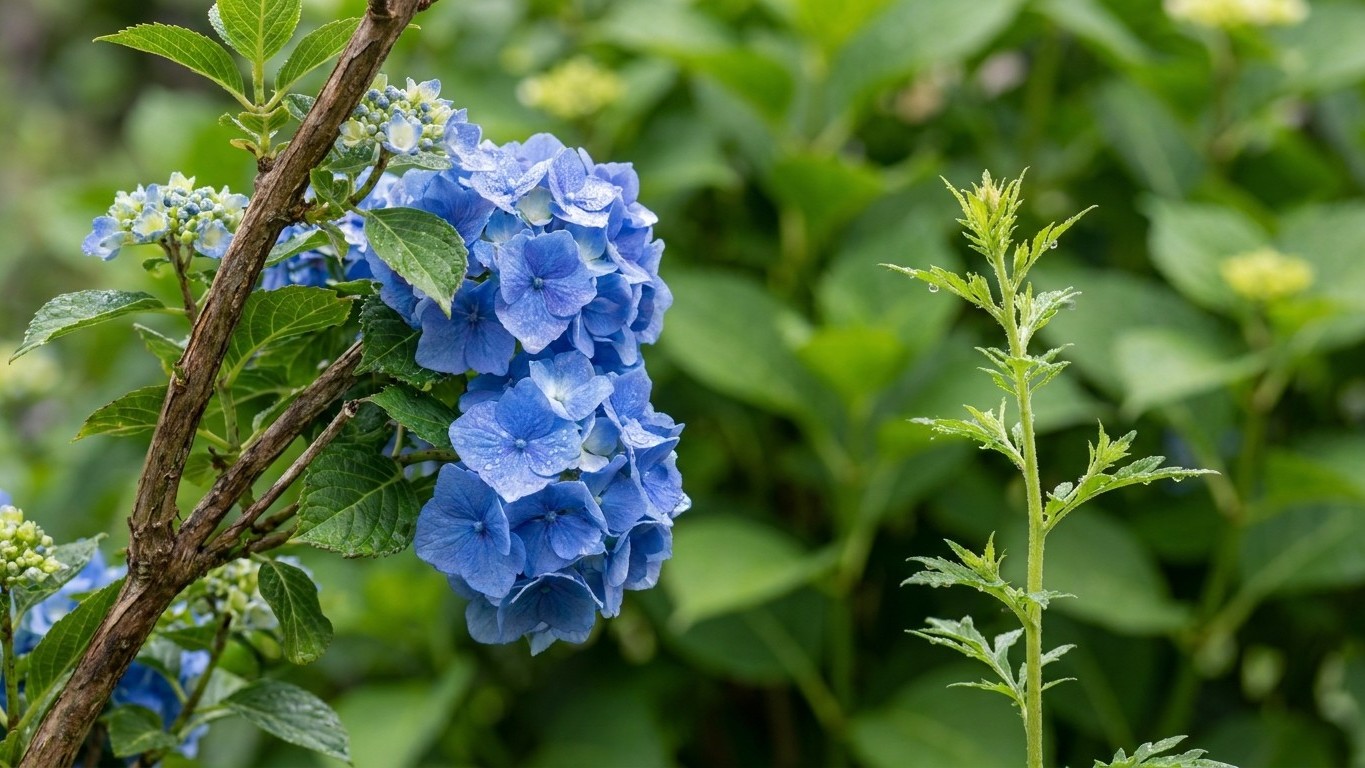

Most hydrangeas sold in Maine garden centers will survive the winter. The real question is whether they will bloom the following summer. Bigleaf types carry next year’s flowers as buds on last year’s stems, and a hard winter can kill those buds while the plant itself lives on. Protection is mostly about saving those buds: a cage of leaves, a layer of mulch, and good timing at both ends of the season.
What this comes down to in Maine

At Portland, the reference city for Maine’s frost dates, the first fall frost arrives between October 9 and October 21, and the last spring frost falls between April 22 and May 1. Those ranges come from NOAA NCEI climate normals and mark the stretch when a 32°F freeze goes from unlikely to likely. Winter protection fills the space between them, and the two ends of that space matter as much as the cold in the middle.
Portland sits at the mild end of the state. Inland and northern Maine get their last spring frost substantially later and their first fall frost earlier, so the protected season there is shorter. The USDA Plant Hardiness Zone Map, which sorts the country by a single number (the average annual extreme minimum temperature), puts Maine anywhere from zone 3b to zone 6a. A gardener on the southern coast and one in the northern woods are working with very different winters, even though they share a state.
Which hydrangeas need winter protection in Maine?
It depends on where the plant sets its flower buds. Bigleaf and mountain hydrangeas form buds on old wood in late summer, so any stem that dies back takes the flowers with it. Reblooming bigleaf cultivars soften the loss because they also flower on new growth, but the early show is still at risk. Oakleaf hydrangeas also bloom on old wood, though they are tougher and usually need less help.
Panicle hydrangeas (the Limelight type) and smooth hydrangeas (the Annabelle type) bloom on wood grown in the current season. They can lose every stem above ground and still flower. For those two groups, protection is mainly for newly planted shrubs in their first winters. The full ranking of what holds up, and where, is in Which Hydrangeas Survive a Maine Winter.
What actually damages hydrangeas in winter?
Raw cold is only one cause. A cold snap before snow has fallen leaves stems and crowns exposed. Repeated thaws and refreezes can heave young roots out of the soil. Wind and winter sun dry out bare stems faster than frozen roots can resupply them. A warm spell in spring can push buds to swell, and then a late frost catches them. Voles tunnel under snow and mulch to chew bark at the base, and deer browse the tips of stems. Good protection addresses several of these at once.
Working it out for your own garden
Start from your own first fall frost date, not from a calendar date someone else gave you. Portland’s range is October 9 to October 21, and your county extension office can tell you how far yours sits from that. Everything else is counting forward from it.
How do you time winter protection?
Covering too early traps warmth and invites rot and mice. Covering too late means the first deep freeze finds bare stems. A workable rule is to wait until the plant has dropped its leaves, several hard frosts have passed, and the top of the soil is beginning to stiffen. That usually lands about three to five weeks after the first fall frost. At Portland, October 9 plus three weeks is October 30, and October 21 plus five weeks is November 25. So the job falls somewhere between the end of October and late November. A garden with an earlier first frost simply shifts that whole range earlier.
Take a bigleaf hydrangea on the southern coast. Its leaves yellow and fall in the weeks after a frost in mid-October. By early to mid-November, once the ground has started to firm up, it gets a wire cage filled loosely with oak or maple leaves, plus a layer of mulch over the crown. A panicle hydrangea next to it needs only mulch around the base if it was planted that year.
Spring runs on the same method in reverse. Last spring frost at Portland falls between April 22 and May 1. Loosen the cage and pull mulch back from the crown as the ground thaws and buds begin to swell, but keep the covering material close by until the later date has passed. Inland gardens should push both steps later. Wait for leaves to open before pruning, since stems that look dead in April often leaf out in late May.
How do you tell what damaged your hydrangea over winter?
Look at the stems and the base before you blame the weather.
- Stems dead above a clean line and green below it point to cold or the snow line, since snow insulates what it covers.
- Gnawed bark at the base, with small tunnels in the mulch, points to voles.
- Ragged, torn stem tips point to deer, which tear rather than cut.
- Dry, shriveled stems with a healthy base point to wind and sun drying out the wood.
Scratch a little bark with a fingernail. Green underneath means the stem is alive.
What changes across the state
Maine stretches from a mild, ocean-moderated southern coast to inland valleys and a northern interior that sit in a much colder part of the USDA hardiness range. Three things move the winter picture most: distance from the coast, elevation, and latitude.
Near the coast, the Gulf of Maine holds heat into early winter and slows the spring warm-up. Winters are milder, but snow cover is less dependable, so crowns and stems are more exposed to wind, salt spray, and thaw-and-freeze cycles. Mulch and a windbreak earn their keep here, and a warm spell in March or April can wake buds too early.
Inland, cold air pools in low ground and river valleys on still nights, so a garden at the bottom of a slope can have a sharply different winter from one higher up the same hill. Higher elevation shortens the season on both ends. Farther north, the cold is deeper and longer, but snow often arrives early and stays, which insulates anything it buries. That is why many northern gardeners get better results from plants that bloom on new wood, and from mounding mulch and leaves up high enough that snow does the rest. The growing hydrangeas in Maine guide covers choosing and siting plants for these differences.
The practical takeaway is to treat Portland’s dates as the early end of the scale and shift your calendar later in spring and earlier in fall the farther inland or north you go.
The mistakes this state punishes

Wrapping too early is probably the most common one. A mild stretch in October tempts people to bundle shrubs up, but a covered plant in warm weather sweats, grows mold, and gives mice a cozy home. Wait for leaf drop and a run of hard frosts.
Sealing a plant in plastic is a close second. Burlap or a cage of wire stuffed with leaves lets air move. A plastic sleeve turns sunny winter days into a greenhouse and then drops the plant back into deep cold at night.
Uncovering during a warm spell in April sets plants up for a late frost. Buds that swell under a warm sun are tender, and the last spring frost at Portland can fall as late as May 1, later farther inland. Remove covering in stages and keep it nearby.
Fertilizing late, or pruning bigleaf hydrangeas in fall, also costs flowers. Late feeding pushes soft growth that cold kills, and fall pruning removes the buds you are trying to save. Leave pruning of old-wood bloomers until spring, once you can see which stems are alive.
Finally, piling mulch right against the stems holds moisture on the bark and creates tunnels for voles. Keep it mounded over the crown but loose, and leave a little space around the stems themselves. If you are also tending soil for flower color, that is a separate job, covered in Why Hydrangeas Are Pink in Maine, and How to Turn Them Blue.
Checking this against your county
Portland’s dates are a starting point for a state that runs from the coast to the northern woods. Your county’s own first and last frost dates, and the local snow pattern, will move the calendar. The nearest office of University of Maine Cooperative Extension can give you dates and advice for your town, and the state’s own hydrangea guide covers the rest.
Common questions
Do panicle hydrangeas need winter protection in Maine?
Established panicle hydrangeas rarely do. They bloom on new wood, so even a plant that dies back to the ground will flower. Newly planted shrubs benefit from a layer of mulch over the root zone for their first one or two winters.
Should I cut hydrangeas back before winter?
Leave bigleaf and oakleaf hydrangeas alone until spring, because the stems hold next summer’s buds. Panicle and smooth types can be cut back in late winter or early spring. Fall cleanup of dead leaves and any broken stems is fine for any type.
When should I take winter protection off?
Begin loosening it as the ground thaws and buds start to swell, around the time of Portland’s last spring frost window of April 22 to May 1, and later inland. Take it off in stages and keep the material handy until the risk of a hard frost has passed.
Do hydrangeas in pots need different care?
Yes. Roots in a pot sit above ground, with no soil to insulate them, and are much more exposed to cold than roots planted in the ground. Move pots to an unheated garage or shed once the plant is dormant, water them lightly a few times over the winter so the soil does not dry out completely, and bring them back outside after the last spring frost window.