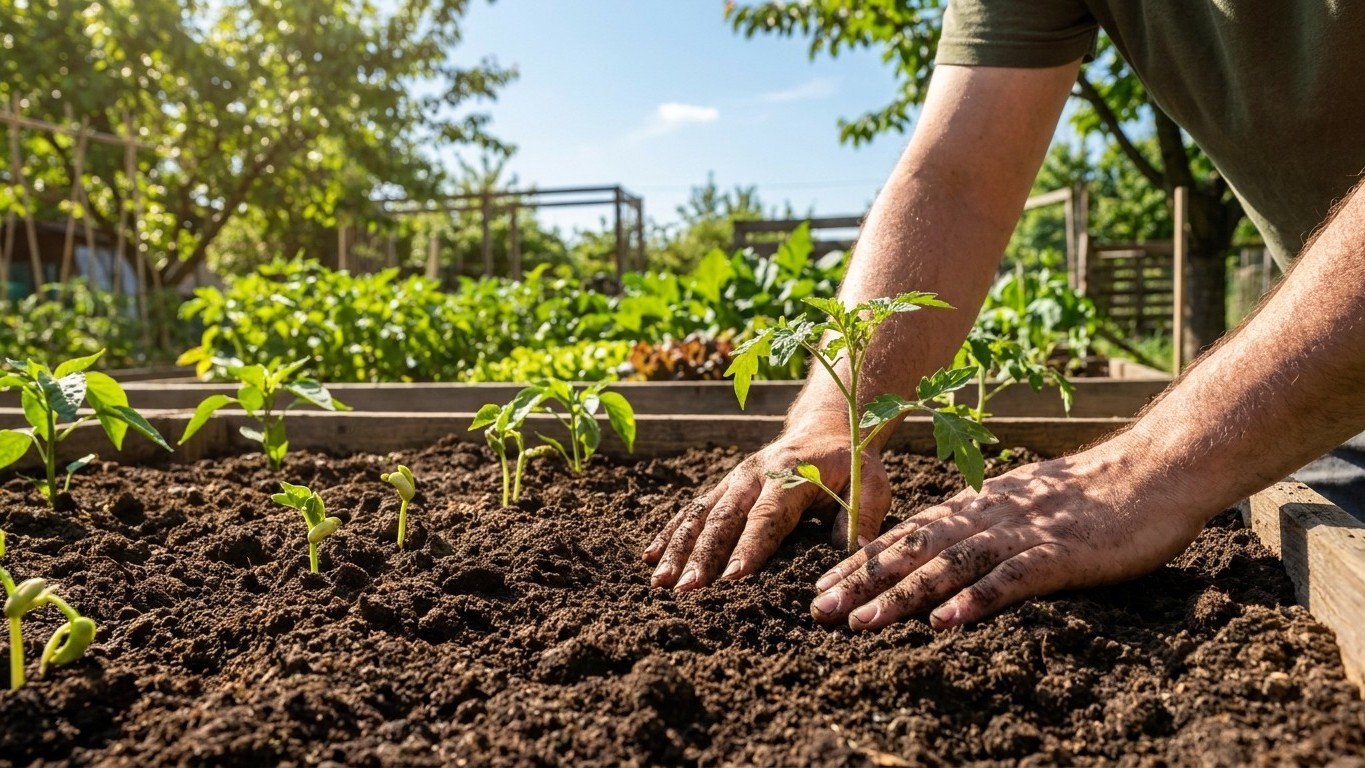

By June, Michigan gardeners are past the frost risk almost everywhere in the state, and this is the month the vegetable garden fills in for real: tender transplants go in, warm-season seeds go straight into the ground, and the first real harvests of the year start coming off cool-season crops planted earlier in spring.
What goes in the ground in June

The decision here isn’t the calendar. It’s soil temperature and whether the frost window has actually closed, and by June it has, statewide. MSU Extension puts the average last spring frost around April 30 in the Detroit area, with early to mid May typical across most of the Lower Peninsula. That means nearly every county in the state has already cleared its frost risk before June begins, and the ground has had time to warm underneath it.
That warmth is what unlocks the crops that couldn’t go in earlier: beans, sweet corn, squash, cucumbers, and melons can all be direct-sown now, and warm-season transplants (tomatoes, peppers, eggplant, sweet potato slips) can go into open ground with confidence rather than a gamble. Michigan’s USDA hardiness zones run from 4a to 6b (2023 map, based on 1991-2020 minimum temperature averages), a system built on one number, the average extreme winter low, so it says nothing about June soil temperature on its own. It’s a useful reference for what survives winter, not a planting trigger for summer crops.
Early June still has room for a last, fast round of cool-season direct sowing, especially in the northern Lower Peninsula and the Upper Peninsula where soil warms later. By the back half of the month, lettuce, spinach, and radishes sown in full sun start to bolt in the heat, so shift those toward part shade or hold off until late summer.
| Region | Safe now | Wait or shift to shade |
|---|---|---|
| Southern Michigan (zone 6a-6b) | Tomatoes, peppers, beans, corn, squash, melons, cucumbers | Lettuce, spinach after mid-June |
| Northern Lower Peninsula / UP (zone 4a-5b) | Beans, squash, corn, transplants hardened off first | Melons, sweet potatoes until soil is reliably warm |
What to start under cover
Most seed-starting under cover in June isn’t for right now, it’s for fall. The math runs backward from the first fall frost rather than forward from today. MSU Extension lists Michigan’s first fall frost as falling between October 6 and October 21 in zone 6a. Take the days-to-maturity number off a seed packet for a fall crop, count back from that October window, and add a buffer of a few extra weeks for slower fall growth as daylight shortens. That’s the arithmetic a reader can redo for their own county just by knowing their local frost date.
Broccoli, cabbage, and other fall brassicas are the classic June indoor starts, timed for transplant out in mid to late summer once the spring crops clear space. Started too early, they sit too long in small cells and get rootbound and stressed before they ever reach the garden; started too late, they run out of daylight and cool weather before they mature, and a fall crop that misses its window just stalls.
A cold frame or shaded cover also earns its keep in June, not for warmth but for the opposite: keeping seedlings and cool-season starts from cooking in direct summer sun while they establish.
What is ready to pick
June is when the spring garden starts paying rent. Asparagus is finishing its cutting window for the season, and any spears still coming should be the last picked before the plant is left to grow into ferns that feed the crown for next year. Rhubarb stalks are thick and ready to pull. Spinach, lettuce, and radishes sown in April and early May are at peak size now, and the difference between a good harvest and a wasted one is timing: pick lettuce and spinach before hot days push them to bolt, and pull radishes as soon as the shoulders show at soil level, since they turn woody fast in warm soil.
Early peas planted in spring should be filling out pods by mid to late June, ready when the pod is plump but before it looks swollen and dull. Strawberries hit their main harvest window statewide this month, and in western Michigan’s fruit belt the earliest sweet cherries start coming in as June closes out.
Anything still in winter storage, squash, onions, potatoes, deserves a check now too. Soft spots, sprouting, or a sweetish smell mean it’s time to use that item before it spreads rot to the rest of the stock.
The jobs that matter this month
Staking and caging tomatoes now, before they sprawl, saves hours later and keeps fruit off the ground where slugs and rot get to it first. Once a tomato plant has flopped over, trying to lift and tie it does more damage to the stem than starting support early ever would.
Mulching follows right behind planting. A layer down now over beans, squash, and tomato beds holds soil moisture through the hotter, drier stretch of the growing season and keeps weed pressure down before weeds get established. Watering rhythm matters more in June than any other month so far: deep, less frequent watering builds deeper roots than a light daily sprinkle, and it’s the deep-rooted plants that shrug off a dry week later in summer.
Succession sowing keeps the harvest coming instead of arriving all at once. Beans, corn, and summer squash can all go in again in two- to three-week batches through June, so the plot isn’t producing a glut one week and nothing the next.
Pest scouting starts in earnest now too. Colorado potato beetle larvae show up on potato and eggplant leaves, squash bugs lay their bronze egg clusters on the undersides of squash and cucumber leaves, and catching either in the first week buys a much easier fix than waiting until the plants are stripped. A quick walk through the beds every few days, checking leaf undersides, catches most problems while they’re still small enough to hand-pick.
What not to do in June
The most common mistake is trusting warm air over cold soil, especially in the northern Lower Peninsula and the UP, where a run of 70-degree days can feel like permission to plant melons or sweet potatoes into ground that’s still cool a few inches down. Warm-season crops planted into cold soil don’t die outright the way they would from frost, but they stall, sit yellow and sulky for weeks, and rarely catch up to a batch planted a week or two later into properly warmed soil.
Overfeeding nitrogen on tomatoes and peppers right as they start flowering is another one. A heavy nitrogen feed pushes lush green leaves at the expense of fruit set, so a plant that looks great can end up producing far less than a leaner-fed one. Save the heavier feeding for after fruit is set.
Removing row covers or shade cloth too early after a mild stretch is a smaller mistake with a real cost: young transplants that were shielded from wind and intense sun can get scorched or windburned the first day they’re left exposed. Ease covers off gradually over a few days rather than pulling them all at once.
Skipping thinning on carrots and beets is easy to justify in the moment (it feels wasteful to pull healthy seedlings), but crowded roots stay small and misshapen all season. Thin early, even if it means tossing perfectly good seedlings.
Checking this against your own county
A statewide June guide is a starting point, not an instruction specific to any one yard. Elevation, lake effect off Lake Michigan and Lake Superior, and the gap between southern Michigan and the Upper Peninsula can shift frost dates and safe planting windows by weeks in either direction. A garden near the shoreline in the northwest Lower Peninsula behaves differently than one an hour inland at the same latitude.
For dates and guidance tuned to a specific county, MSU Extension’s outreach resources at canr.msu.edu/outreach are the reliable next stop, along with the state’s own garden calendar for a season-by-season breakdown.
Common questions
Is it too late to plant tomatoes in Michigan in June?
No. Early June is still a solid window for setting out tomato transplants across most of the state, since the last spring frost has already passed everywhere by then.
Can I still direct-sow beans and squash in June in Michigan?
Yes, and June is actually one of the best months for it, since soil has warmed enough for reliable, fast germination.
Why did my lettuce bolt in June?
Heat is the trigger. Lettuce and spinach sown in full sun tend to bolt once temperatures climb in the back half of June; shifting later sowings to part shade slows that down.
What’s the biggest risk to garden crops left over from June planting decisions?
Planting heat-loving crops like melons or sweet potatoes before soil has actually warmed through, particularly in northern Michigan, where a stretch of warm air can mask cold soil underneath.