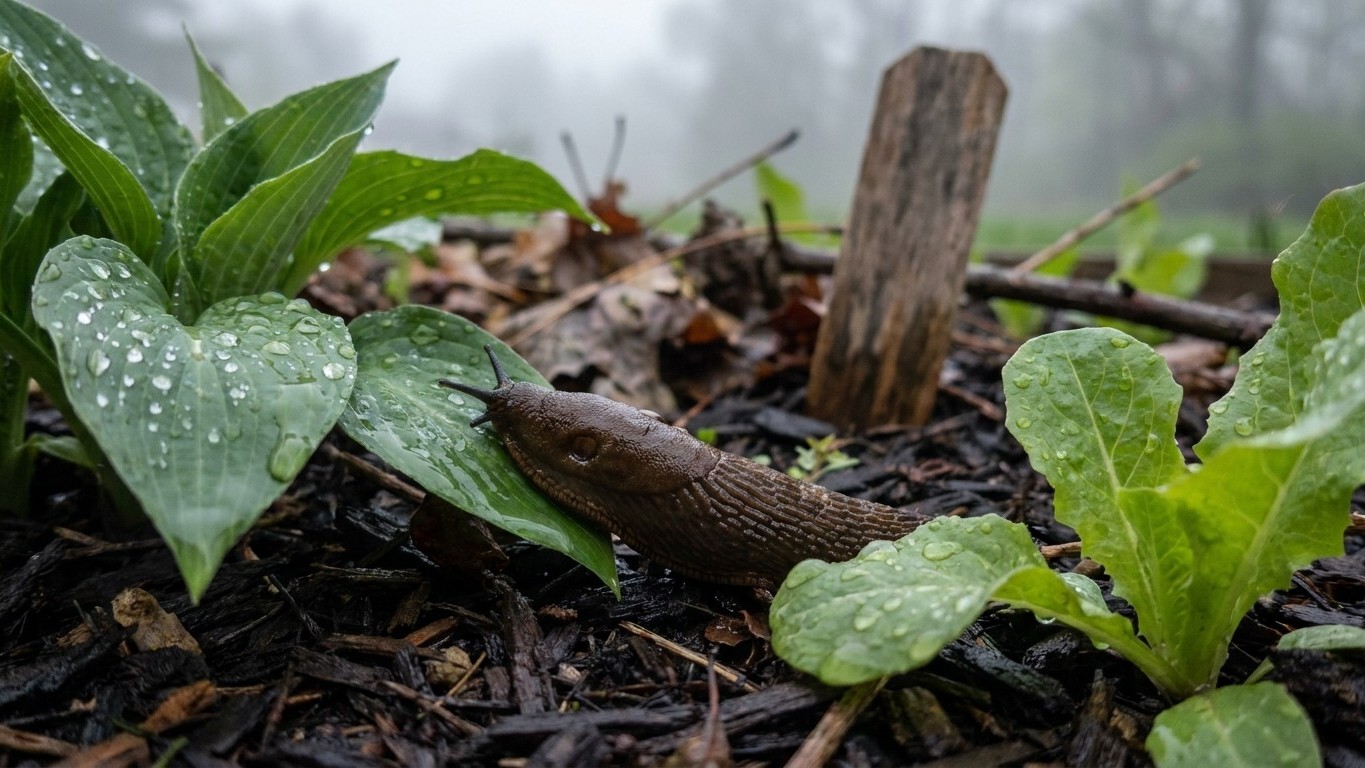

Slugs turn up in Michigan gardens twice a year, not once. The heaviest activity hits in April through June when spring rains soak the soil, then again in September and October once the summer heat breaks and dew returns to the grass overnight. Between those windows, dry July afternoons and hard winter freezes push slug numbers down without eliminating them, because eggs and adults simply wait it out underground.
That two-wave pattern matters for anyone trying to protect hostas, lettuce, or strawberries. Spraying or trapping in the middle of a dry August does almost nothing, because the slugs aren’t moving. Timing controls to the wet stretches is the difference between a wasted afternoon and an actual dent in the population.
Michigan’s Two Slug Seasons

The state’s slug problem is really a moisture problem. Michigan sits downwind of four Great Lakes, and that lake-effect humidity keeps soil and mulch damp longer than in drier Midwest states. Slugs breathe through skin that needs constant moisture, so they’re most active when nighttime temperatures sit between 50 and 70 degrees Fahrenheit and the ground stays wet from rain or heavy dew.
Spring is the bigger of the two seasons. Adult slugs that overwintered in leaf litter or under garden debris wake up as soon as the soil thaws, usually by mid-April in southern Michigan and a couple weeks later up north. They feed heavily on tender new growth, then lay eggs in clusters tucked into moist soil cracks or under boards and pots. Those eggs hatch within a few weeks, adding a second generation right as early summer vegetables are getting established.
Summer heat slows things down, but doesn’t stop reproduction entirely, especially in irrigated beds or shaded, mulched areas that stay damp regardless of the sun. Then September brings cooler nights and fall rains, triggering another burst of feeding and egg-laying before winter. Eggs laid in fall can overwinter in the soil and hatch the following spring, which is one reason populations tend to build year over year in gardens that never get a proper cleanup.
Where Slugs Hide in Michigan Yards
Clay-heavy soil, common across southeast Michigan including the Detroit metro area, drains slowly and holds water close to the surface. That’s ideal slug habitat. Farther north, where sandier glacial soils dominate, water moves through faster and slug pressure tends to run lower, though it never disappears entirely.
Inside a typical yard, slugs cluster in a handful of predictable spots:
- Thick mulch beds, especially wood chips or straw piled more than two inches deep
- Under hostas, one of the most commonly chewed plants in Michigan landscapes
- Window wells and basement entry points on older homes with grade issues
- Compost piles and the shaded underside of pots, boards, or garden edging
- Vegetable beds growing lettuce, strawberries, or young bean seedlings
Hostas take the worst of it because their broad, low leaves sit right at slug height and trap moisture underneath. Strawberry growers notice a different problem: slugs go after the ripening fruit itself, not just the foliage, leaving ragged holes and a slime trail that makes the berry unsellable even if the damage is minor.
What Actually Stops Slugs in Michigan Conditions
Most slug control fails because it targets the slug instead of the moisture that draws it in. Cultural changes do more heavy lifting than any trap or bait, though the two work best combined.
Cut the Moisture, Cut the Population
Watering in the morning instead of the evening gives soil surfaces time to dry before nightfall, when slugs are most active. Pulling mulch back to an inch or less, and switching from bark chips to a coarser material like pine straw in slug-heavy beds, removes a lot of daytime hiding cover. Raised beds with amended, well-drained soil also help, which is part of why the sandy-soil regions of northern Michigan see fewer chronic infestations than the clay belts near Lansing, Detroit, and Ann Arbor.
Fall cleanup matters more than most gardeners think. Leaving dead plant material and leaf piles through winter gives adult slugs a warm, damp place to overwinter and lay eggs before the ground freezes. Clearing beds by late October in Michigan removes both.
Barriers and Traps That Hold Up
Copper strips placed around raised bed edges create a mild electrical reaction against slug slime that most slugs won’t cross, and they hold up for years if kept clean. Diatomaceous earth works differently, drying out the slug’s underside on contact, but it loses effectiveness the moment it gets wet, which in Michigan’s humid summers can mean reapplying every few days during rainy stretches.
Beer traps (a shallow dish of beer sunk to soil level) still work because slugs are drawn to the yeast and drown once they crawl in. They need emptying every couple of days to stay effective and to avoid becoming another damp hiding spot themselves. Hand-picking at night with a flashlight, an hour or two after sunset when slugs are most exposed, remains one of the most effective low-cost methods for small gardens, especially right after a spring rain.
Baits and Natural Predators
Iron phosphate baits are the standard recommendation from university extension programs across the Midwest because they’re far less toxic to pets and wildlife than older metaldehyde-based products, while still being lethal to slugs that ingest them. Scattering bait pellets along the edges of vegetable beds, rather than broadcasting them across the whole garden, concentrates the effect where it counts and cuts down on unnecessary product use.
Encouraging natural predators helps over the long run. Ground beetles, toads, and several bird species eat slugs regularly, and even a small backyard pond or a rock pile that shelters toads can shift the balance. Some Michigan homeowners with the space for it keep a few ducks, which forage slugs aggressively, though that’s obviously not an option for most suburban lots.
When Control Efforts Should Start
Waiting until hostas are already skeletonized means the damage is done for the season. The better window is early spring, right as soil temperatures climb past 50 degrees, before adult slugs start laying eggs. Setting traps, applying bait around vulnerable plants, and thinning mulch in late March or early April gets ahead of the first generation instead of reacting to it.
A second push in early September, before the fall egg-laying period, keeps the population from building a head start into next spring. Skipping that fall round is the most common mistake, since gardeners tend to stop paying attention once the summer harvest winds down, right when slugs are quietly setting up for the following year.
One detail that trips people up: rock salt kills slugs on contact, but it also draws moisture out of soil and can damage plant roots and lawn grass if used anywhere near beds. It’s better suited to bare patios or gravel paths where slugs cross but nothing is growing, not as a general garden treatment.
Related guides
- Slugs in Ohio: When It Shows Up and What Stops It
- Slugs in Wisconsin: When It Shows Up and What Stops It
- Slugs in Northwest Territories: When It Shows Up and What Stops It
- Slugs in Ontario: When It Shows Up and What Stops It
- Asiatic garden beetle in Michigan
- Slugs in Washington: When It Shows Up and What Stops It