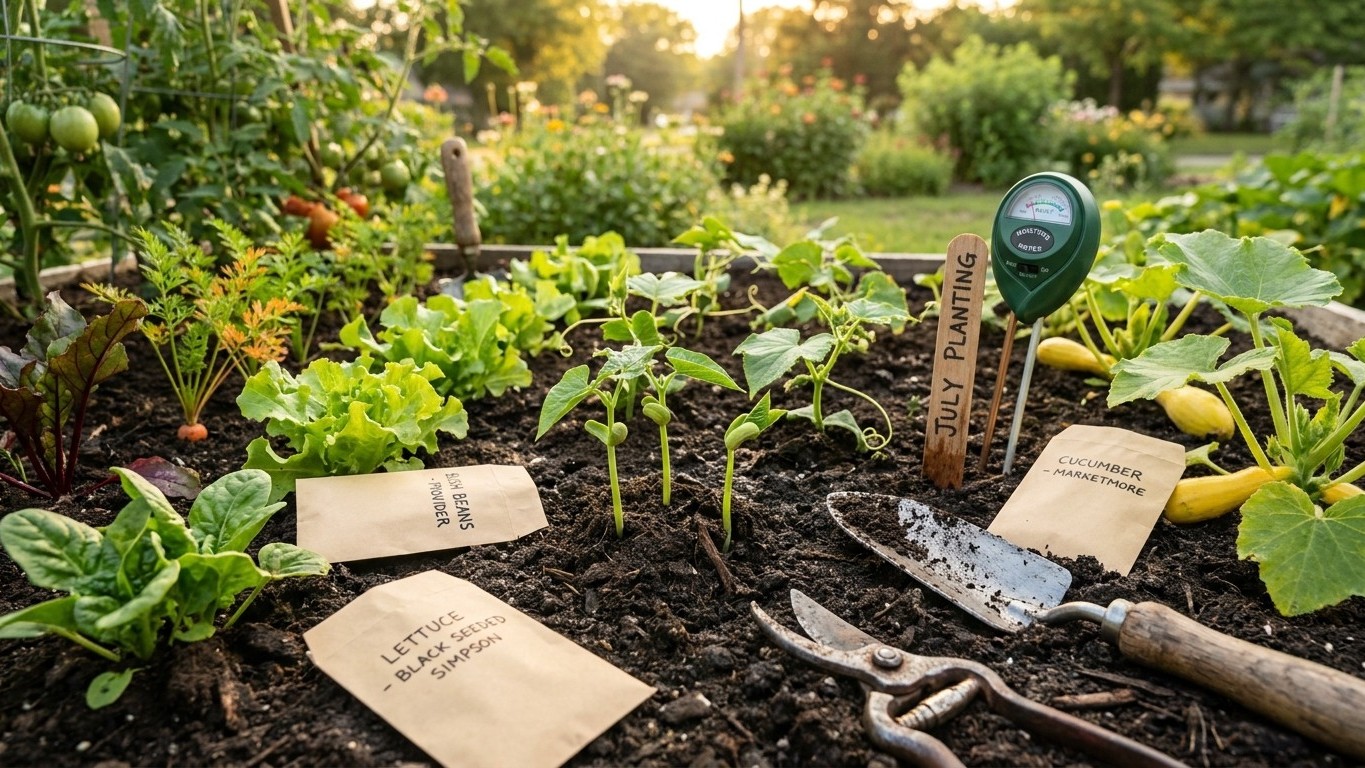

Deep summer has Michigan gardens in full swing by July, well past the last spring frost and weeks away from the first fall one. This is a month for succession sowing quick crops, transplanting the last round of fall brassicas, and keeping up with a harvest that’s picking up speed daily. What you plant now depends less on the calendar page and more on how many weeks are left before your local frost date arrives.
What goes in the ground in July

By July, soil temperature stopped being the limiting factor weeks ago. The Detroit area passed its average last spring frost around April 30, and most of the Lower Peninsula cleared its own frost risk by early to mid May, according to MSU Extension’s frost-free date records. The soil is warm, the season is open, and the real question this month isn’t “will it survive a cold snap” but “does it have time to finish before fall arrives.”
That reframes everything. Bush beans, summer squash, cucumbers, and quick greens like lettuce and spinach can all go into the ground through the first half of the month for a solid harvest before frost. Carrots and beets sown now, especially early in July, have enough runway to mature into fall, and beets in particular tend to sweeten with the cooling weather that follows. Corn is a tighter call: sowing it in July only makes sense in the warmer southern counties, and only with a fast-maturing variety, since the season left before frost keeps shrinking as the month goes on.
Melons, winter squash, and pumpkins are where the gamble shows up. These crops need a long stretch of warm days, and starting them from seed outdoors in July, especially in the cooler northern parts of the state, risks running out of season before the first fall frost, which lands somewhere between October 6 and October 21 in zone 6a. If you haven’t already got these vining crops established, the safer move is a fast-maturing variety and a spot with maximum sun exposure, not a bet on an extended fall.
Garlic has no place in a July planting list, it’s a fall crop here, but if you’re holding cured bulbs from an earlier harvest, this is when you sort and store them, not plant them.
What to start under cover
The seed-starting work in July isn’t about spring crops anymore, it’s about the fall garden. Broccoli, cabbage, cauliflower, and Brussels sprouts for a fall harvest get their start indoors or in a shaded seed bed now, timed backward from the first fall frost rather than forward from any fixed date. Count the weeks a variety needs to reach maturity, add a couple of weeks of buffer for the slower growth that comes as daylight shortens, and work backward from that October 6 to October 21 window to find your sowing date.
The two ways this goes wrong are mirror images of each other. Start too early, and July’s heat pushes seedlings to stretch and go leggy while they wait for cooler transplant conditions, weakening the stems before they ever hit the garden bed. Start too late, and the shortening days of September slow growth just as the plant needs to be finishing up, so it never sizes up before frost cuts the season short.
Kale and collards are more forgiving. They tolerate a light frost, even improve in flavor after one, which gives a wider sowing window than the heading brassicas. Starting them in the second half of July, whether direct-sown in a partly shaded spot or begun in cell trays, still leaves enough season for a full-size fall crop across most of the state’s growing regions.
If you’re in the cooler reaches of the Upper Peninsula or the far northern Lower Peninsula, shift these dates a week or two earlier. The extra buffer costs nothing if the fall turns out mild, and it’s the difference between a full harvest and a half-grown crop if the frost arrives on the early side of that window.
What is ready to pick
July is when the garden starts paying rent. Garlic planted the previous fall usually finishes curing and comes out of the ground around now, signaled by the lower leaves browning while a handful up top stay green. Zucchini and summer squash move fast enough that missing a two-day check can mean a baseball-bat-sized fruit instead of a tender one, so daily walks through the squash patch aren’t excessive, they’re necessary.
Cucumbers, bush beans, and the earliest tomatoes start coming in toward the back half of the month in the warmer parts of the state, with tomatoes judged by color change and a slight give under gentle pressure rather than by size alone. Blueberries, a genuine Michigan specialty crop, ripen in waves through July, and the tell is simple: a truly ripe berry drops into your hand with barely a tug, while one that needs pulling isn’t done yet.
Sweet corn planted earlier in the season reaches the milk stage for many growers by late July, checked by peeling back a bit of husk and pressing a kernel; if the liquid runs milky rather than clear or doughy, it’s ready. Onions signal harvest time when their tops start to yellow and flop over on their own, not when you decide to bend them.
Keep an eye on anything stored from earlier harvests, too. Stored garlic and onions can start to soften in July’s warmth, and any bulb going soft or sprouting should come out of storage before it spreads to the rest.
The jobs that matter this month
Watering rhythm matters more in July than in almost any other month. A deep soak two or three times a week beats a light daily sprinkle, because shallow, frequent watering trains roots to stay near the surface, which then makes plants far more vulnerable the moment a hot, dry stretch hits. Mulch does double duty here, holding that moisture in the soil and keeping root zones several degrees cooler under direct sun.
Staking and caging catch up with plants fast this month. Tomatoes, pole beans, and sprawling squash vines put on major growth in July’s heat, and a plant that goes unsupported for even a week can end up tangled on the ground, inviting rot and making pest scouting harder. Speaking of pests, this is peak season for Japanese beetles and squash vine borers in much of Michigan, and catching an infestation in its first week, rather than its third, is usually the difference between a manageable problem and a lost plant.
Succession sowing keeps the harvest from crashing into a single glut followed by a gap. A fresh round of bush beans or lettuce sown every couple of weeks through July smooths that curve out considerably. This is also the point in the season to prune tomato suckers to keep airflow up through the plant canopy, which cuts down on the fungal diseases that thrive in July’s combination of heat and humidity.
Garlic and any spring-planted onions that have finished curing need a dry, airy, out-of-direct-sun spot to store properly, and that curing step now saves a moldy bin later.
What not to do in July
The most common mistake this month is treating hot air as a green light for crops that actually need warm soil and a long runway, then discovering in September that a melon or winter squash never had a chance to finish. If you’re planting these crops for the first time in July, especially in the cooler counties, pick the fastest-maturing variety available and accept that it’s a smaller bet than a spring planting would have been.
Watering shallow and often, rather than deep and less frequent, is the second big misstep. It feels responsible to water every evening in a heat wave, but it actually weakens the root systems that need to reach down for moisture during the driest stretches. Deep, infrequent watering builds a plant that can handle a dry week; shallow watering builds one that wilts the moment you skip a day.
Heavy nitrogen feeding at this point in the season is another trap, particularly for tomatoes and squash. A nitrogen-heavy feed in July pushes leafy growth right when the plant should be shifting energy into fruit, and the result is often a lush, green plant with disappointing yield. A balanced or phosphorus-leaning feed suits the fruiting stage better.
Letting garlic sit in the ground too long after the tops brown is a smaller but real error, since bulbs left too long can split their wrappers and store far worse than ones pulled at the right moment.
Checking this against your own county
Everything above describes Michigan in broad strokes, and the state doesn’t garden in broad strokes. The USDA Plant Hardiness Zone Map places Michigan anywhere from 4a to 6b, a wide enough spread that a grower near Traverse City and one near Detroit are working with genuinely different seasons, not a rounding error. Lake effect, elevation, and simple latitude all shift frost dates by weeks in either direction.
Treat every date and window here as a starting point, then check it against your own county through MSU Extension, which maintains Michigan’s own frost-date records and planting calendar down to the local level.
Common questions
Is it too late to plant tomatoes in Michigan in July?
Starting tomatoes from seed in July is too late for most of the state, but setting out an already-started transplant can still work in the warmer southern counties, provided the variety matures quickly enough to ripen before the first fall frost between October 6 and October 21 in zone 6a.
Can I still plant carrots in Michigan in July?
Yes. Carrots sown in the first half of July generally have enough time to mature before fall frost, and the cooling weather that follows often improves their flavor rather than hurting it.
What vegetables ripen in Michigan in July?
Garlic, blueberries, zucchini, cucumbers, and the earliest tomatoes are typical July harvests, with sweet corn and onions following close behind toward the end of the month in warmer areas.
Why do garden guides give different Michigan planting dates?
Because Michigan spans USDA hardiness zones 4a through 6b, a range wide enough that a single statewide date rarely fits every county. Local elevation and Great Lakes proximity shift both the last spring frost and first fall frost by weeks, which is why checking MSU Extension’s county-level data matters more than any general calendar.