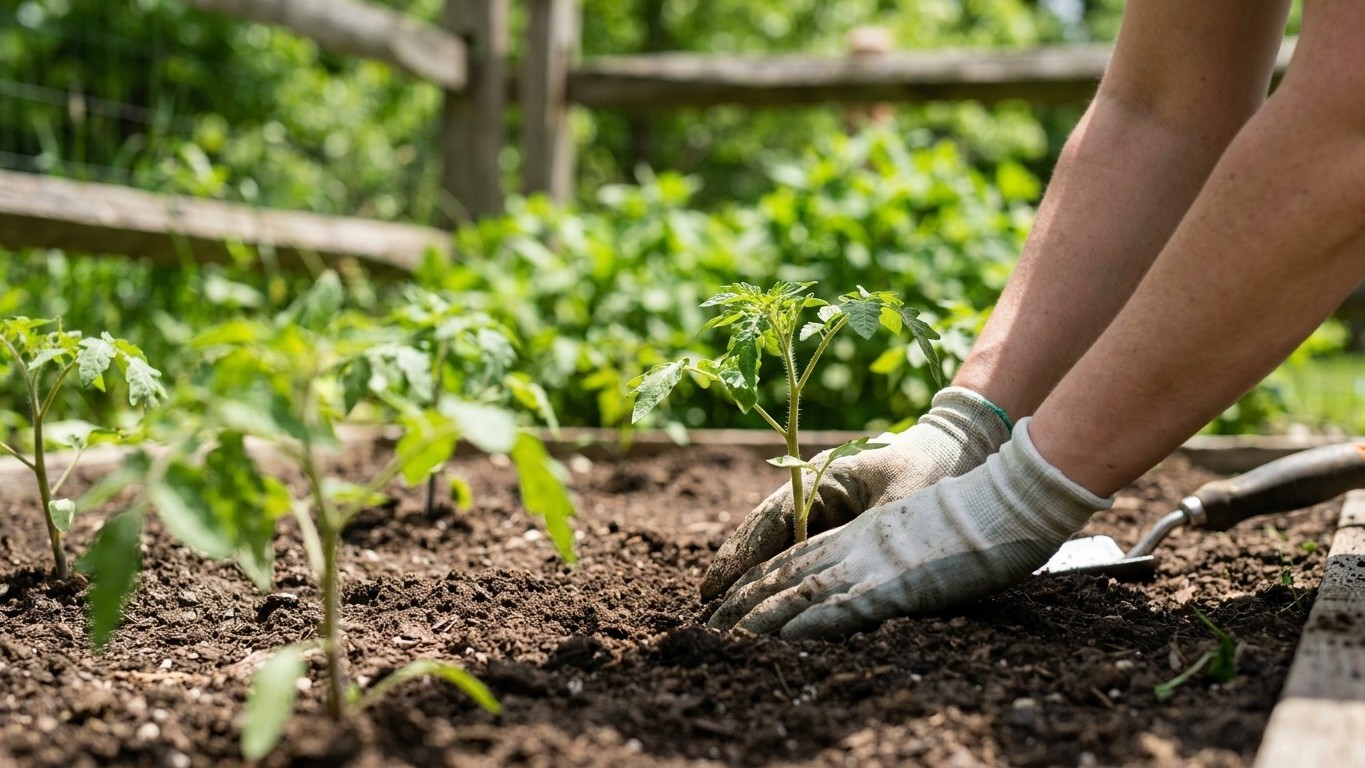

June is Missouri’s green light month. The frost window closed weeks ago, soil temperatures have caught up with the air, and the garden can finally carry the crops that need real heat: beans, corn, squash, cucumbers, melons, okra, and sweet potato slips all go into open ground now. It is also the last comfortable stretch for a second round of quick crops before July heat takes over.
What goes in the ground in June

Soil temperature, not the calendar, decides what survives in June. By now Missouri’s topsoil has warmed well past the 60°F mark that beans and squash need to germinate reliably, and it keeps climbing through the month. That matters more than the frost date because a lot of early-June mornings can still feel cool near the Missouri and Mississippi river bottoms even after the freeze risk is gone.
The freeze risk itself is gone by the time June opens. NOAA’s 1991-2020 climate normals put the last spring frost window at April 6 to April 20 for the Kansas City area station, and that window has already closed by five or six weeks. The station sits at Kansas City International, well north of downtown, and the caution built into that data matters here: the downtown KC station runs about five days earlier in spring, and southern Missouri, around Springfield or the Bootheel, warms up sooner still. Practically, that means gardeners in the southern half of the state had this window open even earlier, and northern Missouri growers are the ones who should double-check local conditions before assuming the ground is ready.
With that settled, June is one of the few months where almost everything in the warm-season lineup is fair game. Direct-sow bush beans, pole beans, sweet corn, cucumbers, summer squash, winter squash, melons, and okra. Set out sweet potato slips once the soil has had a few weeks of real heat. If tomato, pepper, and eggplant transplants did not go in during May, early June is still workable, especially in the northern counties where the season runs a touch cooler.
The gamble is on the other end of the calendar: cool-season crops like lettuce and spinach sown late in June will bolt fast once daytime highs settle into the 85°F-plus range that’s typical across the state by midsummer. Save those for a fall planting instead.
What to start under cover
June is when fall crops start their indoor life, and the math runs backward from the first fall frost rather than forward from today. NOAA’s 1991-2020 normals put that window at October 18 to October 29 for the same Kansas City station, with the same caution: southern Missouri gets a longer season, northern counties a shorter one.
Fall broccoli, cabbage, and brussels sprouts typically need 8 to 10 weeks from seed to a transplant-ready size, plus another several weeks in the garden to mature before that first hard frost. Counting back from an October fall frost puts the ideal starting window for those seedlings squarely in June, started indoors or in a shaded cold frame where the heat won’t cook young seedlings before they’re transplanted.
The two ways this goes wrong both come down to timing the count, not the crop. Start too early, and the seedlings sit in their trays too long, become rootbound, and stall out once transplanted, never fully recovering their growth rate. Start too late, and the plants are still small when the first frost window arrives in October, leaving heads that never size up. Splitting a tray into two sowings roughly two weeks apart is a simple way to hedge against getting the count wrong in either direction, and it costs nothing but a second packet of seed.
Leeks and celery for a fall harvest can go in now too, though both are slower and benefit from the extra runway June still offers before the days get punishingly hot.
What is ready to pick
June rewards the patience of everything planted back in April. Garlic is often the headline crop: when the lower leaves start yellowing and flopping over, usually with several green leaves still standing, it’s time to pull rather than wait for the whole plant to brown down, which risks the bulbs splitting in the ground.
Strawberries hit their peak in June across most of the state, picked when fully red with no white shoulders left, since they don’t ripen further once off the plant. Early peas are close behind, best picked when the pods feel full and firm but before they turn tough and starchy. Spring-planted lettuce, spinach, and radishes are also finishing their run this month; harvest them promptly, because the same heat that’s good for tomatoes pushes greens straight into bolting.
Beets and kale sown in early spring are usually ready for a first cutting, and June is often the tail end of the cherry harvest in orchards across the state, alongside the first flush of early-season raspberries where they’re grown. None of this requires guesswork: color, firmness, and the state of the lower leaves tell the story on almost every one of these crops.
The jobs that matter this month
Staking and trellising can’t wait past June. Tomatoes, cucumbers, and pole beans put on rapid growth once the heat sets in, and a plant that sprawls for even a week before it gets support is harder to stake without breaking stems. Get cages and trellises in place while the plants are still small enough to train.
Mulching matters more in June than almost any other month, because it’s doing two jobs at once: holding soil moisture as evaporation rates climb, and keeping root zones from overheating under direct sun. A 2 to 3 inch layer of straw or shredded leaves around vegetable beds buys real insurance against the dry stretches that often show up by late June.
Watering rhythm needs a reset too. Spring’s rains taper off, and established beds do better with a deep soak once or twice a week than a light sprinkle every day, which encourages shallow roots that struggle the moment things dry out.
Succession sowing keeps the harvest coming instead of dumping everything at once. Bush beans and sweet corn planted every two to three weeks through June stagger the picking window into July and August rather than producing one overwhelming glut.
Pest scouting earns its keep now. Squash bugs, squash vine borer moths, Colorado potato beetles, and Japanese beetles are all active by June across Missouri. Checking the undersides of squash and cucumber leaves for egg clusters, and catching the first beetles by hand before populations build, is far easier than fighting an established infestation in July.
What not to do in June
The most common mistake is trusting warm air over the soil itself. A string of 80°F days can make gardeners push heat-loving crops into beds that haven’t actually warmed at depth, especially in shaded or heavy clay soil that lags behind the air temperature by days. Check the soil with a simple thermometer at planting depth rather than going by how the afternoon feels.
Skipping the hardening-off step on transplants is another June trap. Seedlings raised indoors or in a greenhouse need several days of graduated outdoor exposure before they go into full sun and wind, or they’ll show scorched, wilted leaves within a day of transplanting, even in perfectly warm soil.
Nitrogen timing trips up a lot of tomato and pepper growers. A heavy nitrogen feed once plants are flowering pushes leafy growth at the expense of fruit set. A balanced or lower-nitrogen feed once flowering starts serves the plant better than repeating the nitrogen-heavy feeding schedule that worked during early vegetative growth.
Letting spring greens linger past their prime is a small mistake with an outsized effect on the bed. Lettuce and spinach that bolt in June’s heat aren’t just done producing, they also take up space and moisture that a succession-sown warm-season crop could be using instead. Pull them promptly and replant the space rather than leaving a half-bolted row standing.
Checking this against your own county
A statewide frost window is a starting point, not an instruction for a specific yard. Elevation, urban heat pockets, and the long stretch between Missouri’s northern border and its Bootheel can shift real planting dates by two or three weeks in either direction. The NOAA data behind this page comes from the Kansas City International Airport station, which runs cooler and later than downtown Kansas City by about five days, and considerably later than southern Missouri, where the growing season simply starts earlier and ends later.
The most reliable next step is checking those local numbers directly. The University of Missouri Extension publishes county-level guidance and planting calendars that account for exactly this kind of regional spread, and it’s worth a quick look before locking in a planting date based on a statewide window alone.
Common questions
Is it too late to plant tomatoes in Missouri in June?
No. Early June transplanting still leaves enough of the growing season for most tomato varieties to mature before the first fall frost window of October 18 to October 29, especially in the southern half of the state where that window runs later.
Can I still direct-sow sweet corn in June?
Yes, and staggering plantings every two to three weeks through the month extends the harvest well into late summer rather than producing one large batch all at once.
What USDA hardiness zone is Missouri in?
Missouri spans USDA Plant Hardiness Zones 5b to 7b, based on the USDA’s 2023 map, which is built on average annual extreme minimum winter temperatures. That’s a statewide range; a specific yard’s zone depends heavily on where it falls within that spread.
Why are my spring lettuce and spinach bolting already?
Both crops respond to rising heat and longer daylight by shifting into flowering mode, which is what bolting is. Once daytime temperatures settle into the mid-80s, which typically happens across Missouri by June, there’s no way to reverse it; harvest what’s left and replace the bed with a heat-tolerant crop.