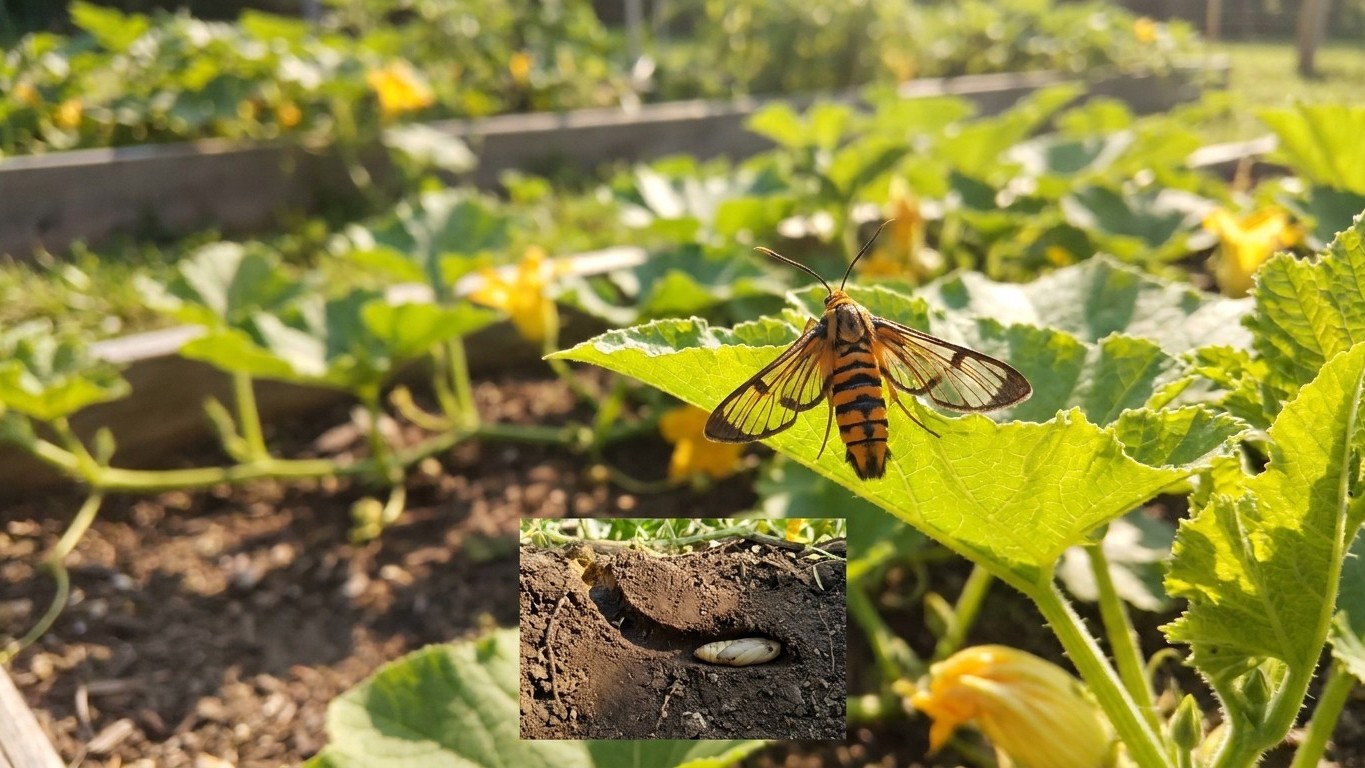

Squash vine borer moths typically start flying in Missouri between mid-June and early July, with the heaviest egg-laying pressure hitting home gardens by the Fourth of July. Once a larva tunnels into a stem, no spray on earth saves that plant. The real fight happens before the caterpillar ever gets inside, and that window is narrower than most gardeners think.
Missouri stretches from the Bootheel’s near-subtropical summers to the cooler ridges along the Iowa border, and that geography matters more than most pest guides admit. A gardener in Cape Girardeau and one in Kirksville are not dealing with the same insect calendar.
The weeks to watch

The adult moth, Melittia cucurbitae, is a day-flying insect that looks more like a wasp than a moth, with an orange-and-black abdomen and clear-tipped forewings. It overwinters as a pupa in the soil, usually just an inch or two below the surface, and emerges when soil temperatures climb into the 60s Fahrenheit for a sustained stretch. In southern Missouri counties like Butler or Dunklin, that threshold often arrives by late May. Farther north, around Chillicothe or Kirksville, emergence tends to lag two to three weeks behind.
University of Missouri Extension entomologists have tracked a single generation per year across most of the state, though warmer southern counties occasionally see a partial second flight in August. That means the bulk of the damage happens in one concentrated window rather than trickling in all season. Gardeners who miss that window by even ten days can lose an entire planting of zucchini or yellow squash before they notice a single wilted leaf.
Why Timing Varies So Much Within One State
Soil temperature drives everything here, not the calendar. A cool, wet spring pushes emergence back regardless of the date on the seed packet. Raised beds and black plastic mulch warm faster than bare garden soil, which can actually pull moth activity earlier in a plot that heats up quickly. Gardeners who track soil temperature with a simple probe thermometer, checking at a two-inch depth, get a far more reliable warning than anyone relying on “it usually happens around the Fourth of July.”
How to Spot the Damage Before It’s Too Late
The first visible sign is almost never the borer itself. It’s a healthy-looking squash plant that wilts suddenly, often just one runner at a time, even when the soil is plenty moist. Growers who pull back the leaves near the base of the stem usually find a small hole packed with a sawdust-like frass, greenish-yellow and slightly moist, right at the point where the vine meets the ground.
Cut the stem open lengthwise near that hole and the culprit is unmistakable: a fat, white, wrinkled caterpillar up to an inch long, chewing through the vascular tissue that carries water to the rest of the plant. Summer squash and zucchini take the worst hits because their thick, hollow stems are easy tunneling targets. Butternut squash, with its solid stem, resists borer damage far better, which is why some Missouri gardeners quietly switch varieties after a bad year rather than fighting the insect head-on.
Adult moths themselves are visible for anyone paying attention during that late-June flight period. They hover low around the base of squash plants in the middle of the day, laying single reddish-brown eggs on stems near the soil line. Spotting even a handful of moths patrolling the garden is a signal to act within days, not weeks.
What Actually Stops Squash Vine Borer in Missouri Gardens
Prevention beats treatment by a wide margin with this pest, mostly because once the larva is inside the stem, insecticides sprayed on foliage never reach it. The strategies that hold up in Missouri conditions fall into a few categories, and combining two or three of them works far better than relying on any single fix.
Row Covers Timed to Local Emergence
Floating row covers placed over young plants before moths emerge physically block egg-laying. The catch is timing: covers need to go on before the local flight starts, which for southern Missouri means late May, and for the northern third of the state, mid-June. Covers must come off once flowers appear so pollinators can reach the blossoms, which creates a short but critical exposure window that some gardeners bridge with hand-pollination.
Staggered and Delayed Planting
Planting a second round of squash in early July, after the main moth flight has passed, often produces a healthy fall crop even in years when the spring planting gets hit hard. This works particularly well in central and northern Missouri, where the growing season still leaves enough warm weeks after the borer flight for squash to mature before frost.
Stem Wrapping and Soil Mounding
Wrapping the lower four to six inches of stem in aluminum foil or a strip of nylon stocking before moths appear prevents egg-laying at the vulnerable base of the plant. Mounding soil over stem nodes encourages secondary rooting, so if borers do get in higher up, the plant can still pull water through roots formed lower on the vine. This trick has kept plenty of home gardens producing even after visible borer damage appeared.
Beneficial Nematodes and Targeted Insecticide Timing
Applying beneficial nematodes (species like Steinernema carpocapsae) to the soil around the stem base can attack larvae that have already entered, though results are inconsistent and depend heavily on soil moisture and temperature. For gardeners who prefer a chemical approach, a targeted application of an insecticide labeled for vine borer, applied directly to the stem base every seven to ten days during the local flight window identified by soil temperature and moth sightings, interrupts newly hatched larvae before they tunnel in. Spraying the whole plant canopy wastes product and misses the target entirely, since the eggs and young larvae are concentrated at the stem base, not on the leaves.
Surgical Removal
Gardeners who catch an infested stem early can slit it lengthwise with a sharp knife, remove the larva by hand, then mound moist soil over the wound to encourage the stem to heal and re-root. It sounds drastic, but it’s one of the few rescue options once damage is already visible, and it works often enough to be worth the ten minutes it takes.
Variety Choice and Garden Layout Make a Difference
Not every squash is equally vulnerable. Hubbard and blue Hubbard squash act almost like trap crops, drawing moths away from other plantings, which some Missouri growers use deliberately by planting a few Hubbard vines at the garden’s edge and monitoring them closely for the first signs of egg-laying. Butternut, moschata-type squashes generally show real resistance thanks to their solid stems, making them a lower-risk choice for anyone who has lost crops to borers in previous seasons.
Crop rotation matters too, though less than gardeners often assume, since the adult moth is a strong flier capable of covering considerable distance to find host plants. Rotating squash to a different bed each year helps marginally with soil-borne pupae but won’t stop a determined moth from finding new plants across the yard.
A Note on Regional Extension Resources
The University of Missouri Extension service publishes region-specific pest alerts and degree-day tracking tools that home gardeners can use to fine-tune the timing described here rather than relying on a single statewide date. Local county extension offices, from the Bootheel up through the northern counties, often adjust their squash-planting and row-cover recommendations based on that season’s actual soil temperature data, which tends to be far more accurate than any fixed calendar date passed around online gardening forums.
One detail that surprises a lot of first-time squash growers: a single female moth can lay upward of 150 to 200 eggs over her short adult life, scattering them individually across multiple plants rather than in clusters. That’s why a garden can go from a handful of moths spotted one week to widespread wilting the next, and why acting on the first sighting, rather than waiting for visible damage, is the difference between a full harvest and a lost planting.
Related guides
- Squash vine borer in Iowa: When It Shows Up and What Stops It
- Squash vine borer in Illinois: When It Shows Up and What Stops It
- Squash vine borer in Nebraska: When It Shows Up and What Stops It
- Squash vine borer in New Brunswick: When It Shows Up and What Stops It
- Squash vine borer in Maryland: When It Shows Up and What Stops It
- Squash vine borer in Alabama: When It Shows Up and What Stops It