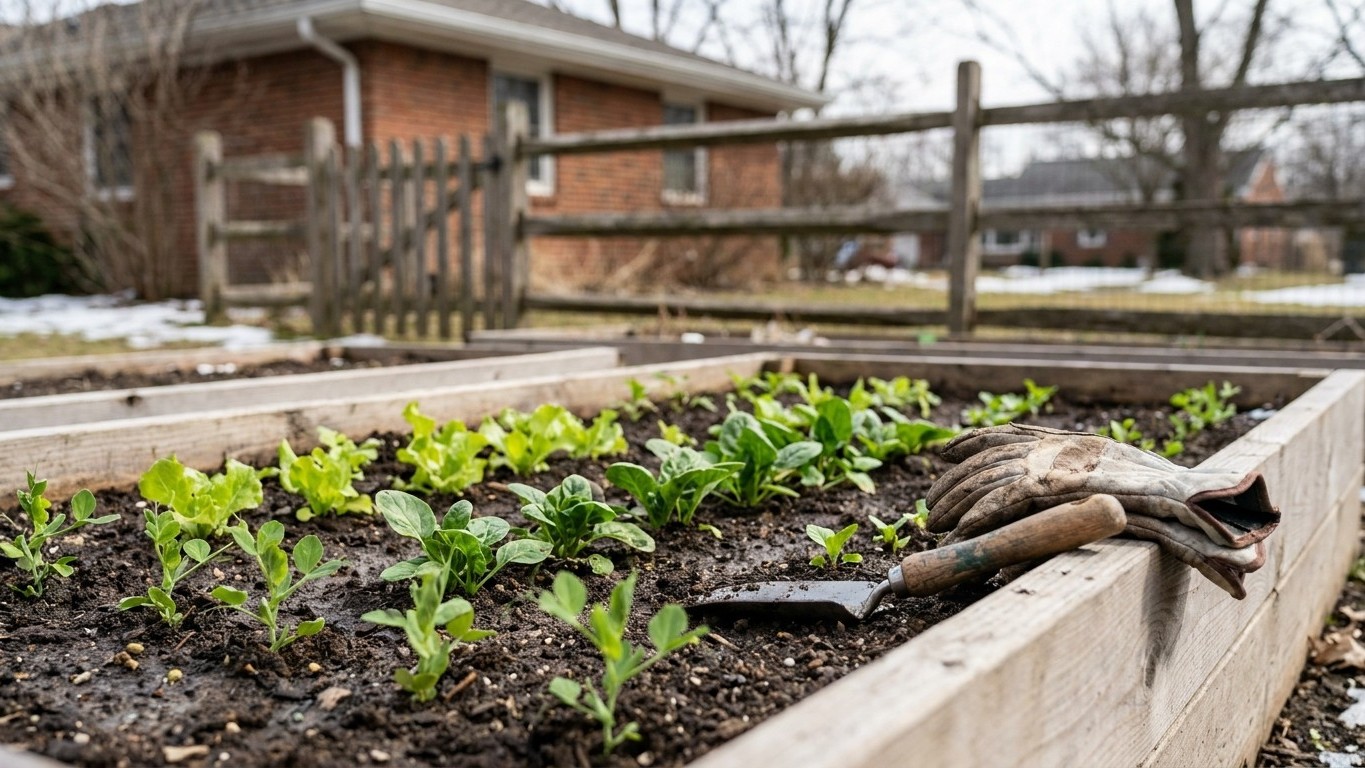

March in Missouri sits in a narrow window: too early for tomatoes and peppers, but wide open for peas, onions, potatoes, and every leafy green that shrugs off a light freeze. The state’s last spring frost falls between April 6 and April 20, so the whole month is a cold-hardy planting stretch, not a dead zone and not a free-for-all.
What goes in the ground in March

The calendar says March, but the soil doesn’t care what the calendar says. What matters is soil temperature and how many weeks stand between today and the last frost window of April 6 to April 20 (measured at the Kansas City area station, USW00003947). Early March can sit six or seven weeks out from that window; late March narrows to two or three. That gap decides what’s safe to plant, not the date on the seed packet.
Peas top the list. They germinate in soil as cool as 40°F and actually prefer a slow, cold start over a rushed warm one. Push them into the ground as soon as the soil can be worked, ideally by mid-March in most of the state. Onion sets and onion transplants go in the same window, right alongside seed potatoes, which tolerate a light frost on their early shoots without much damage.
Spinach, lettuce, arugula, and mustard greens can all be direct-sown through March. These crops germinate in cold soil and hold up fine against a frost that would wipe out anything tender. Brassica transplants (cabbage, broccoli, kale) started indoors earlier in the season can go out toward the end of the month if they’ve been hardened off, especially with a floating row cover on hand for the coldest nights.
Garlic planted in fall is already up and growing; shallots can still go in if the ground is workable and hasn’t turned to mud. For gardeners in the far north of the state, where frost lingers longer, holding brassica transplants back a week or two and leaning on a cold frame is the safer play. In the southern counties, where the season runs milder, all of the above can shift earlier by a week or so without much risk.
What to start under cover
Seed-starting math works backward from the last frost window, not forward from the day you feel like planting. With frost expected to clear between April 6 and April 20, tomatoes started indoors six to eight weeks before transplant land in mid-to-late March as the sowing point, since they won’t go outside until well after that frost window closes, typically several weeks later once nights stay reliably above 50°F.
Peppers and eggplant run slower and need eight to ten weeks indoors before they’re transplant-ready, which pushes their sowing date to early March for anyone hoping to set them out in late May. Broccoli, cabbage, and other brassicas need less lead time, around six weeks, and since they tolerate a fair amount of cold, they can be started indoors in early March and moved outside near the tail end of the month or into April.
Two mistakes show up every year. The first is starting too early: seedlings sit under grow lights for weeks past their ideal transplant size, get leggy, and end up rootbound in a cell pack, stunting them before they ever touch soil. The second is starting too late: gardeners realize in April that peppers needed ten weeks, not four, and end up buying started plants at the garden center instead. Counting backward from the actual frost window, rather than a fixed date, avoids both.
What is ready to pick
March harvests are thin, but not empty. Kale, collards, and leeks that overwintered in the garden, especially under a layer of mulch or row cover, often taste better after a winter’s exposure to cold, since the frost converts starches to sugars. Anyone who left these in the ground has a real harvest waiting, even if it looks unglamorous against a March landscape.
Cold frames extend that further. Spinach, mache, and lettuce tucked under glass or plastic through winter often resume growth as soon as daytime temperatures climb, giving a small but steady supply of greens weeks before the open garden produces anything. Indoors, sprouts and microgreens fill the gap entirely: a tray of pea shoots or radish microgreens is ready to cut within one to two weeks of sowing, regardless of what’s happening outside.
Stored crops need checking now more than ever. Potatoes, winter squash, and onions held since fall are at their highest risk of turning as the season wears on. Squash with a soft spot near the stem, potatoes that have started sprouting eyes, or onions gone soft at the neck should get pulled and used first, before they take neighboring produce down with them. A quick pass through the root cellar or pantry shelf once a week catches these before they spread.
The jobs that matter this month
March is a working month, and the list is long enough to fill every free weekend. Dormant pruning of fruit trees and brambles tops it: apples, pears, and berry canes should get cut back before buds break, since pruning after growth starts wastes the plant’s stored energy and invites disease into fresh wounds. Wait too long and the window closes for another year.
Soil testing pays off now while beds are still empty. A basic test through the University of Missouri Extension flags pH and nutrient gaps early enough to amend before spring planting, rather than guessing later and correcting mid-season. Turning the compost pile at the same time speeds up decomposition as the weather warms, so it’s ready to spread by the time transplants go in.
Seed ordering has a real deadline too, even if it doesn’t feel like one. Popular varieties, especially disease-resistant tomatoes and heirloom peppers, sell out at seed companies by early spring most years. Ordering in March, rather than waiting for a warm day to remind you, is the difference between growing the variety you wanted and settling for whatever’s left.
Beyond that: sharpen and oil pruners and hoes before the season’s heavy use dulls them further, patch fencing and raised bed corners while the garden is still easy to walk through, and start pest scouting as soil warms and overwintering insects begin to stir. Aphids and flea beetles show up early on brassica transplants; catching them in March, before populations build, beats fighting an infestation in May.
What not to do in March
The most common mistake is planting warm-season crops because a stretch of 70-degree days made the air feel like spring. Tomato and pepper seed dropped into soil that’s still in the 50s simply rots before it germinates, and transplants set out too early sit stunted, waiting for warmth that hasn’t arrived. Soil temperature, not air temperature, is the number that matters, and it lags behind a warm spell by days.
A related error: pulling row covers and mulch off hardy crops after a few mild days, then getting caught when a cold snap rolls back through before the last frost window closes on April 6 to April 20. Missouri’s spring weather swings hard between warm and cold in March, and uncovering too soon undoes weeks of protection in a single night.
Nitrogen timing trips people up too. Feeding a heavy dose of nitrogen fertilizer to overwintered greens or newly planted transplants in early March pushes soft, fast growth that’s more vulnerable to a late frost, rather than the slower, hardier growth the plant would produce on its own. Save the nitrogen push for after the frost risk has passed and plants are actively growing into warmer weather. Working wet soil is the last trap: stepping into a bed while it’s still saturated compacts it for the whole season, so wait until a handful of soil crumbles instead of clumping before digging in.
Checking this against your own county
A state-wide frost window is a starting point, not a set of instructions for a specific backyard. Missouri’s hardiness zones run from 5b to 7b, and that range alone covers a real difference in growing conditions between the state’s north and south. Elevation, local microclimates, and distance from the Kansas City reference station all shift the safe planting date by a week or two in either direction. The station itself sits north of the city, and Missouri’s southern counties run milder still.
The University of Missouri Extension (extension.missouri.edu) publishes county-level guidance and a state planting calendar that accounts for these local differences far better than any single statewide date can. Cross-checking against that resource, especially before committing tender transplants to the ground, is worth the five minutes it takes.
Common questions
Can I plant tomatoes outdoors in Missouri in March?
No. Tomatoes are a warm-season crop and go outside only after the last frost window of April 6 to April 20 has passed, and typically not until nights stay reliably above 50°F, which runs later still. March is the month to start tomato seed indoors, not to transplant it outside.
What vegetables can handle a frost in March?
Peas, spinach, lettuce, kale, onions, and potatoes all tolerate a light frost without serious damage. These are the safe direct-sow and transplant choices for March, well ahead of the frost-free date.
Is it too early to start seeds indoors in March?
For tomatoes and peppers, March is close to the right window when counted backward from the April frost dates and the six-to-ten-week lead time these crops need. Starting much earlier risks leggy, rootbound seedlings by transplant time.
Should I prune fruit trees in March?
Yes, as long as it happens before buds break. Dormant pruning done in March, ahead of new growth, is the standard window for apples, pears, and berry canes across Missouri.