
Short answer: statewide, January is not a month for open-ground planting in Montana. Frozen soil and USDA zones ranging from 3a to 6a rule out direct sowing almost everywhere. But the month still has real, deadline-driven work: dormant pruning, seed ordering, indoor starts for the slowest crops, and checking on what’s already stored or overwintering.
What goes in the ground in January

The soil decides this, not the calendar. In Montana, January soil is frozen solid across nearly the entire state, from the Billings valley (USDA Zone reference point, hardiness 3a-6a statewide per the USDA Plant Hardiness Zone Map) up into the mountain valleys where frost can arrive in any month at all. With the first fall frost landing between October 1 and October 14 around Billings and the ground staying locked up well past that, there is no honest scenario where seeds or transplants go into open Montana dirt this month. Anyone telling you otherwise is selling a calendar trick, not a growing method.
That does not mean the garden is closed. Garlic and shallots that missed their fall window because the ground was still workable in a mild pocket can occasionally still go in, but only where soil has not yet locked up, which by January is rare outside of a handful of low-elevation, south-facing spots. For most growers, that window closed with the October frost.
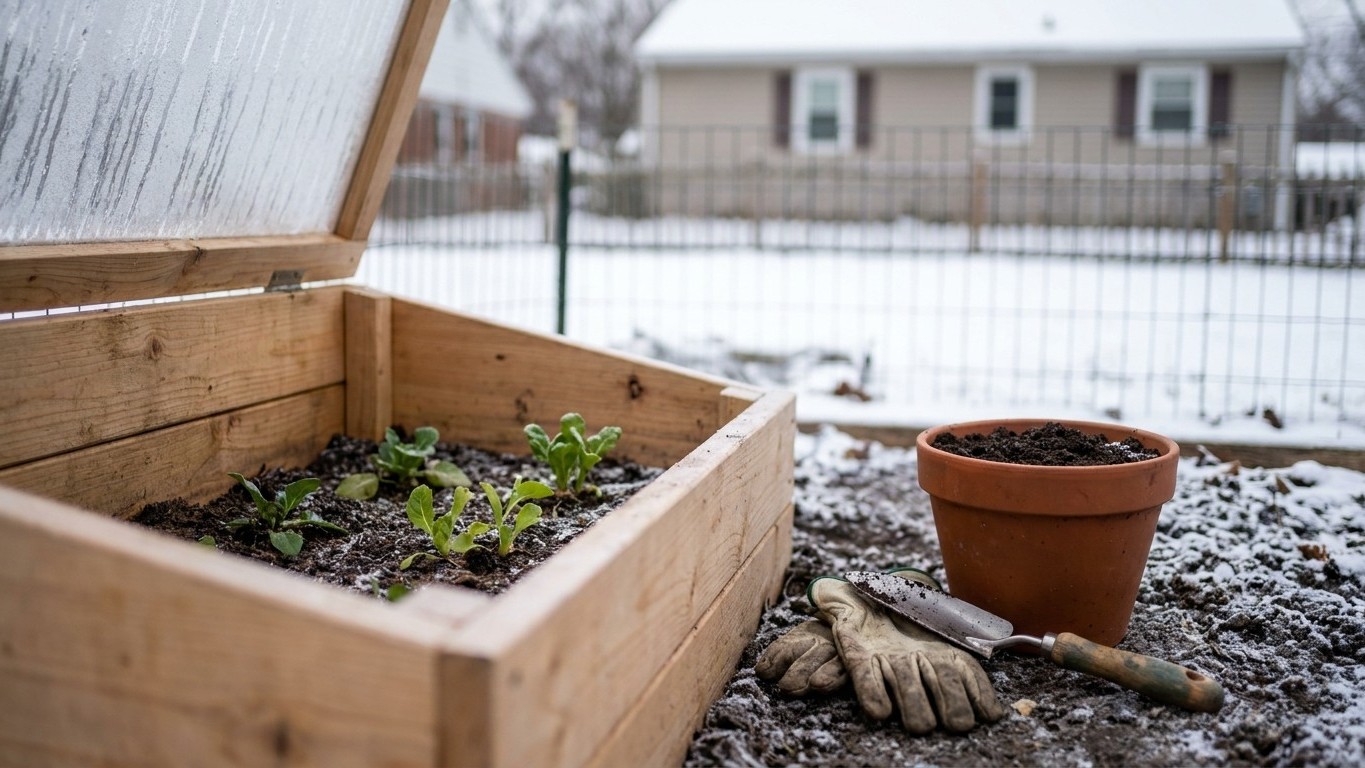
What actually works this month sits under cover or under glass. A cold frame or low tunnel set up in fall can keep hardy greens, spinach, and mache alive and even slowly growing through January’s short daylight, especially with a foot of snow acting as insulation rather than a threat. Bare-root fruit trees, roses, and cane fruits can be planted the moment the ground thaws enough to dig a hole, but in most of Montana that moment does not arrive until spring; in January, bare-root stock should be held in cool, moist storage, not planted.
One genuinely productive January move: forcing. Dig a rhubarb crown or a chicory root, bring it into a dark, cool basement or garage, and you can coax rhubarb stalks or Belgian endive within a few weeks, entirely indoors, with none of the frost risk that rules out everything else this month.
What to start under cover
This is where January earns its keep. The math runs backward from the last spring frost, which falls between April 29 and May 10 around Billings, one of the milder valleys in the state. Onions, leeks, and celery need 10 to 12 weeks of indoor growth before they go outside, which puts their ideal start in mid-February for that reference location. Peppers and eggplant need roughly 8 to 10 weeks plus a slow, warm germination period, which also points to February in the Billings area.
January comes into play for gardeners at higher elevation or further north, where the last frost lands weeks later than the Billings range. If your local frost window runs into late May or June, rather than late April, you push every one of those start dates earlier by the same number of weeks, which lands onion and leek seeding squarely in January instead of February. This is exactly why the brief insists on doing the arithmetic yourself, using your own last-frost estimate, rather than trusting a single statewide date.
The two ways this goes wrong are mirror images of each other. Start too early, working off a fixed date instead of your actual frost window, and you end up with tall, rootbound seedlings by the time it’s safe to plant, weak stems and stalled growth that never fully recover. Start too late, especially for slow crops like onions and celery, and you run out of growing season before the plant reaches transplant size. A seed-starting calendar built on your own county’s frost range, not a generic one, is the only way to hit that window reliably.
What is ready to pick
Outdoors, the honest answer for January in Montana is close to nothing. No fresh harvest is coming out of open ground anywhere in the state this month. What keeps a household fed from the garden in January comes from three sources: what was tucked away before the ground froze, what’s growing under cover, and what’s sprouting on a windowsill.
Kale and leeks left in the ground under heavy mulch or snow cover can still be dug in a mild spell, and both actually sweeten after hard frost, so a January leek pulled from under snow often tastes better than the same leek in October. Cold frames holding spinach or mache from a fall planting can yield small, steady pickings all month, as long as the frame stays closed against the worst of the cold. Indoors, sprouts and microgreens are the fastest fresh food a Montana garden produces this time of year, ready in one to two weeks from a jar or a tray on a sunny sill.
The other job this month is triage on what’s already in storage. Squash should feel firm and heavy for its size; any softening at the stem end or a sour smell means it’s turning and should be used immediately, not left to spread rot to the rest of the bin. Potatoes that have gone green or started sprouting eyes should be pulled and used or composted. Onions with soft necks or a moldy smell at the top are done. A five-minute check of the root cellar or basement bins now saves an entire crate from turning later.
The jobs that matter this month
January carries more real work than its reputation suggests, and most of it has a hard deadline attached.
Pruning and dormant care
Dormant pruning of fruit trees, currants, and raspberry canes should happen while the plant is fully asleep and the structure is visible without leaves in the way. Cutting now, rather than waiting for a warm spell that tempts growth, avoids opening fresh wounds right before a hard freeze and gives the plant a clean structure to grow from once spring arrives.
Ordering and planning
Seed catalogs move fast, and the popular short-season varieties bred for Montana’s compressed growing window sell out earliest. Ordering in January, rather than waiting until the ground thaws, is the difference between getting the variety you actually want and settling for whatever’s left. This is also the month to sketch next season’s rotation on paper, particularly for anyone who had disease pressure or poor yields the season before; deciding where tomatoes and brassicas go before the soil is workable means no scrambling later.
Soil, compost, and tools
A soil test sent off now comes back with results in time to order the right amendments before spring planting, rather than guessing. Compost piles still benefit from an occasional turn even in freezing weather, since it keeps the pile from going anaerobic and slows the loss of nitrogen. And tools cleaned and sharpened now, rather than in the rush of April, are ready the day the ground finally opens up. Checking stored crops, repairing a fence panel a deer knocked loose, or patching a raised bed corner rounds out a month that has no shortage of real tasks, just none of them involve a seed going into open dirt.
What not to do in January
The classic January mistake in Montana is reading a mild stretch of weather as a green light. A few days in the 40s in a January thaw do not mean the soil has warmed or that frost risk has passed; the ground several inches down is often still frozen even when the air feels almost spring-like, and any warm-season seedling moved outside on that basis will be dead within days once temperatures snap back, which they reliably do.
A related error is pulling row cover or mulch off overwintering crops the moment a warm spell hits, exposing kale, garlic, or perennial roots to the next hard freeze with no protection left. Mulch and cover should stay put until the frost pattern has genuinely turned, not until one comfortable afternoon.
Fertilizing is the third trap. Feeding nitrogen to dormant perennials or overwintering crops in January pushes soft, tender new growth at the exact moment a hard freeze is most likely to hit, and that new growth is the tissue most easily killed. Established garlic, perennial herbs, and dormant fruit trees need nothing from a fertilizer bag until active growth resumes in spring; feeding now does more harm than good.
Checking this against your own county
Everything above is a starting point built around Billings, one of Montana’s milder valleys, not a fixed instruction for the whole state. Elevation alone can shift a frost window by weeks, and a mountain valley just an hour from a mild river bottom can see frost in any month of the year. Before acting on any date in this article, check it against your own county through the Montana State University Extension, which tracks local conditions and planting guidance specific to your part of the state.
Common questions
Can I plant anything outdoors in Montana in January?
No. Statewide, soil is frozen and open-ground planting isn’t viable. The exceptions are cold frames, low tunnels, and forcing crops like rhubarb or chicory indoors.
When should I start onions and leeks indoors for a Montana garden?
Count back 10 to 12 weeks from your local last frost. Around Billings, where the last frost falls between April 29 and May 10, that lands in mid-February. Colder, higher-elevation counties with a later last frost should start earlier, potentially in January.
Is it too early to prune fruit trees in January?
No, it’s close to ideal. Dormant pruning while the tree is fully asleep, before any sign of bud swell, gives clean cuts time to heal before spring growth begins.
Why does my Montana hardiness zone matter for planting dates?
The USDA Plant Hardiness Zone Map places Montana between 3a and 6a based on average extreme minimum temperature. That range means a garden in one part of the state can be weeks behind or ahead of another, so treat any single planting date as a reference, not a rule, for your specific location.