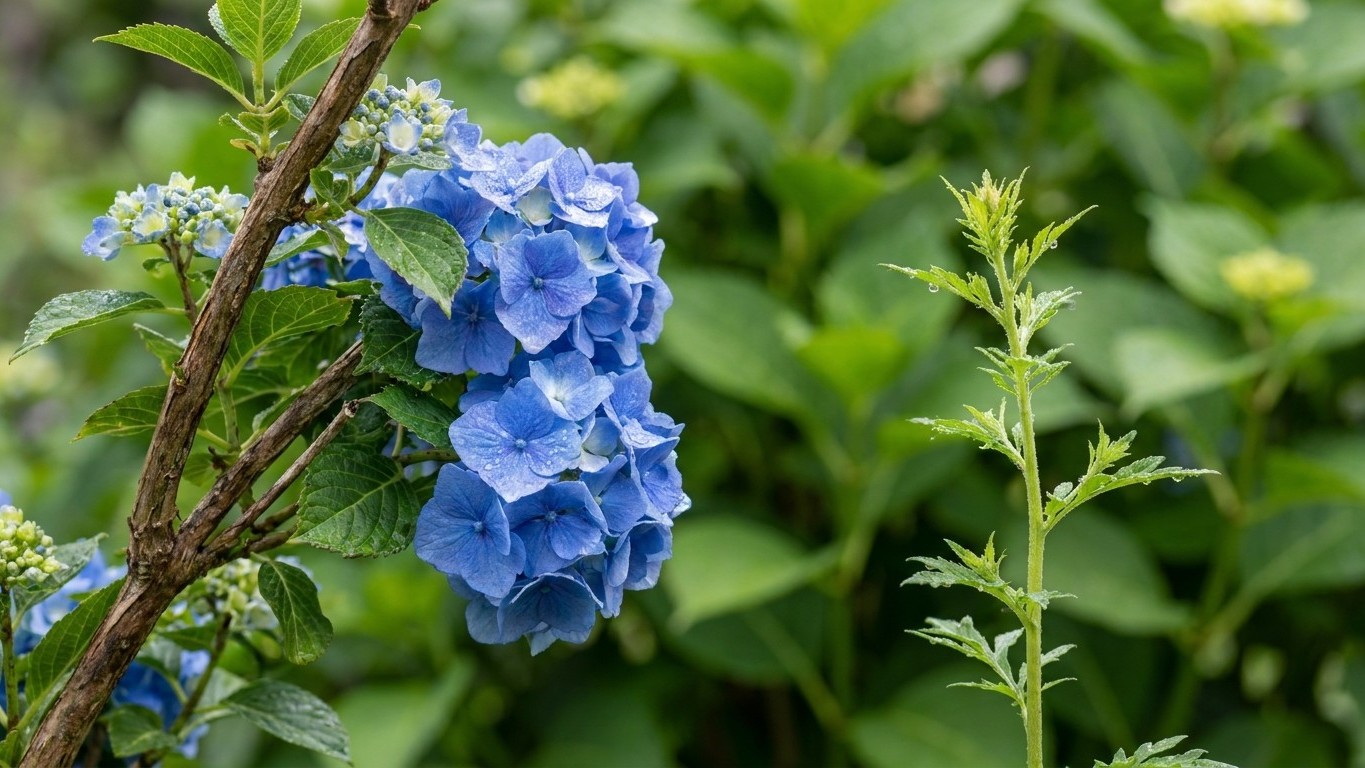

Smooth hydrangeas (Hydrangea arborescens) and panicle hydrangeas (Hydrangea paniculata) are the two kinds that reliably live through a Montana winter and still flower. Bigleaf hydrangeas, the blue and pink mopheads sold every spring, survive in sheltered spots but often lose their flower buds. Oakleaf types are a gamble across most of the state. Choose from the first two groups and a hard winter becomes an inconvenience rather than a loss.
What this comes down to in Montana

Smooth and panicle hydrangeas survive a Montana winter, while bigleaf and oakleaf types survive only in sheltered spots and often skip blooming. Billings, one of the milder valleys, typically has its last spring frost in the first half of May and its first fall frost between late September and early October (published averages vary by source), and the USDA hardiness zone system, which rests on the average annual extreme minimum temperature, runs from 3a to 6b across the state.
That short season is why the kind of wood matters more than the zone number on the tag. Smooth and panicle hydrangeas flower on the current year’s growth, so a January cold snap that kills the stems back to the snow line costs them a few weeks, not a summer of bloom. Bigleaf and oakleaf hydrangeas form their buds the previous summer. If those buds freeze, there is nothing to open in July.
The cultivars below run from the most winter-proof to the least, so you can see where the line falls for your own garden. Catalog hardiness ratings come from the nurseries that sell the plants. None of these is an official state recommendation.
Annabelle
The classic smooth hydrangea, rated hardy to zone 3 in catalogs. It dies to the ground in a hard winter and comes back to produce big white blooms on new stems. The heavy heads flop after a rainstorm, which is its main weakness.
Incrediball
An Annabelle relative with the same zone 3 rating and the same habit of blooming on new growth. Its stems are stiffer, so the white flower heads stay upright. It suits windy sites on the eastern plains better than its parent.
Limelight
A panicle hydrangea rated for zone 3, with lime-green cones that age to pink as nights cool. The wood is tough and the buds form on new growth, so it flowers after most winters. It wants full sun, and an early October freeze ends its display.
Bobo
A dwarf panicle that stays around 3 feet tall. Its compact size means winter snow can cover most of it, which is free insulation. It fits small beds and foundation plantings, and it blooms on new wood like its larger cousins.
Quick Fire
A panicle that starts blooming earlier than most others, with white flowers that turn pink and then deep red. Early bloom counts where fall frost can arrive in late September or early October. Catalogs rate it hardy in the colder zones too, which makes it a good pick for short-season gardens.
Endless Summer
A bigleaf hydrangea rated for zone 4 and sold as a rebloomer. In a milder valley with reliable snow cover it can flower. In colder spots it dies back and its new-growth blooms open late, sometimes after the first freeze has already arrived. Treat it as an experiment, not a staple.
Working it out for your own garden
A list of cultivars goes stale the first time you move or a winter runs colder than normal. The method below holds up in any year and takes about ten minutes.
How do you match a hydrangea to your hardiness zone?
Look up your address on the USDA Plant Hardiness Zone Map. Then buy a plant rated for a zone at least one step colder than yours. The map averages the coldest night of each year, so half of all winters dip below the number printed for your spot. A shrub rated only to your zone will be at its limit every other year.
Next, check where the plant carries its flower buds. This table sorts the four common types.
| Type | Flowers on | What a hard Montana winter does |
|---|---|---|
| Smooth (Annabelle, Incrediball) | New growth | Kills stems to the ground; blooms still come |
| Panicle (Limelight, Bobo, Quick Fire) | New growth | May nip branch tips; blooms still come |
| Bigleaf (Endless Summer) | Old and new growth | Often kills old buds; new-growth blooms are late |
| Oakleaf | Old growth | Buds often freeze; little or no bloom |
Last, test the plant against the frost window. Take Limelight in Billings. It leafs out after the last spring frost, builds its flower buds on that new growth, and opens its cones by midsummer. That is months ahead of the first fall frost, which typically arrives between late September and early October, so it finishes comfortably. Now try Endless Summer in the same yard. If the old buds die, the plant depends on blooms from new growth, and those open late in the season. An early October freeze can get there first, so it falls on the wrong side of the line.
What changes across the state
Montana is not one climate. The Billings numbers describe a mild river valley on the eastern side of the Rockies, and gardens elsewhere in the state can be well outside them. The USDA range of 3a to 6b covers a lot of ground, and that spread is mostly about elevation and landscape.
How much does elevation matter?
A great deal. Every step up in elevation shortens the growing season and lowers the coldest nights. In high mountain valleys, frost can arrive in any month, so a plant that finishes its bloom in Billings may never finish in a higher town. Cold air also drains downhill and pools in low spots, so a garden on a bench above a valley floor can have gentler nights than one down on the flat. Put a hydrangea on the slope side of the yard, not in the frost pocket.
Does west versus east make a difference?
Yes, though the cause differs. West of the Continental Divide, mountain valleys are sheltered from the worst Arctic outbreaks, but the elevation of many towns keeps seasons short. East of the divide, open plains in the north and east take hard cold and drying wind with little snow to cover the crowns. The Rocky Mountain Front sees Chinook winds, which can push a mild afternoon in the middle of winter and then drop back into a freeze. Large lakes such as Flathead Lake soften the cold close to the shore, but the effect fades within a short distance.
In practice, the colder your corner, the more you should lean toward Annabelle, Incrediball and the panicles. Milder valleys can try a bigleaf, but they should still plan around the smooth and panicle types.
The mistakes this state punishes

Several common hydrangea losses here trace back to the swings between warm and cold that Montana weather delivers.
What happens when a warm spell wakes the plant too early?
A mild week in April can push soft new growth out of a hydrangea, and the next frost blackens it. Smooth and panicle types recover and send up new shoots. Bigleaf types may lose the buds they were counting on. Hold off planting and uncovering until the last spring frost has typically passed, which in Billings means mid-May or later. Keep a bedsheet or an old bucket handy for the odd night that drops below freezing after the shrub has leafed out.
The second mistake is buying a bigleaf because the tag shows a gorgeous blue mophead. A zone 4 tag on a plant that flowers on old wood does not mean it blooms after a zone 4 winter. For a cold garden, buy the smooth or panicle type and enjoy a plant that blooms reliably.
The third is feeding late. Nitrogen in August pushes soft growth that will not harden before the first fall frost, which can come in late September or early October. Stop fertilizing by midsummer and let the stems firm up.
The fourth is bare winter crowns in open, windy sites. Mulch the base after the ground begins to freeze, and read Protecting Hydrangeas Through a Montana Winter before the first hard freeze.
Checking this against your county
The Billings dates are a starting point for a hydrangea plan, not an instruction for every yard in the state. Your county office of Montana State University Extension can tell you how your local frost dates compare, which cultivars have done well nearby, and whether your site sits in a cold pocket. For soil, planting and watering details, see growing hydrangeas in Montana.
Common questions
Will Annabelle die back to the ground in a Montana winter?
It often does after a hard winter, and that is normal. New stems grow from the base and bloom the same summer, so the die-back costs you height, not flowers.
Can I grow a blue bigleaf hydrangea in Montana?
You can, but expect uneven results. In a mild valley with snow cover and a sheltered spot it may bloom. In colder places its old-wood buds often freeze, and the new-growth blooms of a rebloomer such as Endless Summer can open too late.
Why did my hydrangea leaf out and then turn black?
A late frost caught the new growth after a warm spell. Leave the damaged leaves alone for a couple of weeks. If the plant is a smooth or panicle type, it will usually push new shoots from lower buds.
Which hydrangea is the hardiest choice for a cold Montana garden?
Annabelle and Incrediball are the safest. Limelight and Quick Fire are the next step for a plant with longer-lasting color. All four flower on new growth, which is why a harsh winter rarely wipes out their bloom.