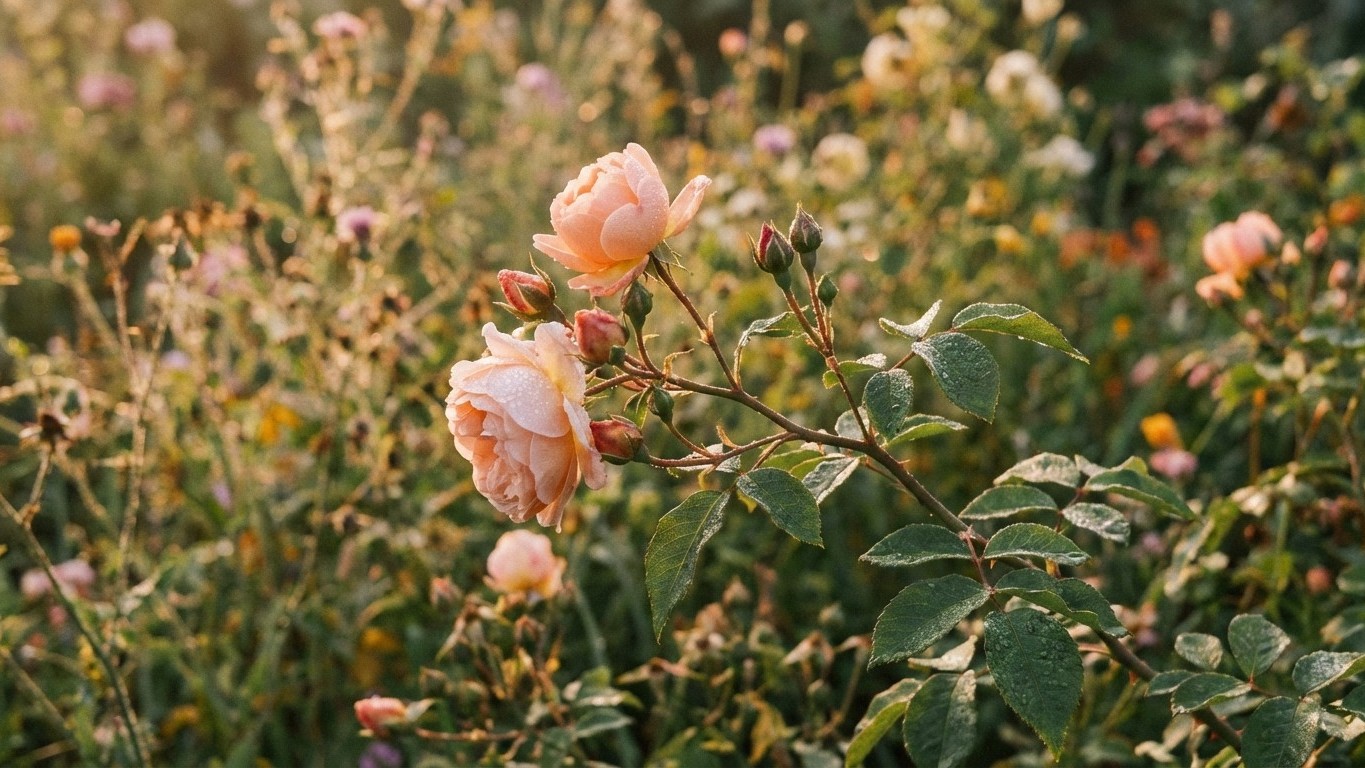

Rugosas, Canadian Explorer and Parkland roses, and a handful of tough own-root shrub roses hold up across most of Montana. Hybrid teas, floribundas, tree roses and many English roses are the ones that struggle. The state runs from USDA zone 3a to 6b, so the right rose depends on your valley more than on the state as a whole. What follows covers the types that clear the cold, named roses worth buying, shelf stock to skip or baby, and what to read on the tag.
Which roses survive a Montana winter
The USDA Plant Hardiness Zone Map puts Montana at 3a to 6b. That system rests on a single measure, the average yearly lowest temperature. It says nothing about wind, snow cover, or a January thaw followed by a hard refreeze, and those kill plenty of roses here too. A rose rated for your zone can still lose canes in a winter with bare ground and a cold snap. The same rose under deep snow comes through fine.
Do rugosas and Explorer roses survive the coldest zones?
Yes. Rugosas are tough roses, and they are usually grown on their own roots, which matters in this climate. They handle zone 3 and colder with little or no dieback. The Explorer series, bred in Canada for cold winters, sits right beside them. Many Explorer roses are rated to zone 3, and the Parkland series from the same Canadian breeding work is built for the same conditions. Native wild roses, such as Woods’ rose, are hardy to similar cold and bloom once in early summer.
Can hybrid teas grow in Montana?
They can, with work. Hybrid teas were bred for repeat bloom in mild climates and are generally rated for zone 5 or 6. In zones 3 and 4, a hybrid tea needs help every winter, and in the colder valleys it may die to the ground even with that help. At the warm end of the range, a sheltered spot in a milder valley gives them a fair chance. Even there, they are a bigger commitment than a rugosa. The full routine is in Protecting Roses Through a Montana Winter.
How much does the frost calendar matter?
Billings is the reference city, and it is one of the milder valleys. NOAA’s 1991-2020 climate normals put the typical last spring frost around mid-May and the first fall frost in late September. Those are averages, since a given year can land on either side. Mountain valleys elsewhere in Montana can frost in any month.
For roses, the practical effect is simple. A late frost burns new shoots that have already leafed out. An early frost catches soft growth that has not hardened. Rugosas and Explorer roses slow down on their own as fall comes. Tender types keep pushing growth into October and pay for it. For general care once you have chosen, see growing roses in Montana.
Named roses that hold up here
Names beat generalities when you are standing in a nursery aisle, so here are roses with a long record in cold country.
Which roses are hardiest?
Hansa is a rugosa with double, deep magenta flowers, a strong clove scent and large orange-red hips in fall. It is a rugosa rose, so once established it generally survives the coldest parts of the state without cover. Therese Bugnet is a rugosa hybrid bred in Alberta. It grows tall and upright with reddish canes and pale pink flowers, and it is a rugosa rose like Hansa. Both bloom heavily in early summer, then more lightly after that. Neither asks for a spray schedule.
William Baffin is an Explorer climber with deep pink flowers. John Cabot, another Explorer climber, is rated about the same. Both will cover a fence or trellis in cold valleys where a standard climber would not live. Morden Blush, from the Parkland series, is a compact pink shrub rose that suits smaller beds.
Which ones need a little help?
Knock Out is a widely sold shrub rose. In colder spots it dies back hard, sometimes to the base, then regrows and blooms later in the season. It is a good choice in the milder valleys. In zone 3 it is a gamble. Because it usually sells on its own roots, it regrows true to name rather than reverting to a wild rootstock.
New Dawn is a pale pink climber that people love for its vigor and fragrance. It is a climbing rose, which puts it at the edge across much of Montana. In zone 4 and colder, its canes will often die back to the snow line, and a climber that dies back every winter never reaches the top of a trellis. If you want that look in a colder valley, William Baffin gives you a similar sweep of flowers with much less risk.
A rule of thumb helps here. If a rose is rated one zone colder than your own, it generally comes through. If it is rated for your zone exactly, it usually survives but may lose some cane tips. If it is rated warmer, plan on losses.
Sold here, but not for this zone
Garden centers and big-box stores buy nationally. The shelves in spring carry roses bred and rated for climates where winter low temperatures stay well above Montana’s. The tag often shows a range such as “zones 5 to 9,” and a buyer in zone 3 or 4 may not stop to read it.
Hybrid teas are a common offender. Classics like Peace and Mister Lincoln show up in nurseries across the country. Floribundas and grandifloras share the same weakness. Many English roses are sold as hardy, and in the colder valleys they often lose canes even when mulched.
Tree roses are a poor fit. A tree rose is a rose grafted onto a tall trunk, usually twice. The trunk stands above the snow line, the graft union sits at the top, and a cold winter freezes everything that matters. If you buy one, expect to lose the top growth every winter unless you dig it up and store it in a cold but not freezing space.
Miniature potted roses sold in late winter are another trap. Those plants were forced into bloom indoors. They are weak when they go outside and rarely recover well after a hard winter.
None of this means these roses are banned. A hybrid tea in a sheltered, milder valley, with proper cover, can do well. The point is to buy with the right expectation. If you do not want to bury canes or build a mulch mound each fall, pick from the hardy list in the section above.
What to check on the label before buying
Start with the grade if you are buying bare-root. The labels carry a grade number. No. 1 is the top grade, with the most and thickest canes, and it is worth paying for. A lower grade can survive in a mild climate. In a cold one, it has less reserve to rebuild after a hard winter.
Next, find out whether the rose is grafted or own-root. A grafted rose has a swollen knob near the base called the bud union, where the named rose was joined to a different rootstock. An own-root rose has no union and grows from its own roots. The tag or catalog listing should say “own root” or “grafted.” If it does not, look at the base of the plant.
Own-root matters more the colder it gets. When winter kills the canes of a grafted rose all the way down, new growth may come from below the union. That growth is the rootstock, which is a different and usually far less showy rose. An own-root rose that dies to the ground regrows as the same rose. In zones 3 and 4, where dieback is common, buy own-root whenever you have the choice.
Last, read the zone range on the tag. The first number is the coldest zone the breeder or grower will vouch for. If that number is higher than your own zone, treat the rose as marginal.
Checking this against your own county
Zone maps and frost ranges are a starting point, but a county’s elevation, wind and valley shape change the picture. Montana State University Extension serves all 56 counties through local offices, staffed by people who know what has survived locally. They can tell you your zone, how often roses winterkill at your elevation, and which cultivars neighbors have kept alive. Call or stop by your county Extension office before you buy anything marginal. The office can also point you to the diseases that show up in your area, which are covered in Rose Diseases in Montana: What the Climate Here Actually Brings.
Common questions
What USDA zone is Montana?
Montana ranges from zone 3a to 6b on the USDA Plant Hardiness Zone Map. That is a spread across the whole state, so use your own address rather than the range. Valleys at lower elevation sit toward the warmer end, and high mountain valleys sit at the cold end.
Is Knock Out hardy enough for Montana?
In the milder valleys, yes. It is commonly rated to zone 4 or 5 and often dies back and regrows. In zone 3 it is a risk. If you want something more certain in a cold valley, a rugosa such as Hansa is the safer pick.
Do rugosa roses need winter protection?
Generally no. Rugosas such as Hansa and Therese Bugnet come through most Montana winters without cover. Young plants in their first year are the one exception worth a bit of mulch.
Is an own-root rose worth the extra money?
In cold zones, yes. If frost kills the canes, an own-root rose regrows as the same variety, while a grafted one may come back as its rootstock. The difference shows up most in zones 3 and 4.