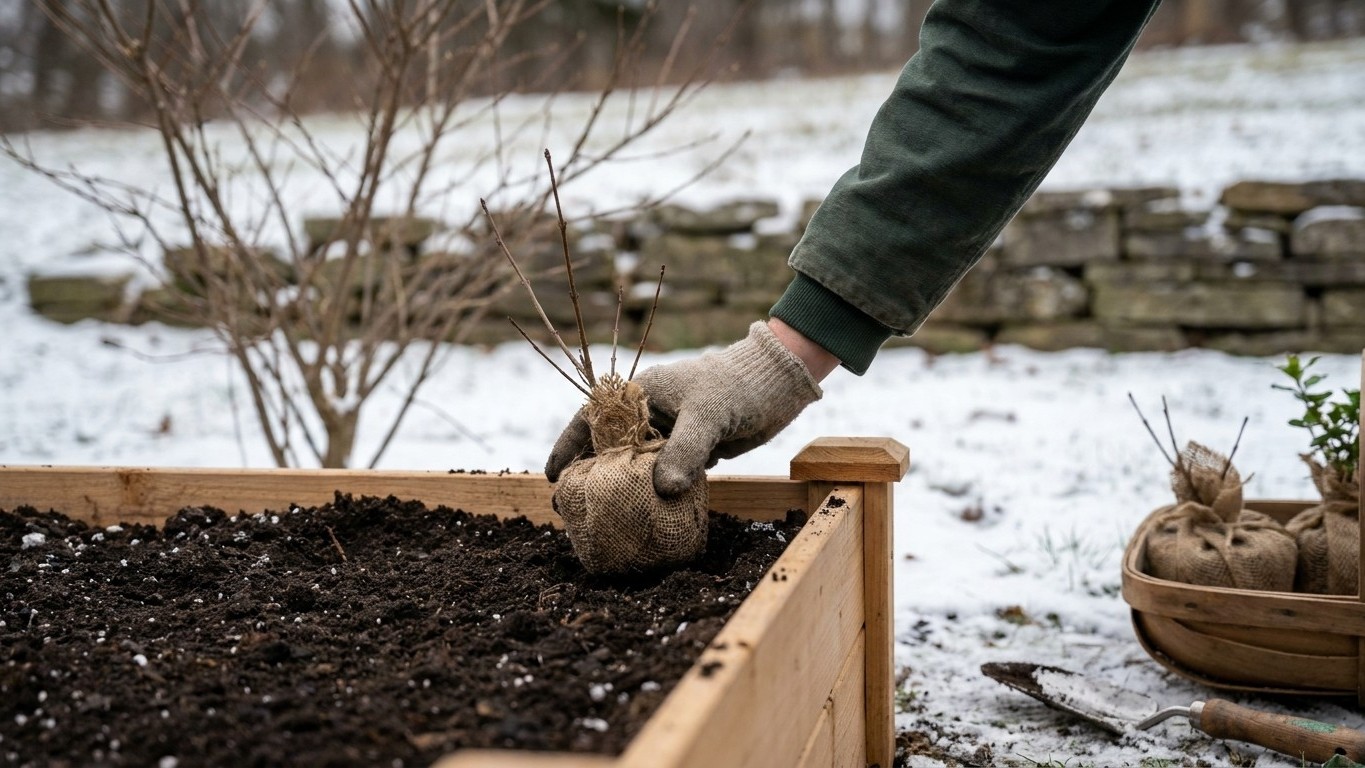

December in New Hampshire is not a planting month for open ground. The state sits in USDA Hardiness Zones 3b to 6a, and by December most soil is frozen or close to it. What actually goes in now is garlic and shallots if the ground is still workable, dormant bare-root stock, and anything started under cover or forced indoors from stored roots.
What goes in the ground in December

The decision here is never the calendar. It’s soil temperature and whether a shovel still goes into the dirt without a fight. New Hampshire’s first fall frost lands between October 13 and October 26 at the region’s reference weather station, and by the time December opens, several weeks of hard freezes have usually locked the ground solid across most of the state, especially in the north and at elevation.
For most New Hampshire gardens, the honest answer is that nothing new goes into open, unprotected ground this month. That’s not a failure of planning. It’s physics. Seeds and transplants need soil above a workable threshold to root, and frozen ground offers none of that.
What is still possible depends on timing and geography. In milder pockets of southern New Hampshire, or in a year when the ground hasn’t frozen hard yet, gardeners can still tuck in garlic cloves and shallot sets in early December, provided the soil is still soft enough to dig and mulch heavily right after. Anywhere the ground has already frozen, hold those bulbs for storage and plant them as soon as the soil thaws.
Cold frames and low tunnels change the equation. Hardy greens sown back in late summer or fall, things like spinach, mache, and claytonia, can keep producing under a frame through December if the cover is tight and snow load is managed. Bare-root fruit trees, shrubs, and canes can go in the ground only where soil remains workable, which is rare this late; most bare-root stock waits for spring delivery. And indoors, this is prime time for forcing: dig a few rhubarb crowns or chicory (witloof) roots, pot them in a dark, cool space, and force tender stalks or chicons without any outdoor soil involved at all.
What to start under cover
Seed starting math runs backward from the last spring frost window of April 16 to April 27, not forward from today’s date. Most vegetable transplants are started 6 to 10 weeks before that window, which points to late January or February for the bulk of tomatoes, peppers, and brassicas. December sits outside that range for nearly everything typical.
The exceptions are the slow growers. Onions from seed, leeks, and artichokes often need 10 to 16 weeks of indoor growth before they’re ready to go out, which pushes their start date into December or early January in a New Hampshire garden aiming for that April frost window. If a gardener wants full-size onion transplants by spring, December is a reasonable window to get seed trays going under lights.
There’s a second technique that fits this month perfectly: winter sowing. Many native perennials and some hardy vegetable seeds need a period of cold, damp stratification before they’ll germinate. Sealed containers of seed and moist soil, left outdoors through the cold months, do that stratification job naturally and sprout on their own once temperatures rise.
Two mistakes show up every year with cover-grown seedlings. Start too early, and by the time the ground is finally workable in spring, the plants are rootbound, leggy, and stressed from too many weeks in a small tray. Start too late, especially with onions and leeks, and the transplants never bulk up enough before the last frost window closes, leaving undersized plants for the whole season. December seed starting only makes sense for the crops that genuinely need that much lead time.
What is ready to pick
Outdoors, December harvests are thin across New Hampshire, but not nonexistent. Kale and Brussels sprouts left standing through several hard frosts often taste sweeter than they did in October, since cold triggers plants to convert starches to sugars. If the stalks aren’t buried under snow, they’re worth checking. Leeks planted for overwintering can also still be dug where the ground hasn’t frozen too deep, sometimes with a layer of mulch pulled back first.
Cold frames extend this further. Spinach, mache, and other hardy greens sown in late summer keep producing small harvests through December as long as the frame stays intact and the plants aren’t smothered by heavy snow. Check them after storms and brush off accumulation before it crushes the cover.
Indoors, sprouts and microgreens fill the gap. A tray of pea shoots or sunflower microgreens on a windowsill takes one to two weeks from seed to harvest, which makes them one of the few crops with a fast, reliable turnaround this time of year.
Stored crops need regular attention now, not just at harvest. Squash, potatoes, and onions held in a root cellar or cool basement should get checked every couple of weeks for soft spots, sprouting eyes, or a sour smell. One rotting potato in a bin can spread moisture and mold to its neighbors fast, so pulling the bad ones out early protects the rest of the stash.
The jobs that matter this month
December carries real deadlines even without a single seed going into open ground.
Pruning and protection
Dormant pruning of apple and pear trees, along with raspberry and blackberry canes, can start once the plants are fully leafless and inactive. Pruning cuts made during extreme cold snaps are riskier since wood becomes brittle, so pick a calmer, drier stretch rather than the coldest day of the month. Winter mulch around perennials and garlic beds should go on after the ground has frozen, not before, since mulching too early can invite rodents looking for a warm nesting spot.
Ordering, planning, and soil work
Seed catalogs move fast. Popular varieties, especially heirloom tomatoes and specific onion types, routinely sell out by late winter, so ordering in December avoids the scramble. This is also the natural window to sketch out next season’s crop rotation while last year’s layout is still fresh, and to send a soil sample to a lab for testing since results usually take a few weeks and there’s no spring rush competing for lab time.
Maintenance that saves time later
Turning the compost pile, even a light stir, keeps decomposition moving and prevents it from going anaerobic under wet leaves and snow. Cleaning soil and rust off hand tools before storing them, then sharpening blades on pruners and hoes, means less time wasted come spring. Fences and raised bed frames are easier to repair now, without a garden full of plants in the way.
What not to do in December
The most common mistake is misreading a mild stretch as a green light. A few 50-degree days can fool a gardener into thinking it’s safe to uncover cold frames fully or pull mulch off garlic beds, but soil temperature lags well behind air temperature. Strip protection too early, and the next hard freeze, which always comes, hits plants that lost their insulation for nothing.
Fertilizing dormant plants is another trap. Nitrogen applied now sits unused in cold soil, and worse, it can occasionally push a burst of tender new growth right before a freeze, which then dies back and weakens the plant further. Save the feeding for when growth actually resumes in spring.
Pruning fruit trees during the coldest snaps of the month causes more harm than good. Wood is more brittle in deep cold, and cuts made then are more prone to cracking or dieback around the wound. Wait for a calmer, drier day above freezing when the wood is more forgiving.
Finally, don’t assume tender crops can handle “just a light frost” because the calendar says late fall habits still apply. By December, New Hampshire is well past its first fall frost window of October 13 to 26, and any warm-season crop still standing outdoors, tomatoes, peppers, basil, is not coming back. Pull them, compost what’s healthy, and redirect that energy toward the cold-hardy crops that are actually built for this stretch.
Checking this against your own county
A state-wide answer for New Hampshire is a starting point, never a guarantee for a specific yard. The hardiness zone range alone, 3b to 6a, spans a huge swing in winter severity between the Seacoast and the White Mountains. Elevation, valley cold pockets, and distance from the coast all shift frost timing by a week or two beyond the reference frost dates cited here, and sometimes more in higher terrain.
For a county-level check, the UNH Extension service publishes local planting guidance that accounts for these regional differences far better than a single state-wide date range can.
Common questions
Can I still plant garlic in New Hampshire in December?
Only if the ground hasn’t frozen solid yet, which is more likely in southern parts of the state. Once soil is frozen, hold cloves in storage and plant as soon as it thaws in late winter or early spring.
Is it too late to start onion seeds indoors in December?
No. Onions and leeks often need 10 to 16 weeks of indoor growth before transplanting, so a December start lines up well with the April 16 to April 27 last frost window.
Why does my kale taste better after a hard frost?
Cold triggers many brassicas to convert stored starches into sugars as a natural antifreeze response, which softens their bitterness and makes them noticeably sweeter after several freezes.
Should I prune my apple trees in December?
Dormant pruning is fine once the tree has fully dropped its leaves, but avoid cutting during the coldest snaps of the month since brittle, frozen wood is more prone to cracking around fresh cuts.