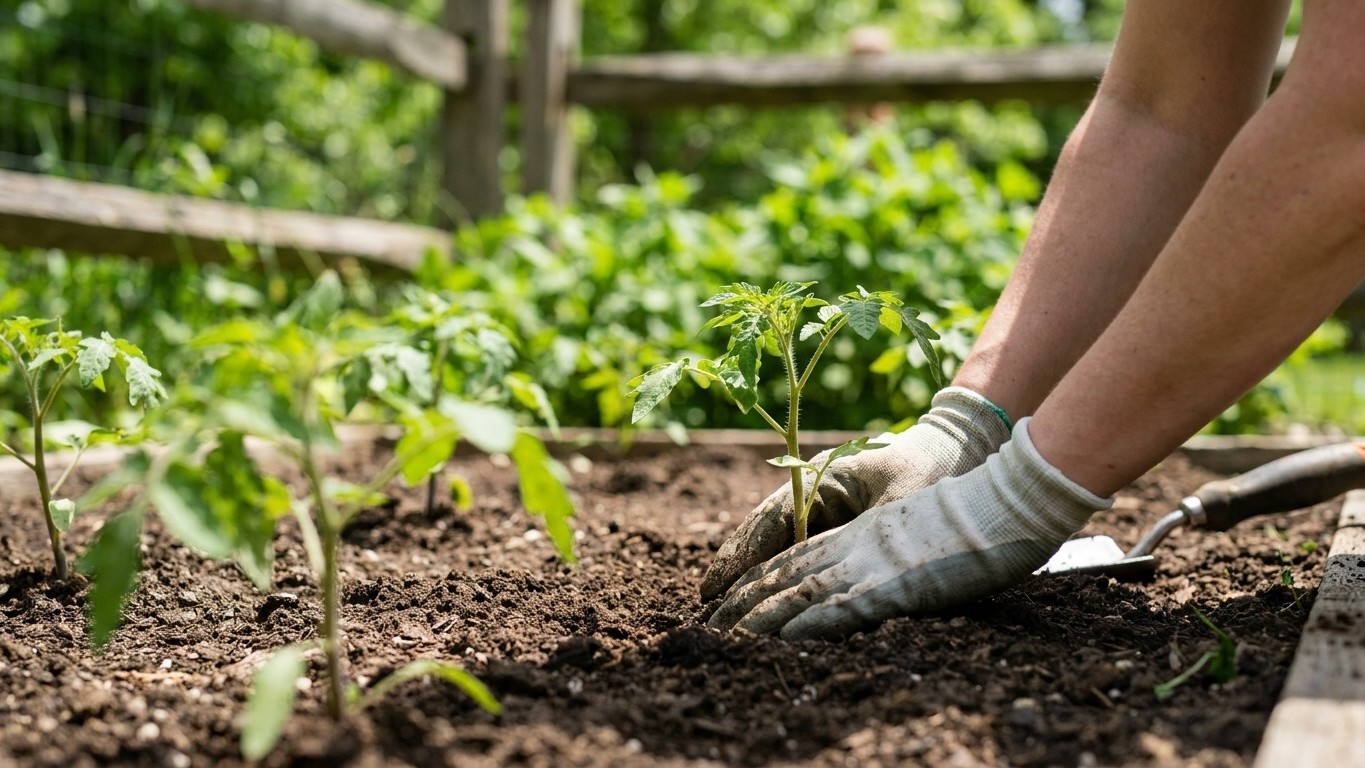

By June, New Hampshire gardens are past the frost threat and running at full speed. This is the month to get tomatoes, peppers, squash, beans, and melons into the ground, keep sowing lettuce and carrots in succession, and start fall brassicas under cover. With the last spring frost window (April 16 to April 27) behind most of the state and the first fall frost (October 13 to October 26) still four months out, June is the widest-open planting month of the year here.
What goes in the ground in June

The calendar says June, but the soil decides what actually survives. Warm-season crops need soil in the 60s Fahrenheit to germinate and root well, and by June that threshold has usually been crossed across most of the state, well after the April 16 to April 27 frost window closed at the reference station. That’s the real green light, not the date on a wall calendar.
Direct-sow beans, sweet corn, summer squash, winter squash, cucumbers, and melons now. Soil that’s been warming since May will support fast germination for all of these. Transplant tomatoes, peppers, eggplant, and basil once nighttime lows are reliably staying above 50 Fahrenheit, since a single chilly night can stunt a pepper transplant for weeks. Keep succession-sowing lettuce, spinach, and radishes in the first half of the month, but expect both lettuce and spinach to bolt once daytime highs push into the 80s, so shift those sowings to a partly shaded bed as the month goes on. Carrots and beets can still go in directly. Early June is also the last reasonable window for a pea sowing, since peas sulk and stop setting pods once heat arrives.
North versus south: same month, different pace
New Hampshire spans USDA Hardiness Zones 3b through 6a, and June behaves differently depending on where in that range a garden sits. The White Mountains and the far north run cooler and later; the Seacoast and the Merrimack Valley warm earlier and push growth faster.
| Region (approx. zone) | June soil status | Best June move |
|---|---|---|
| North Country, higher elevations (3b-4a) | Still catching up to warm-season range | Hold tender transplants a bit longer; prioritize beans, squash, cool greens |
| Central NH, Lakes Region (4b-5a) | Warm-season range reached mid-month | Full transplanting of tomatoes, peppers, melons |
| Seacoast, Merrimack Valley (5b-6a) | Warm-season range reached early June | Succession plant fast; start thinking about fall crops |
Garlic and shallots planted the previous fall are simply growing now; nothing new goes in for those crops until the true dormant-planting window returns.
What to start under cover
Most spring transplanting is already done by June, so starting things under cover this month is really about the fall garden. Count backward from the first fall frost window (October 13 to October 26) instead of forward from today’s date, and the arithmetic writes itself. Fall broccoli, cabbage, and cauliflower need roughly 60 to 80 days from transplant to harvest, plus another two to three weeks of seedling time before they’re ready to go outside. That puts the seed-starting window for fall brassicas squarely in early-to-mid June for gardens aiming to harvest well before the October frost arrives.
The two ways this goes wrong
Start too early and the seedlings sit too long in small trays, turning leggy and rootbound before the July transplant date arrives. A rootbound broccoli start rarely recovers its full size potential once it’s finally in the ground. Start too late and the plants run out of runway. A cauliflower head that’s still forming when frost hits simply stops, and there’s no pushing it further. Splitting the difference by starting a first tray in early June and a second, smaller batch two weeks later hedges against both mistakes without much extra effort.
Cold frames aren’t needed for this kind of June sowing since outdoor temperatures are already generous. A simple seed-starting tray on a porch or a partly shaded cold frame with the lid propped open works fine for keeping brassica seedlings from cooking in full sun.
What is ready to pick
June is when the spring planting finally pays off. Asparagus is winding down its harvest window by early-to-mid month, and beds should be left to fern out once spears thin and go pencil-sized, since cutting too long weakens next year’s crop. Rhubarb stalks are at full size and ready to pull. Overwintered or early spring-sown spinach and lettuce are at their peak now, before heat pushes them to bolt, so this is the moment to cut heads rather than let them sit.
Reading the signs instead of the calendar
Peas are ready when pods feel full and firm under a light squeeze, not when they look green and plump from the outside, since appearance alone overstates readiness. Radishes pull cleanly from loose soil once the shoulders push slightly above the surface. Strawberries, where planted, ripen to full red with no white shoulder left, and they don’t sweeten further once picked, so waiting for “almost there” berries on the plant beats picking early and hoping. Scallions and the first cutting of many perennial herbs, chives especially, are ready for regular harvest by June as well.
Anyone with stored crops left over from the previous season, winter squash or onions tucked in a cool basement, should give them a check now. Warmer June air reaches into most storage spaces, and any squash with a soft spot or onion that’s started sprouting should be used or composted before it spreads to the rest of the stash.
The jobs that matter this month
Mulching moves to the top of the list once June transplants are in, since bare soil dries fast under longer daylight and rising heat. A two-to-three-inch layer of straw or shredded leaves around tomatoes, squash, and peppers holds soil moisture and keeps weed pressure down for the rest of summer, and doing it now, while plants are small, is far easier than working mulch in around sprawling vines later.
Staking and watering rhythm
Stake or cage tomatoes and trellis peas and cucumbers before they sprawl, not after. A tomato plant left to flop for two weeks develops a growth habit that’s awkward to correct, and stems already lying on the ground are far more prone to soil-borne disease. Watering rhythm matters more in June than in any prior month: aim for roughly one to one-and-a-half inches of water per week, delivered in fewer, deeper sessions rather than a daily light sprinkle, which trains roots to stay shallow and vulnerable to any dry stretch.
Pest scouting earns its keep now too. Colorado potato beetle larvae and squash vine borer moths are both active in June across New Hampshire, and catching either one in its first week saves a plant that would otherwise be lost by July. Check the undersides of squash and potato leaves weekly, and handpick or remove affected foliage before populations build. Keep succession sowing going for beans, carrots, and salad greens through the month so the harvest doesn’t stall out in three or four weeks.
What not to do in June
The most common June mistake is trusting warm air over actual soil conditions. A run of 75-degree days doesn’t mean the soil four inches down has caught up, particularly in shaded or heavy clay beds, and tender transplants set into cool soil often just sit and sulk for two or three weeks rather than growing. Checking soil temperature with a simple probe thermometer before a big planting push beats guessing from the forecast.
Uncovering row covers or cold frames too early after a mild stretch is another trap, especially in northern and higher-elevation parts of the state where a late cool snap can still catch exposed seedlings off guard even though the reference-station frost window has passed. Ease covers off gradually over several days rather than pulling them all at once.
Nitrogen timing trips up a lot of tomato and pepper growers in June. Heavy nitrogen feeding once plants are flowering pushes lush leafy growth at the expense of fruit set, leaving a bushy plant with disappointing yield. Switch to a lower-nitrogen, higher-phosphorus feed once flowering starts, and save the nitrogen-heavy feeding for the earlier leaf-growth stage instead.
Checking this against your own county
A statewide June calendar is a starting point, not an instruction sheet. New Hampshire’s elevation swings, its lake-effect pockets around the Lakes Region and Winnipesaukee, and the plain difference between the Seacoast and the North Country can shift real-world planting windows by two weeks or more in either direction from the reference-station figures cited here. A garden tucked into a mountain valley behaves nothing like one on the coastal plain, even in the same month.
For a planting calendar built around local conditions, the University of New Hampshire Cooperative Extension is the right next stop. Its county-level guidance accounts for the elevation and microclimate differences that a single statewide date range can’t capture.
Common questions
Is it too late to plant tomatoes in June in New Hampshire?
No. June is prime tomato transplanting time across most of the state, since it falls well after the April 16 to April 27 last-frost window at the reference station. Gardens in higher, cooler pockets may still be finishing their transplanting in early June without losing meaningful season length.
Can I still direct-sow beans and squash in June?
Yes. Beans, squash, cucumbers, and melons germinate quickly in June’s warmer soil and are commonly direct-sown throughout the month, particularly in the first half.
When should fall broccoli seeds be started for a New Hampshire garden?
Counting backward from the first fall frost window of October 13 to October 26, and allowing 60 to 80 days from transplant to harvest plus seedling time, early-to-mid June is the typical window for starting fall brassica seeds indoors or under light cover.
Why are my June tomato plants leafy but not setting fruit?
This usually points to excess nitrogen applied after flowering began. Switching to a lower-nitrogen, phosphorus-forward feed once flowers appear typically corrects the imbalance over the following weeks.