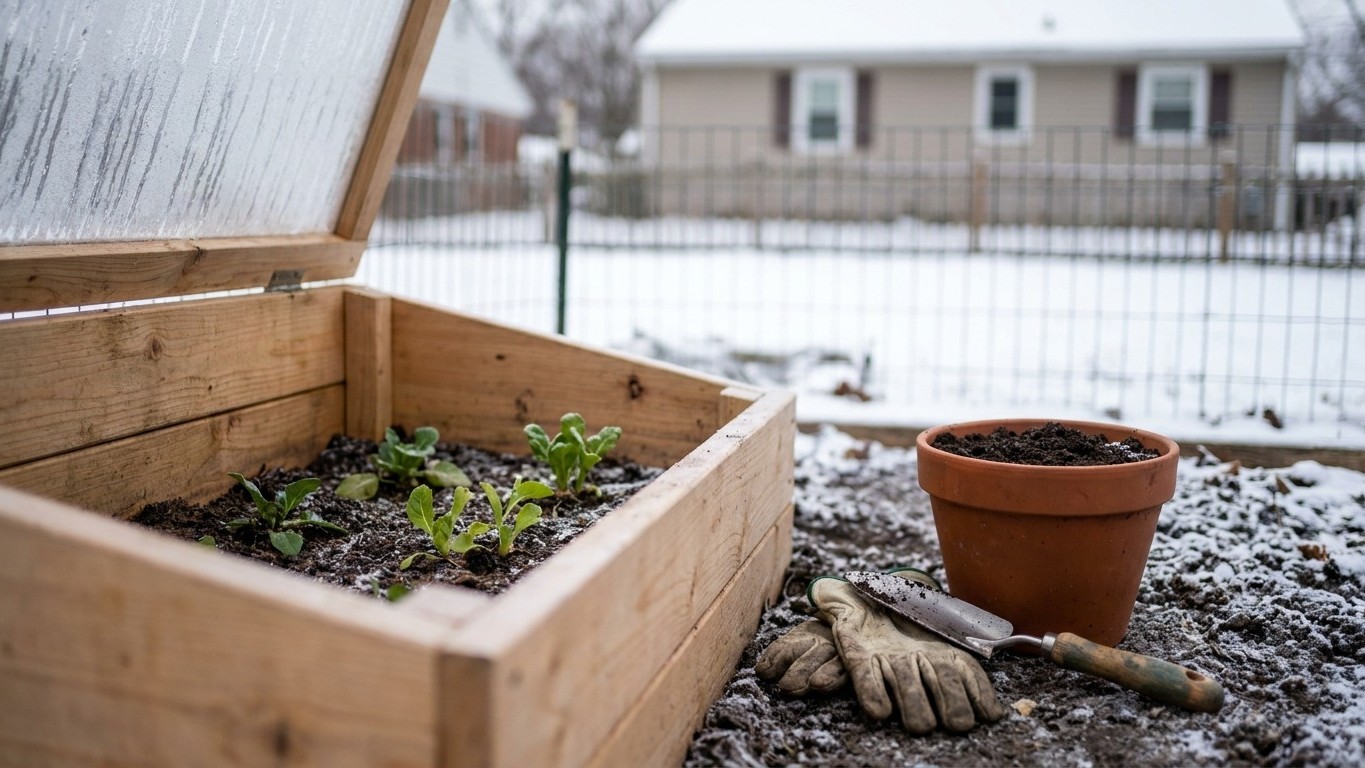

Open ground in New Mexico stays too cold and too unpredictable for direct planting in January across nearly the whole state. The one exception is garlic and shallots tucked into workable soil in the lowest, mildest valleys. Everywhere else, this month belongs to cold frames, dormant plantings, seed starting under lights, and the pruning and planning work that sets up the whole season ahead.
What goes in the ground in January

The calendar says January, but the soil doesn’t care what the calendar says. What decides whether anything survives outdoors is soil temperature and the frost window, and in New Mexico that window doesn’t crack open until late March at the earliest, based on figures from one reference weather station in the state. That station shows a last spring freeze falling somewhere between March 31 and April 12, with first fall freeze arriving between October 29 and November 9. Gardens away from that station, especially at higher elevation or in low-lying cold pockets, typically see frost linger later in spring and arrive earlier in fall, sometimes by a week or two beyond those dates. Given the state spans USDA Hardiness Zones 4b through 9a, a garden in the far south sits in a completely different world than one at elevation in the north.
For most of the state, the honest answer is that nothing goes into open, unprotected ground this month. But that’s not the same as nothing to do.
Garlic and shallots planted the previous fall are usually already in the ground and need nothing beyond a check that mulch hasn’t blown away. In the mildest, lowest-elevation southern valleys, gardeners with truly workable soil can still tuck in a late planting of garlic cloves or shallot sets if the ground isn’t frozen solid.
Cold frames and low tunnels change the math entirely. Under that kind of cover, hardy greens like spinach, mâche, and claytonia can be direct-sown and will germinate slowly but reliably even while the open garden sits frozen. Sweet peas and shell peas can go into a cold frame toward the end of the month in the warmer zones, giving them a head start once the frame comes off.
Bare-root fruit trees, roses, and cane berries can be planted now if the ground isn’t frozen, since they’re dormant and won’t notice the cold the way active growth would. Rhubarb crowns and Belgian endive roots can be brought in and forced indoors in a dark, cool spot for a harvest that has nothing to do with outdoor weather at all.
What to start under cover
Seed starting in January isn’t about the date on the calendar. It’s about counting backward from the frost window, and that window sits between March 31 and April 12 at the reference station, likely later in most home gardens. Work from that, not from a fixed date, since a garden two weeks behind the reference station needs its whole schedule shifted two weeks later too.
Onions and leeks need the longest runway, typically 10 to 12 weeks under lights before they’re ready to go outside. Counting back from an early-April transplant date puts the start in mid-to-late January, which makes this the month those two crops actually belong under grow lights on a windowsill or seedling shelf.
Peppers run 8 to 10 weeks from seed to transplant-ready size, and germinate slowly in cool conditions, so starting them toward the end of January under supplemental heat gives them enough lead time without letting them stall.
Tomatoes are the crop most gardeners rush, and January is too early for them almost everywhere in the state. Started now, they’ll be rootbound, leggy, and stressed long before the ground is warm enough to receive them in April or later. The safer window for tomatoes comes next month.
The two ways this goes wrong run in opposite directions. Start too early and the seedlings outgrow their pots, stretch toward weak light, and sulk for weeks after transplant. Start too late, especially in the shorter growing season at higher elevation, and there isn’t enough summer left to finish a full crop before fall frost closes things down again.
What is ready to pick
Very little comes out of an open New Mexico garden in January, and pretending otherwise doesn’t help anyone plan a meal. What keeps a household fed this month comes from what was put up earlier, plus whatever cover crops survived under protection.
Kale and leeks that overwintered in the ground, especially under a layer of mulch or row cover, can still be harvested leaf by leaf or stalk by stalk through hard freezes, since both crops sweeten rather than degrade with cold. Cold frame greens, spinach, lettuce mixes, mâche, hold through the month with slow, steady growth and can be cut as needed rather than all at once.
Indoors, sprouts and microgreens fill the gap for anyone missing fresh greens. A jar of sprouting seeds on a counter or a shallow tray of microgreens under a window produces a harvest in a week to ten days, with zero dependence on outdoor weather.
The other January harvest job is inspection, not picking. Stored squash should get a hand-check for soft spots, and any squash going soft at the stem end needs to be used first, before it spreads rot to the rest of the batch. Stored potatoes and onions deserve the same treatment: sprouting potatoes should be pulled and used, and onions that have gone soft or started to sprout green shoots need to come out before they take neighboring onions down with them.
The jobs that matter this month
The list of things to actually do in January is longer than the list of things to plant, and skipping items on it costs real ground come spring.
Pruning and dormant work
Dormant pruning of fruit trees, grapevines, and cane berries belongs in this window, done while the plant is fully asleep and before buds swell. Pruning too late, once sap is rising, stresses the plant and invites disease into fresh cuts. This is also the last comfortable stretch to plant bare-root trees and shrubs before the ground firms up and before nurseries sell through their bare-root stock.
Ordering and planning
Seed catalogs move fast, and the specific varieties suited to a short high-elevation season or a hot low-desert one tend to sell out first. Ordering now, rather than in February, is the difference between getting the variety that actually matches the local frost window and settling for whatever’s left.
This is also the month to sketch next season’s crop rotation, so that the same family of vegetables doesn’t land in the same bed for a third year running and build up soil-borne problems.
Soil and equipment
A soil test sent to the state extension lab now comes back with results in time to actually amend before spring planting, instead of guessing. Compost piles benefit from a turn even in cold weather, since that keeps the pile from going anaerobic and stalling. Pruning shears, loppers, and hoes cleaned and sharpened now save time and frustration once the workload picks up. Raised beds, fencing, and irrigation lines damaged by winter weather are far easier to repair on an empty, frozen bed than on one full of seedlings.
What not to do in January
New Mexico’s winter weather swings hard, and that swing is exactly what causes most January mistakes. A run of 60-degree afternoons followed by a hard overnight freeze fools gardeners into thinking spring has arrived weeks early.
Planting warm-season crops, tomatoes, peppers, squash, into soil that merely felt warm during a mild afternoon is the classic error. Air temperature and soil temperature aren’t the same thing, and cold soil rots seeds and stunts roots long before a single freeze finishes the job. Wait for the actual frost window near the reference dates of March 31 to April 12, adjusted later for higher or colder gardens, not for a warm afternoon.
Pulling row covers or opening cold frames during a mild stretch is the second common mistake. New Mexico’s mild spells rarely last, and uncovered greens or newly bare-root plantings can take a hard hit the following night once temperatures drop again. Leave protection in place through the whole month and check the forecast before removing anything, not the thermometer on a single sunny day.
Feeding nitrogen to dormant fruit trees or overwintered crops is the third trap. Nitrogen applied now pushes soft new growth right into the next freeze, and that growth is exactly what cold damages first. Hold off on nitrogen until active growth actually resumes.
Finally, dry winter wind at elevation pulls moisture out of soil and evergreen foliage even when the air feels cold, so newly planted bare-root stock and cold-frame beds still need an occasional check for dryness, not just protection from frost.
Checking this against your own county
Every figure in this article comes from one reference weather station, and New Mexico’s elevation range, from low desert valleys to high mountain basins, moves real frost dates by weeks in either direction. A garden at higher elevation in the north routinely sees frost linger into May and return by September, while a low-desert garden in the south can run several weeks milder on both ends. Treat the dates here as a starting point, not an instruction for a specific yard.
For localized frost data, soil testing, and planting calendars built around the state’s own growing regions, the New Mexico State University Cooperative Extension Service is the resource built for exactly that kind of county-level detail.
Common questions
Can you plant anything outdoors in New Mexico in January?
Almost nothing goes safely into open, unprotected ground this month across most of the state. Garlic and shallots already in the ground need no action, and in the mildest low-elevation valleys, late plantings of garlic or shallot sets are possible if the soil is workable. Cold frames and low tunnels open up more options, including hardy greens and peas.
When is the last frost date in New Mexico?
At the reference weather station used for these figures, the last spring freeze falls between March 31 and April 12. Gardens elsewhere in the state, particularly at higher elevation, often see frost linger a week or two beyond that range.
What USDA hardiness zone is New Mexico?
New Mexico spans USDA Plant Hardiness Zones 4b through 9a, reflecting the state’s dramatic elevation range from low desert to high mountain basin. A single statewide zone number doesn’t apply evenly, since local elevation shifts the actual zone considerably.
What vegetables can be started indoors in January?
Onions and leeks belong under grow lights now, since they need 10 to 12 weeks before transplanting outside near the frost window. Peppers can start toward the end of the month. Tomatoes are better held off until next month to avoid rootbound, leggy seedlings.