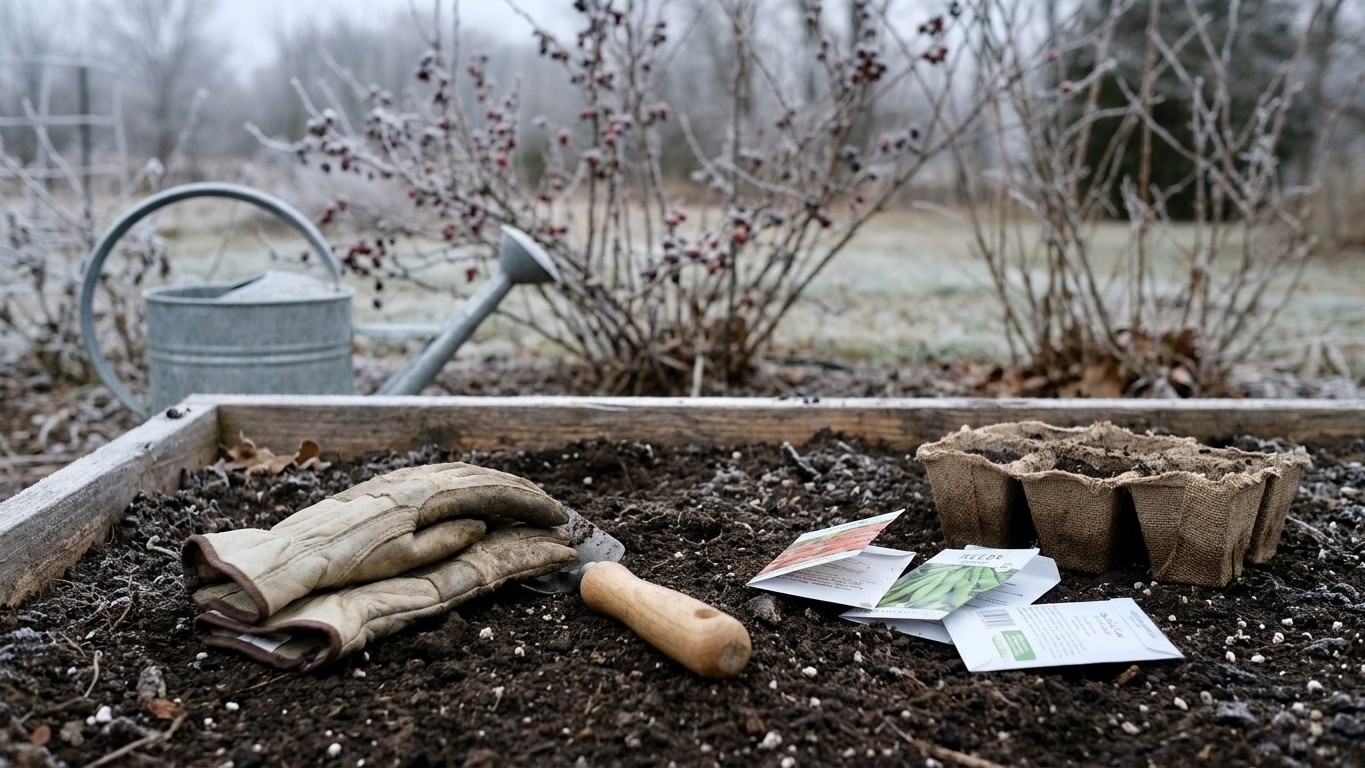

February is not a planting month for most of New Mexico. The state’s last spring frost falls between March 31 and April 12 at the reference station, and most gardens run later than that. The safe work this month sits under cover or in the shed: starting peppers and onions indoors, planting bare-root stock, pruning dormant fruit trees, and getting seed orders in before good varieties sell out.
What goes in the ground in February

New Mexico sits across USDA Hardiness Zones 4b to 9a, which tells you the state spans everything from high mountain valleys to low desert basins near the Rio Grande. That range matters more than the calendar. At the reference weather station, the last spring frost lands somewhere between March 31 and April 12, and February sits weeks ahead of that window everywhere except the very lowest, warmest pockets of the south. Direct-sowing anything tender into open soil this month is a bet against a freeze the state has not yet finished delivering.
What does work outdoors is narrow but real. Garlic and shallots that were not tucked in during fall can still go into workable ground where the soil has thawed and drains well, though later plantings will bulb smaller than fall-planted ones. Bare-root fruit trees, grapevines, and cane berries are typically sold and shipped dormant through late winter, and planting them now, before buds break, gives roots a head start while the plant is not yet demanding water and sugar for leaf growth. Cold frames and low tunnels can carry spinach, mache, and other hardy greens through the tail end of winter in the milder valleys, especially where snow cover has been thin.
Indoors, this is also the month to force rhubarb crowns or chicory roots in a dark, cool space for an early harvest that has nothing to do with outdoor soil temperature at all. None of this replaces the main planting season. It simply keeps hands busy and roots growing while the ground outside is still too cold, and often too wet or too frozen, to trust with seed.
What to start under cover
Seed-starting math runs backward from the frost window, not forward from a date on the calendar. With the last spring frost falling between March 31 and April 12 at the reference station, and most home gardens running one to two weeks later, count back from mid-April rather than late March if you want a safety margin.
Onions and leeks need the longest lead time, often ten to twelve weeks before transplanting outside, which puts a February start right on schedule for an April or May move into the ground. Peppers need roughly eight weeks and benefit from steady bottom heat to germinate well. Tomatoes need only six to eight weeks and are the crop most gardeners start too early, ending up with leggy, rootbound plants sitting in small pots long before the soil outside has warmed enough to receive them.
| Crop | Typical weeks before transplant | Start-too-early risk |
|---|---|---|
| Onions, leeks | 10-12 weeks | Low; slow growers tolerate extra pot time |
| Peppers | 7-8 weeks | Moderate; needs consistent warmth to avoid stall |
| Tomatoes | 6-8 weeks | High; gets leggy and rootbound fast |
Starting too early is the more common mistake in New Mexico, where a run of warm, sunny days in late winter tempts gardeners to get seedlings going, only to have them outgrow their pots weeks before the ground and air outside are reliably warm enough. Starting too late is the quieter risk: skip onions and leeks this month and there may not be enough season left to size up a proper bulb before summer heat locks growth in place.
What is ready to pick
Outdoors, the honest answer is close to nothing. Most New Mexico gardens are weeks away from the last frost, and open ground has little standing that survived winter unprotected. Where a cold frame or low tunnel carried hardy greens through the cold months, spinach, kale, mache, and mizuna can still be cut a leaf at a time, and the flavor is often better after cold exposure than it is in warmer months.
Overwintered kale and leeks left in the open ground in milder valleys can be dug or cut as needed; both tend to sweeten after hard cold rather than spoil, which makes them some of the few outdoor crops worth checking on a frozen morning. Indoors, sprouts and microgreens fill the gap for households wanting fresh green food without waiting on the season, and they finish in one to two weeks on a windowsill or under a simple grow light.
The other job this month is inspection, not harvest. Stored squash, potatoes, and onions from the previous season need a hands-on check for soft spots, sprouting, or the sweet, slightly fermented smell that signals rot has started. Pull anything questionable out of storage immediately; one turning squash or onion speeds up decay in everything stacked near it.
The jobs that matter this month
Dormant pruning is the single biggest job on the list. Apple, pear, peach, and plum trees, along with grapevines and cane berries, are cut back while they are leafless and their structure is visible, and before sap starts moving with the first real warm spell. Wait too long and cuts bleed sap or invite disease; prune now and the plant heals cleanly before growth resumes.
Seed ordering has a deadline too, just not a fixed one. Popular varieties, especially heirloom tomatoes, peppers bred for short seasons, and disease-resistant squash, sell out from suppliers as spring approaches. Ordering now, while the list is still full, beats settling for whatever is left in March.
Soil work pays off precisely because nothing is growing yet. A basic soil test through the local extension office identifies pH and nutrient gaps before planting locks in whatever the soil already has. Turning compost piles now speeds decomposition so finished compost is ready to dig in ahead of spring planting, rather than still cooking when it is needed. Tool maintenance, sharpening pruners, cleaning shovels, oiling hinges on cold frames and gates, is a small investment that saves time once the pace picks up. Bed edges, trellis posts, and fencing damaged by winter wind or snow load are far easier to repair now, with no crops in the way, than once seedlings are in the ground.
What not to do in February
The classic mistake is trusting a warm afternoon over the calendar. A run of 60-degree days in late winter feels like spring, but soil temperature lags air temperature by days or weeks, and a warm afternoon does nothing to move the state’s last frost window, which still runs March 31 to April 12 at the reference station and later than that in most home gardens. Direct-sowing beans, squash, or corn into soil that only felt warm to the hand invites rot or a stalled germination that never recovers.
Uncovering cold frames or removing winter mulch too early after a mild stretch is the second common error. A week of warmth followed by a return to freezing temperatures, which is entirely normal for this stretch of the calendar, can kill hardy greens that would have sailed through winter under their cover. Leave protection in place until the pattern of warm nights, not just warm days, holds steady.
Nitrogen timing trips people up too. Feeding a high-nitrogen fertilizer to dormant fruit trees or overwintered garlic this early pushes soft, tender growth right before a freeze can still hit it, which weakens the plant instead of helping it. Hold nitrogen feeding until active growth is clearly underway, and use this month instead for the soil test that tells you what is actually needed once planting starts.
Checking this against your own county
A state-wide frost window is a starting point, not an instruction for a specific yard. New Mexico’s elevation swings from low desert basins to mountain valleys move planting dates by weeks, and the gap between the warmer south and the higher, colder north can be just as wide. The reference frost dates here come from one weather station; a garden a thousand feet higher or fifty miles north can run noticeably colder.
Local knowledge closes that gap. New Mexico State University’s Cooperative Extension Service, at aces.nmsu.edu, publishes county-level guidance and can confirm how far off the reference dates your specific garden runs.
Common questions
Can I plant tomatoes outdoors in New Mexico in February?
No. The last spring frost runs March 31 to April 12 at the reference station, and most home gardens run later still. Tomatoes started indoors this month should stay under cover until well after that window closes.
Is it too early to start pepper seeds indoors?
Not for most of the state. Peppers typically need seven to eight weeks of indoor growth before transplanting, which lines up well with an April or May move outside given the state’s frost window.
What can I still plant outdoors in February in New Mexico?
Garlic and shallots where the ground is workable, bare-root fruit trees and cane berries while still dormant, and hardy greens under a cold frame or low tunnel. Open, unprotected planting of anything tender is not advisable yet.
Why does my garden run colder than the published frost dates?
Published frost dates come from a single weather station, usually near an airport at lower elevation than many home gardens. Higher elevation, rural sites, and northern counties commonly see later spring frosts and earlier fall frosts than that reference point.