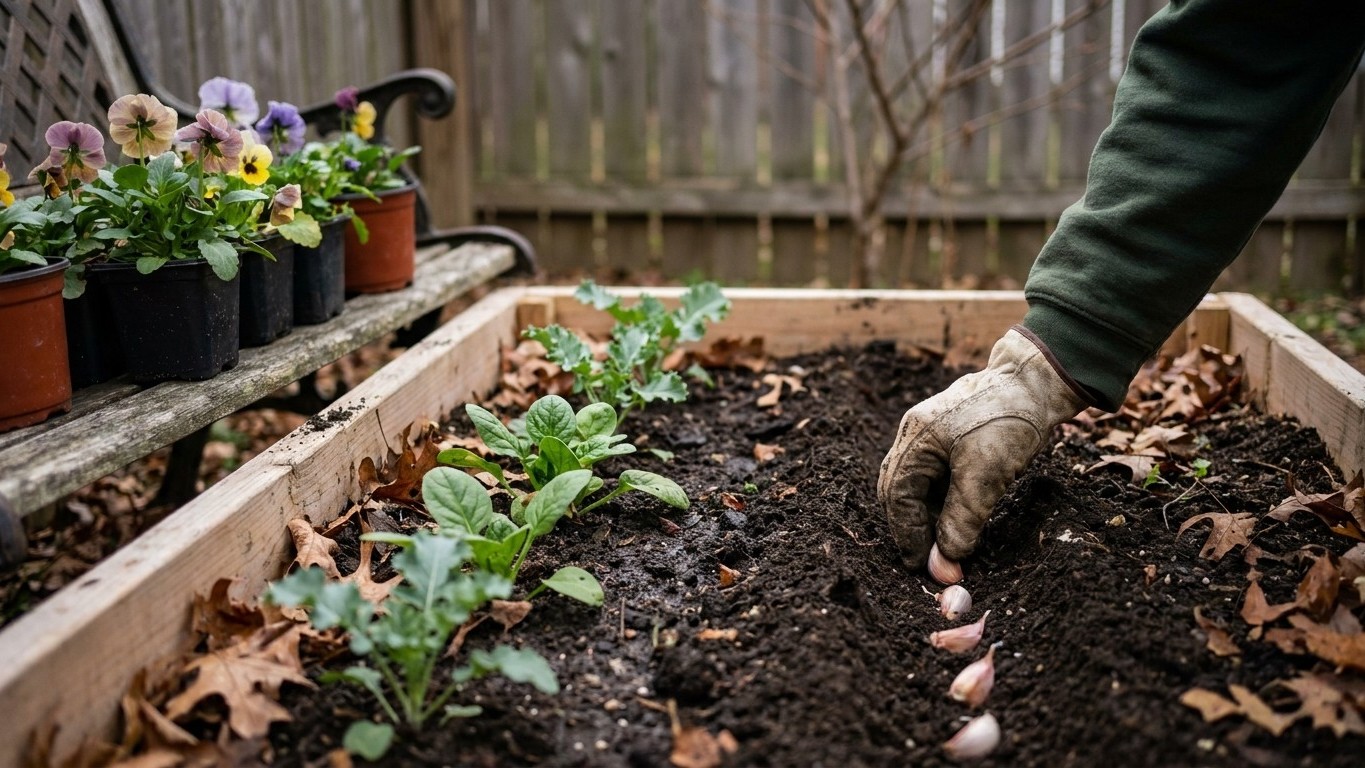

October is planting month for garlic in New York, not the tail end of the growing season. The state’s first fall frost lands somewhere between November 14 and November 27 in New York City, so most of the state still has real growing weeks left when the month opens. The main jobs are getting alliums into the ground, pulling in tender crops before a hard freeze, and prepping beds for the dormant months ahead.
What goes in the ground in October

Soil temperature and the first frost window decide what belongs outdoors this month, not the date on the calendar. In New York City, that first fall frost typically arrives between November 14 and November 27, according to NOAA’s 1991-2020 climate normals for Central Park. That leaves a real stretch of workable soil in early and mid-October across the lower Hudson Valley, Long Island, and the five boroughs. Upstate and at higher elevation, in the Adirondacks and the Catskills, the ground cools and freezes weeks earlier, so that same window has often already closed by the time October starts.
Garlic and shallots are the defining October crop almost everywhere in the state. Cloves go in roughly four to six weeks before the ground freezes hard, giving roots time to establish before the plant goes dormant for winter. Plant too early and the tops push up too much growth before frost; plant too late and the cloves never root in before the freeze locks the soil.
Cold-hardy greens still have a place in the ground in the first half of the month. Spinach, mâche, and claytonia direct-sown early enough will germinate in cooling soil and either give a late fall picking or overwinter for an early spring harvest, especially under a cold frame or row cover. Spring-flowering bulbs, tulips, daffodils, crocus, also belong in the ground this month; they need the cold months ahead to bloom on schedule.
What does not belong outdoors is anything warm-season. Tomatoes, peppers, beans, and squash have no place going into soil this late no matter how mild the afternoon feels. The USDA Plant Hardiness Zone Map places New York across zones 3b to 7b, and that spread matters here: a gardener in the Hudson Valley might have three more weeks of frost-free soil than someone near Saranac Lake.
What to start under cover
Sowing under cover in October means counting backward from that first frost window, not forward from a fixed date. If frost lands between November 14 and 27 in the city, a quick green that needs three to four weeks to reach a pickable size should go into a cold frame or hoop house in the first half of October at the latest. Wait until the last week of the month and germination slows enough, as daylight shortens, that the planting may never catch up before growth stalls.
Mâche, spinach, and baby mustard greens are the reliable choices for this kind of cold-frame sowing. They germinate at soil temperatures well below what lettuce or basil would tolerate, and once established they hold through light frost without protection, then keep producing under glass or plastic through the cooler weeks that follow.
The two failure modes here mirror each other. Sow too early in a cold frame and the seedlings can bolt or outgrow the space before the cold sets in enough to slow them down, leaving overcrowded, leggy plants competing for light. Sow too late and germination drags on so long, as soil temperatures drop, that the seedlings never build enough size to survive the darkest stretch of the year. Splitting a planting into two smaller sowings a week or two apart hedges against both problems and is worth the extra minute with a dibber.
This is also the month to pot up any tender container herbs, rosemary and bay in particular, before a surprise early cold snap catches them outdoors. Bring them in gradually over a week rather than all at once, so the shift in light and humidity doesn’t shock the plant.
What is ready to pick
October is a genuine harvest month across most of New York, not a wind-down. Winter squash and pumpkins come off the vine when the stem has gone dry and corky and a thumbnail can no longer dent the skin. Main-crop potatoes are ready once the foliage has died back and the skins have set, which you can check by rubbing a test tuber gently; if the skin scuffs off easily, give it another week or two in the ground.
Storage onions get pulled once the tops have flopped over and dried, then cure in a warm, airy spot for a couple of weeks before going into storage. Apples come in by variety, and a light frost actually improves the flavor of many brassicas still standing in the garden, cabbage, kale, and Brussels sprouts sweeten noticeably once the nights turn cold.
Because the first frost in New York City doesn’t typically arrive until sometime between November 14 and 27, tender crops like tomatoes and peppers can keep producing right through October in the metro area and Long Island. Watch the forecast closely in the back half of the month; a single hard freeze ends that harvest overnight, so picking everything usable ahead of a frost warning beats losing a full basket of green tomatoes to one cold night.
Herbs like parsley, thyme, and sage are still cuttable outdoors through most of the month in the milder parts of the state, and a last cutting for drying or freezing before growth slows is worth the trip out to the garden.
The jobs that matter this month
Bed cleanup earns its keep in October more than almost any other month. Pulling spent tomato and squash vines, and getting them into the trash rather than the compost pile if there’s any sign of blight or mildew, cuts down dramatically on the disease pressure the garden carries into next season. Leaving diseased debris in place over winter simply gives the pathogen a place to overwinter alongside your soil.
Soil testing pays off now in a way it doesn’t in spring. Samples sent in October have time to come back with results before the ground freezes, giving you the whole winter to plan lime or amendment applications rather than scrambling in a narrow spring window. Cornell Cooperative Extension offices across the state run soil testing programs county by county and can walk you through interpreting the results.
Mulching newly planted garlic and any perennials that struggled through summer protects roots through the freeze-thaw cycles ahead; a few inches of straw or shredded leaves does more good here than at almost any other point in the year. Dividing overgrown perennials, hostas, daylilies, and similar clumps, also belongs in this window, while the soil is still workable and the plant has a few weeks to settle roots before dormancy.
Tool maintenance is easy to push off, but October is when the garden actually gives you the time. Cleaning soil off blades, sharpening pruners and hoes, and oiling wooden handles before they sit unused all winter means you’re not starting spring with rusted, dull tools. Turning the compost pile one more time before cold weather slows the microbial activity down is worth the ten minutes it takes.
What not to do in October
The classic October mistake in New York is trusting a warm afternoon over the calendar. A run of 65-degree days in the middle of the month doesn’t mean the frost risk has passed, and gardeners who leave tender crops uncovered on the strength of a mild stretch often lose the whole planting to a sudden overnight drop once that first frost window, November 14 to 27 in the city, arrives.
Feeding nitrogen to lawns, shrubs, or perennials this late does more harm than good. Nitrogen pushes soft new growth right when the plant should be shutting down for winter, and that tender growth is the first thing a hard freeze kills. If a fall feeding is warranted at all, a phosphorus- and potassium-leaning formula supports root development instead, without triggering the top growth that frost will simply destroy.
Pruning fruit trees and berry canes belongs later in the dormant season, not now. Cutting back branches in October can stimulate a flush of new growth in response to the wound, and that new growth has no time to harden off before winter arrives. Wait until the plant is fully dormant, typically well into the cold months, before reaching for the loppers.
Uncovering cold frames or row covers too eagerly after a warm spell is the other common error. Once greens are established under protection, leave the cover in place through fluctuating fall weather; removing it exposes tender growth to a frost swing the plant was otherwise shielded from.
Checking this against your own county
A state-wide October guide is a starting point, not an instruction sheet. New York spans USDA hardiness zones 3b to 7b, and that range alone tells you the Adirondacks and Long Island are not on the same calendar. Elevation, lake effect near Erie and Ontario, and simple latitude between the southern tier and the north country can shift a frost date by several weeks in either direction.
| Region type | General USDA zone | What that means for October |
|---|---|---|
| New York City, Long Island | Warmer end of the state range | Frost typically holds off until mid-to-late November |
| Hudson Valley, Southern Tier | Mid-range | Frost arrives noticeably earlier than the city |
| Adirondacks, high elevation | Colder end of the state range | Growing season often already closed by October |
For a planting window tuned to your own county, Cornell Cooperative Extension maintains local offices with frost data and planting guidance specific to your part of the state.
Common questions
Is it too late to plant garlic in October in New York?
No, October is the standard planting month for garlic across most of New York. The goal is getting cloves in the ground roughly four to six weeks before the soil freezes hard, which lines up well with October across the majority of the state.
Can I still start a fall vegetable garden in October?
Only with cold-hardy, fast-maturing greens sown under a cold frame or row cover early in the month. Anything needing more than three or four weeks to reach a usable size is racing a closing window as daylight and soil temperatures drop.
When does the first frost typically hit New York City?
Based on NOAA’s 1991-2020 climate normals for Central Park, the first fall frost falls somewhere between November 14 and November 27 in most years. Areas outside the dense urban core, and especially upstate, typically see frost arrive earlier.
Should I fertilize my lawn or garden beds in October?
Avoid nitrogen-heavy feeding this late in the season since it pushes soft growth that frost will damage. If any fall feeding is needed, a formula focused on root development rather than top growth is the safer choice.