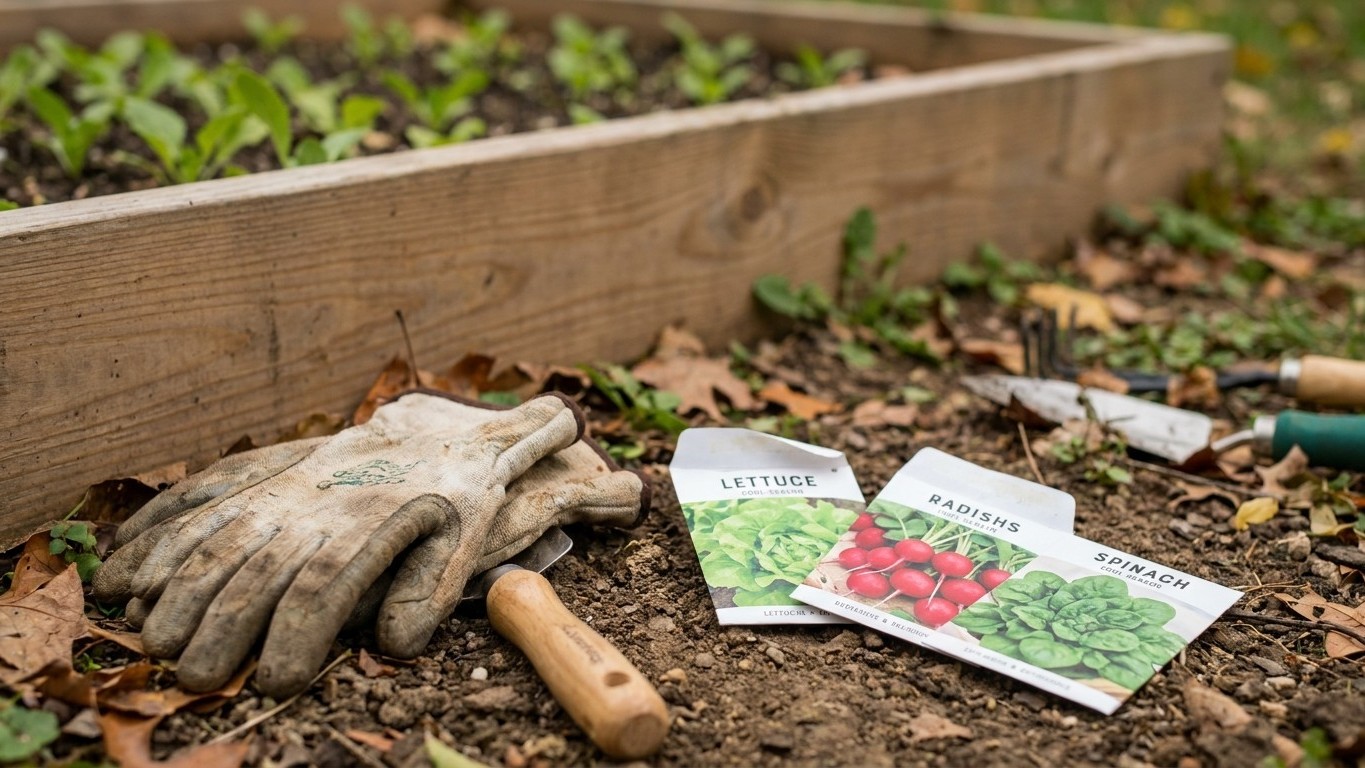

September in New York still has room for fast, cold-hardy crops if you sow them in the first half of the month, but the window narrows fast as you move north and uphill. The right question isn’t “can I plant in September” but “how many weeks of frost-free growing does my spot have left,” and that number changes by weeks depending on where you garden.
What goes in the ground in September

Soil temperature and the local frost window decide what works this month, not the date on the calendar. In New York City, where the National Weather Service station at Central Park has recorded a first fall freeze between November 14 and November 27 (NOAA NCEI 1991-2020 normals), a gardener starting in early September still has roughly ten weeks before the ground freezes. Move upstate into the Adirondacks or the North Country, and that cushion can shrink to three or four weeks, sometimes less at higher elevation.
That difference is exactly why the safe list for September leans hard toward fast, cold-tolerant crops rather than anything that needs a long run to harvest. Direct-sown spinach, arugula, mustard greens, tatsoi, and radishes all mature quickly and shrug off the first light frosts, which makes them the reliable bets almost anywhere in the state this month. Turnips and beets sown for their greens (not roots) work the same way. Lettuce started now, especially loose-leaf types, can still size up for a fall harvest in most of the state’s growing zones.
Peas are a good call too, particularly in the cooler counties, since a fall pea crop sown in early September often beats the frost by the time it needs harvesting. Kale and collard transplants set out now, rather than seeded, get a head start and tend to reward the effort with a harvest that runs well into fall.
Garlic is the classic exception people get wrong. Planting it in September, while the soil is still warm, is a gamble: cloves can sprout too early and push tender green growth right into the first hard freeze. Garlic and shallots are better held until the ground cools further, closer to next month’s window, when the soil has dropped enough to keep growth dormant until spring. Anything in the tomato, pepper, squash, or bean family is off the table entirely this month statewide; the days remaining simply aren’t enough to finish the crop before frost closes the season.
What to start under cover
Starting seed under cover in September is really about buying the plant a few extra weeks the open ground can’t offer, and the arithmetic runs backward from the frost window rather than forward from today’s date. If frost typically lands somewhere in the Central Park range of November 14 to November 27 for a downstate garden, a gardener there can count back six to eight weeks from that window and still have time to raise a transplant indoors or in a cold frame and get it into the ground with weeks to spare. In a northern county where frost arrives weeks earlier, that same count has to start sooner, sometimes as soon as the first days of the month.
Spinach and lettuce raised as transplants indoors now, then moved into a cold frame in the following weeks, extend the harvest well past what direct-sown greens can manage once the light thins out. Cool-season flowers like pansies and violas started under cover this month also handle the transition to fall beds far better than direct-sown seed, since they need the extra weeks to build a strong root system before cold sets in.
The two ways this goes wrong are worth naming plainly. Start too early and the seedlings sit in trays far longer than they should, turning leggy and rootbound before there’s anywhere to put them. Start too late and they’re still small and tender when the real cold arrives, with no time left to toughen up. The trick is matching the start date to the actual frost window for the county, not a fixed date that might suit a garden two hundred miles away.
What is ready to pick
September is one of the fuller harvest months in New York, and knowing when a crop is actually done, rather than just present, saves a lot of wasted counter space. Apples are a signature crop for the state this time of year; ripeness shows in the ease of the twist (a ripe apple parts from the branch with a gentle turn, not a tug) and in the color developing fully on the shaded side of the fruit, not just the sun-facing side. Grapes ripen by taste more than color at this point in the season, since color often develops before sugar does.
Summer squash and cucumbers are winding down but still producing in most gardens, and picking them small and often keeps the plant going a little longer before cooler nights slow it for good. Tomatoes and peppers planted earlier in the season are often at their peak now, and any green tomatoes still on the vine as nights cool are worth pulling and ripening indoors rather than leaving them to a frost.
Storage crops deserve a second look this month too. Winter squash is ready when the skin resists a thumbnail press and the stem has started to dry and harden; onions are ready when the tops have flopped over and started to yellow. Potatoes dug now should be checked for soft spots before they go into storage, since one rotting tuber in a bin can spoil the ones around it within days.
The jobs that matter this month
The work that pays off in September is mostly about managing the transition from summer abundance to fall scarcity, and a lot of it has real deadlines attached. Succession sowing of fast greens every week to ten days through the first half of the month keeps a steady supply coming instead of one big flush followed by nothing. Mulching newly seeded beds helps hold the moisture those small seeds need to germinate while the soil is still warm and prone to drying out fast between waterings.
Watering rhythm shifts this month too: as temperatures cool and days shorten, plants need less frequent but still deep watering, and it’s worth checking soil moisture by hand rather than assuming last month’s schedule still applies. Tomatoes and peppers still producing benefit from a last round of staking or tying before their branches, heavy with late fruit, start to sprawl and break under their own weight.
Pest scouting matters more, not less, as the season winds down. Cabbage worms and aphids tend to move into fresh fall greens just as those crops are germinating and most vulnerable, so a quick check under the leaves every few days catches an infestation before it wipes out a bed of week-old seedlings. Clearing spent summer crops as they finish, rather than letting them sit and rot in place, cuts down on the disease and pest pressure that would otherwise carry into next season.
This is also the month to get ahead on planning: testing soil pH before deciding on any fall amendments, turning the compost pile while there’s still enough warmth to keep it active, and ordering garlic sets or bulbs for next month’s planting before the good varieties sell out. None of this is glamorous, but skipping it now means playing catch-up in spring.
What not to do in September
The most common mistake this month is trusting warm afternoon air over the calendar and the season’s actual math. A string of 75-degree days in September doesn’t mean there’s time left for a crop that needs 70 or 80 days to mature; the days are shortening even when the temperature isn’t dropping, and that slows growth in ways warmth alone can’t fix. Squash, beans, and other warm-season crops planted now almost never finish before frost, regardless of how mild the weather feels.
Fertilizing with a high-nitrogen product this month is another classic misstep. Nitrogen pushes soft, leafy growth that’s exactly the tissue most vulnerable to an early frost, right when the plant should be hardening off for the cold rather than putting out tender new shoots. If feeding is needed at all this month, a lower-nitrogen option that supports root development serves the plant better than one aimed at leaf growth.
Pruning fruit trees or cane fruits now is worth avoiding too. Pruning stimulates new growth, and any new growth pushed out in September doesn’t have time to harden before winter, leaving it exposed to damage. That job belongs in the dormant season, not this one. And for anyone tempted to pull row covers or cold frame lids during a mild stretch mid-month, resist it: a few warm days don’t mean the frost risk has passed, and uncovering too early can catch tender fall greens off guard on the very next cold night.
Checking this against your own county
A statewide answer for September is a starting point, not an instruction. New York spans USDA hardiness zones 3b through 7b (USDA Plant Hardiness Zone Map, 2023, built on 1991-2020 normals), and that range alone tells you the Hudson Valley and Long Island are working with a very different calendar than the Adirondacks or the Tug Hill Plateau, where lake effect and elevation push frost earlier by weeks. The Central Park frost window used here reflects a dense urban site in New York City; it runs later than most of the state, not earlier.
For a planting calendar built around a specific county, Cornell Cooperative Extension is the direct source, with local offices that adjust these general windows to actual local conditions.
Common questions
Is it too late to plant a vegetable garden in New York in September?
Not for fast, cold-tolerant crops. Spinach, arugula, radishes, turnips for greens, and lettuce sown in the first half of the month can still mature before frost in most of the state. It is too late for anything in the tomato, pepper, squash, or bean family.
When should garlic actually go in the ground in New York?
Not in September. The soil is usually still too warm, which risks premature sprouting. Garlic does better once the ground has cooled further, closer to the following month, so growth stays dormant until spring.
Why does the same September advice not work the same way across the state?
New York spans USDA hardiness zones 3b to 7b, and frost timing varies by weeks between the city, the Hudson Valley, and the Adirondacks or lake-effect regions. A single statewide date can’t capture that spread.
What is the single most useful job to do in a New York garden in September?
Succession sowing fast greens every week to ten days through early September, paired with mulch to hold soil moisture for germination, keeps a steady harvest going instead of one early flush followed by an empty bed.