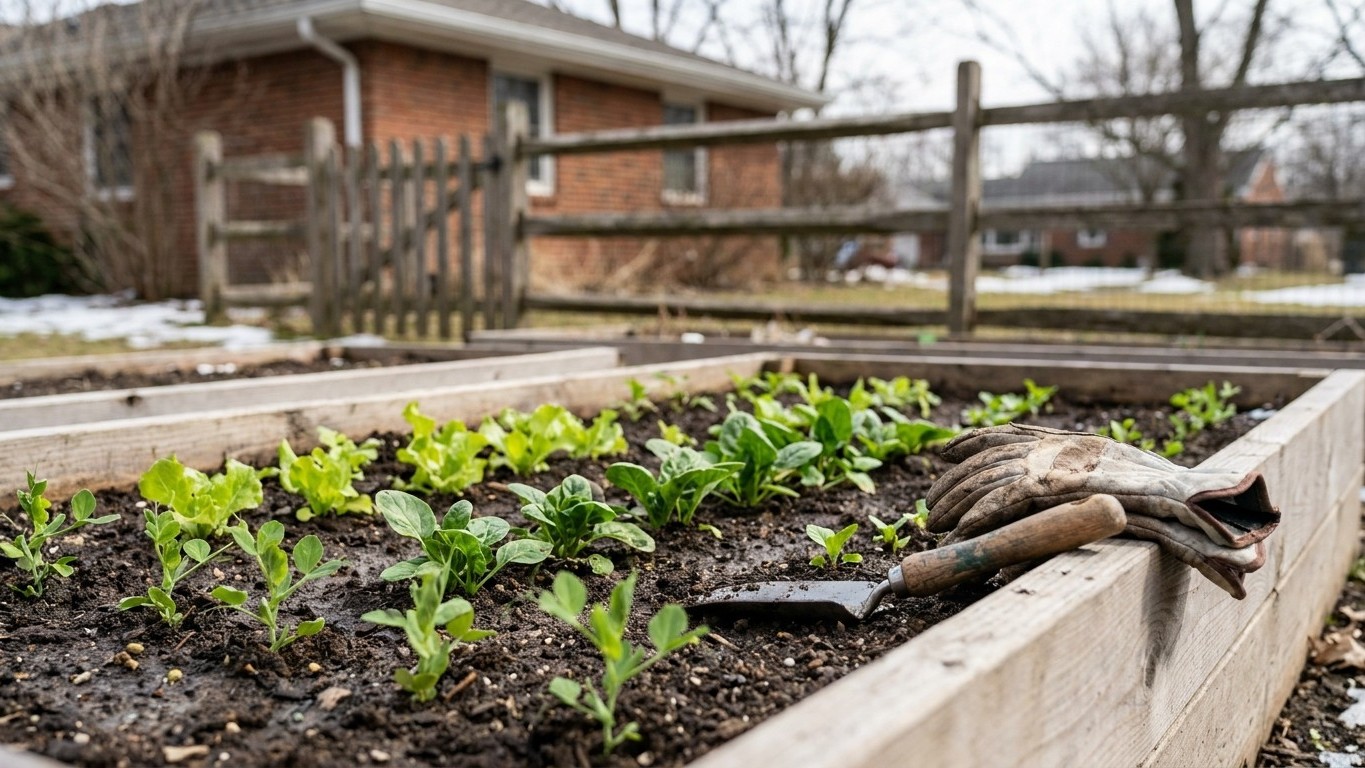

Nothing goes into open ground in Newfoundland and Labrador in March. The frost-free date averages May 30 in St. John’s, and most of the province is still under snow or frozen soil this month. What actually happens in March is indoor seed starting, dormant-season plant work, and the backlog of planning and pruning that a short growing season demands.
What goes in the ground in March

The honest answer for this month is that the open garden stays closed. With an average last spring frost of May 30 recorded at the ST JOHN’S A station, March sits a full two months before that midpoint date, and it’s a midpoint, not a guarantee: Environment and Climate Change Canada’s own normals mean the actual frost can land later than May 30 in roughly half of all years. Soil across the Avalon Peninsula and most coastal districts is either frozen solid or saturated with meltwater, and neither condition supports direct sowing or transplanting.
That doesn’t mean the garden is off-limits. In sheltered, well-drained pockets where the ground has thawed enough to work, hardneck garlic and shallots can still go in if you missed the fall window, though results lag behind a proper autumn planting. Cold frames and low tunnels are worth setting up now over the beds you’ll seed in April, since a covered bed warms and drains faster than open soil once the thaw truly starts. Bare-root fruit trees, canes, and dormant perennials can be planted or heeled in if a nursery has stock available and the hole can actually be dug, which in Labrador and inland Newfoundland is often not the case until much later.
Indoors, this is prime time for forcing. Rhubarb crowns lifted and brought into a dark, warm spot will push tender stalks weeks ahead of anything in the garden. Chicory roots dug the previous fall and forced in a dark box or bucket produce witloof-style heads in about three to four weeks. Neither needs light, both need steady warmth, and both give a household something fresh to harvest while the outdoor beds are still locked up.
Skip anything that asks for open soil this month: peas, hardy greens, and alliums sown direct all wait for April or later here, once the ground has actually opened up rather than just looked mild for a few days.
What to start under cover
Seed starting indoors runs on its own calendar, counted backward from that May 30 average frost date rather than from the date on the wall. Onions and leeks, which need ten to twelve weeks of growth before transplanting, go in first, meaning early to mid-March is close to the last reasonable start for a full-sized crop. Peppers and eggplant, needing eight to ten weeks under lights before they can handle outdoor conditions, follow a similar logic and are often started alongside the alliums.
Tomatoes need less lead time, usually six to eight weeks, so starting them too early in March risks tall, rootbound plants sitting in small pots for weeks past their prime, stretching toward the light and setting back their first flush of flowers once they finally go outside. That’s the first failure mode gardeners hit here: starting warm-season crops too soon because the seed packet arrived and the itch to plant something took over. The second failure mode runs the other way, starting slow growers like celery or onions too late and running out of the growing season entirely, since even a generous frost-free stretch in this province rarely exceeds four and a half months between May 30 and October 17.
Brassicas for an early crop, cabbage and broccoli in particular, can start under cover toward the end of March for transplanting once the soil has warmed in late spring. Cole crops tolerate a light frost after hardening off, which gives a bit of buffer that heat-loving crops don’t have. Whatever the crop, a heat mat and supplemental light matter more here than almost anywhere else, since natural daylight in March is still limited and a windowsill alone rarely gives seedlings the light they need to stay stocky rather than leggy.
What is ready to pick
Outdoors, there is little to nothing coming out of a Newfoundland and Labrador garden in March. Snow cover typically persists into the month across most of the island and well into it across Labrador, and any overwintered crops left in the ground, kale, leeks, parsnips, are usually buried and inaccessible rather than harvestable on demand.
Where a cold frame or low tunnel was set up earlier in the winter, hardy greens like spinach and mâche may have held on and can be picked as soon as the cover is lifted, a few leaves at a time rather than a full cut, since growth is slow to nonexistent this early. Indoors, this is where the household’s fresh food is actually coming from: sprouts started from mung beans, lentils, or broccoli seed are ready in three to five days, and microgreens sown in shallow trays under a grow light are cuttable in ten to fourteen days, both a reliable way to get something green onto the table with no outdoor access at all.
The other job this month is checking what’s already in storage before it turns. Squash should feel firm with no soft spots near the stem end; a squash that’s started to give under gentle pressure is on its way out and should be used first. Potatoes need a check for sprouting eyes and green-tinged skin, both signs it’s time to use them up or trim and darken the storage space further. Onions that have gone soft at the neck or started throwing green shoots are past holding and belong in the kitchen now rather than back in the bin.
The jobs that matter this month
Pruning and planning
Dormant pruning of fruit trees and berry canes is one of the few outdoor jobs that actually belongs in March here, and it has a real deadline: prune apples, pears, and currants while they’re still fully dormant and before buds swell, since cuts made once sap is rising heal more slowly and stress the plant. Raspberry canes that fruited the previous summer on old wood should come out now, cut to the ground, clearing space for the new canes that will carry the next crop.
Seed ordering can’t wait much longer either. Popular varieties, particularly short-season tomatoes and cold-tolerant greens bred for maritime climates, sell out at Canadian seed suppliers well before the ground is workable, and a gardener who waits until April to order is choosing from what’s left rather than what was wanted.
Soil, tools, and storage
Soil testing is worth doing as soon as a sample can be pulled from workable ground, since results take a few weeks to come back and amendments like lime need time to adjust pH before spring planting. Turning the compost pile, even a half-frozen one, keeps the pile aerated and speeds the breakdown that will produce usable compost by the time beds are ready in late spring.
Cleaning and sharpening tools, pruners especially, takes an afternoon and pays off all season in cleaner cuts and less plant stress. Raised beds and fencing that took winter damage should get repaired now, before the rush of April planting leaves no time for carpentry. And that stored produce mentioned above needs a second look every week or two all month, since one soft squash left in a bin can start a rot that spreads to its neighbors.
What not to do in March
The classic mistake this month is reading a mild afternoon as a season change. A few days above freezing don’t mean the ground has thawed at root depth, and transplanting or direct-sowing anything into soil that’s still cold and wet below the surface usually ends in stalled growth or rot, not an early crop.
Uncovering cold frames or removing winter mulch too early is the second trap. A warm stretch followed by a return to freezing, which happens often in a maritime climate like this one, can kill back growth that had just started responding to the earlier warmth. Better to vent a cold frame on mild days and close it back up at night than to pull the cover entirely on the strength of one warm afternoon.
Feeding nitrogen too early is a third misstep, and one that’s easy to make once seedlings are up under lights. High-nitrogen fertilizer applied before a plant has real root mass or before outdoor soil has warmed pushes soft, leafy growth that’s more vulnerable to cold snaps and pests, rather than the sturdier growth that comes from patience and a balanced feed once conditions catch up. Hold off on heavy feeding until transplant time, not before.
Finally, resist buying warm-season transplants from a garden center display in late March. They’re grown for climates well ahead of this one, and bringing them home means either coddling them indoors for two more months or losing them to a frost that, on average, is still nearly two months away.
Checking this against your own county
Every figure here comes from the ST JOHN’S A weather station, and Newfoundland and Labrador is not one climate. Elevation, coastal exposure, and the long stretch between the Avalon Peninsula and interior Labrador can shift these frost windows by weeks in either direction, and Labrador’s growing season runs noticeably shorter and later than the numbers cited above. The Canadian hardiness zone of 6a cited here also belongs to St. John’s specifically, not the whole province, and it comes from a seven-variable Canadian system that doesn’t convert to the single-variable USDA scale used elsewhere in the US. For local frost data and a provincial planting calendar, check the Newfoundland and Labrador Department of Fisheries, Forestry and Agriculture.
Common questions
Can I plant anything outdoors in Newfoundland and Labrador in March?
Direct sowing and transplanting into open ground isn’t realistic this month. The exceptions are garlic or shallots in ground that’s already thawed and workable, and bare-root stock where a planting hole can actually be dug.
When is it safe to start tomatoes indoors for a Newfoundland and Labrador garden?
Since tomatoes need six to eight weeks before transplanting and the average frost-free date is May 30, starting in early to mid-March gives seedlings enough time without letting them get rootbound before it’s warm enough to move them out.
Why does this page say May 30 for last frost when some years it’s earlier?
May 30 is a mean date from Environment and Climate Change Canada’s climate normals, not a guaranteed cutoff. In roughly half of all years, the actual last frost falls later than that date, so it should be treated as the middle of a risk window, not a safe planting deadline.
Is Labrador’s growing season the same as Newfoundland’s?
No. The frost and hardiness figures cited here come from the ST JOHN’S A station on the Avalon Peninsula. Labrador’s interior and northern coastal areas run considerably colder and later, and gardeners there should treat these dates as a starting reference rather than a local forecast.