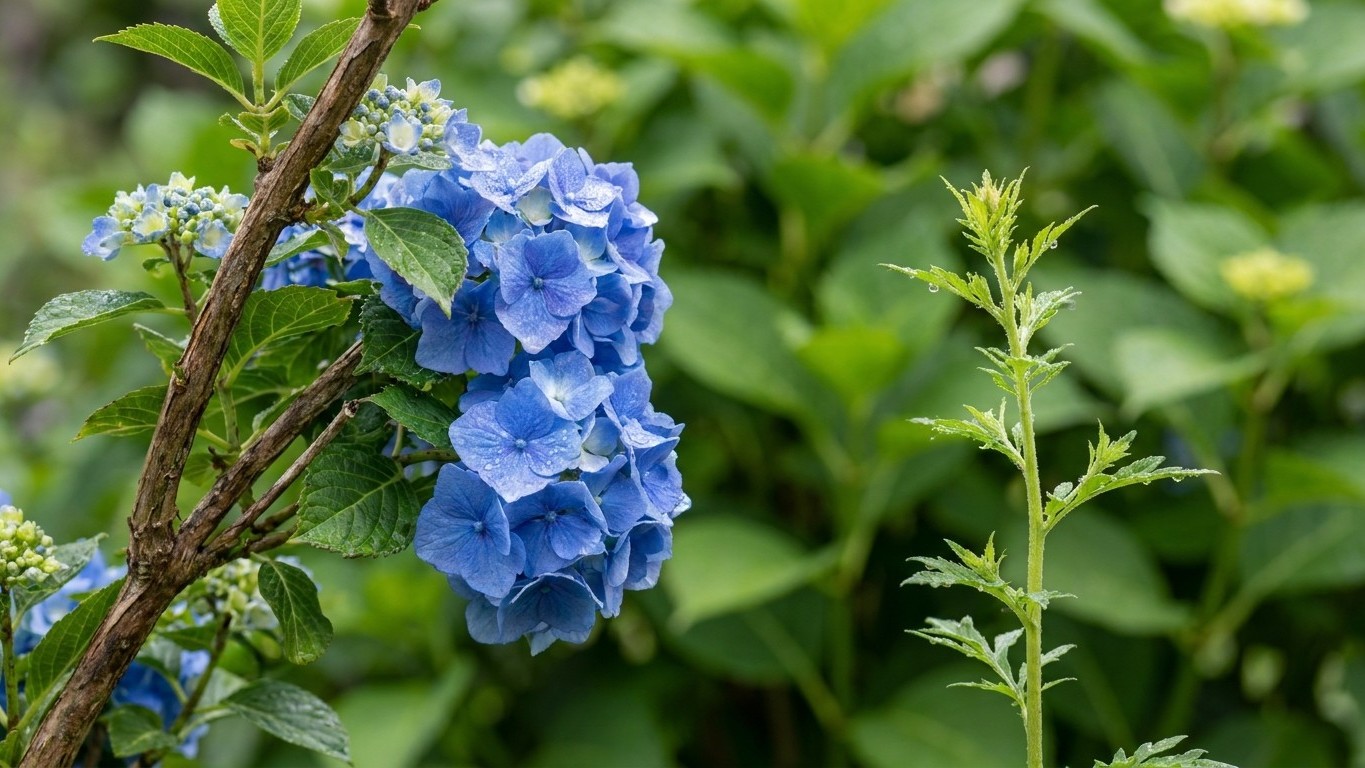

A bigleaf hydrangea blooms pink when aluminum in the soil is locked away, and blue when the plant can take it up. Gardens in Newfoundland and Labrador usually end up pink when lime, wood ash, concrete runoff or phosphorus-heavy fertilizer pushes the soil toward neutral. To turn flowers blue, bring the soil pH down to roughly 5.0 to 5.5 and supply aluminum sulfate. Expect the full change to take a season or two, and only certain hydrangeas can make it.
What this comes down to in Newfoundland and Labrador
At the St. John’s airport station, the mean last spring frost falls on May 30 and the mean first fall frost on October 17, which leaves about 140 frost-free days. That short window is why color changes here are slow, and why the aluminum treatments have to be timed to the leafing-out period and finished before autumn.
Both dates are midpoints. In one year out of two the last frost comes later than May 30, and in one year out of two the first frost arrives earlier than October 17. The station also sits at the coast on the Avalon Peninsula, so inland and northern gardens run weeks behind it. Natural Resources Canada places St. John’s in Canadian plant hardiness zone 6a, a rating from a different system than the USDA map that does not convert to a USDA zone.
What turns a hydrangea pink or blue?
The pigment in bigleaf (Hydrangea macrophylla) and mountain (Hydrangea serrata) flowers reacts to aluminum. When the roots absorb it, the sepals shift toward blue. Soil pH controls how much aluminum dissolves, and the ranges below are rough guides, since variety and phosphorus level shift the result.
| Soil pH | Aluminum available to roots | Typical bigleaf color |
|---|---|---|
| Below about 5.5 | Plentiful | Blue |
| About 5.5 to 6.0 | Partial | Purple, or blue and pink on the same plant |
| About 6.0 and above | Mostly locked up | Pink to deep rose |
What keeps hydrangeas pink in a Newfoundland garden?
Native soils under spruce, fir and peat run acidic, so a pink hydrangea usually points to something that was added to the ground. The usual suspects are short:
- Garden lime or dolomitic lime spread on a nearby lawn or vegetable bed
- Wood ash from a stove, which raises pH quickly
- Concrete foundations, mortar and gravel paths that leach lime into the bed
- Bagged topsoil or fill brought in for a new yard
- Fertilizer high in phosphorus, which ties up aluminum even when pH is right
Any one of these can tip a bed toward pink. A new house with a concrete foundation and trucked-in topsoil often has all of them at once.
Working it out for your own garden
A color change follows soil chemistry, and the frost window sets the calendar. The method below works in any year and survives a move to a different part of the province.
How do you find out your soil pH?
Test before you treat. Dig small samples at the edge of the shrub’s canopy, mix them together, and run them through a home pH kit or a lab. A reading above 6.0 under a pink plant confirms the diagnosis. A reading below 5.5 under a plant that still blooms pink points to phosphorus or to a variety that stays pink, so adding acid will not help.
When do you apply aluminum sulfate in St. John’s?
Start when new leaves are unfolding, once frost danger has passed. Frost can come after the May 30 mean, so the first application usually falls in early to mid June. Three treatments spaced three to four weeks apart then land in mid-June, early to mid July, and early August. Stop by mid-August so the plant is not pushing tender growth when the first fall frost window opens, which can be before October 17 in half the years.
Dissolve aluminum sulfate in water, or follow the product label if it differs, and pour it onto soil that is already moist. Dry soil and strong doses burn roots. Elemental sulfur lowers pH more gently but takes months, so it suits a fall or early-spring start.
Take a bigleaf hydrangea, which flowers on wood formed the previous summer. A June planting or a first June treatment finishes well ahead of the fall frost window, but this year’s buds were already set, so expect a purple blend this summer and cleaner blue the next. A reblooming type carries flowers on old and new wood into the season. Its late flush can be caught by an early frost, so judge your color progress by the first flowers in July.
What changes across the province
A single station cannot describe a province that stretches from the Avalon to northern Labrador. Coastal gardens on the Avalon and the south and east shores get a longer, damper, foggier season, and cool fog can slow growth and bloom. Interior central Newfoundland has warmer summer days but colder nights and colder winters, so frost can arrive earlier and sneak in later than at the airport. The west coast and the Northern Peninsula run cooler still. In coastal Labrador, bigleaf hydrangeas are a stretch, and hardier panicle types, which do not change color with pH, are the better bet.
Soil shifts too. Gardens cut out of boreal forest or peat start naturally acidic, so blue comes easily and the main job is not spoiling it. Town lots, new subdivisions and anywhere that gets regular liming start higher and drift pink. Wind and exposure matter for color as well, because a plant that loses its flower buds to a cold winter will not bloom in any color. If buds fail often where you live, the Protecting Hydrangeas Through a Newfoundland and Labrador Winter guide is the better place to start than any soil amendment.
The mistakes this state punishes
The shortest growing seasons leave little room for do-overs, and a few errors cost a full year of bloom.
- Treating too late in summer. Pouring on aluminum sulfate in September does little for next year’s color and can push soft growth right before frost.
- Applying to dry soil or in strong doses. Aluminum sulfate burns roots, and wet cold spring soil slows uptake. Water first and keep to the label rate.
- Pruning off the buds. Bigleaf types form flower buds the summer before, so spring cutting removes the blooms you are trying to color. The When to Prune Hydrangeas in Newfoundland and Labrador guide covers the timing.
- Liming next door. Spreading lime on a lawn or vegetable bed beside the hydrangea quietly undoes weeks of work.
- Expecting every hydrangea to change. White bigleaf types, panicles and smooth hydrangeas respond differently to soil pH.
The fix in each case is to test first, treat on a June to early August schedule, and give the bed a full season before judging.
Checking this against your county
A frost window from one airport station is a starting point, not an instruction for your yard. Newfoundland and Labrador does not use counties, so ask the provincial Department of Forestry, Agriculture and Lands (formerly part of Fisheries, Forestry and Agriculture) which office serves your area, and ask about soil testing and local frost timing. For the basics of siting, planting and care, see the main guide to growing hydrangeas in Newfoundland and Labrador.
Common questions
Can I turn a white hydrangea blue?
No. White bigleaf cultivars lack the pigment that reacts to aluminum, and panicle and smooth hydrangeas do not respond to soil pH. Only pink or blue bigleaf and mountain hydrangeas can change.
How long does it take to turn pink hydrangeas blue?
Plan on one full growing season for a partial shift and often two for clean blue. Buds are already formed by the time you treat in spring, so the biggest change shows the following summer.
Do coffee grounds turn hydrangeas blue?
Not reliably. Used grounds are close to neutral in pH, so they do little on their own. Elemental sulfur or aluminum sulfate gives a predictable result.
Can I turn blue hydrangeas back to pink?
Yes. Work garden lime into the soil to raise pH and avoid aluminum products. Use a phosphorus-rich fertilizer, which helps pink by locking up aluminum. Test the soil first so you do not overshoot.