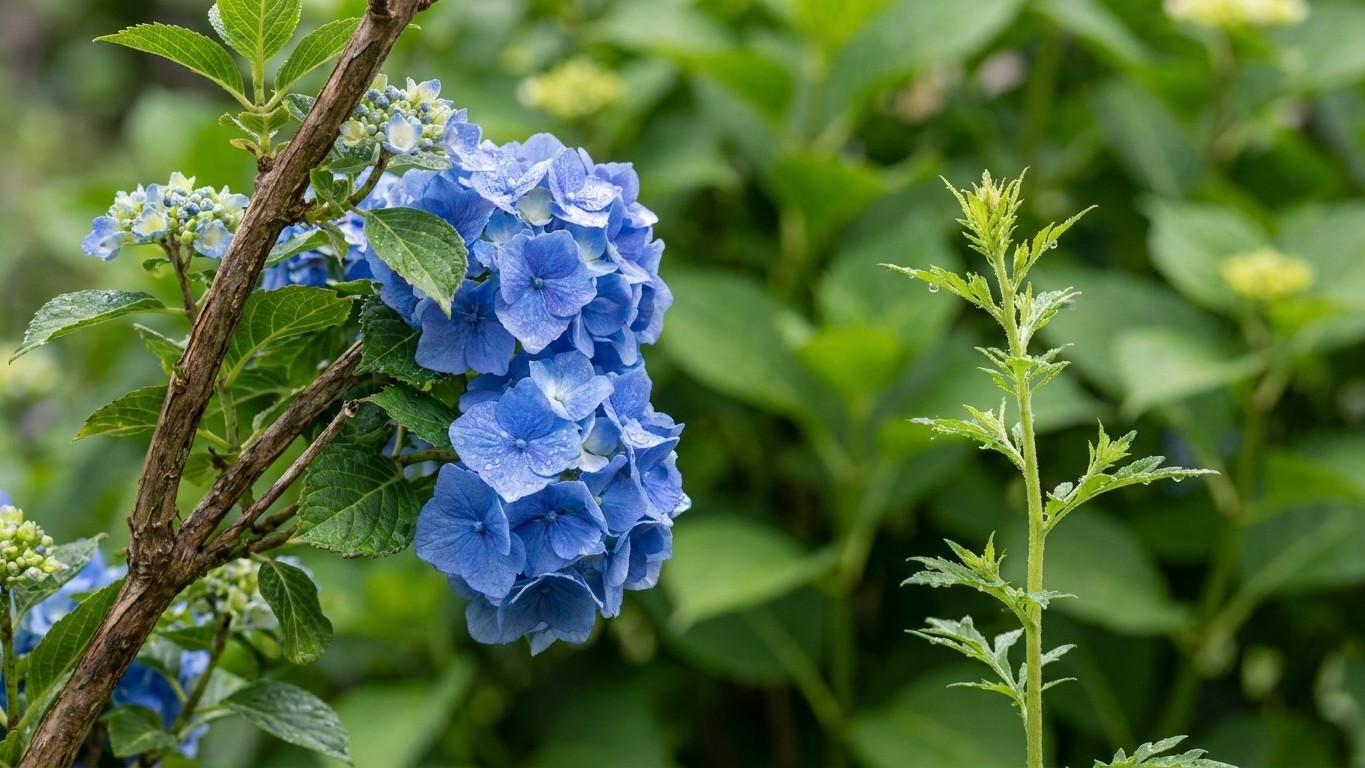

Panicle and smooth hydrangeas are the safe bet for a Newfoundland and Labrador winter. Both bloom on the current year’s growth, so a hard winter that kills stems does not cost you the flowers. Bigleaf types, which bloom on last year’s stems, are the gamble. At the St. John’s airport station the average last spring frost falls on May 30 and the average first fall frost on October 17, and the city sits in Canadian hardiness zone 6a.
What this comes down to in Newfoundland and Labrador
The reference city is St. John’s, where Environment and Climate Change Canada’s long-term averages put the last spring frost on May 30 and the first fall frost on October 17. Those are midpoints, so in one year out of two the last frost comes later than May 30 and in one year out of two the first fall frost arrives earlier than October 17. That leaves about 140 frost-free days at the airport station, and a cool, foggy summer makes them feel shorter than they are.
The question that sorts hydrangeas is simple: where does the plant form its flower buds? Types that make buds on new wood start from scratch every spring, so winter dieback only costs you height. Types that form buds on old wood carry those buds through the cold, and a bud killed in January means no flowers in July. St. John’s falls in Canadian zone 6a, according to Natural Resources Canada’s plant hardiness map. That system uses seven climate variables and does not convert to a USDA zone. Plant tags usually quote USDA ranges, so read them as a rough guide to cold tolerance and give the wind and the short summer their own weight.
The cultivars below run roughly from the most to the least dependable for a short, cool season. Where your garden sits on the list depends on how much summer it gets.
Quick Fire
A panicle hydrangea (Hydrangea paniculata) that tags rate for zones 3 to 8. It opens white earlier than most panicles and ages to pink and red. It blooms on new wood. That early start makes it a good fit where summers are short and cool.
Annabelle
A smooth hydrangea (Hydrangea arborescens) rated for zones 3 to 9, with big white domes on new wood. It will bloom even if every stem dies back to the ground. The weak point is floppy stems when blooms get heavy with rain and fog, so give it some support.
Incrediball
Also a smooth hydrangea, rated for zones 3 to 8, with white blooms on new wood. It was bred for stiffer stems than Annabelle, which helps in wet, windy summers. Use it where you want the Annabelle look without the sprawl.
Bobo
The white blooms fade to pink and form on new wood. The compact habit makes it a good choice for exposed yards and containers you can move to shelter.
Limelight
The lime-green blooms turn cream and then pink as the season cools, and they form on new wood. It blooms later than Quick Fire, so it needs a fuller summer. On a cold, late-spring site the flowers may still be filling out when fall frost arrives.
Endless Summer
A bigleaf hydrangea (Hydrangea macrophylla) rated for zones 4 to 9, blue or pink depending on soil acidity. It flowers on both old and new wood. Old-wood buds often die in a cold winter, and the new-wood flowers open late in the season. That makes it marginal here, worth trying only in a sheltered spot.
Nikko Blue
A classic bigleaf hydrangea hardy in Canadian zone 6a that blooms only on old wood. Winter cold and drying wind regularly kill the buds, so flowers are unreliable. Most gardeners in this province should pass on it unless the site is very sheltered.
Working it out for your own garden
A short list of names will not help after a move or after an odd winter. The method is to ask three things of any hydrangea: where it makes its flower buds, how many weeks of summer it needs before it blooms, and whether your site gives it those weeks. The sections below work through two examples.
Will Limelight bloom before the first fall frost?
Start with the planting window. The mean last frost is May 30, but half of all years run later, so treat early June as the earliest sensible planting time for a potted shrub and mid June as safer. A container shrub then wants time to root before fall frost. Count forward from a mid June planting and you reach late July to the second week of August, comfortably ahead of the mean October 17 first frost.
Next comes bloom. A shrub that breaks bud in late May or early June builds its flowers on that fresh growth through July and August. In an average year it will bloom well before October. In a cold, foggy year the flowers open late and may be caught half-colored, but the plant itself is not at risk. A shrub already established in the ground has even more time, since it leafs out as soon as the weather allows.
Where does Endless Summer fall short?
The old-wood buds have to survive from fall to spring in a place that is Canadian zone 6a at the reference city and colder in many other districts. Wind, which can dry out stems, makes it worse. If those buds die, the plant falls back on new wood, which flowers late. The first fall frost can then arrive before the late blooms mature. A bloom that finishes in September in a warm year may never open here in a cool one.
That is where the line falls. Anything that blooms reliably on new wood and starts early passes the test across most of the province. Anything that depends on last year’s wood needs a sheltered site and extra winter care, covered in Protecting Hydrangeas Through a Newfoundland and Labrador Winter.
What changes across the province
The frost window above belongs to the St. John’s airport station, and the province is not one climate. The Avalon Peninsula is moderated by the Atlantic, with cool summers, long damp springs, and a frost season that runs late in spring. The ocean also keeps winters milder than the interior, though wind is a constant problem. Cold water and fog hold down summer heat on exposed coasts, which delays bloom even on cultivars that handle winter well.
Move inland or west and the picture changes. Sheltered valleys and sites away from the open ocean tend to run warmer in summer and colder in winter, with a longer growing season than the exposed coast. Elevation pushes the other way. Upland districts run weeks behind the airport station in spring and see fall frost earlier, so a cultivar that makes a September bloom in a lowland garden may fail on a hillside only a short drive away.
Labrador is a different gardening world, with a much shorter and colder season than the island. New-wood bloomers like the smooth hydrangeas are the most realistic choice there, and even they need a sheltered, sunny spot. Within one town, a south-facing wall, a windbreak, or a low frost pocket can shift your effective season as much as the difference between two nearby communities.
The mistakes this province punishes
A warm spell in April or early May tempts people to plant. The soil is still cold, roots barely move, and a late frost (half of all years bring one after May 30) can burn the first leaves. Wait for settled weather and soil that has warmed, even if the calendar says it is time.
Choosing a variety that needs a long season is a costly error. Bigleaf hydrangeas are common in garden centers because their colors are showy, but buds on old wood are exposed to winter cold and to spring wind. If you want one anyway, plant it where it gets shelter and plan to protect it. For most gardens the dependable path is a panicle or smooth hydrangea.
Pruning at the wrong time ruins a bloom season. Cutting back an old-wood bloomer in fall or early spring removes the very buds you were waiting for, while new-wood types tolerate a spring cut. Timing is covered in When to Prune Hydrangeas in Newfoundland and Labrador.
Last, mistaking the airport station for your own yard sets up bad timing. If you garden on a hill or far from the coast, add weeks of caution in spring and expect fall frost earlier than October 17.
Checking this against your local area
The dates and zone above describe the St. John’s airport station, and they are a starting point for your own site. Newfoundland and Labrador does not use counties, so the nearest equivalent is your regional agriculture office. Contact the provincial Department of Forestry, Agriculture and Lands (the agriculture side of the former Fisheries, Forestry and Agriculture department) for local frost experience and plant advice. For the basics of site, soil and care, see growing hydrangeas in Newfoundland and Labrador.
Common questions
Which hydrangea is the hardiest choice for Newfoundland and Labrador?
Smooth hydrangeas such as Annabelle and Incrediball, and panicle hydrangeas such as Quick Fire, are the most dependable. They bloom on new wood, so winter dieback does not stop the flowers.
Is Canadian zone 6a the same as USDA zone 6a?
No. Canada’s system uses seven climate variables and the USDA system uses one, and the two do not convert. Treat a USDA zone on a plant tag as a general guide to cold tolerance, not an exact match for your garden.
Can bigleaf hydrangeas bloom here at all?
Sometimes, in sheltered spots and in milder winters. Because they bloom on old wood, a cold winter or drying wind can kill the buds, and the plant may give leaves but no flowers for the season.
Is a climbing hydrangea an option?
Yes, for a wall or fence with some protection. Climbing hydrangea (Hydrangea petiolaris) is slow to establish and may take several years before it blooms, but it tolerates cold well.