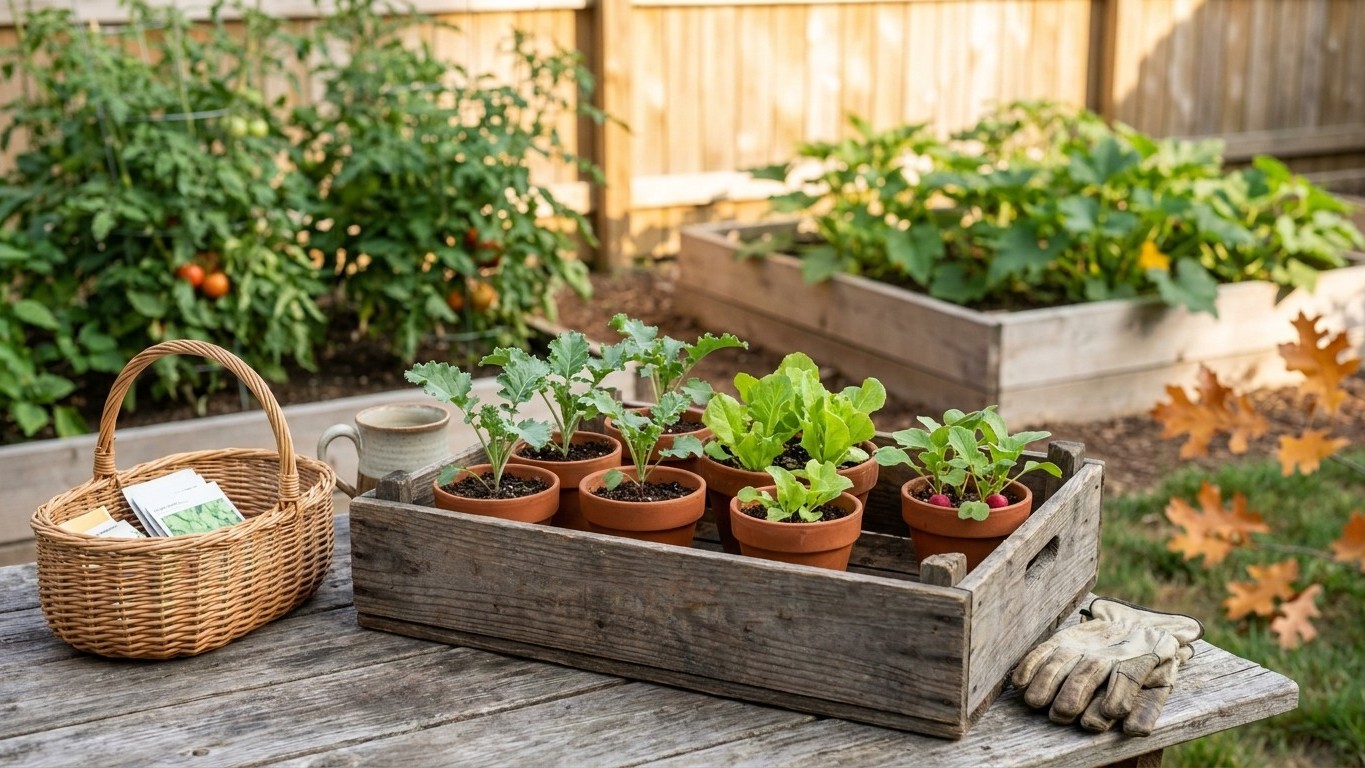

In Nunavut, August falls inside the territory’s brief frost-free stretch, but only just: the average last spring frost lands around June 19 and the average first fall frost around September 13, based on Environment and Climate Change Canada’s normals for the Rankin Inlet area. That leaves roughly six weeks of open-ground time once August begins, not enough to start much from seed and expect a harvest. The realistic answer is quick, hardy greens under some form of cover, picking what’s already up, and getting ready for the frost that’s on its way.
What goes in the ground in August

Soil Temperature, not the date on a calendar, decides what survives here, and in most of Nunavut the ground itself is the limiting factor before frost even enters the picture. Much of the territory sits on permafrost or shallow rocky soil that never fully warms, so the growing medium most gardeners actually use is imported soil or compost in raised beds, planters, or a community greenhouse. “Direct-sown into open ground” means something different here than it does farther south.
By August, the frost-free window that opened around June 19 is already six to seven weeks old, and it closes again around September 13. That’s not enough runway left to start anything that needs a full season. Anything sown from seed outdoors now needs to mature in well under six weeks, and even that is a gamble, because the September 13 date is a mean: in roughly half of years, frost arrives earlier than that.
What can still go in
The crops worth trying, and only under some kind of row cover, cloche, or cold frame:
- Fast salad greens sown as baby leaf: spinach, mizuna, arugula, cut-and-come-again lettuce
- Radishes, which can size up in three to four weeks under protection
- Transplants of hardy greens that were started indoors or under cover earlier in the season and are ready to move out for a short final stretch
Anything that needs a long season, root crops that bulk up over months, or heat-loving plants of any kind, doesn’t belong in an outdoor Nunavut bed at this point. The math simply doesn’t work: not enough weeks left, and soil that was never particularly warm to begin with.
What to start under cover
Counting backward from the average September 13 frost is the only way this makes sense. If a crop needs 30 days from seed to a pickable size, the last realistic sowing date sits close to the second week of August, and that’s cutting it fine given that frost can arrive earlier than the mean in any given year. Anything slower than that belongs indoors for the rest of its life, not in a bed or cold frame outside.
The two ways this goes wrong are mirror images of each other. Start too early relative to what’s left of the season and a transplant sits rootbound in a small pot far longer than it should, stressed and stunted before it ever goes anywhere. Start too late and the plant is still small when the cold arrives, with no time left to size up. In a climate this compressed, there’s very little margin for either mistake.
Under cover in August is mostly about two things: pushing the last quick greens through before the light and warmth run out, and beginning the shift toward what will carry the household through the dark months. Sprouts and microgreens on a windowsill or under grow lights don’t care what the outdoor frost date is at all, and they’re one of the few fresh-food options that stay reliable once the greenhouse or cold frame stops producing. Community greenhouse space, where it exists, is worth using now for anything that still needs another few weeks before the light drops off sharply.
What is ready to pick
Anything sown in the early weeks after the average June 19 last frost should be sizing up by August, and this is the month to get it in before an early frost catches it. Baby-leaf greens like spinach and lettuce are ready whenever the leaves reach a usable size, there’s no need to wait for a “mature” plant; harvesting outer leaves and letting the center keep growing stretches the picking window by weeks.
Radishes are ready when the shoulders push up out of the soil and reach roughly an inch across; leave them longer than that in cool soil and they tend to go pithy rather than sweeter. Kale and other cold-hardy brassicas, where they’ve been grown in a protected bed, actually improve with a light chill, and can often be picked leaf by leaf well past when tenderer greens have finished.
Where crops haven’t been grown outdoors at all, the household food supply for the month leans on stored and indoor sources: sprouts and microgreens started a week or two earlier, anything still coming out of a community greenhouse, and whatever was preserved or stored from a previous season. Checking stored roots, onions, or squash now for soft spots or sprouting is worth the five minutes it takes, since one turning item in storage spreads faster than most people expect.
The jobs that matter this month
With roughly six weeks between the start of August and the average first fall frost, the single most valuable job is watching the weather rather than the calendar. A mean frost date of September 13 means an early frost is not a freak event here, it happens in a meaningful share of years, and covering beds a week or two ahead of a forecast cold snap is far cheaper than losing a bed of nearly-finished greens overnight.
Season-extension work
Row cover, cloches, and cold frames earn their keep in this exact window. Getting them ready and in place before the first cold night, rather than scrambling once frost is forecast, can buy a crop an extra two to three weeks of growth. For anyone running a hoop house or greenhouse, checking that seams and covers are sound before the weather turns matters more now than at almost any other point in the season.
Looking ahead
Seed for Nunavut gardens generally has to travel a long way to get here, and popular hardy varieties can sell out well before the following season opens, so ordering ahead rather than waiting is a practical habit rather than an over-cautious one. It’s also a good month to note which beds performed well and which struggled, since soil in raised beds and greenhouses built on imported material tends to need topping up or amending between seasons rather than being left as-is. Turning compost, cleaning tools before they’re put away, and checking that fencing or covers survived any wind are all small jobs that are far easier to do now than after the ground freezes.
What not to do in August
The most common mistake is treating a mild, sunny stretch of weather as proof that the season has more room in it than it does. Air temperature in the high Arctic can feel warm on a still, sunny day even while soil temperature and the shrinking amount of daylight are already signaling that the season is closing. Sowing something that needs eight weeks to mature, on the assumption that “it’s still summer,” almost always ends with an unfinished crop caught by frost.
Pulling covers off cold frames or hoop houses too soon after a warm spell is the second classic error. A few mild days don’t cancel out an average frost date of September 13, and since that date is a mean rather than a guarantee, frost can arrive with little warning even after a run of pleasant weather. Leaving protection in place, or at least easy to redeploy quickly, costs nothing and saves a bed when the temperature drops overnight.
Heavy nitrogen feeding late in the season is worth avoiding too. Pushing soft, leafy growth just before the cold arrives leaves plants with tender tissue that has no time to toughen up, and that tissue is exactly what frost damages first. Where a feed is needed at all this late, something that supports what’s already growing rather than forcing a new flush is the safer choice.
Checking this against your own county
A single frost window for a territory this size is a starting point, not an instruction. Nunavut spans multiple climate zones, and elevation, distance from open water, and simple latitude shift these dates by weeks between communities, sometimes more. The figures here come from the Rankin Inlet area; a community farther north or at higher latitude should expect a shorter, later-opening season, not the same one.
The hardiness zone for that same reference area sits at 0a in the Canadian system, which is not the USDA scale used elsewhere on this site and can’t be converted to it directly. For local frost data and growing guidance specific to a community’s own conditions, Agriculture and Agri-Food Canada is the place to start.
Common questions
Can anything actually be grown outdoors in Nunavut in August?
Yes, but only fast, hardy crops under some form of protection, and mostly in raised beds or greenhouses built with imported soil rather than native ground, since much of the territory sits on permafrost or shallow rocky soil.
How reliable is the September 13 frost date?
It’s a mean figure from Environment and Climate Change Canada’s climate normals for the Rankin Inlet station, not a guaranteed safe date. In roughly half of years, frost arrives earlier than that, so treating it as a hard deadline rather than a midpoint is a mistake.
Does the Canadian hardiness zone for this area match a USDA zone?
No. The area sits at 0a on the Canadian scale, which is built from seven climate variables rather than the single minimum-temperature measure the USDA system uses, and Natural Resources Canada is explicit that the two scales don’t convert directly.
What’s the single most useful task in a Nunavut garden this month?
Watching the short-term forecast and having row cover or cold frame lids ready to go, since an early frost ahead of the September 13 average can end the outdoor season with little warning.