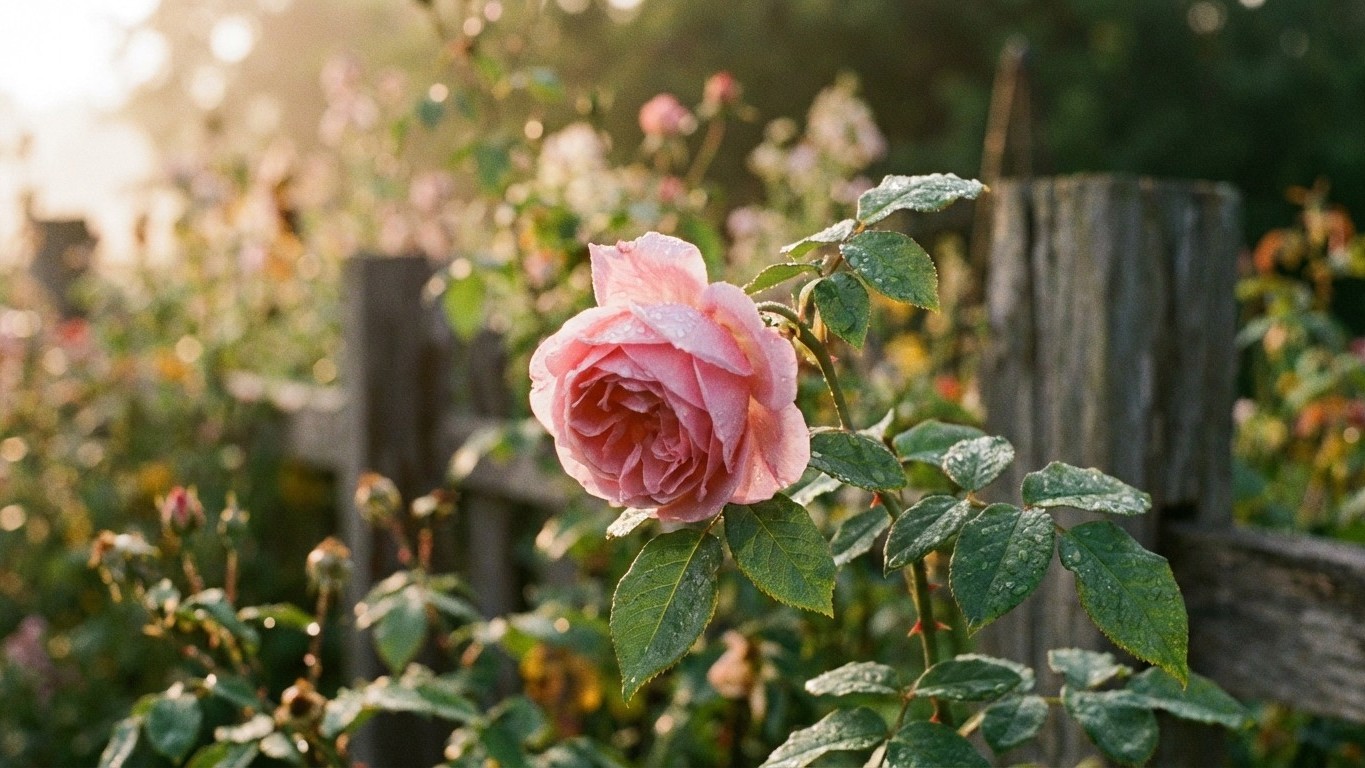

Rugosa roses and the Explorer series are the roses with the best chance of holding up in Nunavut. Natural Resources Canada places the reference community in Canadian zone 0a, the coldest band on its map, and only roses bred for the Canadian prairies and other very cold regions have a fair chance there. Hybrid teas, floribundas and most garden-center climbers will not come through a winter without serious help. Success here starts with a short, specific shopping list.
Which roses survive a Nunavut winter
The number to write down is Canadian zone 0a. Canada’s zones run from 0 at the cold end up to 9, and the system is built on seven climate variables: winter minimum temperature, length of the frost-free period, summer and January rainfall, warmest-month temperature, snow depth and wind gusts. A US label that cites a USDA zone cannot be matched to it by arithmetic. Natural Resources Canada itself says there are no simple conversions, and its example is that Canadian zone 4a overlaps nine different USDA zones, from 3a to 7a. When you shop, read the Canadian zone on the tag, or ask the grower which system a number comes from.
At the cold end of that map, two groups of roses do the work. Rugosas (Rosa rugosa and its hybrids) are tough, thorny shrubs that shrug off wind and salt and regrow from the base after a hard winter. The Explorer series, bred in Canada and named for Canadian explorers, was developed for cold Canadian winters, including on the prairies, and many of its roses need little or no winter protection in cold regions. None was bred or tested for Nunavut’s severity. Both groups are grown on their own roots far more often than modern hybrid teas, which matters for reasons covered below. The native prickly rose (Rosa acicularis) also grows wild across much of northern Canada, a useful reminder that the genus can live in this climate when the genetics are right.
Hybrid teas sit at the other end of the scale. They are bred for flower form, and they need serious help once winters turn truly severe. In the colder half of the Canadian map, help means more than a pile of mulch. In zone 0a it usually means the plant is not a realistic outdoor choice.
How long is the growing season for roses in Nunavut?
At the Rankin Inlet A weather station, Environment and Climate Change Canada gives a mean last spring frost of June 19 and a mean first fall frost of September 13. That leaves roughly twelve weeks between them. Both dates are midpoints of a window. In one year out of two the last spring frost falls later than June 19, and in one year out of two the first fall frost arrives earlier than September 13. Communities farther north or on higher ground run weeks behind this station.
For roses, the short window has a practical meaning. Canes need time to ripen before freeze-up, and soft growth that is still green when hard cold arrives is the first to die. Rugosas and Explorers tend to harden off well, which is part of why they are on the list. Planting dates and frost protection have their own pages, so the focus here stays on what to buy.
Named roses that hold up here
Start with Therese Bugnet, a hybrid rugosa bred in Alberta and introduced in the middle of the last century. It is one of the standard answers for extreme cold. Its canes are reddish and nearly thornless compared with other rugosas, it carries fragrant pink double flowers, and it regrows from the base after dieback. Hansa is the other anchor. This old Dutch rugosa has double magenta-purple flowers, a strong clove scent and large red hips, and it spreads by suckers when grown on its own roots. In a short season those hips are a bonus, since they hold color after the flowers finish.
Among the Explorer roses, William Baffin is a tall, vigorous shrub with clusters of deep pink flowers. Gardeners often treat it as a climber, though it holds up much better than climbers from the south. Henry Hudson is a compact rugosa hybrid with white, scented flowers, a good fit for a small sheltered bed. Jens Munk is another Explorer rugosa, with pink flowers, a wide spread and good wind tolerance. Martin Frobisher takes its name from the explorer who sailed to Baffin Island, and it has soft pink, fragrant blooms on a rugosa-type shrub. None of these is guaranteed in Nunavut, because the climate is more severe than anywhere the breeding programs tested, but they are where the odds are best.
What about Knock Out and New Dawn?
These two names often come up with northern buyers, because they sell almost everywhere. Knock Out is a tough shrub with excellent disease resistance, and it takes real cold in the Upper Midwest by dying back and regrowing. New Dawn is a vigorous, pale pink climber with a long track record in temperate gardens. Neither was bred for the far north, and neither belongs in an outdoor bed at zone 0a. Treat them as container plants at best. Their performance in milder regions says little about a Nunavut winter.
If you plan to buy a named rose, ask whether it is Canadian-bred. Programs such as the Explorer series and the Morden roses developed on the prairies were selected through harsh winters. Disease resistance matters too, though that sits with the rose diseases page. Choose one hardy cultivar and keep it alive for several seasons before adding a second. Plants that die in the first winter teach you nothing about the next cultivar unless you note why they died, so record the spot, the snow cover and the variety.
For the general case of growing the plant itself, growing roses in Nunavut covers the basics.
Sold here, but not for this zone
Garden centers and mail-order catalogs stock roses nationally. The plant on the shelf was grown for the biggest market, which means gentle climates in the south. Whatever reaches a northern shelf or a shipping box from southern suppliers was not chosen for zone 0a. A rose can be healthy, well-rooted and handsome on the day you buy it and still have no chance of living through the first winter outdoors.
Which popular roses need work to survive?
Hybrid teas head the list. They are bred for long-stemmed cut flowers, and they are usually grafted. Floribundas and grandifloras share the same background and the same weakness. Tree roses, which are a hybrid tea or floribunda grafted on top of a tall trunk, are especially exposed, since the whole trunk stands above the snow. English roses from breeders such as David Austin are bred for flower form and fragrance, and they are rated for far milder climates than Nunavut’s. New Dawn (a climber) and the Knock Out family (shrub roses) sit in the same group, as covered above.
Even the plants sold as “hardy” can mislead. A tag may say hardy to a zone number without naming the system, and if it is a USDA number it will not translate into Canadian zone 0a. A rose bought on the strength of a vague phrase like “tough” or “winter hardy” is a gamble. Buy it only if you can accept a loss.
If you still want one of these roses, the practical approach is to grow it in a container and bring it in. A dormant potted rose needs a cold but frost-free place for the winter, and that is hard to arrange where the air outdoors drops far below freezing. Methods for protecting plants outdoors are covered under winter protection for roses. For a grafted hybrid tea or New Dawn in the ground at zone 0a, plan to replace it every year and count it as a seasonal purchase, not a shrub that will grow bigger over time.
What to check on the label before buying
Three details on the label or in the catalog description matter more than the flower photo. The first is grade. Bare-root roses are sold in grades, with Grade 1 being the best, meaning the most and thickest canes and the strongest root system. A Grade 1 plant puts more energy into the one short season you have, while a lower grade spends it catching up. Potted roses usually do not carry a grade, so judge them by cane thickness and root condition.
The second is own-root versus grafted. A grafted rose has a swollen knob near the soil line, the bud union, where the named variety is joined to a different, tougher rootstock. If severe cold kills the canes down to the ground, a grafted plant may regrow from the rootstock instead, and what comes up is a different, usually unremarkable rose. An own-root rose regrows from below the soil as the same variety you bought. The colder the climate, the more often you can expect dieback to the ground, and the more this difference matters. In zone 0a it decides whether the plant keeps its identity after a hard winter. Look for “own-root” or “grown on its own roots” on the tag, and check the base of the plant for the knob.
The third is the hardiness rating and the system behind it. If the tag names a zone, find out whether it is Canadian or USDA. When it is not stated, ask. Choose own-root plants rated for the Canadian system wherever you can, and be wary of any rating you cannot trace to a source. A rose that is rated only by a USDA number will give you no reliable guide to Nunavut conditions.
Checking this against your own county
Nunavut has no counties, so the closest local check is your own community. Zone 0a belongs to the reference community on the national map, and conditions in other communities can be milder or harsher. Look up your community on the Canada Plant Hardiness Site, and for advice on what grows locally, see Agriculture and Agri-Food Canada, the federal agriculture department, for general agricultural information. It is not a direct equivalent of a US extension service. Keep in mind that the reference station’s frost dates will not match your garden exactly.
Common questions
Can roses survive outdoors in Nunavut?
Some can. Rugosas and Explorer roses have the best chance, especially where snow covers the base of the plant through winter. Even they may lose canes in a hard season and regrow from the base. Hybrid teas and most garden-center climbers should be treated as container plants or as annuals.
Is Canadian zone 0a the same as a USDA zone?
No. The two systems are built differently. The Canadian one uses seven climate variables, while the USDA one uses winter minimum temperature alone. Natural Resources Canada states that there are no simple conversions between them, so a USDA number on a plant tag cannot be turned into Canadian zone 0a.
Why does own-root matter so much for roses in the far north?
Severe cold often kills the canes back to ground level. An own-root rose regrows as the variety you bought, while a grafted rose may regrow from its rootstock, giving a different plant. The colder the climate, the more likely that dieback becomes.
Will roses bloom before the first fall frost?
Hardy shrub roses can bloom within the short season, but timing depends on the year and on how much cane survived the winter. The mean last spring frost at Rankin Inlet A is June 19 and the mean first fall frost is September 13, but each is only the midpoint of a window. Frost can come earlier or later, and communities farther north or on higher ground run weeks behind that station.