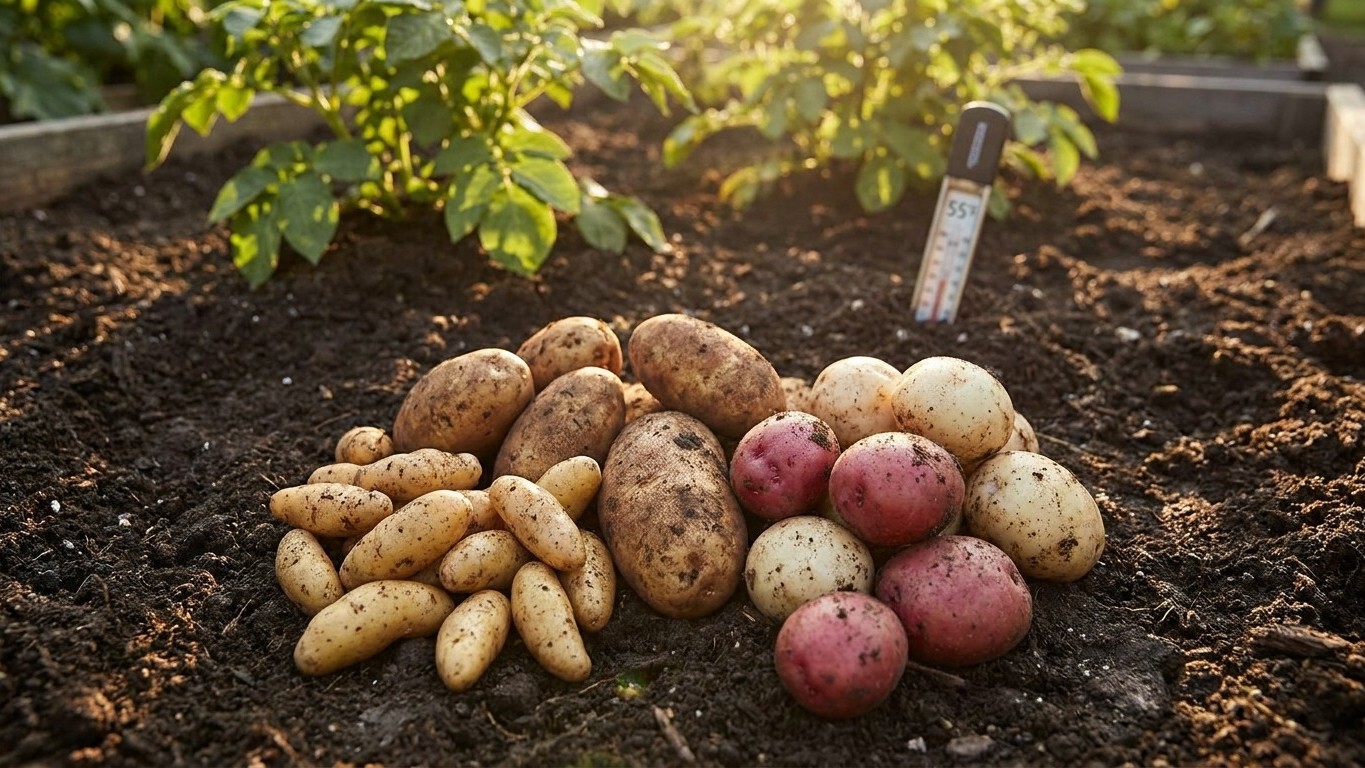

Illinois gardeners get the best results from early and mid-season potatoes suited to baking or boiling, planted as soon as soil hits 50 degrees rather than waiting for a calendar date. That timing matters more than variety choice itself, since Illinois summers routinely push soil temperatures past the point where tubers stop sizing.
The short answer
Plant early and mid-season potatoes in Illinois, and plant them 14 to 21 days before your area’s last spring frost, according to guidance shared by University of Maine Cooperative Extension and Utah State University Extension. That window is not a suggestion; it is how you dodge the heat ceiling that shuts down tuber growth once soil temperatures climb above 90 degrees Fahrenheit.
For a reference point, a Chicago-area NOAA weather station (station USW00094846) shows the last spring frost falling between April 11 and April 22, based on 1991-2020 Climate Normals. That is a single station’s record, not a statewide guarantee. Southern Illinois counties typically see their last frost earlier, and rural gardens away from urban heat islands often run one to two weeks behind an airport reading. Check your own county’s frost data before you set a planting date.
Season class does the heavy lifting here, not brand names. Early-season potatoes bulk up their tubers before the hottest stretch of summer arrives, which makes them the safer bet for most of the state. Mid-season types work too, provided they go in the ground early and get dug before the worst heat sets in. Late-season potatoes ask for a longer stretch of cool soil than much of Illinois reliably offers, and that is where a lot of home gardens run into trouble.
Use matters as much as timing. Some potatoes are grown for baking, others for boiling, and neither university source uses the old “waxy” or “floury” labels. What they publish instead is intended use, which is the more useful distinction for a home cook deciding what to plant next to tomatoes and peppers. A baking potato and a boiling potato behave differently in the kitchen regardless of when they matured, so matching use to your household’s cooking habits is worth as much thought as matching season class to your climate.
Certified seed potatoes are the other non-negotiable. Uncertified seed can carry viruses that quietly reduce yield year after year, and there is no way to spot that damage by looking at the tuber. Buying certified seed from a garden center or extension-recommended supplier removes that risk before it starts.
What actually decides it
Two mechanisms run this whole decision, and once you understand them you can size up a variety this page never mentions.
The heat ceiling underground
Tuber set and fill stop when soil temperatures climb above 90 degrees Fahrenheit, according to Utah State University Extension. This is not a matter of the plant wilting or looking stressed above ground; the tubers simply quit sizing, and extra watering will not reverse it. Illinois soil can cross that threshold by mid to late summer in a normal year, which is why the whole state benefits from potatoes that finish their bulking before the heat peaks. A variety planted late, or a late-season type asked to bulk through August, runs straight into this wall regardless of how well it was watered or fed.
The planting window before last frost
Potatoes go in the ground 14 to 21 days before the last frost date, once soil reaches 50 degrees Fahrenheit, per University of Maine Cooperative Extension guidance. That sounds early, and it is, but potato seed pieces tolerate cool soil far better than most garden crops. The plant’s own foliage can handle a light frost after emergence, so the real limit is soil temperature, not air temperature. If you wait for a warm, frost-free week to plant, you have already given up some of the cool-season growth potatoes need before summer heat arrives.
Why season class outranks variety name
Because neither authority publishes days-to-maturity numbers, season class (early, mid-season, or late) is the only timing signal that is actually verified. A variety marketed under a new name but sold as early-season behaves like other early-season potatoes for planning purposes: it bulks fast and tolerates a compressed cool window better than anything sold as late-season. When you evaluate an unfamiliar variety, ask which season class it falls into and what it’s grown for (baking or boiling) before you ask anything else. Those two facts, sourced correctly, tell you almost everything you need to plan a planting date.
How to do it
- Find your local last spring frost date through your county extension office rather than relying on a single airport station’s average.
- Check soil temperature with a soil thermometer at planting depth; wait until it reads 50 degrees Fahrenheit.
- Count backward 14 to 21 days from your last frost date and plant certified seed potatoes within that window.
- Choose early-season or mid-season varieties over late-season types, since they finish bulking before soil temperatures climb past 90 degrees.
- Match variety to kitchen use, baking or boiling, based on how your household actually cooks potatoes.
- Buy only certified seed potatoes, never seed cut from grocery-store tubers or unlabeled sources.
- Monitor soil temperature through the growing season, especially in July and August, and plan to dig early-season crops before extended stretches above 90 degrees.
What goes wrong
- Planting after the soil warms past 50 degrees. Waiting for a frost-free week instead of checking soil temperature costs you cool growing days. Fix it by planting on soil temperature, not on the calendar or on how the air feels.
- Choosing a late-season variety for a short cool window. Late-season types need more time in cool soil than much of Illinois reliably provides before the 90-degree ceiling arrives. Switch to an early or mid-season type if your local frost-to-heat window runs short.
- Using uncertified or grocery-store seed potatoes. Uncertified seed can silently carry viruses that reduce yield without any visible sign on the tuber. Buy certified seed potatoes every time, even if it costs more upfront.
- Assuming an airport frost date applies to your whole property. A single NOAA station’s 1991-2020 average, like the Chicago-area figure of April 11 to April 22, is a reference point, not a guarantee for a rural garden or a different county. Confirm your own local frost pattern before committing to a planting date.
- Trying to push a summer crop through peak heat. Once soil crosses 90 degrees, watering more will not restart tuber sizing. The fix is planning a spring crop that finishes before the heat arrives, rather than nursing a stalled summer crop that has already stopped filling.
- Ignoring intended use when picking a variety. Choosing a variety without checking whether it’s suited for baking or boiling leads to disappointing results at the stove regardless of how well the crop grew. Check intended use before you check anything else about a new variety.
Common questions
Can I plant potatoes before the last frost date in Illinois?
Yes, and you should. University of Maine Cooperative Extension guidance calls for planting 14 to 21 days before the last frost, once soil reaches 50 degrees Fahrenheit. Potato foliage tolerates light frost better than most vegetable seedlings.
Why do my potatoes stop growing in midsummer?
Soil temperatures above 90 degrees Fahrenheit inhibit tuber set and fill, according to Utah State University Extension. This happens underground regardless of watering, which is why gardens that plant late or grow late-season varieties often see disappointing yields once summer heat sets in.
Is it better to grow early-season or late-season potatoes in Illinois?
Early and mid-season varieties fit Illinois’s climate better because they finish bulking before soil temperatures climb past the 90-degree ceiling. Late-season types need a longer stretch of cool soil than most of the state reliably offers.
Does it matter if I use seed potatoes from the grocery store?
It does. Uncertified seed, including grocery-store tubers, can carry viruses that reduce yield without visible symptoms. Certified seed potatoes remove that risk and are worth the extra cost for a reliable harvest.