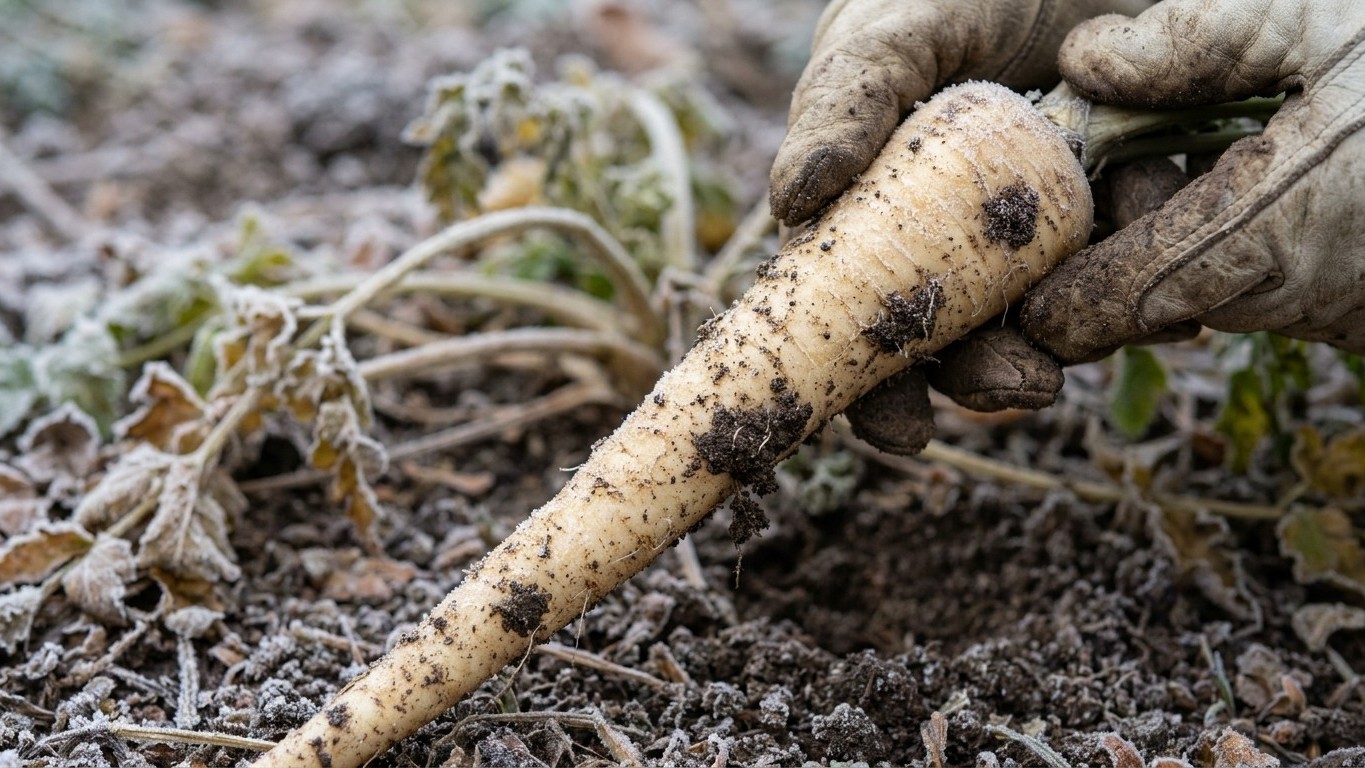

A parsnip grown in Delaware will sweeten, not just grow. The reference station at Wilmington shows a mean minimum of 25.6°F in the coldest month, cold enough for repeated hard freezes that convert stored starch into sugar. The frost-free season here runs long enough, too, so the crop has time to mature before that cold arrives. The real work is matching sowing dates to the frost calendar and giving the roots soil they can grow straight down into.
The short answer
Here’s the question that actually decides this, before anything about zones or averages: does this territory deliver several frosty weeks, not just an occasional freeze? At the Wilmington reference station, the coldest month averages a mean minimum of 25.6°F. That’s not a record low and it’s not a single overnight dip. It’s the average of the lowest nightly temperature across an entire month, which means nights in the mid-20s are routine, not rare, during that stretch of winter.
That distinction matters because sweetening in a parsnip isn’t triggered by surviving winter. It’s triggered by cold exposure itself. The frost breaks down starches stored in the root and turns them into sugars, and that process needs sustained freezing weather, not a token frost followed by weeks of mild days. A mean minimum in the mid-20s tells you the cold here isn’t a one-off event. It’s a recurring condition across several weeks, which is exactly the exposure the root needs.
This is also where a lot of garden advice goes wrong by leaning on hardiness zone instead. A zone rating describes whether a perennial plant survives winter dormant in the ground. It says nothing about how many frosty nights a biennial root crop like parsnip actually experiences while sitting in the soil waiting to be harvested. Two locations can share the same hardiness zone and have very different numbers of hard-freeze nights, and it’s that count of freezing nights, not the zone label, that decides whether your parsnips taste sweet or just taste like a parsnip.
So the plain answer for anyone gardening in Delaware: yes, a parsnip left in the ground here through the cold weeks of the coldest month will sweeten. The mean minimum sitting at 25.6°F means the ground and the roots in it are exposed to real freezing conditions for an extended stretch, not a brief cold snap. What determines the outcome after that point is mostly management: whether the roots were sown early enough to mature before that cold sets in, and whether they were left in the ground long enough afterward to actually experience it. Pulling parsnips too early, right after the calendar hits 100 days, skips the part of the process that makes them worth growing in the first place. The cold is available here. Using it is the gardener’s job.
Does the season fit?
Parsnips take 100 to 120 days from seeding to maturity, and they’re sown directly in place rather than started indoors and transplanted. The sowing itself happens 2 to 3 weeks before the last spring frost, since the seed tolerates cool soil better than most root crops. Working out whether that fits Delaware’s frost calendar means lining up a few numbers in sequence.
- At the Wilmington reference station, the last spring frost falls between April 3 and April 14. Counting back 2 to 3 weeks puts the sowing window in mid-to-late March for most of this territory.
- Germination itself is slow. Parsnip seed takes 14 to 21 days to come up, which means three weeks of bare-looking soil is normal, not a sign of failure. Gardeners who give up and re-sow at day ten are working against the seed, not with it.
- From that seeding date, the 100 to 120 days to maturity land somewhere between late June and late July, well inside the frost-free stretch of the calendar.
- The first fall frost at the reference station arrives between October 26 and November 7. Counting from a late-July maturity date to early November leaves roughly three months of margin before the ground freezes hard.
- That margin is not wasted time. It’s the window where the mature root sits in the soil absorbing the cold snaps of autumn, the part of the process that actually builds sweetness.
Add it up and the frost-free season at this reference station runs about 206 to 207 days end to end, well over the 100 to 120 the crop needs to mature. That’s a comfortable fit, with enough slack left over to leave the roots in the ground through several fall frosts before pulling them. A gardener working from a later sowing date, or a colder microclimate away from the coast, still has room to work with here. Someone starting in early May, on the other hand, is cutting that margin much closer and should expect a smaller window before the ground stiffens up for the season.
What goes wrong here
- Forked roots from heavy or stony ground. Parsnips send a taproot straight down, and clay-heavy or rocky Delaware soil deflects that root into two or three prongs around any obstruction. The fix is working the bed 12 to 15 inches deep before sowing, removing stones, or double digging heavier plots so the root has a clear path down.
- Forked roots from overwatering. This is a separate cause from soil texture, and it happens even in loose, sandy ground. Inconsistent or heavy watering encourages the root to branch as it chases moisture unevenly through the soil profile. Steady, moderate watering on a regular schedule, rather than occasional soaking, keeps the taproot growing in one straight line.
- Giving up on germination too soon. Because parsnip seed takes 14 to 21 days to sprout, a bed that still looks bare at day twelve gets dug up and re-sown by impatient gardeners more often than it should. Mark the row, wait out the full three weeks, and resist disturbing the soil in between.
- Sowing outside the window and running the season short. A sowing pushed into May instead of mid-to-late March eats into the margin between maturity and the first fall frost. The remedy is simple: sow within the 2-to-3-week-before-last-frost window rather than waiting for warmer, more comfortable planting weather.
- Warm coastal or urban microclimates blunting the cold. Spots near Delaware Bay or within Wilmington’s built-up areas can run consistently milder than the open-country reference figures, cutting down the number of hard-freeze nights a root actually experiences. Where that’s the case, leave the roots in the ground longer into fall rather than harvesting at the first light frost, giving them more exposure before pulling.
Every part of a parsnip plant carries a chemical risk that has nothing to do with taste or soil. As the North Carolina Extension Gardener Plant Toolbox states directly: “All parts of this plant contain furocoumarins which can make skin sensitive to light causing burns so be sure to wear gloves, long sleeves and long pants when dealing with it.”
What makes this catch people off guard is the mechanism. The burn isn’t caused by the sap alone. It takes sap on the skin plus sunlight hitting that same skin afterward. That combination is exactly what happens on a bright day of pulling roots or clearing away the tops, hands and forearms brushing against foliage and stems in full sun for an hour or more. The reaction doesn’t show up immediately either. It can surface hours later, well after the gardening is done and the sap has already dried on the skin, which is part of why people don’t connect the burn to the plant at all.
Because the exposure needs light as well as sap, washing up afterward doesn’t undo the damage once sunlight has already reacted with skin that had sap on it. The protection has to come before the exposure, not after: gloves, long sleeves, and long pants whenever handling any part of this plant, harvest day included.
Checking this against your own county
Every figure above comes from a single reference station near Wilmington, and Delaware’s frost dates shift by county and by how close a garden sits to the Bay, to open farmland, or to built-up ground that holds heat. A rural plot inland can see its last spring frost run later and its first fall frost arrive earlier than the numbers used here, sometimes by a week or two.
Before locking in a sowing date, check those local frost windows with the University of Delaware Cooperative Extension. Their agents work with county-level data and can speak to how a specific garden’s exposure, soil, and elevation shift the picture from the reference figures used across this article.
Common questions
Can parsnips be sown indoors and transplanted in Delaware?
No. Parsnips are sown directly in place. The taproot doesn’t tolerate the disturbance of transplanting, and starting it indoors typically produces the same forked, stunted roots that heavy soil or overwatering cause outdoors.
How long can parsnips stay in the ground after the first fall frost?
The Utah State University Extension guidance behind this article doesn’t publish a specific end date, only that flavor builds over several weeks of cold exposure. Given the reference station’s roughly three-month gap between maturity and the ground freezing hard, there’s substantial room to leave roots in place well into fall.
Does a mild winter mean the parsnips won’t sweeten at all?
It depends on how mild. A winter with only occasional light frost and no sustained cold stretch will produce a parsnip that grows fine but never develops much sugar. Delaware’s coldest-month mean minimum of 25.6°F points to real, recurring freezing weather rather than an occasional dip, which is what sweetening actually requires.
What soil type works best for parsnips in this territory?
Deep, sandy soil is the starting point recommended by Utah State University Extension, since the taproot needs an unobstructed path down. Heavier Delaware clay isn’t disqualifying, but it needs to be double dug or amended before sowing, otherwise forked roots become the norm rather than the exception.