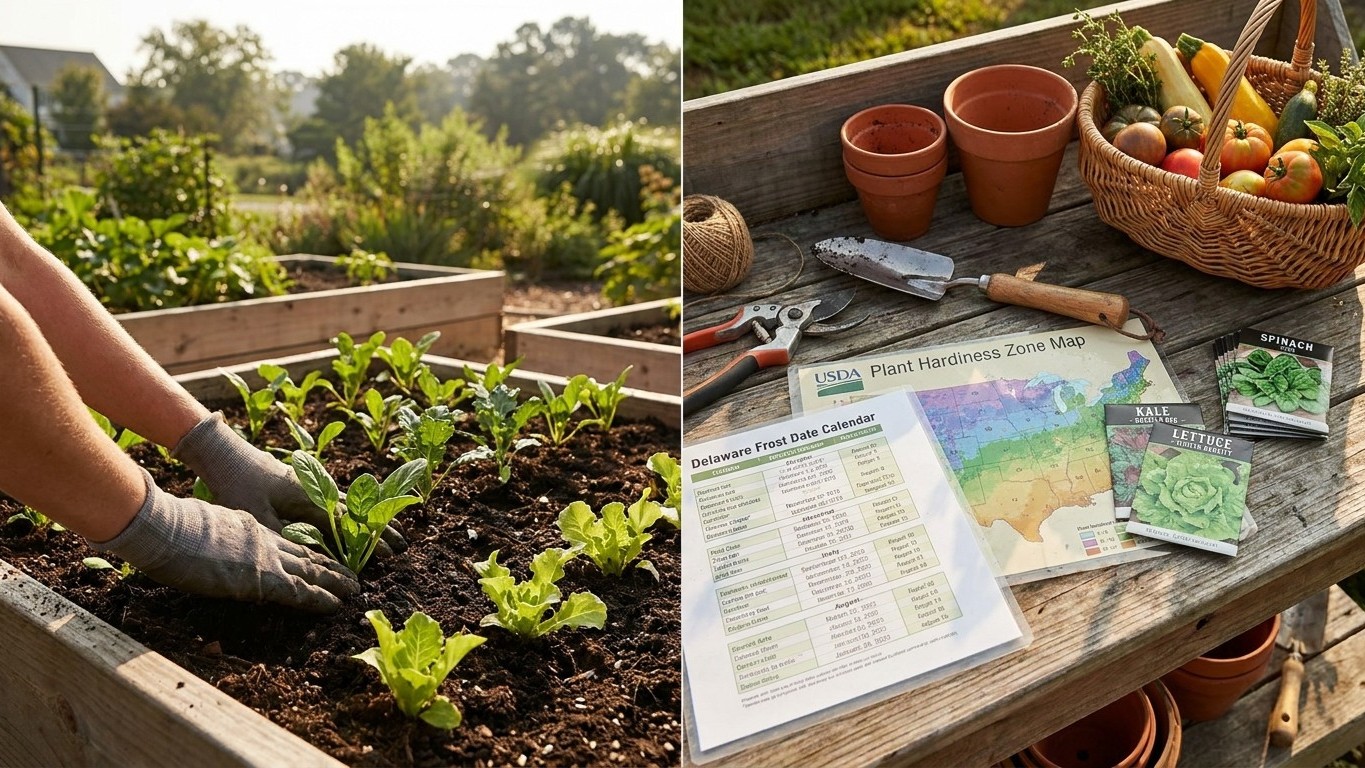

Late August in Delaware means one thing for gardeners: the window for a fall harvest is open, but it’s closing fast. Cool-season crops like kale and lettuce can still go into the ground through mid-September in most of the state, and the same is true for Growing Spinach in Delaware, which also thrives when sown during this same fall window. This is also prime time to overseed lawns and divide overgrown perennials before the soil cools, and it’s a good moment to plan out a permanent bed for a perennial vegetable, since Growing Asparagus in Delaware starts with crown placement and soil prep that’s best done well ahead of the spring planting season. What actually thrives here depends heavily on which county you’re in, since Delaware’s small size hides a surprising amount of climate variation between Wilmington and the coast.
Delaware’s Climate and What It Actually Means for Planting Dates

Delaware sits almost entirely in USDA Hardiness Zones 7a and 7b, according to the USDA Plant Hardiness Zone Map, with a narrow strip along the southern coast in Sussex County nudging into 8a. That’s not a huge spread on paper, but it translates into real differences on the ground. New Castle County, up near Wilmington, tends to see first frost around mid-to-late October. Head south to Sussex County near Rehoboth Beach or Lewes, and the Atlantic keeps things milder into early November some years.
That extra two to three weeks matters more than most gardeners assume. A gardener in Georgetown can still get a decent crop of bush beans planted in early August, while someone in Newark needs to have already switched to frost-tolerant crops by then—and it’s also enough of a window to consider a second round of a crop like potatoes, since Growing Potatoes in Delaware depends heavily on timing planting around the local frost schedule. The same logic applies to warm-season crops that need every bit of that extra heat, which is why Growing Peppers in Delaware tends to favor gardeners in the milder coastal pocket, and it’s the same extra heat that makes Growing Sweet Corn in Delaware more forgiving near the shore than inland. Root crops benefit from this timing flexibility too, and Growing Carrots in Delaware often means a fall sowing that stretches into tha, much like Growing Pumpkins in Delaware relies on that extended coastal season to reach full maturity before the first frostt extra warm window along the coast, much like Growing Parsnips in Delaware, which relies on that same lingering coastal warmth to develop properly before harvest. The same is true for Growing Beets in Delaware, another root crop that does well with a fall sowing timed to the coastal frost schedule. The takeaway for anyone gardening in Delaware right now: check your specific county’s average first frost date rather than relying on a statewide number, because the difference between 7a and the coastal 8a pocket can shift a planting calendar by three weeks in either direction.
Summers here run hot and sticky. Delaware’s inland location combined with its low elevation means humidity lingers well into September, which keeps soil warm longer than gardeners in, say, inland Pennsylvania might expect. That’s good news for heat-loving crops trying to finish out their season, but it also means fungal pressure doesn’t let up just because the calendar says fall is coming.
What Late Summer And Early Fall Allow In Delaware Gardens
Right now, at the tail end of August, Delaware gardeners have a specific and fairly narrow list of smart moves. Direct-seeding fast-maturing greens (spinach, arugula, mustard greens) still works through mid-September in Kent and Sussex counties, a bit earlier further north. It’s also worth planning ahead for autumn traditions, since knowing When to Carve a Pumpkin in Delaware can help you time any pumpkin patch plantings still in the ground. Transplants of broccoli, cabbage, and cauliflower started indoors in July should be going into beds now if they haven’t already, since these brassicas need roughly 60 to 80 days to mature before hard frost shuts things down.
Garlic planting is a fall ritual worth flagging even though it’s still weeks away. Delaware growers typically plant garlic cloves in late October through mid-November, timed so roots establish before the ground freezes but before top growth emerges. Marking that window now, rather than scrambling in November, saves a lot of frustration.
Lawn care deserves equal attention this time of year. Tall fescue, the dominant turf type across Delaware because it handles both summer heat and winter cold reasonably well, does its best establishing in September when soil temperatures are warm but air temperatures have started to ease. Overseeding thin patches now, rather than waiting until spring, gives new grass a full fall and winter to root before next summer’s heat stress arrives.
A few practical tasks round out the late-summer list:
- Divide and transplant spring-blooming perennials like peonies and daylilies once temperatures drop below 85 degrees consistently
- Cut back diseased foliage on tomatoes and squash to slow the spread of blight before it overwinters in soil debris
- Start hardening off any second-round transplants gradually rather than moving them straight from indoor trays to full sun
Soil Realities Vary More Than You’d Expect Across Three Counties
Delaware’s three counties sit on genuinely different geological ground, and that shapes what grows easily versus what fights you every season. New Castle County, in the north, edges into the Piedmont region with heavier clay-influenced soils that hold moisture and nutrients well but drain slowly after heavy rain. Gardeners there often deal with compaction and benefit from raised beds or generous compost amendments to loosen structure.
Move south into Kent and Sussex counties and you’re squarely in the Atlantic Coastal Plain, where sandy loam dominates. This soil drains fast, which is a blessing during Delaware’s humid summers when fungal disease thrives in waterlogged root zones, but it also means nutrients and water leach through quickly. Sussex County gardeners in particular tend to need more frequent watering and fertilizing compared to their New Castle counterparts, even though both are technically in the same state.
The practical fix in sandy soil is organic matter, consistently added over years rather than dumped once. Compost, aged manure, and shredded leaves worked into coastal plain beds each fall improve water retention dramatically by the following summer. Clay soil in the north benefits from the same amendments for the opposite reason: they open up compacted structure and improve drainage.
Testing Before Guessing
Soil pH across Delaware tends to run slightly acidic, which suits blueberries and azaleas without much adjustment but can shortchange vegetables like broccoli and asparagus that prefer closer to neutral. A basic soil test, run every two to three years, is the only way to know for sure what a specific yard needs rather than applying lime or sulfur based on statewide averages that may not match a particular property.
The Challenges Delaware Gardeners Deal With Every Year
Humidity is the recurring antagonist in Delaware gardens. The combination of coastal proximity and inland heat creates conditions where powdery mildew on squash and cucumbers, and early blight on tomatoes, show up almost predictably by late July most seasons. Spacing plants further apart than seed packets suggest, and watering at the base rather than overhead, cuts down on this pressure considerably. It’s a small adjustment that pays off disproportionately.
Deer pressure is another statewide constant, worse in the more rural stretches of Kent and Sussex counties where suburban development hasn’t pushed populations back as much as it has around Wilmington. Fencing at least 8 feet high is the only truly reliable deterrent; repellent sprays work for a season at best before deer habituate to the smell.
Coastal Sussex County gardeners face a more specific problem: salt spray and occasional storm surge affecting properties within a mile or two of the shoreline. Salt-tolerant plantings (like certain ornamental grasses and beach plum) hold up better than standard vegetable gardens in these exposed spots, and windbreaks made of shrubs planted on the windward side genuinely reduce salt damage to more sensitive crops further inland on the same property.
Japanese beetles round out the list of persistent nuisances, typically emerging in late June and feeding heavily through July across the entire state. Hand-picking into soapy water in early morning, when beetles are sluggish from cooler overnight temperatures, remains more effective than most commercial traps, which tend to attract more beetles to a yard than they actually capture.
What Changes Once October Arrives
The next few weeks matter because they set up everything through winter. Bulbs for spring color, tulips, daffodils, crocus, go into the ground once soil temperatures drop below 60 degrees, which in Delaware usually means late October to November depending on that same north-south split that governs frost dates. Planting too early in still-warm soil can trigger premature sprouting that gets damaged by the first hard freeze.
Cover cropping empty vegetable beds is worth serious consideration for anyone who hasn’t tried it. Crimson clover or winter rye, seeded in September after summer crops are pulled, protects bare soil from erosion over winter and adds organic matter back in when tilled under come spring. Given how quickly Delaware’s sandy coastal plain soils lose nutrients, this is one of the higher-value, lower-effort moves available to gardeners in Kent and Sussex counties in particular.
None of this requires elaborate infrastructure or specialized knowledge, just attention to the specific timing that Delaware’s coastal-inland split creates. A gardener working with the actual frost dates and soil type of their own county, rather than generic zone-based advice, ends up with noticeably better results by the time the first hard freeze finally settles in.
Where to check before you plant
Delaware only stretches about a hundred miles from the Pennsylvania line to Fenwick Island, but that distance covers real differences in frost timing. A garden in New Castle County can see its first hard freeze two to three weeks before one in coastal Sussex County, where the Atlantic and the bays keep air temperatures milder into late fall. The numbers used earlier in this article reflect one location, and applying them blindly at either end of the state means either losing a crop early or missing the window for a fall planting that could have survived.
The University of Delaware’s Cooperative Extension is the authority to check against, since its recommendations are built around the specific soil and climate conditions found across the state’s three counties rather than a single averaged date. You can find their guidance here: University of Delaware Cooperative Extension.
From there, look up your county office directly. New Castle, Kent, and Sussex each publish their own frost and planting guidance, and that local version is the one worth trusting over any general statewide figure.
Where to Go Next
Once you’ve got a feel for what Delaware’s calendar allows, the details start to matter — and they’re different for every plant. If you’re thinking about fall planting, growing garlic in Delaware walks through why the state’s freeze timing, especially around Wilmington’s late-October cold snap, is exactly what a clove needs to split into a full head by summer. If your patience runs more toward turf than vegetables, Delaware lawn care covers the cool-season grass and feeding schedule that fits a climate where 90°F days are the exception, not the rule, at the Wilmington reference station. And if tomatoes are the whole reason you’re out there in the first place, growing tomatoes in Delaware lays out how that same Wilmington weather station — and its official 30-to-70-percent frost odds — ends up setting your planting date whether you garden next door to it or two counties away. Read any of the three and you’ll see the same pattern: the season doesn’t ask what you want to grow, it tells you when you’re allowed to.