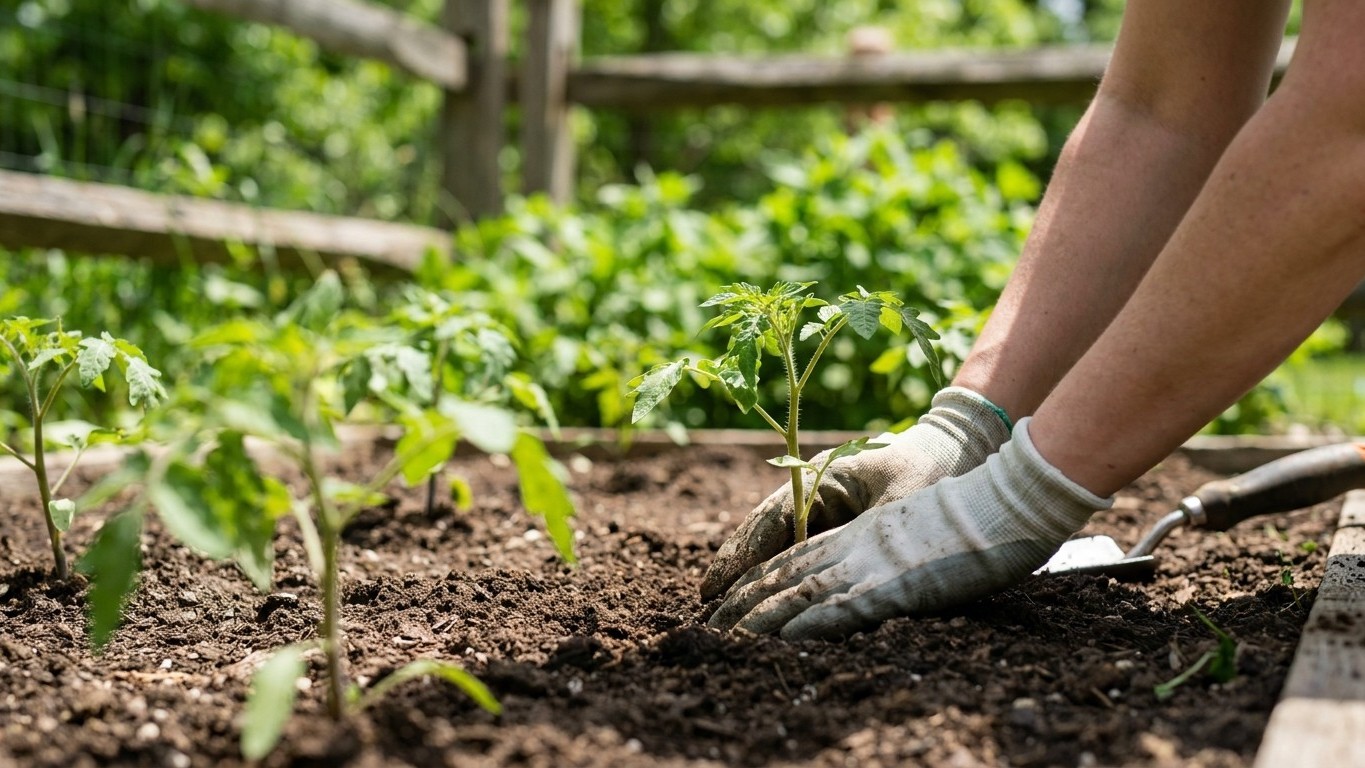

June is the true starting line for Nunavut gardens, but the mean last spring frost at Rankin Inlet falls on June 19, right in the middle of the month. That means the first half of June still carries real freeze risk, and only the toughest crops belong outdoors even then, mostly in raised beds or under some kind of cover. Everything else waits, or moves under glass and plastic.
What goes in the ground in June

The mean last frost date of June 19 at Rankin Inlet A is exactly that: a mean. Environment and Climate Change Canada’s own normals show it as a midpoint, not a safe cutoff, which means in roughly half the years on record, frost has arrived later than that date. Treat it as the center of a window, not a green light, and shift your own plans later if your community sits north, inland, or at higher ground than Rankin Inlet.
Given that, plain honesty says most of Nunavut is not a place to trust bare open ground to tender crops in June, and often not even to hardy ones in the first two or three weeks. What changes the picture is cover and soil warmth, not the calendar square. Permafrost keeps native ground cold and often waterlogged well into the season, which is exactly why most food growing here happens in raised beds filled with imported or amended soil, in cold frames, or in community hoop houses and greenhouses rather than in open rows.
Once that soil has thawed and nights are holding reliably above freezing, a short list of crops can go into raised beds or under low tunnels: radish, spinach, hardy lettuce and kale mixes, and peas, all of which tolerate a light frost and germinate in cool soil. Shallot and onion sets, tucked into raised beds once workable, round out the safe list. None of this should go into bare exposed ground with no protection this early; a low tunnel or cold frame lid buys real insurance against the swings that are normal here in June.
What does not belong outside yet, covered or not, is anything that needs consistently warm soil to germinate or grow, tomatoes, squash, beans, corn. The frost-free window this far north runs roughly from that June 19 mean to the mean first fall frost of September 13, about 86 days total. That is not enough season to gamble any of it on an early, exposed planting.
What to start under cover
With roughly 86 frost-free days on average between the two mean dates, timing what gets started indoors or under glass has to be counted backward from that short window, not forward from a fixed date. A crop that needs five to six weeks of indoor growth before it can handle a hoop house or cold frame should have gone in weeks before the ground even thaws, which for many Nunavut gardeners means starting well before June arrives. Anything sown indoors now is really aimed at a July or early August transplant, filling a second wave rather than the first.
The two ways this goes wrong are familiar to gardeners everywhere, but they bite harder in a season this compressed. Start too early and seedlings sit indoors too long, becoming rootbound and leggy under limited light and warmth, then struggle once they finally go into a cold frame or raised bed. Start too late and there simply is not enough of the 86-day window left to finish a crop before the September mean frost closes things down.
Quick-maturing greens are the safer bet for anything started now: a second batch of spinach, radish, or a fast lettuce mix can still be sown indoors or directly into a warmed cold frame and reach harvest within the remaining window. Slower crops, anything counted in months rather than weeks, are better held for greenhouse space where the season can be stretched artificially with heat and light rather than pushed into the open air.
What is ready to pick
Honestly, not much is coming out of open ground in Nunavut this early in the season, and that is worth saying plainly rather than padding a harvest list that does not exist yet. What is often ready is whatever went into a hoop house, greenhouse, or cold frame weeks before the ground outside was even workable: a first cutting of microgreens, sprouts grown entirely indoors, or an early flush of radish and spinach started under cover ahead of the outdoor season.
Community greenhouses across the territory, where they exist, tend to carry the earliest real harvests, since they buffer both the cold and the extreme swings in daylight that come with a far-northern June. For households without that access, sprouting seeds and growing microgreens on a windowsill remain the most reliable fresh food from a seed this early, regardless of what the ground outside is doing.
This is also the month to go back through whatever is left in storage from the previous season. Potatoes, squash, and onions held over winter should get a hands-on check now: soft spots, sprouting eyes, or a sweet fermented smell mean a squash or potato is turning and should be used or composted before it spreads to the rest of the store. Onions that have started sending up green shoots are still edible but are past their storage life and should move to the front of the meal plan.
The jobs that matter this month

June’s most valuable work in Nunavut has less to do with seeds and more to do with structures and soil. Raised beds need their soil checked and turned as it thaws, since compacted, waterlogged ground straight off a winter freeze will smother roots before they get going. Where soil has been imported or amended, this is the month to work in compost or aged manure so nutrients are available as the short season ramps up.
Nunavut’s June brings something most American gardeners never plan around: daylight that runs close to 24 hours at this latitude. That light heats cold frames and hoop houses fast, even when the outdoor air stays cold, so ventilation matters as much as insulation this month. A cold frame left sealed on a bright day can cook young seedlings even with snow still on the ground nearby, so check and vent covered structures daily rather than relying on air temperature alone.
Mulching raised beds helps hold the soil warmth that took weeks to build, and it is worth doing as soon as soil temperature feels right to the hand rather than waiting for a fixed date. Staking peas and any climbing crop should happen before growth gets tangled, since retrofitting supports later damages roots that are already working hard in cold soil. Watering needs a light touch early in the month, since thawing ground often holds more moisture than it looks like it does, and overwatering compounds the cold-soil stress crops are already under.
Succession sowing of quick greens, a small new patch of radish or spinach every week or two, keeps a harvest coming through the rest of the short season instead of one crowded flush. Scouting for pests matters less here than in warmer climates, but slugs can appear fast in the damp, cool conditions inside a covered bed, so a quick check under leaves costs little and catches problems early.
What not to do in June
The most common mistake in a place like Nunavut is trusting the air, not the soil or the date. A run of bright, mild days under near-constant daylight can feel like summer, but it says nothing about whether soil has actually thawed and warmed, or whether the mean last frost of June 19 has genuinely passed for good. Setting out anything beyond the hardiest greens and peas on the strength of a few warm afternoons is a common way to lose a planting to a cold snap days later.
Uncovering cold frames or hoop houses too widely after a mild stretch is the second classic error. Pulling back protection fully, rather than venting it and closing it again at night, leaves young plants exposed the moment temperatures drop, which they still do regularly through June this far north. Partial, daily venting protects growth without gambling the whole planting on the weather holding.
Feeding nitrogen heavily early in the month is another misstep, since cold soil slows root uptake and much of that fertilizer either leaches away or pushes soft, frost-tender leaf growth at exactly the point plants can least afford it. Holding off on heavier feeding until soil has genuinely warmed, and roots are actively growing, gets far better results than an early, well-meant dose.
Checking this against your own county
The Rankin Inlet A figures used here are a starting point, not an instruction for every community across Nunavut. This is a territory where coastline, elevation, and simple distance north or south can shift a frost window by weeks in either direction, and a mean date measured at one station will not hold everywhere. Before committing seed or transplants to a raised bed or cold frame, check conditions against your own community’s recent history and local knowledge, and use Agriculture and Agri-Food Canada as a starting reference for broader planting guidance.
Common questions
Can I plant directly into open ground in Nunavut in June?
Only the hardiest crops, and only once soil has thawed and nights are reliably above freezing. Given that the mean last frost falls June 19, with real risk of frost later than that in about half of years, most gardeners get better results from raised beds or covered structures than from bare open ground this month.
Why does daylight matter so much for June planting here?
At this latitude, June brings close to 24 hours of daylight, which heats cold frames and hoop houses quickly even when the outdoor air is still cold. Structures need daily venting to avoid cooking seedlings, regardless of what the thermometer outside shows.
What is the safest crop to start with in a Nunavut June?
Radish and spinach are usually the most forgiving choices, since both tolerate cool soil and light frost and mature quickly enough to fit inside the roughly 86-day window between the mean last spring frost and the mean first fall frost.
Is the Canadian hardiness zone the same as a USDA zone?
No. The reference city here sits in Canadian zone 0a, a rating built from seven climate variables rather than the single minimum-temperature measure the USDA system uses. The two scales do not convert directly, and a Canadian zone can span multiple USDA zones, so treat 0a as a Canadian-system figure only, not a USDA equivalent.