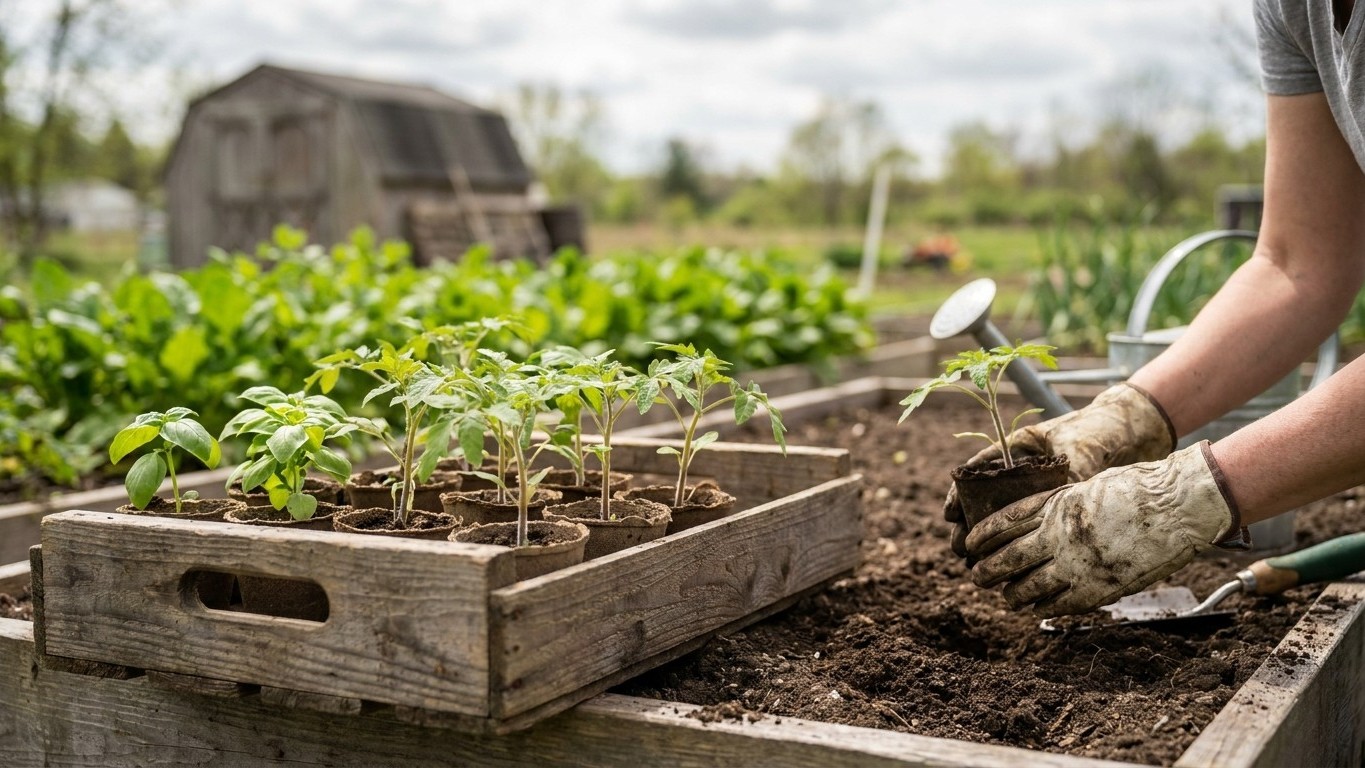

In Nunavut, May is not a planting month for anything grown in open soil. The ground is still frozen or buried under snow across most of the territory, and the average last spring frost doesn’t arrive until June 19. What you can do in May is start seeds indoors, prep containers and cold frames, and order the seed you’ll need once the brief growing window opens.
What goes in the ground in May
Nothing goes into open ground in Nunavut in May. That’s not a hedge, it’s the honest answer for a territory where the average last spring frost, measured at the Rankin Inlet A station, falls on June 19. And that date is a midpoint, not a guarantee: in one year out of two, frost arrives even later than that. Soil temperature, not the calendar, decides when a seed can survive outdoors, and in May the ground across most of Nunavut is either still frozen solid or just beginning to thaw at the surface.
The territory sits in Canadian hardiness zone 0a, based on the reference city used for that rating. That’s the coldest classification on the Canadian scale, built from seven climate variables rather than the single minimum-temperature figure the USDA system uses. Don’t try to match it to a USDA zone number elsewhere on this site. It doesn’t convert, and Natural Resources Canada says so directly.
So what actually happens in a Nunavut garden in May? Almost all of it happens under cover. Home growers who use cold frames or small greenhouse structures may begin conditioning them, sealing gaps and letting sunlight start warming the soil inside, but planting inside those structures still waits until there’s enough stored heat to keep seedlings alive overnight. Community greenhouses, which a number of Nunavut settlements maintain as shared growing spaces, typically spend May on cleanup and system checks rather than sowing. Outdoors, there is no dormant planting, no bare-root work, and no garlic going into beds the way it might in a milder province. The frost table below shows why.
| Measure | Value | Station |
|---|---|---|
| Average last spring frost | June 19 | Rankin Inlet A |
| Average first fall frost | September 13 | Rankin Inlet A |
| Hardiness zone (Canadian system) | 0a | Reference city |
What to start under cover
Work backward from that June 19 average, not forward from a fixed date on a calendar. If transplants need several weeks of indoor growth before they can go into a cold frame or greenhouse bed, and the earliest realistic outdoor window doesn’t open until mid-June at the very soonest, then May is the month to have hardy seedlings already growing under lights or on a bright windowsill. Cold-tolerant crops such as kale, spinach, and other leafy greens are the reasonable candidates, since they’re the ones that can handle a cool, short, uncertain season once they do move outside or into a cold frame.
The two ways this goes wrong are familiar to anyone who’s grown vegetables at high latitude. Start too early, weeks before the frost window has any realistic chance of closing, and the seedlings sit indoors far longer than planned, growing leggy and rootbound in containers too small for them. Start too late, and there isn’t enough of the short frost-free stretch, roughly the span between June 19 and September 13 on average, left to bring a plant from transplant to harvest. Given how tight and how late that window already runs in Nunavut, most home growers do better erring toward starting seedlings now rather than waiting for warmer-feeling days that may not mean much for soil temperature.
Growing under lights indoors, rather than on a windowsill alone, matters more here than in most of the country, since daylight length in May is unusual at this latitude and natural light quality through a window doesn’t always match what young seedlings need to stay stocky rather than stretched.
What is ready to pick
Nothing is coming out of a Nunavut garden outdoors in May. There’s no overwintered crop pushing up through thawing soil the way there might be farther south, because the ground itself hasn’t thawed. What feeds a household this month comes from indoor growing and from stores laid in earlier.
Sprouts and microgreens are the realistic fresh harvest in May for a Nunavut home grower. Both can be grown on a countertop in a matter of days to a couple of weeks, using nothing more than a shallow tray, a bit of growing medium or even just a jar, and they don’t depend on outdoor conditions at all. For anyone with shelf-stored produce from earlier in the season, whether that’s root vegetables or winter squash, May is a good point to go through what’s left and check it over. Squash that’s starting to soften at the stem end, potatoes that have gone soft or sprouted heavily, and onions that feel spongy rather than firm should be pulled and used first, before they spread rot to what’s stored around them.
If there’s a cold frame that made it through winter with anything planted late the previous season, it’s worth a careful look too. Occasionally a hardy green survives longer than expected under insulation and snow cover, though this is the exception rather than something to plan around in a territory this far north.
The jobs that matter this month
May in Nunavut is a planning and preparation month, and there’s genuine work in it, not filler. Seed ordering belongs near the top of the list. Varieties bred for short, cool seasons sell out early, and growers this far north have less margin than most to make do with a substitute variety that needs a longer stretch of warmth than the local window can provide.
Soil testing and amending matter here too, though it typically happens in containers, raised beds, or greenhouse plots rather than open ground, since that’s where most Nunavut vegetable growing actually takes place. May is a reasonable time to check what’s in those growing beds before the season’s first sowings go in under cover, and to work in compost or amendments while there’s still time for them to settle before planting.
Structural checks deserve attention as well. Cold frames, hoop houses, and community greenhouse coverings take a beating over a Nunavut winter, and May is the point to look for torn plastic, damaged frames, or seals that failed under the weight of snow and ice, well before those structures are needed to hold in heat for actual seedlings.
Tool cleaning and sharpening, container prep, and rotation planning round out the list. None of these carry a hard deadline the way seed ordering does, but doing them in May means they’re done before the narrow growing window opens and every hour of daylight and warmth needs to go toward the plants themselves rather than the setup around them.
What not to do in May
The most common mistake in Nunavut gardening is trusting the air temperature over the soil. A stretch of unusually bright, mild days in May can feel like spring, but air warms far faster than frozen ground, and putting anything into open soil on the strength of a few pleasant afternoons is a good way to lose it outright.
Uncovering a cold frame too early follows the same logic in reverse. A warm afternoon might tempt a grower to pull back the cover and let seedlings get direct light and air, but temperatures at this latitude can drop sharply once the sun angle shifts or cloud cover rolls in, and a cold frame that’s been opened up loses the stored heat that was protecting whatever’s growing inside it.
Feeding nitrogen too early is a quieter mistake but a real one. Pushing leafy, soft growth on seedlings before they have anywhere to go, whether that’s because the outdoor window is still weeks away or because a greenhouse hasn’t warmed enough to take a transplant, produces weak growth that struggles once conditions do allow a move outside or into unheated cover. It’s better to hold seedlings at a steady, moderate pace of growth through May and save heavier feeding for once they’re settled into their final growing spot.
Checking this against your own county
A territory-wide figure is a starting point, not an instruction. Nunavut spans an enormous range of latitude, coastline, and elevation, and the frost dates here come from a single station at Rankin Inlet. Communities farther north or at different elevations can run weeks behind that reference point, and local microclimates, whether from a sheltered valley or exposure to open water, shift things further still.
For a more specific read on conditions in your own community, the federal agriculture department’s site is the place to start: https://agriculture.canada.ca/en.
Common questions
Can anything be planted outdoors in Nunavut in May?
Not in open ground. The average last spring frost falls on June 19, and that’s a midpoint date, meaning frost arrives even later in roughly half of all years. Growing in May happens indoors or, toward the end of the month, in insulated cold frames or greenhouses that hold heat.
What does hardiness zone 0a actually mean for Nunavut?
It’s the coldest classification in the Canadian system, which is built from seven climate variables rather than the single minimum-temperature reading the USDA system uses. It does not translate to a USDA zone number, so it shouldn’t be compared directly to hardiness ratings used elsewhere in the US.
How short is the actual frost-free season?
Based on the average dates from Rankin Inlet A, the frost-free window runs from around June 19 to September 13, roughly 86 days. Since both figures are averages rather than guaranteed dates, the real window in any given year can run shorter.
What’s the single most useful thing to do in May?
Start hardy seedlings indoors under grow lights and order seed for cold-tolerant, short-season varieties. Both put you ahead of the narrow window that opens once soil and air finally warm enough to move plants into a cold frame or greenhouse.