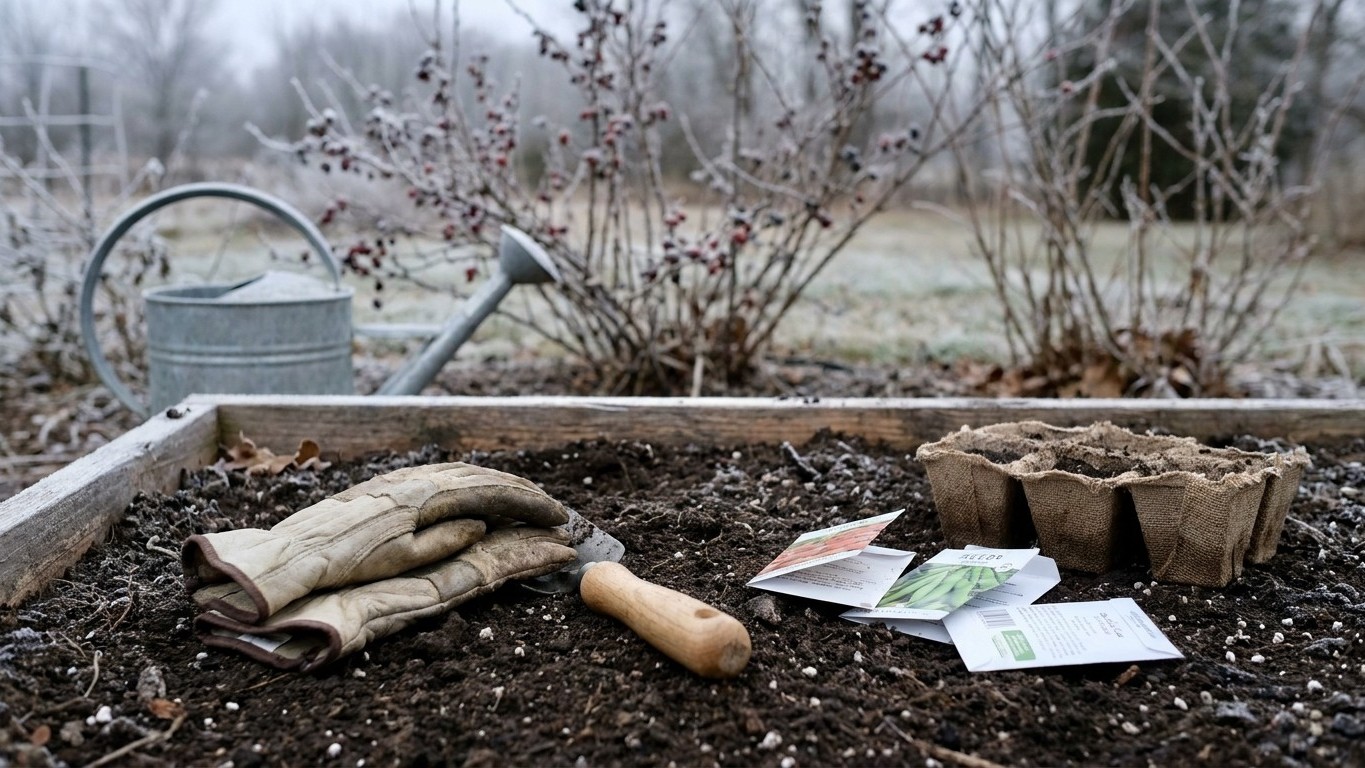

Garlic and shallots can still go into workable ground, and cold-hardy greens under a cold frame or low tunnel keep producing. Everything else waits. With the last spring frost window running March 28 to April 10, most of Oklahoma sits four to eight weeks out from safe outdoor planting, so February belongs to dormant work, indoor starts, and protected beds rather than open soil.
What goes in the ground in February

The decision here isn’t the calendar page, it’s soil temperature and that frost window. NOAA’s 1991-2020 climate normals put the 30 to 70 percent probability band for a 32°F freeze between March 28 and April 10 at the reference weather station. That’s a range, not a date, and it comes from one airport station, so a garden in a low-lying rural spot or at higher elevation often sees frost linger a week or two past that window. Oklahoma’s hardiness zones run 6a in the panhandle up to 8a in the far south, which means a gardener near the Red River is working with real thermal advantage over someone near Guymon, even in the same month.
Given all that, plant nothing tender now. What tolerates the cold is a short list, but it’s a real one:
- Garlic and shallot cloves, if the fall planting window was missed and the ground is still workable and not waterlogged
- Bare-root asparagus crowns and bare-root fruit trees, brambles, and grapevines, set out while still dormant
- English peas direct-sown in southern Oklahoma’s warmer pockets, once soil has thawed and drains freely
- Spinach, kale, and other hardy greens, but only under a cold frame or low tunnel for insulation
Everything on that list shares one trait: it can handle a hard freeze without dying back to nothing. Beans, squash, tomatoes, corn, and anything else that came from a warm climate stay indoors or on the seed rack. A 60-degree afternoon in February doesn’t change the soil temperature six inches down, and that’s what actually decides germination and root survival, not the air.
What to start under cover
Work backward from that March 28 to April 10 frost window instead of from a fixed date on a packet. Tomatoes, peppers, and eggplant need roughly six to eight weeks indoors under grow lights before they’re ready to move outside, which puts the sowing window for most of Oklahoma somewhere in the back half of February to catch the earlier end of that frost range, later for gardeners in the panhandle who should expect their own frost-free date to run later still.
Onions grown from seed rather than sets need a longer runway, closer to eight to ten weeks, so seed started now is already behind for anyone aiming at an early spring bed and should have gone in weeks back; sets remain the forgiving option for latecomers. Cole crops for spring transplant, broccoli and cabbage among them, fall into that same six-to-eight-week bracket and can be started alongside the tomatoes.
Two ways this goes wrong bookend the whole exercise. Start too early and the seedlings sit under lights far longer than they should, stretching into leggy, rootbound plants that sulk for weeks after transplant instead of taking off. Start too late and there’s no time to harvest the cool-season crop before Oklahoma’s early, aggressive heat shuts down lettuce, spinach, and peas sometime in late spring. Counting backward from the actual frost window, county by county, beats guessing from a seed packet printed for a national audience.
What is ready to pick
Little comes out of an open Oklahoma garden in February, and there’s no point dressing that up. What keeps a household fed this month comes from what was put up earlier or tucked under cover.
Kale, collards, and leeks that overwintered in the ground, especially under a layer of mulch or row cover, are often still harvestable, sweeter even, after repeated light freezes convert starches to sugars. A cold frame planted the previous fall can still be yielding spinach, lettuce, and mâche if it was managed through the coldest weeks. Indoors, sprouts and microgreens fill the gap for anyone missing fresh greens on the counter, ready in a matter of days rather than weeks.
This is also the month to go through the root cellar or pantry shelf and actually check the stored crops rather than assume they’re fine. Winter squash should feel firm with no soft spots near the stem. Potatoes that have started sprouting eyes or gone soft and wrinkled need to be pulled and used or composted before they take neighboring tubers with them. Onions with any give when squeezed, or a sour smell at the neck, are on their way out and should move to the top of the meal plan. None of this is glamorous work, but it’s the difference between eating what was grown and throwing half of it away come spring.
The jobs that matter this month

February carries more weight than the empty garden beds suggest, and skipping these jobs now costs real time later in the season.
Pruning and dormant-season care
Fruit trees, brambles, and grapevines are still dormant, which makes this the window for structural pruning without the stress of cutting into active growth. Remove dead, crossing, and inward-growing branches on apples, pears, and peaches; cut raspberry and blackberry canes that fruited back to the ground if they’re the type that dies back after bearing. Wait on nitrogen fertilizer here; more on that below.
Soil, compost, and planning
A soil test now, through the county extension office, gives results back in time to amend before spring planting rather than guessing and fertilizing blind. Turning the compost pile speeds up decomposition that slows in cold weather, and working finished compost into beds that will be planted in a month or two gives it time to integrate. This is also when seed catalogs sell through their popular varieties, so ordering now beats finding a favorite tomato sold out in April.
Tools, structures, and stored crops
Cleaning and sharpening pruners, hoes, and shovels takes an afternoon and pays off all season in cleaner cuts and less effort. Raised bed frames, trellises, and fencing that took winter damage need repair before they’re buried under new growth and harder to access. Rotation planning, deciding which family of crops goes where this year, is easier to do now on paper than mid-March with seedlings already demanding a bed.
What not to do in February
The most common mistake is trusting a warm afternoon over the calendar’s frost math. A 65-degree day in February doesn’t mean soil six inches down has warmed to the 50s that warm-season seeds need to germinate, and direct-sowing tomatoes, peppers, beans, squash, or corn now almost always ends in rot or a stand that never comes up. Wait for the actual frost window, March 28 to April 10 at the reference station, and later than that for higher ground or the panhandle.
A close second is uncovering cold frames, low tunnels, or mulched beds too eagerly after a mild stretch. Oklahoma’s weather swings hard, and a 70-degree day followed within 48 hours by a hard freeze is a normal pattern here, not a fluke. Tender growth that gets exposed during the warm spell has no protection when temperatures crash back down. Leave protective covers in place, or at least within easy reach, through the entire frost window rather than pulling them at the first sign of spring.
Fertilizing dormant fruit trees, perennials, or lawns with nitrogen this month is also a mistake many gardeners make with good intentions. Nitrogen applied before active growth begins pushes soft, tender new growth right when a late freeze is most likely to hit it, weakening the plant instead of helping it. Hold nitrogen until buds are visibly swelling or growth has actually resumed, and use this month instead for the soil test that tells you what’s actually needed.
Checking this against your own county
Everything above is a state-wide starting point, not an instruction for a specific backyard. Oklahoma spans hardiness zones 6a to 8a, and that spread, combined with elevation changes and the difference between the panhandle and the southeastern corner of the state, can shift real planting windows by two to three weeks in either direction. A garden in low ground that collects cold air will lag behind a slope just a mile away.
The Oklahoma State University Cooperative Extension Service (extension.okstate.edu) publishes county-level guidance and local planting calendars that account for these differences far better than any state-wide date range can. Checking there before committing seed to soil is worth the ten minutes it takes.
Common questions
Can I plant potatoes in February in Oklahoma?
In most of the state, no, the soil is still too cold and too wet, and seed potatoes set into ground below the mid-40s often rot before sprouting. Southern Oklahoma gardeners sometimes push potatoes in toward the very end of February in a mild year, but even there it’s a gamble against a late cold snap.
Is it too early for tomatoes outdoors?
Yes, by a wide margin. Tomatoes are frost-tender and the last spring frost window doesn’t open until March 28 at the earliest, running to April 10, and often later away from town. February is the month for starting tomato seed indoors under lights, not transplanting outside.
What vegetables can survive an Oklahoma winter outdoors?
Kale, collards, spinach, and leeks handle hard freezes well, especially under mulch or a row cover, and garlic and shallots planted in fall continue growing slowly through winter. None of these need protection from a typical Oklahoma cold snap, though an extended hard freeze still calls for extra mulch.
When should I start seeds indoors for an Oklahoma spring garden?
Count backward from the local last frost date rather than a fixed date on the packet. Tomatoes, peppers, and cole crops generally need six to eight weeks indoors before transplant, which for most of the state lands in the back half of February, earlier for onions from seed, which need eight to ten weeks.