
Texas doesn’t have one December. Along the coast and down into the Rio Grande Valley, gardeners are still tucking garlic into workable soil and picking greens. In the Panhandle, the ground may already be locked with frost and the real work is dormant pruning and seed orders. With USDA hardiness zones ranging from 6a to 10a across the state, “what to plant” depends entirely on which Texas you’re standing in.
What goes in the ground in December

The calendar says December everywhere in Texas, but the soil doesn’t agree. At Houston’s IAH station, the average first fall frost lands somewhere between December 1 and December 19, which means that by the time this month is underway, the mild Gulf Coast reference point has often already seen its first freeze, or is about to. That single data point tells you the season has effectively turned. It also tells you nothing about the Panhandle, where freezing ground can already be routine by early December, or the Lower Rio Grande Valley, where a hard freeze in December is unusual enough to make local news.
That spread across USDA zones 6a to 10a is the reason a single planting list for the whole state would be dishonest. In the Panhandle and High Plains, the ground is often too cold or too frozen to plant anything new. In Central and North Texas, workable soil and cold-hardy crops can coexist, but only just. Along the coast and in South Texas, the ground usually stays workable most of the month.
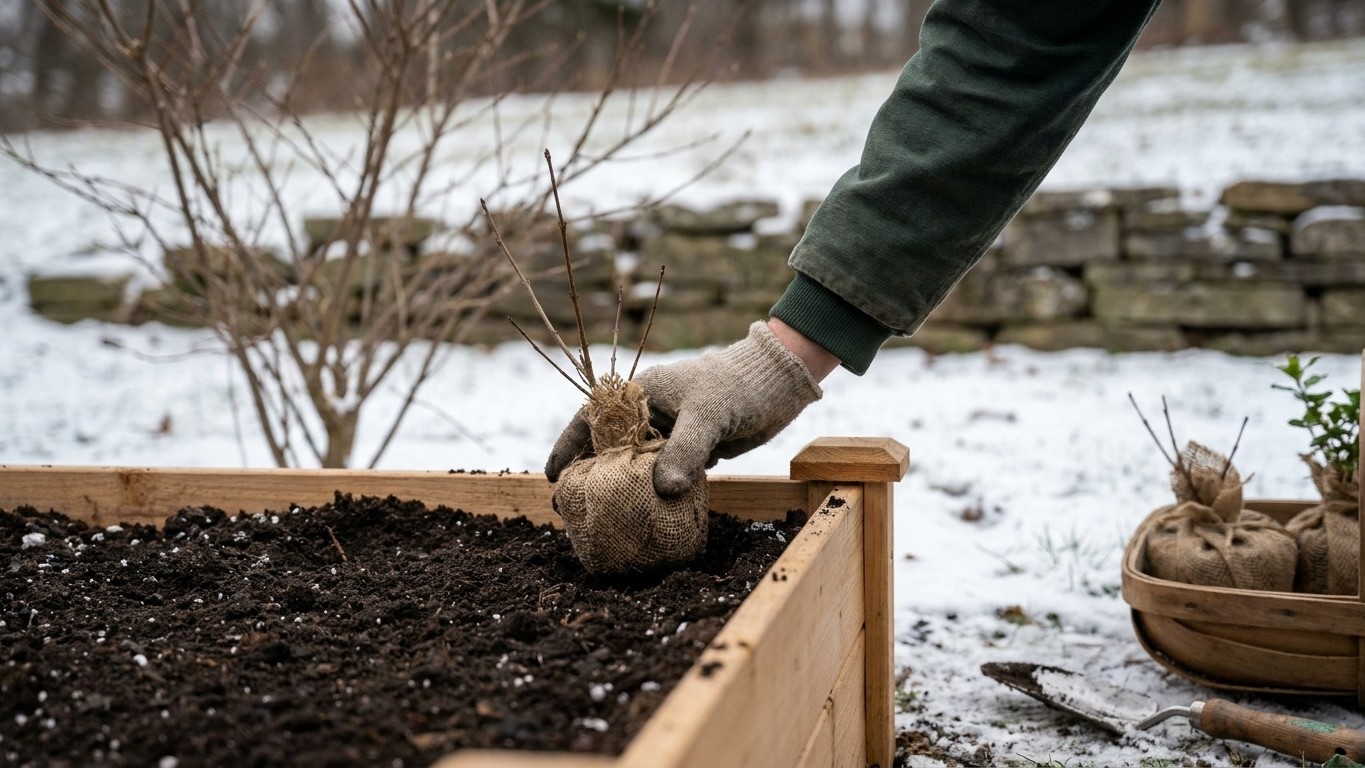
Where soil is still workable, what’s safe is narrow but real: garlic and shallots going in for a spring harvest, hardy greens like spinach, mache, and kale set out as transplants, and English peas or snap peas direct-sown in the milder southern counties. Cold frames and low tunnels stretch that window several weeks further north than open ground alone would allow. Dormant, bare-root plantings of fruit trees, roses, and cane berries are a genuine December job almost statewide, since the plant isn’t drawing on the soil while it sleeps. Forcing chicory indoors, cutting roots and holding them in a dark, cool spot for a tender winter crop, is a low-effort way to use the season rather than fight it. What doesn’t belong on this list: tomatoes, peppers, squash, beans, and anything else that dies at the first real freeze. Save them for spring math, not December optimism.
What to start under cover
Starting seeds indoors in December only makes sense when you count backward from your own last spring frost, not from a date on a seed packet. Near Houston’s IAH station, the average last spring frost falls between February 4 and March 1. Warm-season transplants like tomatoes, peppers, and eggplant generally need six to eight weeks indoors before they’re ready to go out, which puts an early-zone start right around now for gardeners working from that Gulf Coast window. That arithmetic breaks down fast the farther north or inland you go: North Texas and the Panhandle see their last frost weeks to months later than Houston does, so a December start there would leave transplants leggy and rootbound long before the ground warms up.
The failure modes run in both directions. Start too early and you get stretched, pale seedlings competing for windowsill space, root systems circling a too-small pot, stems too weak to stand up to a breeze once they finally go outside. Start too late and the plants never build the root mass or stem thickness to handle transplant shock before the heat arrives, which in much of Texas comes on fast and early.
Under cover this month also means brassicas and hardy greens started for a spring crop, and alliums grown from seed rather than sets for gardeners who want more variety than the nursery rack offers. A heat mat and a south-facing window do most of the work; a grow light matters more the farther north you are, since December daylight is short everywhere but shortest where the frost season is longest.
What is ready to pick
Along the coast and through South Texas, December harvest is quietly generous. Kale, collards, mustard greens, and lettuce planted in fall keep cropping through mild spells, and a light frost usually sweetens rather than ruins them. Carrots, beets, and turnips sown earlier in fall are often sizing up now, and broccoli or cauliflower heads started in late summer can be forming in the cooler weeks of the month. In the Rio Grande Valley and along the Gulf, citrus, satsumas and grapefruit especially, often ripens through this stretch, though a hard freeze can force an early pick to save the crop.
Farther north and at higher elevation, the honest answer is less. In the Panhandle and High Plains, outdoor harvest can slow to a stop once the ground freezes, and the real food source shifts indoors: cold-frame greens still cropping under cover, sprouts and microgreens grown on a counter in a matter of days, and whatever made it into storage before the freeze.
That storage is worth checking now, not later. Winter squash should feel firm with no soft spots; a single mushy squash left in a bin can spread rot to its neighbors within days. Potatoes need a dark, cool, dry spot and a quick sort for any that have sprouted or gone soft. Onions and garlic braided or bagged from fall should be checked for the ones going papery or sprouting green, since one bad bulb speeds up the rest.
The jobs that matter this month

Dormant pruning is the anchor job for most of Texas this month. Peach and plum trees, pecans, and cane fruit like blackberries are leafless and inactive, which makes structural cuts easier to see and less stressful for the plant than pruning during active growth. Cutting now, before sap starts moving in late winter, also reduces the wound’s exposure to disease that spreads faster once the tree wakes up.
Seed ordering belongs on this month’s list too, and it’s easy to underrate. The varieties that perform best in Texas heat and humidity, heat-tolerant tomatoes, bolt-resistant lettuce, disease-resistant squash, tend to sell out of seed catalogs earliest, well before spring planting season even opens. Ordering now means the difference between growing the variety you actually wanted and settling for whatever’s left on the rack in March.
Soil work pays off precisely because nothing is competing for the bed. Texas’s heavy clay soils respond well to compost worked in during the dormant months, since there’s time for it to break down before spring planting without smothering active roots. Turning the compost pile keeps it from stalling out in cold, wet weather. Testing soil now, through the county extension office, gives results back in time to amend before spring rather than scrambling after planting.
Tool maintenance, cleaning and sharpening pruners, shovels, and hoes, and repairing raised beds or fencing before the spring rush, are the kind of jobs that feel optional until a dull blade tears a stem instead of cutting it cleanly, or a fence gap lets deer into a bed of new seedlings. In coastal and South Texas counties, this is also the month to have frost cloth ready for citrus and tender perennials, since a freeze arriving inside that early-December window can catch an unprotected tree off guard.
What not to do in December
The classic December mistake in Texas is trusting a warm afternoon more than the season. A run of 70-degree days can tempt a gardener to set out tomato or pepper transplants, but soil temperature lags behind air temperature by days, and a single freeze a week later can undo the whole gamble. Wait for the actual spring frost window in your area, not the first mild stretch that feels like spring.
The reverse mistake shows up just as often: pulling mulch or removing cold-frame covers too early after a warm spell, only to have a freeze move back in and hit newly exposed plants that had been protected right up until that point. Mulch and covers should come off gradually and only once the freeze risk in your specific zone has genuinely passed, not after a few warm days in a row.
Feeding nitrogen at the wrong moment causes a third common problem. Fertilizing lawns, roses, or young fruit trees with a high-nitrogen product during the dormant season pushes soft new growth right when a freeze is most likely to kill it. Save nitrogen feeding for active growth in spring, and if soil testing shows a deficiency now, correct it with amendments that don’t force tender new shoots into a cold snap. Overwatering dormant beds in Texas’s clay soil is the quieter version of the same problem: waterlogged roots in cold clay are far more prone to rot than roots left slightly dry until growth resumes.
Checking this against your own county
Everything above is a starting point built largely on Houston-area data, not an instruction for every Texas backyard. Elevation, distance from the coast, and simple latitude move frost windows by weeks: a garden in the Hill Country or North Texas can lag Houston’s frost dates by a month or more, and the Panhandle by even longer. Even within the Houston area, Hobby Airport runs roughly two weeks milder than IAH, which shows how much local geography can shift these numbers.
Before committing a bed to any of this, check it against Texas A&M AgriLife Extension, which tracks frost data and planting guidance by county rather than by statewide average.
Gardeners who plant by the Moon can check the December 2026 moon planting calendar, a tradition rather than a proven method.
Common questions
Can I still plant garlic in Texas in December?
In most of the state, yes, as long as the ground is workable and not frozen or waterlogged. Garlic planted in the cooler months has time to establish roots before the heat of late spring pushes bulb development.
Is it too late to start seeds for spring vegetables?
It depends entirely on your local last spring frost date, not the date on the calendar. Gardeners near the mild Gulf Coast window may already be starting warm-season transplants indoors; gardeners farther north or inland, where the last frost lands weeks or months later, should wait and count backward from their own frost date instead.
Why is my citrus tree at risk this month?
Coastal and South Texas citrus growers are inside the window where the first fall freeze historically arrives, sometime between December 1 and December 19 at the Houston reference station. A sudden freeze during that stretch can damage unprotected trees, so having frost cloth on hand matters even in a typically mild area.
Do I need to worry about frost if I live inland versus on the coast?
Yes. Coastal Texas moderates temperature swings, while inland and northern counties see harder, earlier freezes and colder soil. The hardiness zone range across the state, 6a to 10a, exists precisely because these local differences are too large to average into one number.