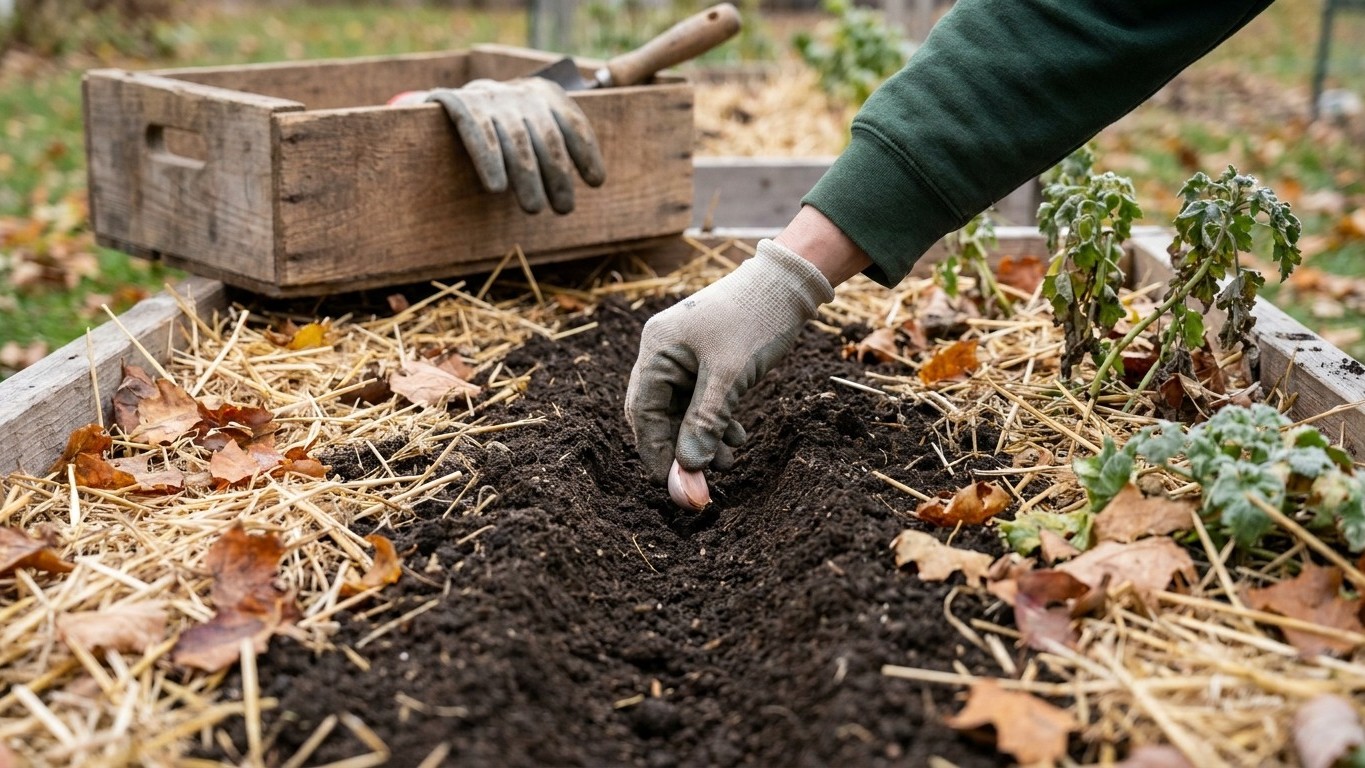

In Houston and along the Gulf Coast, November still sits ahead of the first fall frost (December 1 to December 19 at IAH), so this is an active window for cool-season vegetables, garlic and hardy greens. Farther north and inland, frost has often already arrived, and the job shifts toward dormant plantings and soil prep rather than a full seed list.
What goes in the ground in November

What decides the answer this month is not the calendar square but two numbers: soil temperature and how many weeks stand between now and that first freeze. At Houston’s IAH station, the 1991-2020 normal puts the first fall freeze somewhere between December 1 and December 19. That gives Gulf Coast gardeners real weeks left to get cool-season crops rooted before cold arrives, and most of what goes in now is built to shrug off a light frost anyway once it does.
Garlic and shallot cloves go into worked soil now across most of the state, timed to establish roots before winter and bulb up in spring. Onion transplants follow the same logic in the milder south. Leafy greens, hardy root vegetables and the pea family round out the safe list for direct sowing or transplanting where soil is still workable and warm enough to germinate seed.
| Crop | Method | Frost tolerance |
|---|---|---|
| Garlic, shallots | Direct sow (cloves) | High, hardy through winter |
| Spinach, kale, collards | Direct sow or transplant | High, improves with light frost |
| Carrots, beets, turnips, radishes | Direct sow | Moderate to high |
| English peas, snap peas | Direct sow | Moderate |
| Lettuce, mustard greens, cilantro | Direct sow or transplant | Moderate, needs row cover in hard freeze |
| Broccoli, cauliflower transplants | Transplant only | Low if set out late in the month |
That last row is the gamble. Brassica transplants set out in the closing days of November may not size up before a hard freeze knocks growth back, especially north of the Gulf Coast where cold arrives sooner. Where the ground has already frozen or stayed sodden for weeks, skip direct sowing altogether and hold seed for a cold frame or low tunnel instead, where soil stays workable and a few extra degrees make the difference between germination and a wasted packet.
What to start under cover
Work backward from the first freeze rather than from the date on the wall. A packet of onion or leek seed that needs eight to ten weeks to reach transplant size, started now under lights or in a cold frame, lands as a plantable seedling right around when Gulf Coast soil is still workable in deep winter. Gardeners farther north, closer to an earlier freeze, need to have already made that calculation weeks earlier, so November under cover for them leans toward crops with shorter timelines or toward simply holding stock for spring.
Two failure modes show up every year. Start too early under lights without enough daylight or heat, and seedlings stretch into leggy, rootbound stock long before the ground is ready for them, a common problem with tomatoes and peppers started far ahead of their outdoor date. Start too late, and there is no runway left before conditions turn against tender growth. The safer bet for November starts is skewed toward crops that tolerate a slower, cooler finish: cabbage family transplants, leeks, and bunching onions all forgive an extra week or two in the tray better than heat-loving crops ever do.
A cold frame or unheated hoop house effectively buys two to four extra weeks of growing season at either end, which matters most for gardeners north of the Gulf Coast trying to squeeze a last succession of greens or root crops past their normal outdoor cutoff. Where soil under cover stays workable, it is also one of the few places seed potatoes or onion sets can go in even after open-ground planting elsewhere has stopped for the season.
What is ready to pick
Along the Gulf Coast, fall plantings of greens, root vegetables and herbs put in during late summer and early fall are usually sizing up by now, and the harvest window stays open as long as frost holds off. Collards and kale actually improve in flavor after a light touch of cold, so there is no rush to pull them the moment temperatures dip. Carrots, beets and turnips can stay in the ground under a layer of mulch and be pulled as needed rather than harvested all at once.
Farther north where frost has already settled in, the outdoor harvest thins out fast, and the more reliable food source shifts indoors and under cover: sprouts and microgreens on a windowsill, cold-frame lettuce and spinach that keep producing in a sheltered pocket of warmth, and whatever is left standing under row cover after the first hard freeze.
This is also the month to walk the storage shelf. Winter squash, potatoes and onions put up earlier in the season need a hands-on check now: press gently for soft spots, look for sprouting eyes on potatoes, and pull anything showing mold or a sour smell before it spreads to the rest of the batch. A single soft squash left in a bin with a dozen good ones can take down the whole lot within a couple of weeks.
The jobs that matter this month

Fruit tree and cane pruning belongs on the list now, timed to dormancy rather than to a fixed date. Peaches, plums and pears across most of Texas are shedding leaves and slowing sap flow, which makes this the window to cut for shape and airflow without stressing the tree the way a summer cut would. Blackberry and grape canes get the same treatment: remove what fruited this year, thin the rest, and the plant rewards that work with a cleaner, more productive season ahead.
Seed catalogs move fast, and the varieties that sell out first tend to be the ones worth having, particularly heat-tolerant tomatoes and disease-resistant squash bred for Texas conditions. Ordering now, rather than waiting for spring urgency, is the difference between planting what was actually chosen and planting whatever was left on the shelf.
Soil work pays off precisely because nothing is actively growing to get in the way. A simple soil test now gives time for lime or sulfur to adjust pH well before spring planting, and turning finished compost into beds lets it integrate over winter rather than sitting as a surface layer come spring. Mulching beds that are between crops holds moisture, suppresses winter weeds, and protects any soil life still active underground.
Tool maintenance and bed repair round out the list. A pruning saw or set of loppers sharpened now cuts cleaner and stresses plants less than a dull blade forced through wood. Fencing, raised bed frames and trellis hardware are easier to fix while the garden is quiet than during the scramble of spring planting, when every hour goes toward seed and soil instead.
What not to do in November
A stretch of warm afternoons in the 70s does not mean the soil has warmed to match, and that gap catches gardeners every year. Warm-season crops like tomatoes, peppers and squash going into cold soil on the strength of a mild week almost always stall or rot at the root zone once temperatures swing back down, which they reliably do before the first fall freeze actually locks in.
Row covers and cold frames come off too soon for the same reason. One warm afternoon is not a season, and pulling protection off tender greens or newly rooted transplants right before the next cold front leaves them exposed at the worst possible moment. Leave winter protection in place until the pattern, not a single afternoon, has actually shifted.
Nitrogen-heavy fertilizer applied now works against most of what is planted this month. A hardy green or garlic clove settling in for winter needs root development, not a flush of tender leaf growth that a freeze will simply burn back. Save the nitrogen push for late winter or early spring, when active top growth is actually the goal, and let November plantings focus their energy underground where the cold cannot touch it.
Checking this against your own county
Texas runs from USDA hardiness zone 6a in the Panhandle to zone 10a along the southern Gulf Coast, based on the USDA Plant Hardiness Zone Map’s average annual extreme minimum temperature. That spread means a frost window built on Houston’s IAH station data describes the mild end of the state, not the whole thing, and even within Houston, Hobby airport runs about two weeks milder than IAH. Elevation, latitude and distance from the coast all shift these dates by weeks in either direction.
The most reliable next step is a local check rather than a statewide guess: Texas A&M AgriLife Extension publishes county-level guidance and planting calendars that account for these regional differences directly.
Common questions
Is it too late to plant garlic in November?
No. Garlic cloves planted in worked soil this month have time to root before winter and typically bulb up in late spring, which is the standard timing across most of the state.
Can tomatoes still go in the ground in November?
Not safely outdoors. Tomatoes are a warm-season crop that cold soil and an approaching freeze will stall or kill; hold seed for spring starts timed to the last frost window instead.
Do I need to cover greens like kale and collards from frost?
Not for a light frost. These crops tolerate cold well and often taste better after it; row cover matters more ahead of a hard freeze or an extended deep cold spell.
Why does my frost date differ from what I read online?
Published frost windows are usually tied to a single weather station. Elevation, latitude and local terrain shift the real date at a specific address, sometimes by weeks, which is why a county-level source is worth checking against any statewide figure.
Gardeners who plant by the Moon can check the November 2026 moon planting calendar, a tradition rather than a proven method.
Related guides
Elsewhere? See what to plant in November in every state and province.