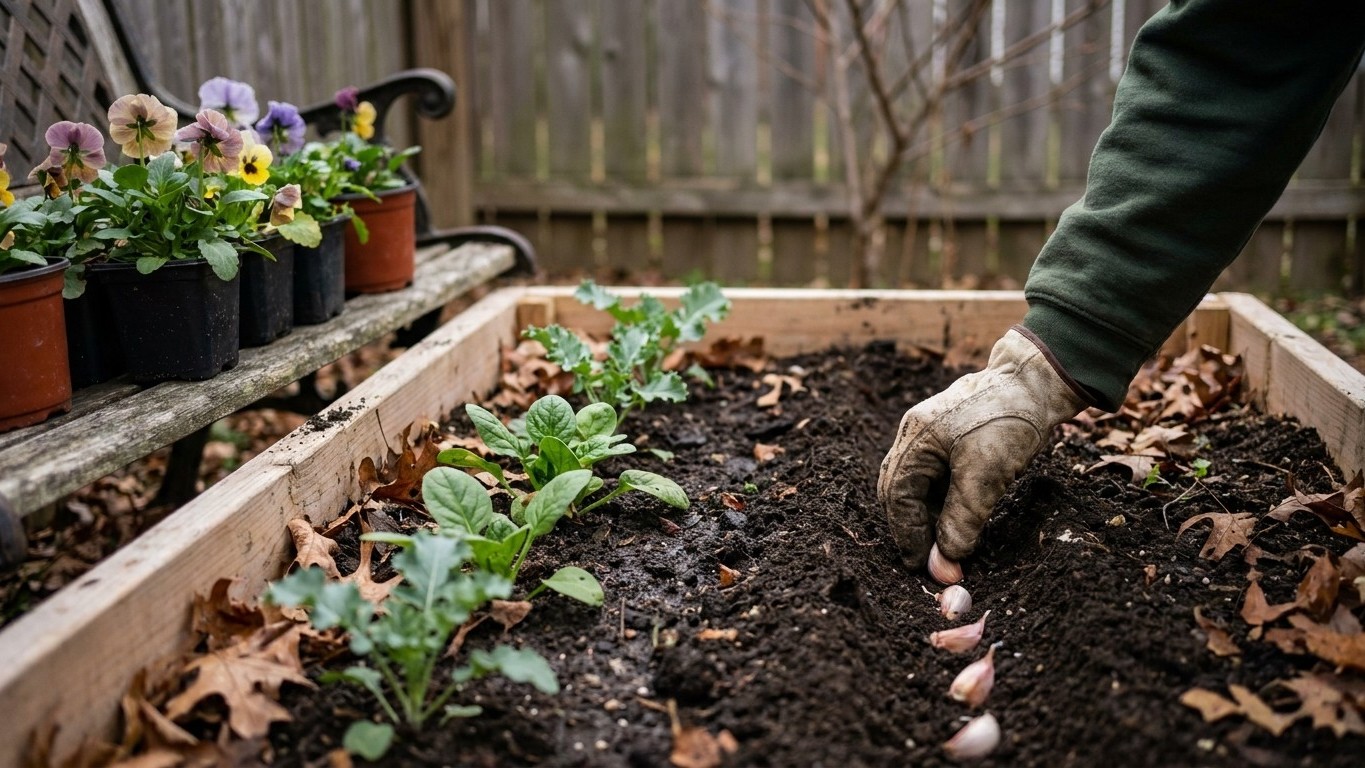

October in Texas is prime planting territory for cool-season crops across most of the state, because the first fall frost in Gulf Coast areas like Houston doesn’t arrive until December 1 to December 19. That leaves eight to ten weeks of frost-free growing for leafy greens, brassicas, root vegetables, garlic and onion sets. Timing shifts by weeks depending on where in the state’s 6a-10a hardiness range you garden.
What goes in the ground in October

The decision here isn’t the calendar. It’s how many frost-free weeks remain before the ground freezes, and in the Houston area that number is generous. With first frost pinned to a December 1-19 window at the IAH station, October sowings get a full two to nearly three months to establish before any cold threat shows up. That’s enough time for most cool-season crops to reach a harvestable size, and enough buffer that a late-arriving frost won’t catch tender seedlings off guard.
Direct-sow candidates include carrots, beets, turnips, radishes, spinach, lettuce and English peas. Garlic cloves and shallot sets also go into the ground now for a spring harvest, and they tolerate the mild cold that eventually shows up better than almost anything else on this list. Transplants of broccoli, cabbage, cauliflower and collards can go out too, since they’ve usually spent four to six weeks under cover already and just need soil that’s cooled from summer highs without dipping toward frost.
The caution that matters most: the Houston frost window is the mild Gulf end of Texas. North Texas and the Panhandle sit in cooler USDA zones and see their first freeze arrive far earlier in the fall, which means their safe October sowing list is already narrowing toward the truly cold-hardy crops while Gulf Coast gardeners still have room for less hardy transplants.
| Crop group | Method | Frost tolerance |
|---|---|---|
| Garlic, shallots | Direct-sow cloves/sets | High, plant now regardless |
| Carrots, beets, turnips, radishes | Direct-sow seed | Moderate to high once established |
| Lettuce, spinach, English peas | Direct-sow seed | Moderate, prefers cooling soil |
| Broccoli, cabbage, cauliflower, collards | Transplant | High once hardened off |
What to start under cover
Seed started indoors or under a cold frame this month should be counted backward from the first frost window, not forward from today’s date. Take the Houston range of December 1 to December 19 as the outer boundary, then subtract the weeks a seed packet lists for reaching transplant size, and subtract again the weeks that crop needs after transplanting to reach harvest. Whatever’s left is the margin. A gardener working from a colder zone further north or west needs to slide that whole calculation earlier, since the frost line arrives on their calendar well before it reaches the Gulf.
Spinach, lettuce, and the brassica family (broccoli, cabbage, kale) are the usual candidates for starting under cover this month, especially in regions where outdoor soil is still holding summer heat and germination indoors gives more control. A cold frame or low tunnel extends that runway further, letting seedlings hit transplant size without competing against heat-stressed outdoor soil.
Two failure modes show up every year. Starting too early means transplants sit too long in trays, become rootbound, and stall once they finally go into the ground, a setback that often costs more time than starting a week or two later would have. Starting too late runs the opposite risk: seedlings hit the ground undersized, and by the time they’d normally bulk up, the frost window has closed on the milder crops that don’t handle a hard freeze well. Splitting a batch of trays across two start dates a week apart is a simple way to hedge against getting that arithmetic wrong.
What is ready to pick
October in much of Texas is harvest season for crops planted back in late winter and early spring. Sweet potatoes, okra, eggplant and the tail end of tomato and pepper plantings are still producing, and gardeners watching the December frost window know they have real weeks left to bring in what’s still on the vine. Okra pods are ready when they’re four to six inches and still snap cleanly; letting them go longer turns them woody. Sweet potato harvest typically comes before the vines take any frost damage, since a hard freeze can affect storage quality of tubers left in cold ground too long.
Quick crops sown in August or early September, like radishes and loose-leaf lettuce, are also coming in now, giving a fast turnaround while the slower brassicas and root crops planted this month are still weeks from ready. Checking these regularly matters, since radishes especially turn woody and hollow if left in the ground past their window.
For anyone with stored crops from earlier in the season, onions and winter squash sitting in a pantry or garage should get a quick check for soft spots or sprouting, since cooler nights this month don’t stop rot that started earlier from spreading through a stored batch.
The jobs that matter this month

Succession sowing is the single job most likely to pay off if it happens now. Rather than planting an entire bed of lettuce or spinach in one pass, splitting seed across two or three sowings a week or two apart spreads harvest over a longer stretch and hedges against any one batch failing to germinate evenly in soil that’s still cooling from summer.
Mulching newly seeded beds helps keep soil temperature and moisture steady while germination gets underway, and it matters more in October than in cooler months because daytime highs can still swing wide even as nights cool off. Watering rhythm needs adjusting too: as evapotranspiration slows with shorter days, beds that needed daily water in August often only need it every second or third day now, and overwatering at this point invites root rot in crops that are just getting established.
Pest scouting shouldn’t slip. Fresh brassica transplants are a magnet for cabbage loopers and aphids this time of year, and catching an infestation in its first week is far easier than dealing with a bed that’s been stripped by the time anyone notices. Staking peas and any remaining vining crops before they sprawl saves a headache later, since untangling vines from the ground after the fact damages roots and stems.
Beyond the bed itself, this is a good month to order garlic and bulb stock before the better varieties sell out, test soil pH ahead of spring planning, and turn compost piles that have been sitting since summer. Tools that saw heavy use through the growing season are due for cleaning and sharpening before the next round of transplanting wears them down further.
What not to do in October
The most common mistake is planting warm-season crops like tomatoes or peppers as new starts this month, chasing a few warm afternoons as if they mean summer is back. Even with a Gulf Coast frost window pushed out to December, a new tomato transplant needs eight to ten weeks to fruit, and starting that late in cooler parts of the state leaves no real margin before frost cuts the season short. Stick to finishing out plants already established rather than starting new warm-season crops from scratch.
Uncovering cold frames or row covers too early after a mild stretch is another trap. A few warm days in October don’t mean the frost risk has passed, and tender seedlings exposed too soon can take damage from a cold snap that arrives a week later without much warning.
Heavy nitrogen feeding at this point in the season also backfires. It pushes soft, leafy growth on plants that would be better served hardening off ahead of cooler nights, and that soft growth is exactly what a frost damages first. A better move is a lighter feed focused on root and leaf development rather than rapid top growth, saving heavier feeding for spring.
Assuming the Houston frost window applies statewide is its own mistake. Gardeners in cooler zones further north or at higher elevation may already be past their own first frost by the time Gulf Coast gardeners are still weeks out, and treating one region’s calendar as universal leads to crops planted too late to matter.
Checking this against your own county
A statewide October guide is a starting point, not an instruction. Texas spans four USDA hardiness zones, from 6a to 10a, and elevation, regional climate patterns and simple distance from the Gulf move frost windows by weeks in either direction. Even within the Houston area, Hobby airport runs about two weeks milder than the IAH station. For a planting calendar tuned to a specific county, the Texas A&M AgriLife Extension Service is the reliable next stop.
Common questions
Is October too late to plant tomatoes in Texas?
For new transplants, yes in most of the state. A tomato needs roughly eight to ten weeks to fruit, and even with the Houston area’s frost not arriving until December, that leaves too thin a margin in cooler regions. Finishing existing plants makes more sense than starting new ones.
Can garlic really go in the ground this month across Texas?
Garlic and shallots are among the most frost-tolerant crops on this list and are a safe October planting almost anywhere workable soil is available, regardless of how far a given county’s first frost is from the Houston-area window cited here.
Why does the Houston frost date not apply to the whole state?
Texas covers four USDA hardiness zones, from 6a to 10a. The Houston figures come from a single Gulf Coast weather station, and areas further north or at higher elevation see frost arrive on a different schedule entirely, sometimes months earlier.
What’s the biggest risk of planting cool-season crops too early in October?
Soil and air still carrying summer heat can cause certain greens to bolt or germinate poorly, since crops like spinach and lettuce prefer cooling soil. Spacing sowings across a few weeks lowers that risk compared to planting everything in one pass.
Gardeners who plant by the Moon can check the October 2026 moon planting calendar, a tradition rather than a proven method.
Related guides
Elsewhere? See what to plant in October in every state and province.