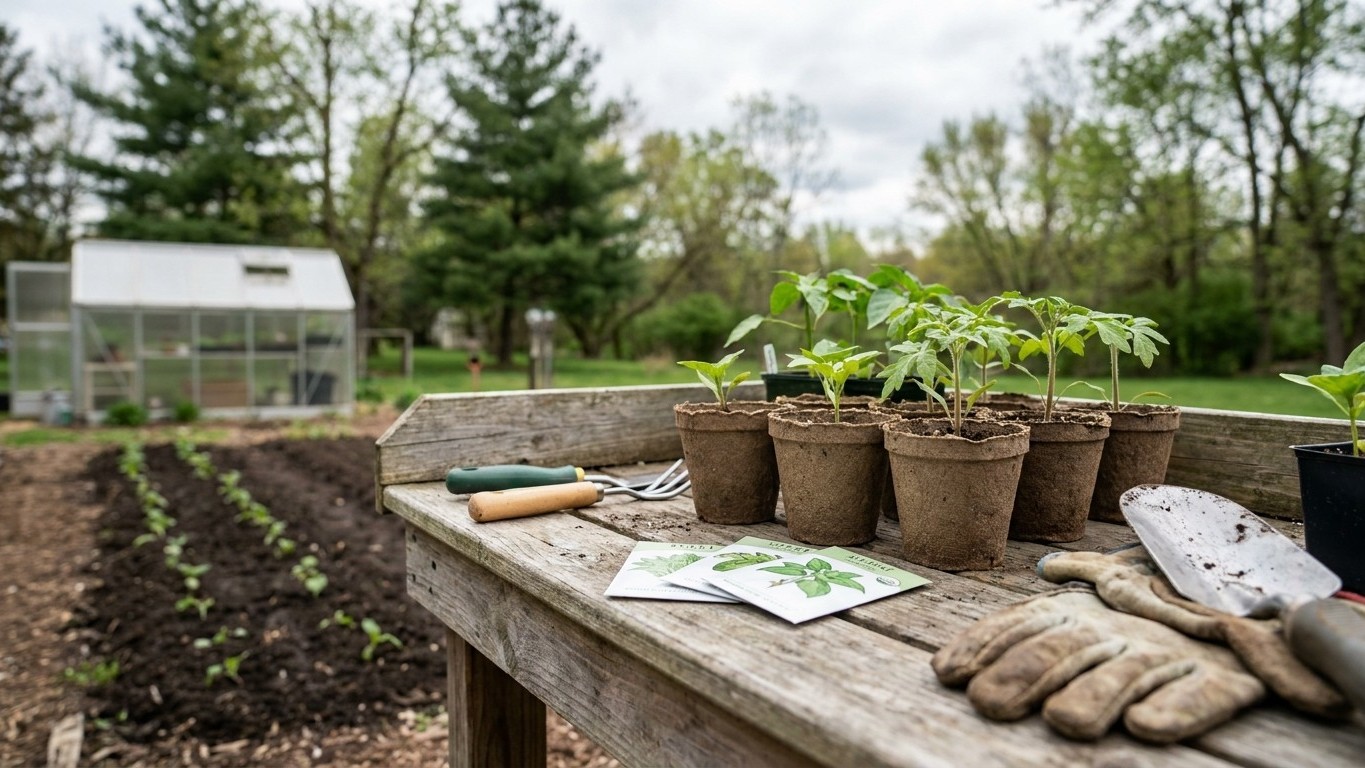

April is prime direct-sowing season in western Washington, since the region’s typical last frost window (February 27 to March 18) has usually closed by the time the month starts. Peas, spinach, brassicas, alliums and root crops can go into workable soil now. East of the Cascades, the calendar means something different: colder soil and a later frost window push the same crops back, and warm-season transplants like tomatoes stay indoors either way.
What goes in the ground in April
The frost date tells only part of the story here. Western Washington’s last spring frost, measured at the Seattle-area station, falls somewhere between February 27 and March 18 in most years, which means April opens with that risk mostly behind you on that side of the state. But a passing frost date does not mean the soil has caught up. Maritime spring soil stays cold and wet well into the month, and low light slows germination even when the air feels mild. That is the trap: the calendar says go, the thermometer says wait.
Crops that tolerate this in-between stretch are the ones worth trusting. Peas can go into the ground as soon as it can be worked without turning into mud. Spinach, lettuce and other hardy greens handle the cool nights without complaint. Alliums, meaning onion sets, shallots, garlic and leeks, are built for exactly this kind of weather. Brassica transplants, cabbage, broccoli, kale, started earlier under cover, can move outside now if they have been hardened off. Root crops like carrots, beets and radishes can be direct-sown once the soil crumbles rather than clumps.
Anything that wants real heat, tomatoes, peppers, squash, beans, corn, is still a gamble. Those crops need soil consistently in the 60s, and Washington’s maritime spring rarely delivers that before late spring on the west side, later still to the east.
| Region | Frost pattern | April reality |
|---|---|---|
| Western Washington | Last frost typically passed by mid-March | Cool-season crops go in once soil is workable; warm-season crops wait |
| Eastern Washington | High desert, frost lingers longer, shorter season overall | Cool-season planting trails the west side by weeks; frost risk still active |
The USDA Plant Hardiness Zone Map places the state anywhere from 4a to 9a, a spread wide enough that a rule written for one corner of Washington can be flatly wrong for another. Treat the western window above as a reference for the milder, wetter side of the Cascades, not a statewide instruction.
What to start under cover
Seed packets tell you to count backward from the last frost, and that arithmetic still holds, it just needs the right frost date plugged in. On the west side, with frost typically clearing by mid-March, tomato and pepper seedlings started roughly six to eight weeks earlier are already at or past transplant size, and a fresh round can still go in now for a later crop. Squash and cucumbers, which resent root disturbance and grow fast, are better started closer to the transplant date itself rather than weeks ahead.
East of the mountains, where the frost-free stretch starts later and the season overall runs shorter, the backward count shifts later too. Starting warm-season seedlings on a western Washington timeline in a high-desert county means weeks of leggy, rootbound plants sitting on a windowsill waiting for ground that still hasn’t warmed.
The two failure modes are mirror images of each other. Start too early and you get stretched, pale stems, tangled roots, and transplants that sulk for weeks after they finally go outside. Start too late and there simply isn’t enough season left for a heat-loving crop to size up and ripen before fall cold arrives. Neither mistake is fixable after the fact, which is why the count matters more than the date on the packet.
Brassicas, lettuce and onions started under cover earlier in spring should be hardening off now, moved outside for a few hours a day and brought back in if a cold night threatens, before they transplant permanently.
What is ready to pick
April’s harvest leans on what survived winter rather than on anything planted this spring. Overwintered kale keeps producing new leaves as the days lengthen, often tasting sweeter than it did in fall since cold weather concentrates sugars in the leaves. Purple sprouting broccoli, a crop grown specifically to overwinter in mild maritime climates, hits its stride now, throwing up tender side shoots that keep coming for weeks if picked regularly.
Leeks left in the ground over winter are still perfectly good, and rhubarb crowns that have been building energy underground since fall start pushing up stalks worth cutting once they reach decent size. Any cold frame running greens through winter should be handing over a steady trickle of lettuce, spinach or mustard greens, and a quick check under the cover tells you whether it needs venting on warmer days.
Stored crops need attention too. Squash, potatoes and onions held from last season should get a hands-on check now: soft spots, sprouting eyes on potatoes, or a sour smell from an onion mean it is time to use or toss that one before it spreads rot to its neighbors in storage.
The jobs that matter this month
Timing decides more than effort does in April. Beds getting cool-season crops need their soil worked while it is still workable but not so wet it compacts underfoot, since compacted spring soil stays dense all season. Mulch applied now around overwintered crops and new transplants holds in the moisture that maritime spring rain provides, and heads off the weed flush that arrives right alongside the seedlings.
Peas need support in place before they start climbing, not after. A trellis or netting set up at planting time saves the tangle of trying to weave stems through wire once they have already sprawled sideways looking for something to grab. The same logic applies to any brassica transplant that will eventually need staking against wind, better to drive the stake now than to disturb the roots later.
Watering rhythm matters even in a wet month, because Washington’s spring rain is unreliable in short bursts, and newly transplanted seedlings with shallow roots dry out fast between showers if the weather turns dry for even a week. Checking soil moisture by hand two inches down, rather than trusting the look of the surface, catches this before wilting does.
Slug and snail scouting deserves real attention here, since the state’s mild wet spring is exactly the weather that brings them out in force against tender seedlings. A quick evening check with a flashlight, or simple barriers around the most vulnerable transplants, heads off damage that otherwise shows up as shredded leaves by morning.
Succession sowing keeps the harvest coming rather than arriving all at once. A short row of lettuce or spinach every couple of weeks, rather than one big planting, spreads the crop out and avoids the glut-then-gap pattern that catches a lot of first-time vegetable gardeners.
What not to do in April
The single most common mistake this month is trusting the air temperature over the soil. A run of sunny 65-degree afternoons feels like summer, but the ground underneath, especially in heavier western Washington clay, can still sit in the 40s. Tomato and pepper transplants set into that cold soil stall out, turn purple-tinged from the cold stress, and often never fully recover the growth they lost in those first weeks. Check soil temperature with a simple thermometer pushed a few inches down rather than going by feel.
Pulling row covers or cold frame lids off too early after a mild stretch is the second classic error. Washington’s spring weather swings back and forth, and a week of gentle days can be followed by a sharp cold snap that catches uncovered seedlings off guard. Keep the covers within reach even after you have started venting them on warm afternoons.
Nitrogen timing trips people up too. A heavy dose of high-nitrogen fertilizer early on pushes leafy growth at the expense of root and fruit development later, and in the state’s wet spring soil, a lot of that nitrogen simply washes past the root zone before the plant can use it. A modest feeding once plants are established, rather than a heavy hand at planting, gets better results.
Overwatering rounds out the list. It sounds counterintuitive in a rainy state, but gardeners used to dry climates sometimes irrigate on top of natural rainfall out of habit, and that combination waterlogs already-saturated spring soil, starving roots of oxygen just when they need it most.
Checking this against your own county
Everything above describes Washington in broad strokes, and broad strokes miss a lot of ground in a state this varied. Elevation pushes frost dates later the higher you go, the Cascades split the state into two different climates entirely, and low-lying spots prone to cold air pooling can lag weeks behind a county average. A planting window built for one river valley can be off by a month for a hillside twenty miles away.
The Washington State University Extension service tracks these local differences county by county and is the better source for a planting date tuned to your specific ground, rather than a statewide range.
Common questions
Is it too late to plant peas in April in Washington?
No. Peas tolerate cool soil well, and April sowing still gives them time to establish and climb before summer heat arrives, particularly on the milder west side of the state.
Can tomatoes go outside in Washington in April?
Not safely in most of the state. Tomatoes need consistently warm soil, which April rarely provides even where frost risk has passed, so they are better started or kept under cover and transplanted later.
Why is the frost date different on each side of the Cascades?
Western Washington has a mild, maritime climate moderated by the Pacific, while eastern Washington sits in a high-desert pattern with sharper temperature swings and a shorter frost-free season overall.
What USDA hardiness zone is Washington in?
The state spans USDA zones 4a to 9a, a wide range driven mainly by elevation and distance from the coast, which is why a single statewide planting rule rarely fits every county.