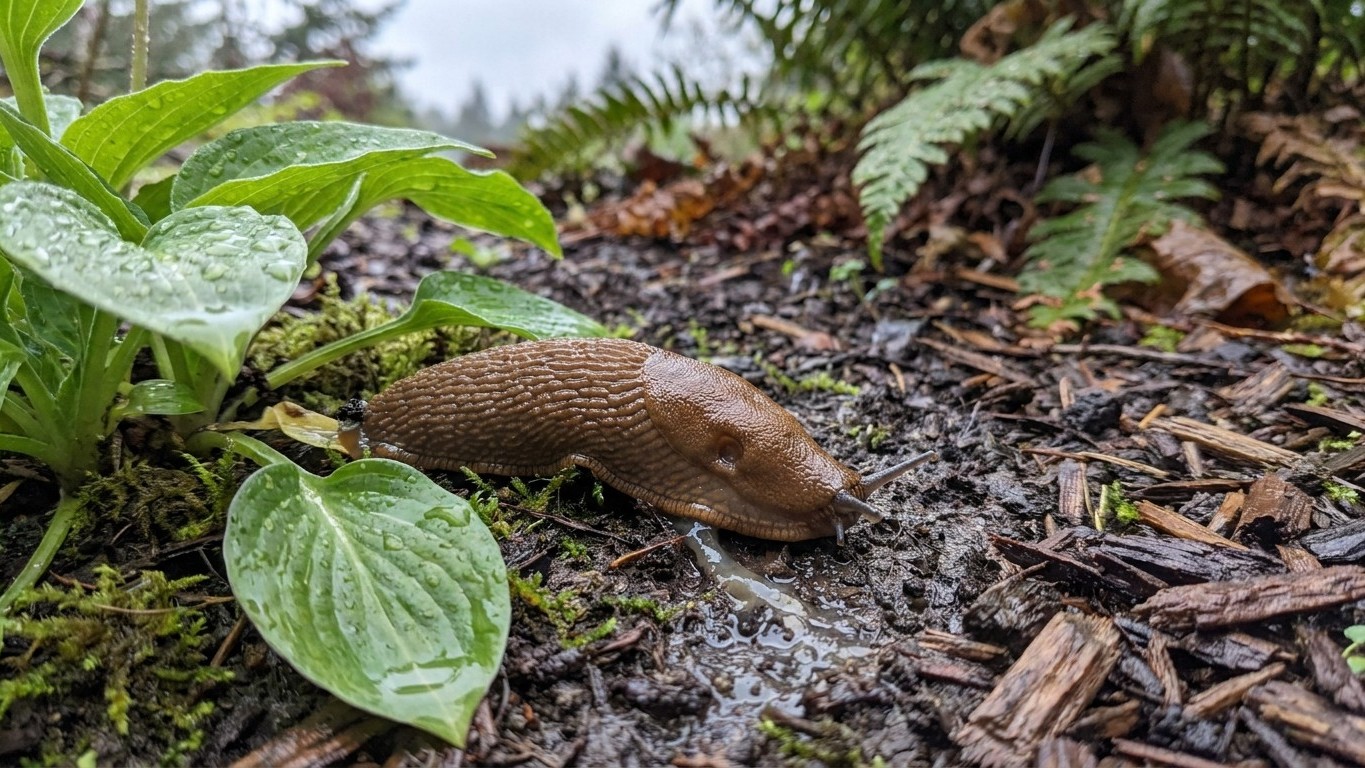

Slugs turn up in Washington whenever the ground stays damp and temperatures sit in the 45 to 65 degree range, which in this state means most of the year west of the Cascades. Peak activity hits in spring (March through May) and again in fall (September through November), when rain returns but the ground hasn’t frozen. What stops them isn’t one single product but a combination of drying out their habitat, blocking their path with barriers, and removing egg-laying sites before populations build up.
When Slugs Show Up Across Washington

Western Washington, from Bellingham down through Seattle, Tacoma, and Olympia, deals with slugs practically year-round. The region’s marine climate rarely dips below freezing for long stretches, and annual rainfall in cities like Forks can top 100 inches. That combination keeps soil moisture high enough for slugs to stay active even in January during mild spells.
East of the Cascades, the picture changes fast. Spokane, Yakima, and the Tri-Cities sit in a rain shadow, and summer heat there routinely climbs past 90 degrees with low humidity. Slugs still show up in irrigated gardens and shaded, mulched beds, but they’re far less of a year-round nuisance. Their activity window narrows to spring and early fall, and they retreat underground or into leaf litter once things dry out.
Gardeners on both sides of the state notice the same pattern within a season: slug damage spikes after a stretch of rainy, overcast days, then drops off during a dry snap. That’s not a coincidence. Slugs breathe through moist skin and lose water fast in dry air, so their nightly foraging runs are timed almost entirely by humidity, not the calendar.
Native Banana Slugs Versus Garden Pests
Not every slug crawling through a Washington yard is a problem. The Pacific banana slug, common in forested and shaded parts of western Washington, is a native decomposer that mostly eats dead leaves, fungi, and animal droppings rather than living plants. It’s the yellow, sometimes spotted slug that can grow to nearly 10 inches.
The species doing real damage to lettuce, hostas, and strawberries tend to be introduced ones: the gray garden slug and the European black slug, both accidental arrivals tied to nursery stock and shipping over the past century. They’re smaller, darker or mottled gray, and they reproduce faster in disturbed garden soil than banana slugs do in undisturbed forest duff.
Why Washington’s Climate Is Built for Slugs
Slugs lay eggs in clusters of a few dozen, tucked into moist soil, under boards, or inside compost piles. In a mild Puget Sound winter, those eggs can survive and hatch within four to six weeks once temperatures stay above 42 degrees. In a colder, drier east-side winter, egg development slows or stalls until spring warmth returns.
This is why a single wet fall in western Washington can set up a heavier slug season the following spring. Homeowners who till in compost or leave fallen leaves against foundation walls through winter are essentially running an incubator. The eggs overwinter protected from frost, then hatch right as spring seedlings emerge, which is exactly when new slugs do the most visible damage.
Mulch makes the same trade-off gardeners run into with a lot of soil-improvement practices. A two-inch layer of bark or straw mulch conserves moisture for plant roots, but it also creates the cool, damp microclimate slugs need to survive daylight hours without drying out. That doesn’t mean skipping mulch. It means keeping it a few inches back from stems and not piling it thick against raised bed frames where slugs like to hide.
What Actually Stops Slugs in a Washington Yard
Reducing moisture at ground level does more long-term work than any single trap or bait. Watering in the morning instead of the evening gives soil time to dry on the surface before nightfall, when slugs are most active. Spacing plants for airflow and removing dense ground cover near vegetable beds cuts down on the daytime hiding spots slugs need between feeding runs.
Iron phosphate bait is the most commonly recommended chemical option for home gardens, largely because it’s less toxic to pets and wildlife than older metaldehyde-based products. It works by disrupting the slug’s digestion after ingestion, and slugs typically stop feeding within a day or two, though they may not visibly die where you can see them. Scattering it thinly around vulnerable plants, rather than piling it in one spot, keeps it effective without overusing product that will eventually break down into soil nutrients anyway.
Physical barriers work well for anyone who wants to skip pesticides entirely:
- Copper tape or copper mesh around raised bed edges delivers a mild electric-like reaction that slugs avoid crossing
- Diatomaceous earth sprinkled in a dry ring around plants cuts and dehydrates slugs that try to cross it, though it needs reapplying after rain
- Crushed eggshells or coarse sand create a similar rough-texture deterrent
- Beer traps, a shallow dish sunk into the soil and filled an inch deep, drown slugs attracted to the yeast, and work best emptied and refilled every few days
Hand removal still holds up as one of the most reliable low-tech methods, especially right after a rain. Slugs are most active for the first two to three hours after dark, so a flashlight check around 9 or 10 p.m. during a wet week can pull dozens off hostas and lettuce beds before they do real damage. Dropping them into a bucket of soapy water is a common, low-cost way to dispose of them without pesticides.
Letting Natural Predators Do Some of the Work
Ground beetles, garter snakes, and several bird species eat slugs regularly, and Washington yards that avoid broad-spectrum insecticides tend to keep healthier populations of these predators around. Ducks are a favorite among homeowners with the space for them, since a small flock can clear a garden bed of slugs in a single evening pass. Even without livestock, leaving a rock pile or log at the edge of a yard gives garter snakes and beetles a place to shelter during the day, which keeps them nearby when slugs come out at night.
Telling Slug Damage Apart From Other Pests
Slug feeding leaves ragged, irregular holes in leaves, often starting at the edges, along with a telltale silvery slime trail visible in morning light. That trail is the giveaway that separates slug damage from caterpillar or beetle chewing, which leaves clean-edged holes without any residue.
Seedlings and transplants take the worst hits because slugs can mow down an entire young lettuce or bean start in a single night, while established plants with thicker leaves, like mature kale or chard, usually survive slug feeding with cosmetic damage rather than plant loss. Strawberries are a particular target in Washington gardens since the fruit sits low to the ground, right in a slug’s normal foraging path, and a single overnight visit can ruin a whole cluster of nearly ripe berries.
Anyone dealing with a bad season shouldn’t expect one method to solve it. The gardeners who keep slug damage manageable year after year usually combine two or three tactics at once, drying out hiding spots, setting a physical barrier around the plants that matter most, and doing a flashlight pass during the wettest weeks of spring and fall when slug activity peaks statewide.
Related guides
- Slugs in Oregon: When It Shows Up and What Stops It
- Slugs in West Virginia: When It Shows Up and What Stops It
- Slugs in Wisconsin: When It Shows Up and What Stops It
- Corn earworm in Washington
- Armyworms in Washington
- Western spotted cucumber beetle in Washington
- Slugs in British Columbia: When It Shows Up and What Stops It
- Slugs in Colorado: When It Shows Up and What Stops It