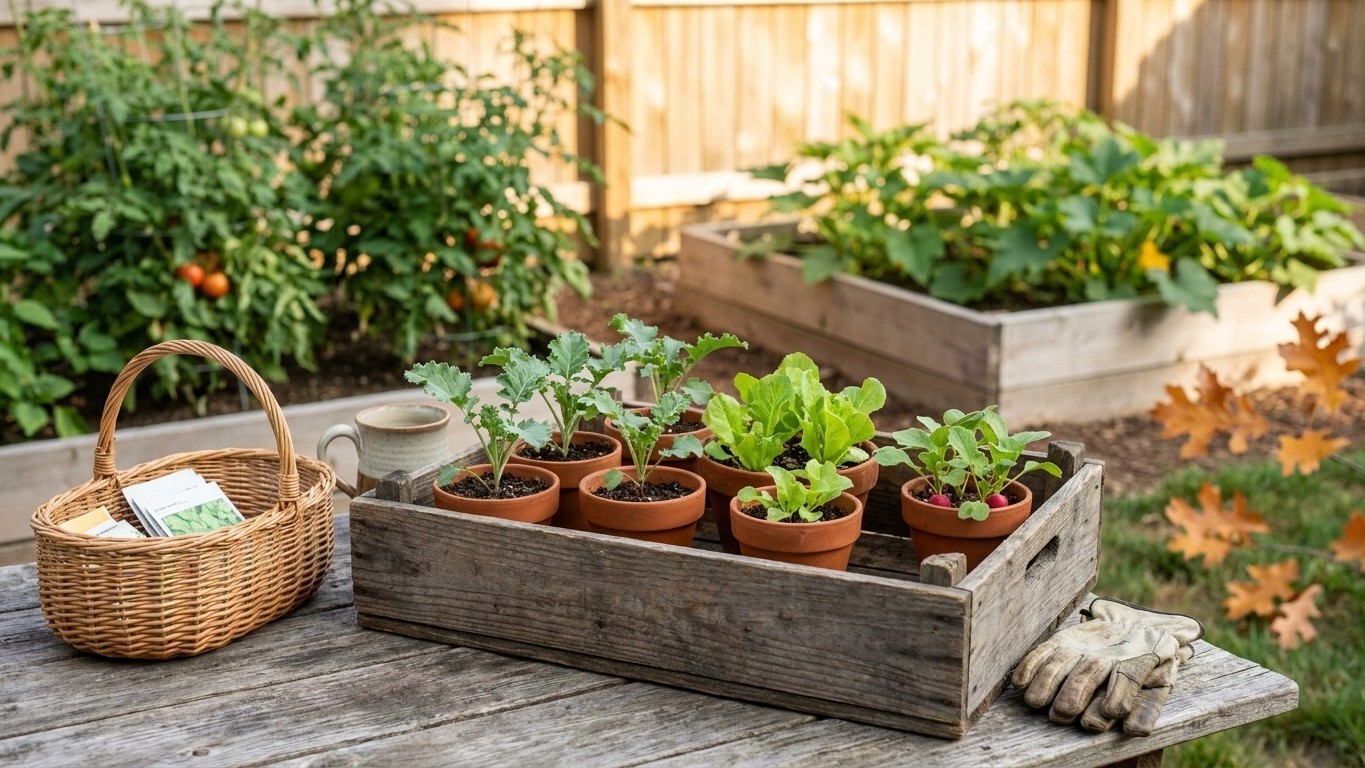

August in Washington’s mild, wet-winter zone means one thing above all: this is the last real window for sowing many fall crops directly outdoors, while summer crops are still cranking out tomatoes and squash. West of the Cascades, the growing season runs long enough to squeeze in a second round of quick greens and roots before the cold settles in. East of the mountains, that window is already narrowing fast.
What goes in the ground in August
The decision this month isn’t the calendar. It’s arithmetic: how many days does a crop need to mature, and how many days are left before the first fall frost? In western Washington, that frost typically lands between November 13 and November 30, based on NOAA’s 1991-2020 climate normals for the Seattle-area station. That gives a maritime gardener roughly three months of frost-free growing left when August opens, which is enough for a lot of fast crops but not for anything slow.
Direct-sown outdoors this month, with reasonable confidence: bush beans (only in the first week or two), beets, carrots, radishes, turnips, bok choy, arugula, lettuce, spinach, and a fall crop of peas if the soil hasn’t baked hard. Kale and collards sown now will size up nicely before frost knocks them back, and both actually sweeten once temperatures drop. Broccoli, cabbage, and cauliflower can still go in as transplants, since they’ve had a head start indoors or in a nursery flat, but starting their seed outdoors from scratch this late is pushing it in most counties.
What’s a gamble: new plantings of corn, winter squash, pumpkins, or anything that needs 90-plus days to bear fruit. Tomatoes and peppers already in the ground should stay there and keep producing, but setting out new starts of either now is a losing bet almost everywhere in the state.
East of the Cascades, the calculation shifts hard. That region runs closer to high desert, with a shorter frost-free stretch and hotter, drier August soil. Gardeners there should treat the fall-planting window as already closing for anything but the quickest greens and radishes, and lean on cold frames or row cover sooner than their counterparts on the coast.
What to start under cover
Counting backward from the first fall frost is the only way this works, because a fixed date on a seed packet doesn’t know what county you’re in. Take a crop that needs about 60 days from transplant to harvest, like a fast cabbage or a Chinese cabbage. Working back from a western Washington frost window of November 13 to 30, that puts the transplant date in mid-September, which means starting seed under cover now, in early-to-mid August, gives the seedlings four to five weeks to size up before they go in the ground.
This is the month to start seed trays of spring-maturing onions and hardy Asian greens meant for a fall or early-spring harvest, along with a second wave of broccoli and cauliflower destined for October transplant. A cold frame or an unheated hoop house buys an extra few weeks of growing time on either end, which matters more here than in drier climates because low light and damp soil slow everything down even when temperatures are mild.
Two ways this goes wrong. Start too early, and the seedlings sit around in small pots too long, get rootbound, and stall out the moment they’re transplanted, never really catching up. Start too late, and the plant runs out of daylight and warmth before it reaches a useful size, leaving a half-grown cabbage sitting in the garden through winter without ever heading up. The fix for both is the same: work out the transplant date from the frost window first, then count backward, rather than starting seed just because it’s sitting in the shed.
What is ready to pick
August is the payoff month for everything planted back in spring. Tomatoes are hitting their stride, summer squash and cucumbers need checking every couple of days or they turn into baseball bats overnight, and beans should be picked young and often to keep the plants producing instead of shutting down to make seed. Sweet corn is ready when the silks turn brown and dry while the husk stays green, and a quick thumbnail test on a kernel (milky, not clear or doughy) confirms it.
Blueberries and early apple varieties are coming in through the month in most of the state, along with stone fruit in warmer pockets east of the mountains. Garlic and bulb onions planted the previous fall or early spring should already be out of the ground and curing in a dry, shaded spot; leaving them in wet soil past maturity invites rot.
Zucchini and summer squash are ready smaller than most gardeners think, six to eight inches is plenty; a squash left to grow to a foot gets tough and seedy fast. Winter squash and pumpkins, by contrast, are not ready yet. They need a hard rind that resists a fingernail scratch and a stem that’s started to dry and cork over, which for most varieties doesn’t happen until September or later. Pulling them early just gets a squash that won’t store.
The jobs that matter this month
Succession sowing is the single biggest lever this month, because every two to three weeks of delay on a fall crop eats directly into the shrinking window before frost. A row of lettuce or radishes sown now, then again in two weeks, spreads the harvest out and hedges against one batch bolting in a hot spell.
Water, mulch, and staking
Dry August soil is the enemy of germination. Newly sown fall crops need consistent moisture right at the surface to come up at all, which usually means light watering once a day rather than a deep soak every few days. A two-inch layer of mulch around established tomatoes, squash, and beans holds that moisture and keeps root zones cooler, which matters when afternoon soil temperatures climb. Anything sprawling or top-heavy, indeterminate tomatoes, tall dahlias, heavy-fruited squash vines, should be staked or caged now, before a wind event or the weight of ripening fruit does the damage for you.
Pest scouting
Late blight shows up on tomato and potato foliage as dark, water-soaked blotches, especially after a stretch of cool, damp mornings, and it spreads fast enough that a daily walk-through catches it before it wipes out a bed. Squash vine borer damage looks like sudden wilting of one vine while the rest of the plant looks fine; slitting the stem near the wilted section and removing the borer is the only real fix once it’s inside. Aphids cluster on the undersides of brassica leaves this time of year and are easy to blast off with a hard spray of water before they need anything stronger.
What not to do in August
The classic mistake is reading a warm, sunny stretch as permission to plant something that needs a long season, like a fresh round of tomatoes or corn. The air feels like summer, but the calendar math hasn’t changed: a crop that needs 80 days still needs 80 days, and starting it now in most of Washington means frost arrives before it finishes.
Nitrogen-heavy fertilizer is another trap this month. Feeding a tomato or pepper plant a high-nitrogen boost in August pushes leafy green growth right when the plant should be putting its energy into ripening the fruit already set. The same applies to winter squash and pumpkins heading into their final bulking-up phase; what they need now is potassium and steady water, not a nitrogen jolt.
Letting harvest slide is a quieter mistake with real consequences. Overripe squash, beans left to toughen on the vine, and fallen fruit rotting on the ground all draw in pests and disease that spread to healthy plants nearby. A daily or every-other-day pass through the garden to pick anything ready keeps both the harvest and the pest pressure under control.
Finally, don’t assume the western Washington rhythm applies statewide. A gardener in the high desert east of the Cascades working from a Seattle-based frost calendar is likely to overshoot their real planting window by weeks, since that region’s growing season runs shorter and hotter and closes earlier in the fall.
Checking this against your own county
A statewide frost window is a starting point, not an instruction. Elevation alone can shift a local frost date by two or three weeks compared to a low-lying valley a few miles away, and the difference between the wet, temperate coast and the dry interior east of the Cascades is even bigger. The USDA Plant Hardiness Zone Map places Washington across zones 4a to 9a, and Seattle itself sits in a milder band than most of the eastern half of the state, which is a reminder that a single reference city doesn’t speak for the whole territory.
For a planting calendar tuned to a specific county, the Washington State University Extension service is the reliable next stop, with local offices that track frost dates and soil conditions block by block rather than state by state.
Common questions
Is it too late to plant tomatoes in Washington in August?
For new plantings, yes, in nearly all of the state. Tomatoes need a long stretch of warm days to ripen fruit, and starting fresh plants in August leaves too little time before the first fall frost, which lands between November 13 and 30 in the mild western part of the state and earlier east of the Cascades. Existing plants should stay in the ground and keep producing.
Can I still start a fall vegetable garden in August?
Yes, and it’s one of the better months to do it. Fast crops like lettuce, spinach, radishes, turnips, and kale sown now have enough time to mature before frost in most of the state, especially west of the Cascades where the frost-free season runs into late November.
What vegetables should I harvest right away in August?
Summer squash and cucumbers need picking every couple of days to stay tender, beans should come off the vine young and often, and garlic and onions from earlier plantings should already be pulled and curing. Winter squash and pumpkins are the exception; they need more time and shouldn’t come off the vine until the rind resists a fingernail scratch.
Does eastern Washington follow the same planting schedule as western Washington?
No. Eastern Washington’s high-desert climate runs a shorter, hotter growing season with an earlier fall frost than the maritime west side, so fall-crop planting windows there close sooner. Gardeners east of the Cascades should check with their local WSU Extension office rather than relying on frost dates drawn from the Seattle area.