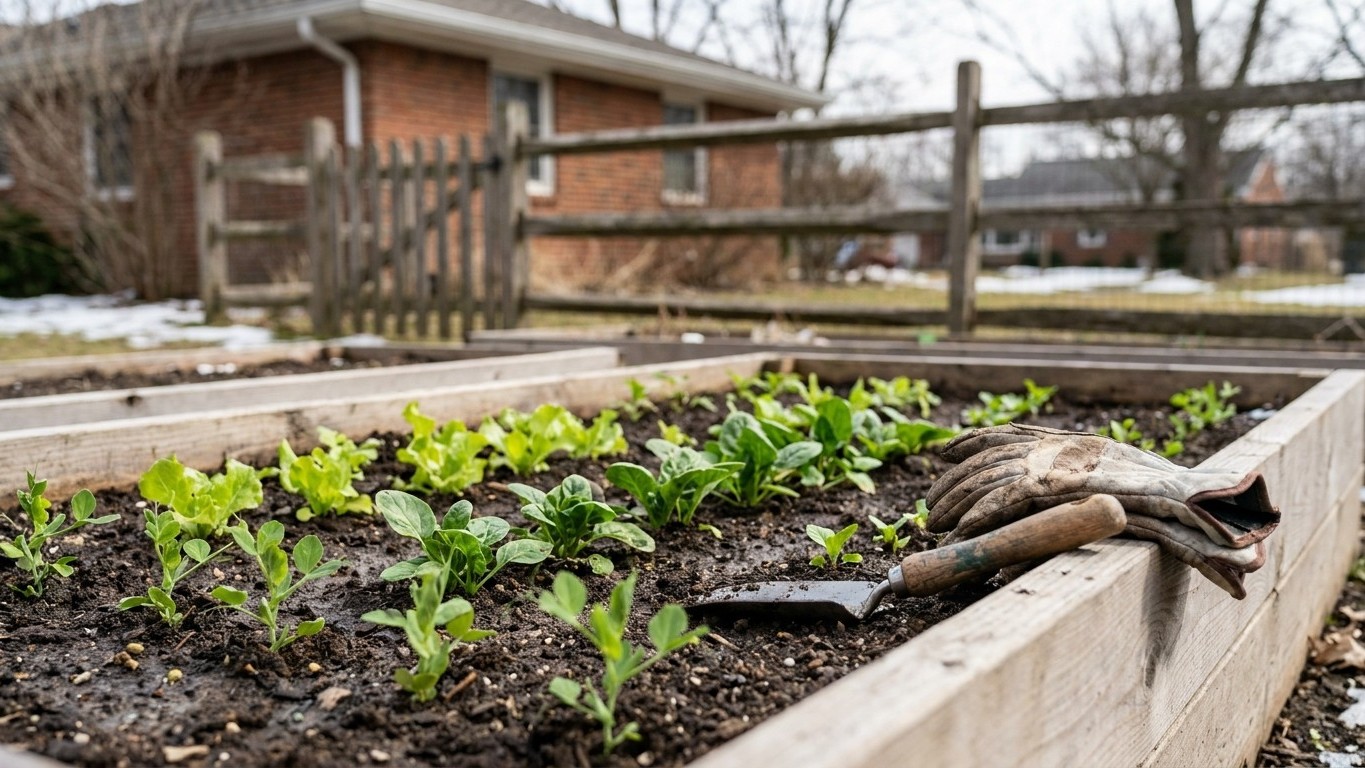

March in Washington splits the state in two. West of the Cascades, the last frost window (February 27 to March 18, per NOAA) is closing out, and the ground is workable enough for peas, hardy greens, alliums and seed potatoes. East of the Cascades, in the high desert beyond the mountains, the season runs shorter and colder, so most of that has to wait. This is also the month to finish dormant pruning and get soil and seed orders sorted before the window shuts.
What goes in the ground in March
Air temperature is not what decides whether a seed germinates. Soil temperature does, and in March that’s the real gatekeeper in Washington. The published frost data for the western part of the state (station near Seattle, NOAA NCEI 1991-2020 normals) puts the last spring freeze somewhere between February 27 and March 18. By the back half of the month, freeze risk in the lowlands has mostly passed. But the soil itself is still cold and often waterlogged from winter rain, and that holds tender crops back for weeks after the frost date clears.
Crops that germinate in cold, damp soil are the safe bet: peas (shell, snap or snow), fava beans, spinach, lettuce, arugula, mizuna, mache and radishes. Onion sets and shallots can go in once beds drain, and seed potatoes, chitted indoors ahead of time, can be planted toward the end of the month if the soil crumbles rather than clumps in your hand. Garlic planted in fall is already growing and needs nothing but a weeding pass. Carrots and beets are more of a gamble this early; cold soil slows their germination so badly that seed often rots before it sprouts, so many gardeners hold those for April or start them under cover instead.
| Region | March conditions | Safe to plant outside | Still waiting |
|---|---|---|---|
| Western Washington (Puget Sound lowlands) | Last frost window closing (Feb 27–Mar 18); soil cold and often wet | Peas, favas, hardy greens, onion sets, shallots, seed potatoes late in month | Tomatoes, peppers, squash, beans, corn |
| Eastern Washington (Columbia Basin and high desert) | Ground often still frozen or snow-covered early in the month; shorter overall season | Garlic already in the ground; hardy greens under cold frames | Nearly everything else until soil thaws and warms |
The frost figures above come from a western Washington station, so a comparable published range for the high desert side of the Cascades isn’t given here. Growers there simply know the season starts later and ends sooner, and they plan around that reality rather than a firm date.
What to start under cover
The trick with indoor seed starting isn’t picking a date off a calendar. It’s counting backward from when you actually expect to move a plant outside, and in maritime Washington that transplant date runs later than the frost window alone would suggest, because cold soil keeps tomatoes, peppers, and squash sitting in a holding pattern well after the air has warmed. Most gardeners in the western lowlands don’t set those out until the soil itself has caught up, often weeks past the last frost.
Work backward from that transplant window. Tomatoes and peppers typically need six to eight weeks indoors before they’re ready to go in the ground, so starting seed for those now, in March, sets up a transplant later in spring rather than an immediate one. Broccoli and cabbage transplants follow a shorter runway, roughly five to six weeks, which makes March a reasonable start for an April move outdoors, especially in the milder western counties.
The two ways this goes wrong
Start too early and you end up with leggy, rootbound seedlings sitting in undersized pots for a month past when they should have moved outside, stunted before they ever hit the garden. Start too late, particularly in the shorter eastern Washington season, and there isn’t enough runway left to get a full harvest before fall cold shuts things down again. Neither mistake is fatal on its own, but both cost weeks you don’t get back.
What is ready to pick
Outdoor harvests in March lean on whatever made it through winter rather than anything freshly planted. Overwintered kale, chard, and leeks that weathered the cold months are often at their best right now, sweetened by the cold rather than damaged by it. Sprouting broccoli, if you planted it the previous summer, starts throwing shoots this month too. Cold frames and low tunnels extend the list further, with lettuce, spinach, and mache holding through weather that would otherwise stop them cold.
Indoors, sprouts and microgreens fill the gap when the outdoor garden is still catching up, ready in a week or two from seed and needing nothing more than a windowsill. Forced rhubarb, kept in the dark to push pale, tender stalks, is another March-specific treat that doesn’t wait for the rest of the garden.
This is also the month to walk the root cellar or pantry shelf and check stored squash, potatoes, and onions. Squash with soft spots near the stem, potatoes that have started sprouting eyes, and onions gone soft at the neck are all signs those need to be used or composted before they take neighboring produce with them.
The jobs that matter this month
Dormant pruning of fruit trees and cane berries has a real deadline, and March is close to the end of it. Once buds swell and break, the tree is no longer dormant, and cuts made after that point cost more in lost growth than the same cut made now. If apple, pear, or stone fruit trees haven’t been pruned yet, this is the window to finish before that changes.
Seed ordering belongs on this month’s list too, and not as an afterthought. Popular varieties, especially the shorter-season types eastern Washington growers rely on, sell out earlier than most people expect, and a favorite tomato or squash variety can disappear from suppliers before the ground is even ready for it.
Soil testing and amending pays off now because amendments need time to work into the root zone before spring planting ramps up. Turning compost, sharpening pruning shears and hoes, and repairing raised beds or fencing that winter weather loosened are all jobs that take an afternoon now and save a scramble later. Chitting seed potatoes in a bright, cool spot indoors, so they’ve got stubby green sprouts before they go in the ground, is a small step that speeds up their start once they’re planted.
What not to do in March
The most common March mistake in Washington is trusting the air instead of the soil. A run of sixty-degree days feels like spring, but it doesn’t mean the ground has warmed to match, and tomatoes, peppers, squash, and beans set out on the strength of a warm afternoon usually sit stalled, or rot outright, in soil that’s still cold six inches down.
Pulling row covers and cold frame lids off too early after a mild spell is the second classic error. The published frost window for western Washington runs as late as March 18, and inland and higher-elevation spots trail even further behind that. A week of warm weather followed by one more freeze can undo months of careful overwintering in a single night.
Heavy nitrogen feeding on fruit trees before growth actually starts is another timing mistake worth avoiding. Fertilizer applied too early sits unused and can leach away before roots are active enough to take it up, and it can push soft, frost-tender growth right when a late freeze is still possible. Wait for visible bud swell before feeding, and hold off tilling or working clay soil that’s still wet, since that compacts it in a way that takes a full season to undo.
Checking this against your own county
A statewide picture of March is a starting point, not a personal instruction. Washington spans USDA hardiness zones 4a to 9a, and that range alone tells you how differently a garden in Seattle behaves compared to one in the Cascade foothills or the Columbia Basin. Elevation, distance from the coast, and which side of the mountains you’re on can shift a planting window by several weeks in either direction.
For a planting schedule tuned to your specific county, the Washington State University Extension is the resource built for exactly that gap between a statewide guide and your own backyard.
Common questions
Can I plant tomatoes in Washington in March?
Not outdoors, in most of the state. Cold, wet soil in March stalls or rots tomato seed and seedlings even after the frost risk passes. Start seed indoors now for a later transplant once soil has warmed.
Is it too late to prune fruit trees in March?
It’s close to the deadline rather than past it. Pruning works best while trees are still dormant; once buds swell and break, cuts cost the tree more lost growth. Finish this month if it hasn’t been done yet.
What vegetables are frost-hardy enough for March planting in Washington?
Peas, fava beans, spinach, lettuce, arugula, mizuna, mache, and radishes all tolerate the cold soil and lingering frost risk typical of a Washington March, along with onion sets, shallots, and fall-planted garlic already in the ground.
When should potatoes go in the ground in Washington?
Chit seed potatoes indoors first, then plant them out toward the end of March if the soil is workable and well-drained rather than sodden. Cold, waterlogged ground is the main reason potatoes rot before they sprout.