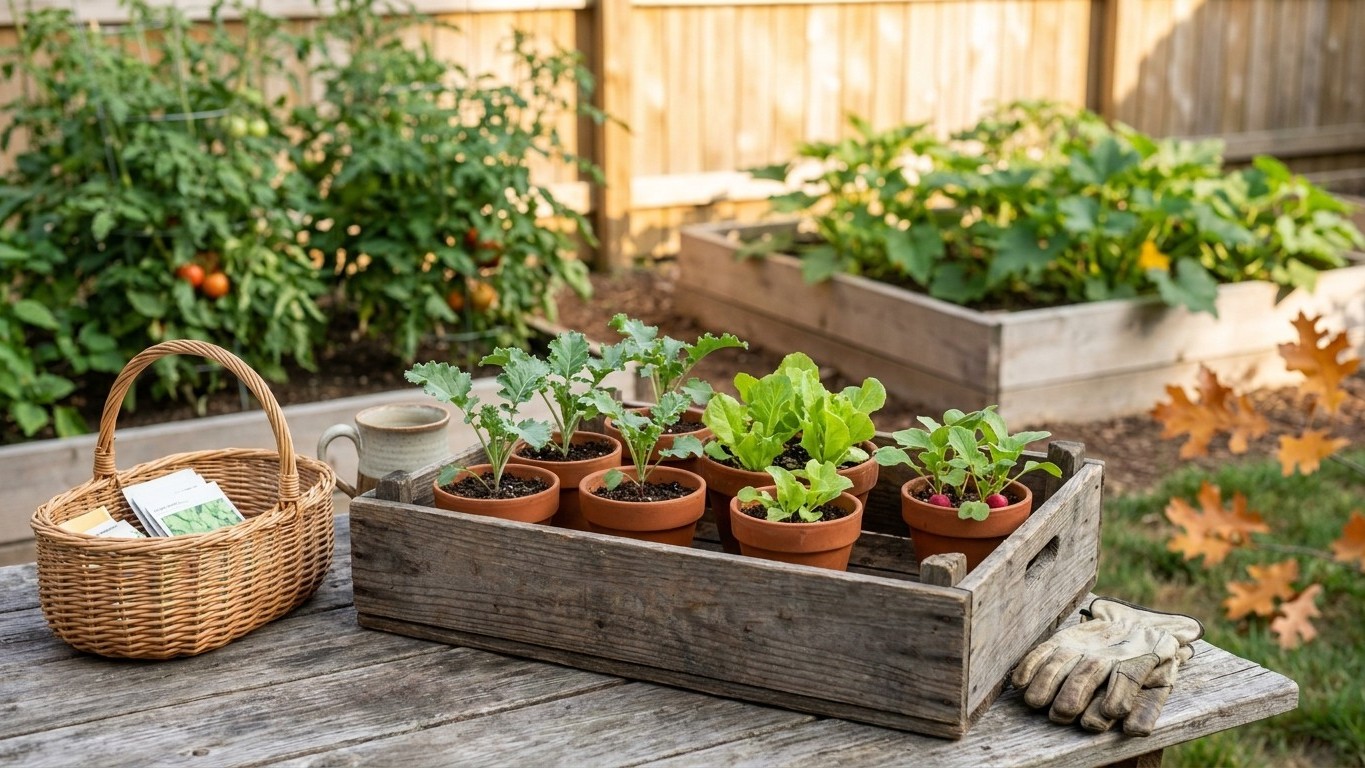

August in West Virginia is a fall-garden month wearing a summer-garden’s clothes. You’re still picking tomatoes and squash, but the real work now is getting cool-season crops into the ground for a fall harvest before the first frost arrives sometime between October 18 and November 1. Direct-sow kale, beets, turnips, bush beans (early in the month only), and transplant broccoli and cabbage started weeks ago. Skip anything that needs a full 90 days to mature.
What goes in the ground in August

The decision this month isn’t whether the soil is warm enough, it almost always is, but whether there’s enough time left before frost for a crop to finish. With first fall frost landing anywhere from October 18 to November 1 depending on the year, early August still leaves 75 to 90 days of growing season. By the last week of the month, that window has shrunk to under 60 days in many spots. That arithmetic decides what’s worth planting.
Bush beans are the classic early-August gamble: they need roughly 55 to 60 days, so seed them in the first week or two and you’ll likely beat the frost. Wait until late August and you’re rolling dice against a mid-October freeze. Beets, turnips, kale, collards, Swiss chard, and mustard greens are safer bets all month long, since most tolerate a light frost and some (kale especially) actually taste better after one.
Lettuce and spinach can go in directly, but August soil often runs too warm for good germination. A layer of shade cloth or seeding in the cooler evening hours helps seeds sprout instead of cooking in the top inch of soil. Carrots are borderline: they want 70 to 80 days, so only plant them in the first half of the month, and expect smaller roots than a spring crop.
Transplants, not seeds, for the slower crops
Broccoli and cabbage are too slow to start from seed outdoors in August. If you have transplants that were started indoors or in a shaded nursery bed back in July, this is the month to get them into open ground. Space them properly, water them in well, and don’t let the last hot stretch of summer dry them out before their roots establish.
What to start under cover
Count backward from the frost window rather than from a date on the calendar. If first frost falls October 18 in a lower-elevation valley, and a fall broccoli transplant needs about three weeks in a seed tray before it’s ready to go out, plus roughly 65 to 70 days in the ground to mature, you needed those seeds started by early August at the latest. Miss that window and you’re growing broccoli that never heads before the cold shuts it down.
Lettuce and spinach are easier to hedge. Start them in trays under light shade or in a cool spot indoors through most of August, and you can keep transplanting successions every couple of weeks well into fall since they mature fast and tolerate cold better than almost anything else in the garden.
The two ways this goes wrong are familiar to anyone who’s gardened more than a season. Start too early, before you have a real transplant date in mind, and you end up with leggy, rootbound seedlings sitting in trays waiting for space that isn’t ready. Start too late, treating August like it’s still early summer, and the plant simply runs out of season, hitting frost as an immature head or a plant that never sized up. Neither mistake is fixable once it happens, so the trays going in now should already have a home picked out in the garden two to three weeks ahead.
What is ready to pick
August is the harvest month most gardeners wait all year for. Tomatoes are in full swing; check for a deep, even color across the whole fruit and a slight give when you press the skin, not rock-hard, not mushy. Peppers can be picked green or left to ripen further to red, orange, or yellow depending on the variety, and leaving them longer only improves flavor as long as the plant stays healthy.
Sweet corn signals readiness with dry, brown silks and a kernel that spurts milky liquid when punctured with a thumbnail, clear liquid means wait a few more days. Summer squash and cucumbers should come off the vine small and often; oversized zucchini turns woody fast, and letting cucumbers yellow on the vine tells the plant to stop producing new fruit.
Beans are ready when pods snap cleanly rather than bend, and picking them consistently, every two to three days, actually keeps the plant producing longer. Melons are trickier: a cantaloupe slips easily from the vine when ripe, while watermelon needs the thump test and a check of the underside spot, which should have turned from white to a creamy yellow.
Blackberries and early apple varieties are also coming in through the month in much of the state, and stored garlic or onions from earlier in the season should get a quick check now, anything soft or sprouting should be used first, before it takes down neighboring bulbs in storage.
The jobs that matter this month

Succession sowing is the single job that separates a garden that produces through October from one that stops cold in September. Every two weeks through August, another short row of lettuce, radishes, or greens keeps the harvest coming instead of dumping everything at once.
Watering rhythm matters more in August than almost any other month, since heat and dry spells stress plants right when tomatoes and peppers are sizing up fruit. Deep, infrequent watering, aimed at the soil rather than the leaves, beats a daily light sprinkle that only wets the surface and encourages shallow roots.
Staking and support should already be in place by now for tomatoes and beans, but if a plant has outgrown its cage or stake, don’t wait, a storm-flattened tomato vine loses fruit to rot on the ground almost overnight. Mulch is doing double duty this month, holding soil moisture and keeping weed pressure down while everything is actively growing.
Pest scouting doesn’t pause for harvest
Squash vine borer, Japanese beetles, and tomato hornworm are all active in August, and a five-minute walk through the garden every few days catches an infestation while it’s still a few leaves, not a collapsed plant. Check the undersides of squash leaves for sawdust-like frass near the base of the stem, a sign the vine borer has already gotten in.
Compost turned now, and beds cleared of spent early crops like garlic or bolted lettuce, set up the space and the soil for the fall plantings going in through the rest of the month. None of this is optional busywork, it’s the difference between a garden that keeps producing into October and one that quietly shuts down in September.
What not to do in August
The most common mistake is treating August like early June and starting warm-season crops, like a fresh round of squash or melons, that simply won’t mature before frost. A tomato started from seed now has no realistic path to fruit before the season ends; if you want more tomatoes, buy an already-fruiting transplant, don’t start from seed.
Nitrogen-heavy fertilizer is another trap this month. Established tomatoes, peppers, and squash don’t need a nitrogen boost in August, it pushes leafy green growth at the expense of the fruit you’re trying to ripen, and can actually delay harvest. If anything is due for feeding now, it’s the fall greens and brassicas just going into the ground, and even those need a balanced feed, not a nitrogen-only one.
Letting weeds finish flowering and set seed in August is a mistake that costs you next year, not just this one, since a single mature weed can drop thousands of seeds into the soil before frost. And don’t skip hardening off fall transplants just because it’s still hot out, moving broccoli or cabbage seedlings straight from a shaded tray into full August sun without a few days of gradual exposure will scorch them just as surely as a late spring frost would.
Checking this against your own county
Every date in this article is built around a single reference point, and the state doesn’t behave like one climate. Elevation shifts frost timing by weeks, not days, a mountain garden can see frost while a river valley is still weeks away from it. The USDA hardiness zone range across the state, 5a to 7a, reflects that same spread from coldest pockets to milder valleys.
Treat everything above as a starting point, then check it against your own county through the West Virginia University Extension Service, which tracks local frost data and planting guidance specific to your part of the state.
Common questions
Is it too late to plant tomatoes in West Virginia in August?
From seed, yes, there isn’t enough season left to mature fruit before frost. An already-established transplant from a nursery can still produce if planted early in the month, but it’s a race against the October frost window.
Can I still plant a fall vegetable garden in August?
Yes, and it’s the most productive planting window of the year for cool-season crops. Kale, collards, beets, turnips, and successive rounds of lettuce and spinach all have time to mature before the first frost between October 18 and November 1.
Why won’t my lettuce seeds germinate in August?
August soil often runs too warm for lettuce and spinach seed to sprout reliably. Seeding in the evening, using shade cloth, or starting seeds indoors in a cooler spot and transplanting them out solves the problem.
Should I fertilize my garden in August?
Established fruiting plants like tomatoes and peppers don’t need extra nitrogen this month, it delays ripening. Save fertilizer for the fall crops going into the ground now, using a balanced feed rather than a nitrogen-heavy one.
Gardeners who plant by the Moon can check the August 2027 moon planting calendar, a tradition rather than a proven method.