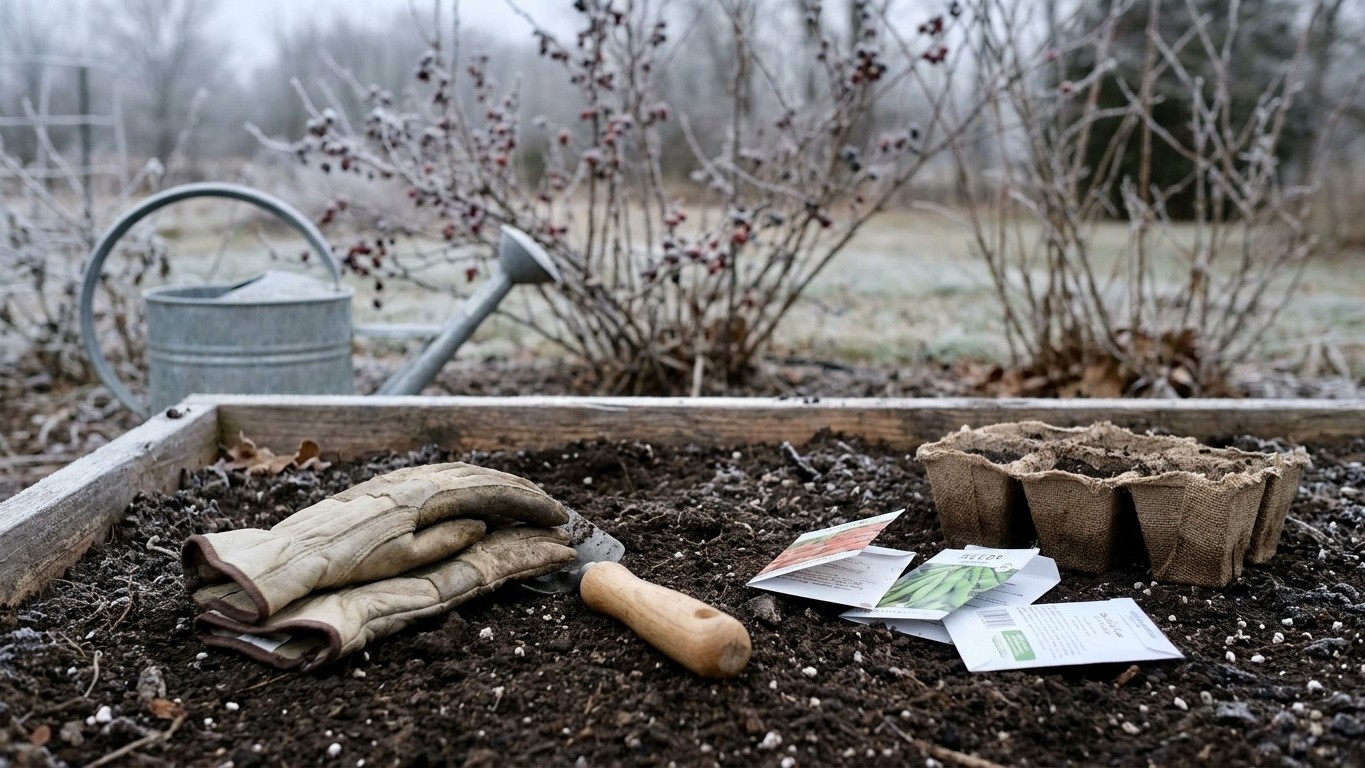

Short answer: in most of West Virginia, February is not a month for putting seeds or transplants into open ground. The state’s last spring frost runs April 9 to April 23 around Charleston, and higher elevations lag further behind. What actually works this month is narrower: garlic and shallots into workable soil, cold frames and low tunnels, bare-root fruit stock, and a full slate of indoor seed-starting timed off the frost window rather than the calendar.
What goes in the ground in February

The decision here isn’t the date on the wall, it’s two numbers: soil temperature and the frost window. Charleston’s last-frost range sits between April 9 and April 23, which puts February six to twelve weeks ahead of it depending on where in the month you’re standing and where in the state you garden. Above that river valley, in the high counties of Pocahontas, Randolph or Tucker, frozen and saturated soil can push things back even further. Planting into ground that hasn’t opened up yet doesn’t save time. It rots seed and stresses transplants that then sulk for weeks once conditions do turn.
That said, the ground isn’t off-limits everywhere. If the soil in your beds has thawed and drains when you press a handful of it, garlic and shallot cloves can still go in, especially in the lower valleys and the Eastern Panhandle where frost depth is shallower. Both crops root through cold soil and don’t mind a late freeze once they’re tucked under a couple inches of earth and mulch.
What actually moves forward this month
- Garlic and shallot cloves, into workable soil only, mulched heavily after planting
- Bare-root fruit trees, brambles and dormant shrubs, planted while they’re still fully dormant
- Cold frames and low tunnels seeded with spinach, arugula or mâche, which will sit and germinate slowly rather than shooting up
- Rhubarb crowns or chicory roots forced indoors in a dark, cool space for an early, tender harvest
Everything else, the peas, the lettuce, the onion sets destined for open rows, waits. Peas can go in as soon as soil is workable and daytime temperatures climb, but that’s typically a March conversation across most of the state, not a February one. Treat this month as prep and protected planting, not open-ground planting.
What to start under cover
Seed-starting math runs backward from the frost window, not forward from today’s date. With Charleston’s last frost falling April 9 to April 23, count back and February lands roughly eight to twelve weeks out, which is exactly the window most long-season crops need indoors before they’re ready to go outside.
Onions and leeks are the earliest starts, since they grow slowly from seed and benefit from a long head start under lights. Started now, they’ll have the stocky, pencil-thick stems by spring that transplant well. Peppers follow close behind: they’re slow to germinate and slower to size up, so starting them in the back half of the month gives them enough runway without letting them stall in a small pot. Broccoli, cabbage and other cole crops destined for an early spring planting also belong on this month’s tray, since they can go out under cover well before the last frost once hardened off.
Tomatoes are the crop gardeners most often rush, and the timing here matters. Started too early, they turn into leggy, rootbound plants sitting in cups on a windowsill for weeks past their prime, stressed before they ever see soil. Started too late, they miss the window to produce a full harvest before fall frost arrives October 18 to November 1. The safer play is to hold tomato seed for a start date closer to six to eight weeks before your local last frost, which for most of the state means waiting until the tail end of February or into March rather than the first week of the month.
Whatever you start now needs real light, not just a bright windowsill. Weak light is the single biggest reason indoor starts come out stretched and floppy by transplant time.
What is ready to pick
Little comes out of open ground anywhere in West Virginia this month, and there’s no point pretending otherwise. But little isn’t nothing, and a garden that was planned right doesn’t go silent.
Kale, collards and leeks that overwintered in the ground are often still harvestable, having sweetened rather than spoiled after repeated frosts. Pull back any snow cover and check: leaves that are dark green and firm are fine, leaves gone translucent and mushy have finally given out and should come off. Cold frames planted the previous fall with spinach or mâche are usually still producing small, slow leaves, worth a cut every couple of weeks.
Indoors, sprouts and microgreens fill the gap fastest. A tray of pea shoots or radish microgreens is ready in one to two weeks from seed, no light setup required beyond a sunny sill, and gives fresh greens to a kitchen that otherwise has none coming from the yard.
Checking what’s in storage
This is also the month stored crops start turning if they’re going to. Walk the root cellar or basement shelf and look for three things: soft spots on winter squash (a sign of rot starting from the inside), potatoes that have gone soft, green, or started sprouting eyes, and onions with a sour smell or a neck that’s gone slimy at the top. Pull anything questionable now rather than finding a spoiled onion has fouled a whole bin of good ones next to it.
The jobs that matter this month

This is the month the garden gets built for the season ahead, even though nothing visible is happening in the beds.
Dormant pruning tops the list, and timing is why it belongs here specifically. Apple, pear and other fruit trees, along with brambles like raspberries and blackberries, prune cleanest while they’re fully dormant and the wood structure is visible without leaves in the way. Wait too long and buds start swelling, which means every cut becomes a lost fruiting branch instead of a clean thinning cut.
Seed ordering has its own deadline pressure. Popular varieties, particularly heirloom tomatoes and anything a seed company flags as limited stock, sell out weeks before planting season actually starts. Ordering now, rather than waiting until the seed rack at the local store looks picked over, is the difference between growing the variety you wanted and settling for whatever’s left.
Soil work pays off precisely because nothing’s growing yet. A soil test taken now gives results back in time to amend before spring planting, rather than guessing at fertility after the fact. Turning a compost pile that’s gone dormant in the cold restarts the breakdown process so it’s ready to spread by the time beds are prepped. Tools deserve the same attention: pruners, loppers and hoes sharpened and oiled now cut cleaner all season, and a clean cut heals faster and invites less disease than a ragged one from a dull blade.
Round it out with the unglamorous repairs, fixing a sagging trellis, patching fence where deer have been testing it, mending raised bed corners, before the rush of spring planting makes those jobs compete for time they won’t get.
What not to do in February
The most common mistake is trusting a warm afternoon over the actual frost data. A 60-degree day in the middle of the month feels like spring, and it tempts gardeners into direct-sowing warm-season crops or hardening off tender transplants outdoors. Soil temperature lags air temperature by days to weeks, and a single warm afternoon doesn’t change a last-frost window that runs April 9 to April 23 in the milder parts of the state and later at elevation. Seed that goes into cold, wet soil during a warm spell often rots before it germinates rather than getting a head start.
A related error is uncovering cold frames, mulch, or overwintered crops too early after a mild stretch, only to have a hard freeze move back in and undo weeks of protection. West Virginia’s late-winter weather swings hard between mild and bitter, and cold frames especially need to stay closed or vented rather than thrown open the first time it feels like spring.
Fertilizing at the wrong moment is the third trap. Feeding nitrogen to dormant fruit trees, overwintered garlic, or beds that won’t be planted for another month or more mostly feeds weeds and leaches away before anything can use it. Hold nitrogen applications until plants are actively growing and can take it up, and lean on a soil test rather than a calendar date to decide when and how much to apply.
Checking this against your own county
A state-wide frost window is a starting point, not an instruction for your particular yard. Charleston’s April 9 to April 23 last-frost range comes from a single river-valley station, and elevation changes that number fast: the high counties of the Allegheny Mountains routinely freeze later in spring and earlier in fall than the river valleys and the Eastern Panhandle. Local terrain, cold-air drainage into hollows, and even which side of a ridge a garden sits on can shift a planting date by two or three weeks from what a state average suggests.
The most reliable next step is checking those specifics against the West Virginia University Extension Service, which tracks county-level guidance and local planting calendars built for the state’s mountain and valley terrain rather than a single statewide date.
Gardeners who plant by the Moon can check the February 2027 moon planting calendar, a tradition rather than a proven method.
Common questions
Can I plant grass seed in West Virginia in February?
Cold, often frozen or saturated soil makes February a poor month for establishing turf almost anywhere in the state. Grass seed germinates reliably once soil temperatures climb consistently, which tends to happen well after the last-frost window opens in spring.
Is it too early to start tomato seeds indoors?
Starting tomatoes in early February is usually too early for most of the state, since Charleston’s last frost falls April 9 to April 23 and tomatoes only need about six to eight weeks indoors before transplant. Starting late in the month or holding until March keeps plants from getting leggy and rootbound before conditions are right outside.
What USDA hardiness zone is West Virginia in?
The USDA Plant Hardiness Zone Map places the state across zones 5a to 7a, a range built on one measurement: average annual extreme minimum winter temperature. That range means a garden in the high mountains and one in a low river valley can differ by a full zone or more, so treat a statewide zone number as a rough guide rather than a precise fit for any one yard.
Do I need a cold frame to plant anything outdoors this month?
Not strictly, garlic and shallots can go into open, workable soil without any cover. But a cold frame or low tunnel extends what’s possible considerably, letting spinach, arugula and mâche germinate and hold through late-winter cold that would otherwise stall or kill them in open beds.