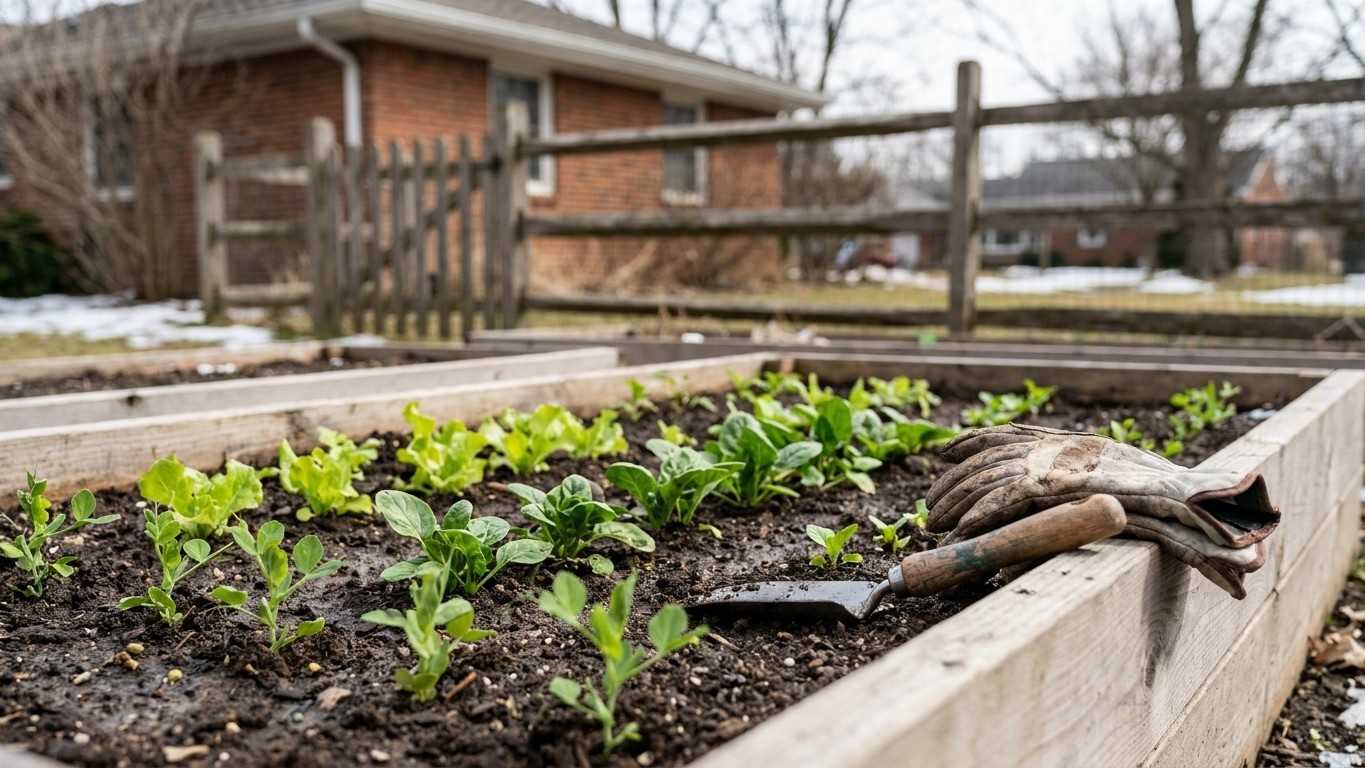

March in West Virginia sits before the frost window closes, so the ground stays the boss. Hardy crops like peas, onion sets, spinach, kale and lettuce can go into workable soil, along with dormant bare-root plants and garlic or shallots not yet in from fall. Anything tender, tomatoes, peppers, beans, squash, waits. Last frost across the state’s mid-elevations runs April 9 to April 23, so March is a setup month, not a planting free-for-all.
What goes in the ground in March

Soil temperature decides what survives here, not the date on the seed packet. A 60-degree afternoon in March doesn’t mean the six inches of dirt below it have caught up, and cold, wet soil rots seeds before they sprout. That’s the real reason West Virginia gardeners hold tomatoes and beans until well past the last-frost window of April 9 to April 23, while pushing ahead with crops that shrug off a freeze.
Peas are the classic March gamble that usually pays off. Sown as soon as the ground can be worked with a shovel, they germinate in cool soil and tolerate a hard frost once up. Spinach, kale, arugula and most lettuces behave the same way, especially if the bed gets a floating row cover for the coldest nights. Onion sets and onion transplants go in now too, along with shallots if the fall planting was missed. Garlic planted in fall is already up and doesn’t need attention beyond weeding.
Radishes reward the impatient gardener in March. They germinate fast even in cold soil and are pulled in three to four weeks, making them one of the only crops that can go from seed to harvest before the last-frost window even opens. Asparagus crowns and rhubarb divisions also belong in the ground now, while still dormant, along with bare-root fruit trees, brambles and roses, which establish root systems before top growth demands water and nutrients they haven’t grown yet.
| Crop | Method | Frost tolerance |
|---|---|---|
| Peas | Direct sow | High, survives light freezes once emerged |
| Spinach, kale, lettuce | Direct sow or transplant | High, especially under row cover |
| Onion sets, shallots | Direct sow | High |
| Radishes | Direct sow | High |
| Asparagus, rhubarb | Bare-root crowns | Dormant, unaffected by frost |
| Tomatoes, peppers, beans, squash | Wait | None, killed by frost |
A cold frame or low tunnel buys real ground. Both raise soil temperature enough to start lettuce, spinach and even early carrots two to three weeks ahead of open-ground timing, which matters in a state where the growing season is already squeezed by mountain elevation on one end and river-valley heat on the other.
What to start under cover
Everything started indoors this month should be counted backward from the local last-frost date, not forward from today. Tomatoes need six to eight weeks of indoor growth before they’re ready to transplant. If a garden’s last frost falls on the early end of the range, April 9, that six-to-eight-week window opens in mid-February, meaning a March start is already running late for the earliest transplant date. If the local last frost lands closer to April 23, there’s still room, since six weeks back from that date is mid-March.
Peppers and eggplant need eight to ten weeks indoors, plus warmer soil than tomatoes tolerate at transplant, so they’re usually started earlier and held longer. Anyone counting from an April 23 frost date has until roughly mid-February for peppers, which means a March start is behind schedule for that crop specifically, even though it’s fine for tomatoes.
Cole crops work differently because they tolerate cold at transplant. Broccoli, cabbage and cauliflower started indoors in early-to-mid March, six to eight weeks before their outdoor move, can go into the garden while frost is still a possibility, since a light freeze doesn’t damage them once hardened off.
Two mistakes ruin this stage. Starting too early produces leggy, rootbound seedlings sitting in small pots for weeks past when they should have moved to bigger ground, stunting them before they ever get outside. Starting too late means the transplant misses the early harvest window entirely, especially for long-season crops like peppers that need every one of those eight to ten weeks to size up before the heat of summer arrives.
What is ready to pick
Not much comes out of open ground in March, and that’s worth saying plainly rather than padding the list. What does come out matters, though. Kale, leeks and collards that overwintered under mulch or a blanket of snow are often sweeter after the cold, since starches convert to sugars as a frost-survival response. Parsnips left in the ground over winter do the same thing and can be dug as soon as the soil thaws enough to work a fork into it.
Cold frames extend this further. Lettuce, spinach and arugula growing under glass or plastic often reach picking size weeks before their open-ground counterparts, giving a small but real harvest while the rest of the garden sits bare. Indoors, sprouts and microgreens fill the gap entirely, ready in one to two weeks from seed and requiring nothing more than a sunny windowsill or grow light.
Storage crops need checking now, not later. Squash, potatoes and onions put up in fall are three to four months into storage by March, and that’s when soft spots, sprouting eyes and mold start showing up. Sorting through the bin and using the ones starting to turn first, rather than losing them to rot, is a small habit that saves real food. Potatoes with long sprouts should either be planted, if seed potatoes, or used up quickly, since sprouting draws down the tuber’s stored energy and eating quality.
The jobs that matter this month

Pruning and planning
Dormant pruning of fruit trees and brambles has a real deadline in March: it needs to happen before buds break and sap starts moving. Pruning after growth resumes stresses the plant and invites disease into fresh wounds. Apples, pears and grapes all take well to a March cut, while stone fruits like peaches are more sensitive to timing and benefit from pruning right at the tail end of dormancy, not weeks before.
Seed catalogs move fast this time of year, and popular varieties, especially disease-resistant tomatoes and short-season corn suited to higher elevations, sell out before the ordering window closes. Getting orders in now, rather than waiting for the ground to warm, avoids substituting a second-choice variety for lack of options.
Soil and structure
A soil test now gives results in time to amend before the main planting season, and lime especially needs months to adjust pH, so applying it in spring for a June garden is often too late. Turning the compost pile, sharpening pruners and hoes, and repairing raised beds or fencing damaged by winter weather are all jobs that cost nothing to do now and cost real time later if they slip into the busier weeks of April and May.
Chitting seed potatoes, setting them in a bright, cool spot to sprout before planting, gives them a head start once they go into the ground, and it’s a five-minute task that pays off in earlier harvest.
What not to do in March
The most common mistake is trusting the air temperature over the soil. A run of 65-degree afternoons feels like an invitation to put out tomato transplants, but the soil six inches down is often still in the 40s, and warm-season roots sitting in cold, wet dirt simply rot before they can grow. The fix is a soil thermometer, not a jacket check: wait until the soil itself holds steady warmth, which in West Virginia usually means waiting until after the last-frost window closes in mid-to-late April.
Uncovering strawberries, perennials or cold-frame crops too early after a mild stretch is the second trap. A few warm days convince gardeners to pull back mulch or open the cold frame fully, and then a cold snap moves back in and damages the new growth that warmth just encouraged. Mulch and covers should come off gradually, and only once the mild weather has held for more than a few days.
Nitrogen applied too early does more harm than good. Feeding dormant or barely-waking plants pushes soft, leafy growth that a late frost can knock back hard, and on bare soil much of that nitrogen simply washes away before roots are active enough to use it. Holding off until plants show real growth, rather than feeding on a fixed date, protects both the plant and the fertilizer budget.
Checking this against your own county
A statewide frost window is a starting point, not an instruction for a specific yard. West Virginia’s terrain swings from river valleys to mountain ridges within the same county, and elevation alone can shift a last-frost date by two or three weeks compared to the Charleston reference used here. The Eastern Panhandle, the Allegheny highlands and the southern coalfields don’t share one planting calendar, even though they share one state.
The WVU Extension Service publishes county-level guidance that accounts for this, and it’s worth checking against local knowledge, particularly for anyone gardening above 2,500 feet, where frost can linger well past the dates that hold true in the lower valleys.
Common questions
Can tomatoes go outside in March in West Virginia?
No. Last frost runs April 9 to April 23 depending on location, and tomatoes are killed by any frost. They should stay indoors until well after that window closes, with soil temperature, not the calendar, as the final check.
What USDA hardiness zone is West Virginia in?
The state spans USDA zones 5a to 7a, per the USDA Plant Hardiness Zone Map. That’s a wide range built on one measure, average annual extreme minimum temperature, and it varies sharply with elevation, so a zone lookup for a specific address is more useful than the statewide range.
Is it too late to prune fruit trees in March?
Generally no, as long as it happens before buds break and sap starts flowing. March is often the last safe window for dormant pruning in West Virginia, making it a deadline month rather than a late one.
What should be started indoors in March for a West Virginia garden?
It depends on the local last-frost date. Counting back six to eight weeks from that date gives the right window for tomatoes; peppers and eggplant need eight to ten weeks. Anyone unsure of their exact last-frost date should check county-level data through WVU Extension before setting a start date.
Gardeners who plant by the Moon can check the March 2027 moon planting calendar, a tradition rather than a proven method.