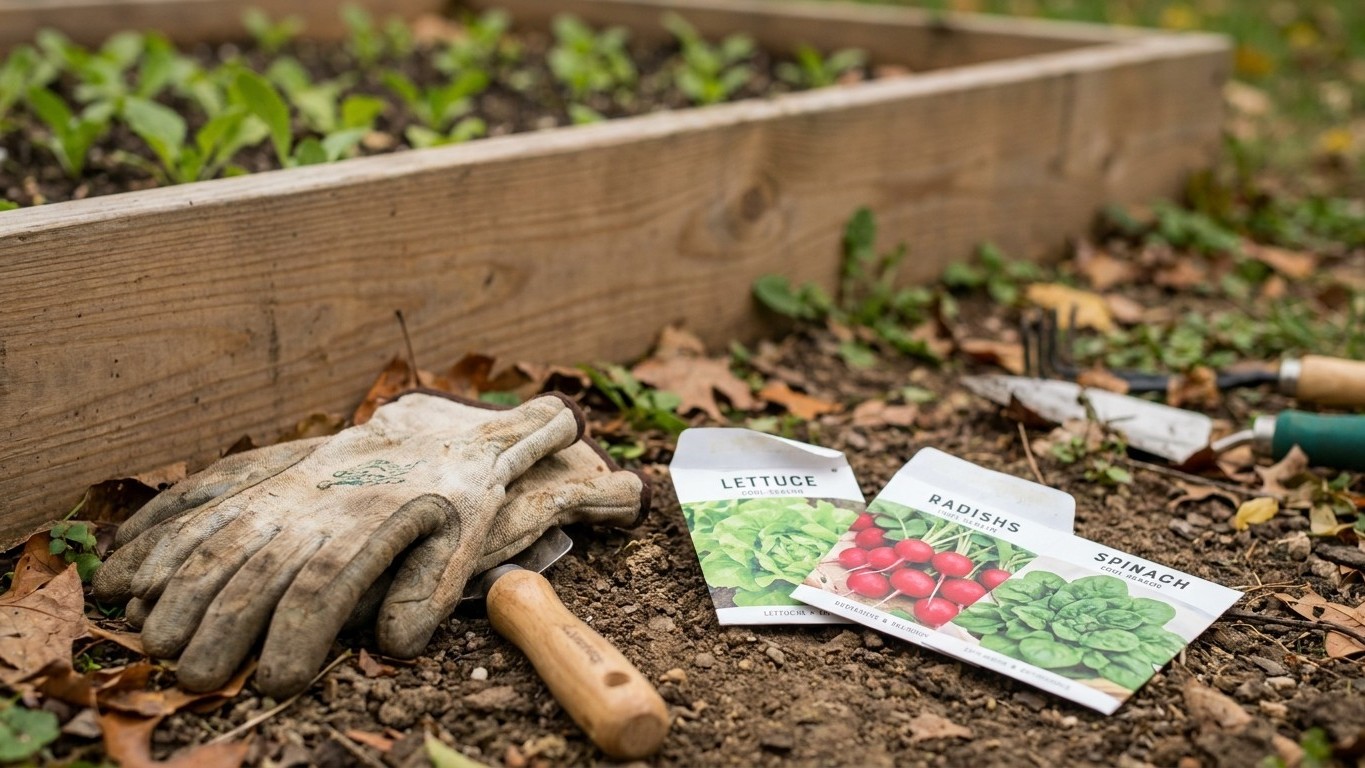

September in West Virginia sits in the gap between summer’s last tomatoes and the first frost, which typically lands somewhere between October 18 and November 1 depending on where in the state you garden. That gap is wide enough to squeeze in a full round of cool-season crops, get cover crops established, and still bring in the last of the warm-season harvest before the weather turns.
What goes in the ground in September

Soil temperature, not the date on the calendar, decides what germinates this month. Warm days can fool a gardener into thinking there’s time for one more round of beans or squash, but the ground is already cooling under the surface, and the first fall frost (October 18 to November 1, per NOAA’s 1991-2020 climate normals for the Charleston station) sets a hard deadline for anything that needs 60 or more frost-free days to mature.
Fast, cold-tolerant crops are the safe bet. Spinach, arugula, mustard greens, and Asian greens like tatsoi or mizuna germinate quickly in cooling soil and can handle a light frost once established. Radishes are close to foolproof, often ready in three to four weeks. Turnips sown in the first half of the month usually have enough runway to size up before the ground freezes hard. Leaf lettuce direct-sown now will often outlast a first light frost, especially with a row cover on hand.
Garlic and shallots are the other real September crop, though timing them well depends on elevation. In the lower river valleys, late September plantings can work, but many growers wait until the soil has cooled further into October. Higher up in the mountains, where frost arrives sooner than the statewide range suggests, garlic often goes in earlier rather than later. Either way, cloves need several weeks of root growth before the ground freezes solid, so waiting too long is the more common mistake.
Cover crops belong on this month’s list too. Winter rye, crimson clover, and hairy vetch all establish well from a September seeding and protect bare soil through winter instead of leaving it exposed. The gamble crops are anything in the squash, bean, or corn family; even a warm stretch of September weather won’t buy back the days these plants need before frost ends the season.
What to start under cover
Counting backward from the frost window is more useful here than counting forward from today’s date. If frost tends to arrive in your part of the state around mid to late October, and a crop needs 30 to 40 days to reach a pickable size, seed started in early September still has a real shot at maturing, especially with the protection of a cold frame or low tunnel once nights turn sharp.
Lettuce and spinach are the two crops most gardeners start under cover this month, either in trays for transplanting into a cold frame or seeded directly into one. Starting trays too early in warm September weather often produces leggy, stressed seedlings that stall once transplanted, since indoor heat pushes growth the plant can’t sustain outside yet. Wait until temperatures moderate in the back half of the month and the seedlings stay stockier.
The opposite failure shows up just as often: gardeners who put off starting anything until the weather clearly feels like fall, then discover there isn’t enough season left before frost to bring a transplant to harvest size. A cold frame extends the growing window by several weeks, but it doesn’t erase the calendar entirely. Anything started under cover in September should be a crop that was already going to be quick outdoors, not a stand-in for a summer crop that ran out of time.
Onion seed for a spring crop is sometimes started this early by growers working toward long-day varieties, but that’s a narrower project best paired with a cold frame or unheated greenhouse rather than a windowsill, since onion seedlings need consistent light to avoid stretching.
What is ready to pick
September is one of the fuller harvest months in West Virginia gardens. Tomatoes are still coming in, though the pace slows as nights cool. Peppers, both sweet and hot, often color up fully this month after sitting green through August. Summer squash and cucumbers wind down, and this is usually the point where powdery mildew or squash vine borer damage makes the decision to pull the vines for the gardener.
Winter squash and pumpkins are the marquee harvest. The tell is the rind: press a thumbnail into it, and if it doesn’t dent, the squash is ready. A dull, matte skin (instead of glossy) and a dried, corky stem are the other two signs. Pulling winter squash too early means it won’t store well; leaving it too long risks a frost cracking the skin and inviting rot.
Onions and garlic planted the previous fall or spring are usually curing by now if they haven’t been already, tops flopped over and dug before wet weather sets in. Early apples come off the tree this month in much of the state, and beans left on the vine past their fresh-eating stage can be shelled for dry storage instead of wasted. Sweet corn planted in late spring typically finishes its run in early September in the warmer valleys.
The jobs that matter this month

Succession sowing is the job with the tightest deadline. Every week a fall green or radish planting is delayed shrinks its margin against the first frost, so gardeners who want a continuous harvest into fall are sowing small batches every week or two rather than one big planting.
Mulching earns its keep twice this month: it keeps soil moisture steady for germinating fall seed during dry September stretches, and later it insulates root crops and greens against the season’s first cold snaps. Watering rhythm needs adjusting too, since shorter days and cooler nights mean the garden dries out slower than it did in July, and overwatering fall seedbeds is an easy way to rot seed before it sprouts.
Pest scouting doesn’t let up just because summer crops are fading. Cabbage worms and aphids often build up on fall brassicas precisely because gardeners assume the worst pest pressure is behind them. Squash vine borer damage on the last of the summer squash is worth checking, mainly to decide whether the vines are worth keeping another few weeks or should come out to reduce next year’s overwintering population.
Fall lawn overseeding is a September fixture in West Virginia’s transition-zone climate, since cool-season grasses establish best while soil is still warm but air temperatures have eased. Beyond the vegetable beds, this is also a reasonable month to divide overgrown perennials, clean up spent summer plants to cut down on disease carried into next season, and start turning the compost pile before it sits untouched all winter.
What not to do in September
The most common mistake is treating a run of warm September days as an invitation to plant something warm-season, whether it’s a tray of tomato transplants found on sale or a late round of bush beans. The soil may feel warm at the surface, but there isn’t enough season left for these crops to produce anything before frost, and the effort is better spent on a fall green that will actually mature.
A close second is delaying fall greens because it still feels like summer. Gardeners who wait until the air genuinely feels like fall to sow spinach or lettuce often find they’ve used up the very weeks those crops needed to size up before frost. The plants that succeed in October and into a cold frame in winter are almost always the ones sown in the first half of September, not the second.
Feeding nitrogen to trees, shrubs, or the lawn late in the month is another trap. Nitrogen pushes soft, tender new growth, and that growth won’t have time to harden off before the season’s first freeze, leaving it vulnerable to dieback. If a lawn or shrub bed needs fertilizer this time of year, a lower-nitrogen formulation timed for root and root-reserve building is the safer route.
Uncovering row covers or cold frames too eagerly after a mild stretch is the last common misstep. A few warm days don’t mean the cold is done; young fall seedlings exposed too soon can be knocked back hard by the next cool night.
Checking this against your own county
A statewide frost window is a starting point, not a forecast for any one garden. West Virginia’s terrain does a lot of the work here: a garden tucked into a river valley like Charleston’s can run two or three weeks behind a ridge-top garden a county over when it comes to the first fall freeze. Elevation changes the math more than latitude does in a state this mountainous.
For a planting date tuned to actual local conditions, the WVU Extension Service is the reliable next stop, with county offices that track local frost patterns and crop timing more closely than any statewide average can.
Common questions
Can tomatoes still be planted in West Virginia in September?
No. Tomatoes need well past 60 days to fruit, and September plantings won’t mature before the first fall frost arrives between October 18 and November 1 in most of the state.
Is it too late to plant garlic in September?
Not necessarily, though many West Virginia growers wait until October for cooler soil. In higher elevations where frost comes earlier, a September planting can work; check with WVU Extension for the timing that fits your county.
What USDA hardiness zone is West Virginia in?
The state spans USDA Plant Hardiness Zones 5a to 7a, based on the 2023 map’s average annual extreme minimum temperature. That range means a variety hardy in one part of the state may struggle in another, so check the zone for your specific county rather than the state as a whole.
Will a light frost kill fall greens like spinach and kale?
Established spinach, kale, and similar greens typically tolerate a light frost without damage. What matters more is giving them enough weeks to establish before that first frost hits, which is why early-September sowing dates matter more than the frost date itself.
Gardeners who plant by the Moon can check the September 2027 moon planting calendar, a tradition rather than a proven method.