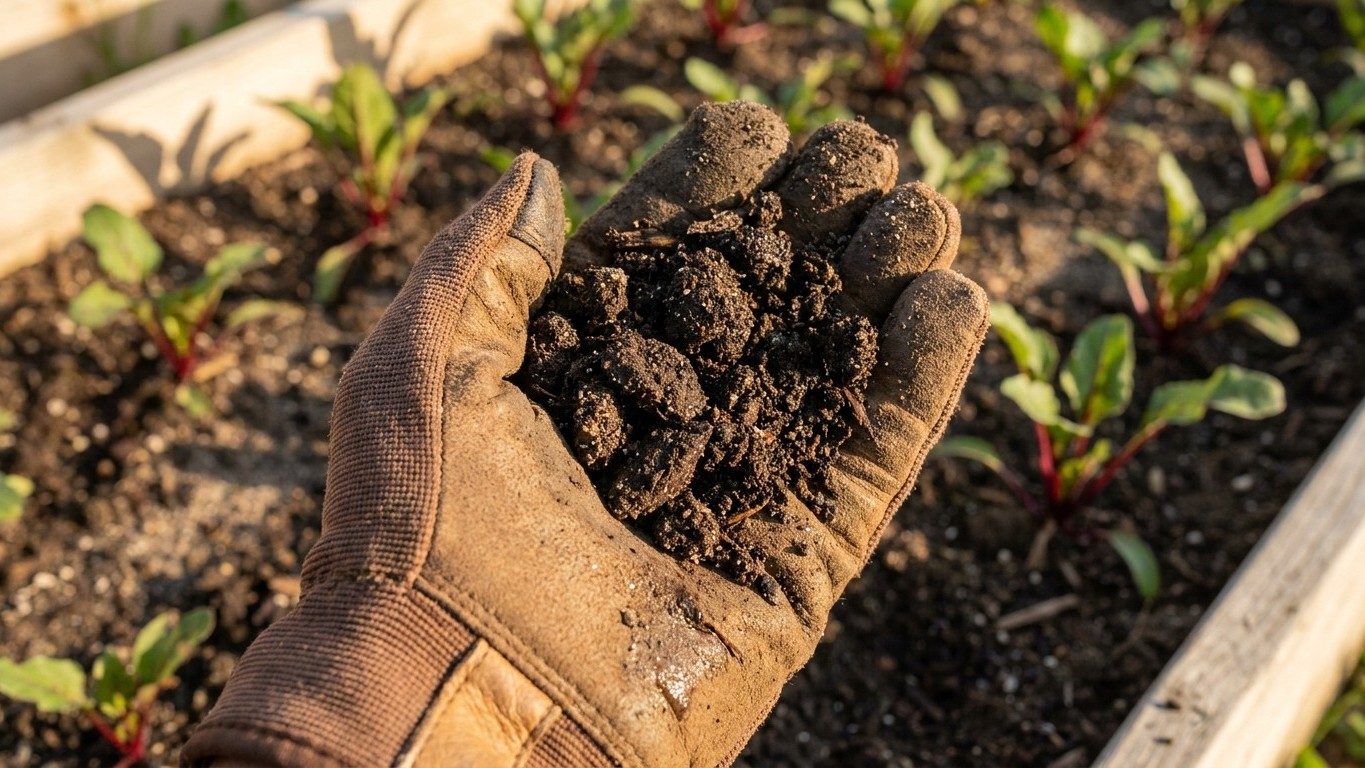

The Miami series, Indiana’s representative soil, runs 30 percent sand, 20 percent clay and 49 percent silt with a surface pH near 6.5 and about 2.0 percent organic matter. That’s a workable silt loam for beets, moderately well drained rather than free-draining, sitting on the acid side of neutral. For a deeper look at how this soil type stacks up for growing beets, see Beet Soil in Indiana. It’s a starting point, not a verdict on your own bed.
The short answer
Beets want deep, sandy, well-drained ground loaded with organic matter, according to Utah State University Extension. Indiana’s Miami series gets partway there. The silt-heavy texture, 49 percent silt against just 30 percent sand, holds moisture better than a true sandy loam, which helps beets avoid the water stress that triggers bolting, but it also means the surface can crust and slow germination if it dries out between waterings. The “moderately well drained” rating is the middle case: not a soil that sits wet for days, but not one that sheds a heavy spring rain quickly either. Low spots on this soil type will hold water longer than the ridges a few yards away.
Organic matter sits around 2.0 percent at the surface, which is modest rather than rich. Utah State’s guidance caps amendment at no more than 1 inch of composted organic matter per 100 square feet, so the fix here is a measured top-dressing worked into the top few inches before sowing, not a wholesale rebuild of the bed. The pH of 6.5 is slightly acid and close enough to neutral that most gardeners won’t need to lime, though a soil test on your own plot is the only way to know for certain, since the Miami series figure is a mapped average, not your number.
On heat, the exact count of days Indiana spends above 90 F in a typical year isn’t published in the sources behind this page, so it won’t be guessed at here. What is documented is the threshold that matters for beets specifically: Utah State’s research ties woody roots to heat above 85 F combined with water stress, not to any single high-temperature record. Indiana summers reliably deliver stretches above that 85 F mark, which means the risk is real regardless of how many days the thermometer happens to clear 90 F in a given year. The soil’s moderate water-holding capacity helps here too, but only if watering keeps pace once the heat arrives.
None of this is a verdict on any one garden. Indiana spans hundreds of mapped soil series, and the Miami series is simply what USDA lists as representative of the state as a whole. A river-bottom garden, a hillside plot or a yard where a builder scraped and filled the topsoil years back can behave nothing like the numbers above. Treat this section as the regional tendency, then confirm your own ground with a test.
The six weeks that decide it here
For specific guidance on When to Sow Beets in Indiana, sowing beets 2 to 3 weeks ahead of the last frost date puts the first six weeks of root development squarely inside Indiana’s early spring. NOAA’s 1991-2020 climate normals put that last-frost window at April 9 to April 21 for the Indianapolis station, which means a beet sown on schedule is germinating and setting its first true leaves sometime in late March into April, well before the state’s warm, settled weather arrives. That’s the window Utah State flags as decisive: water stress during these six weeks is what pushes a beet toward premature flowering rather than root growth, and it’s a different failure entirely from the woodiness that shows up later from summer heat.
Early spring in Indiana doesn’t hold a single pattern. Some years bring a cold, wet stretch that keeps beds saturated and germination slow; other years bring a dry, windy spell that pulls moisture out of a silt loam surface faster than a new gardener expects, even with the Miami series’ moderate water-holding capacity working in the plant’s favor. The practical result is the same either way: a beet’s first six weeks in Indiana can’t be planned around “normal” spring weather, because normal here swings widely from one season to the next. Consistent soil moisture, checked by hand rather than by calendar, matters more than any fixed watering schedule.
There’s a second wrinkle worth flagging. Purdue’s climate data notes that even after the published last-frost date, there remains roughly a 10 percent chance of a 32 F freeze event. That’s a low-probability edge case for beet seedlings, which tolerate a light frost better than many garden crops, but it’s still a reason to have row cover on hand if you’re sowing on the early side of the April 9 to April 21 window rather than the late side. Gardeners in southern Indiana get a small buffer here, since the region tends to warm a fortnight or more ahead of the Indianapolis reference point, while northern counties should expect the opposite lag.
What goes wrong here
- Bolting from a dry stretch in the first six weeks. A beet sown in late March or April that hits even a short dry spell during establishment can read that stress as a signal to flower instead of build a root. The remedy is steady moisture through germination and early growth, checked by pushing a finger into the soil rather than trusting a rain gauge, since the Miami series’ silt content can look moist on top while drying out below.
- Woody roots from summer heat. Once temperatures push past 85 F, any accompanying water stress toughens the root’s texture, according to Utah State’s findings. This is unrelated to the bolting risk above; it happens later in the season, closer to harvest, and the fix is the same discipline applied at a different stage: don’t let the bed dry out once real heat sets in, and consider harvesting a touch earlier rather than letting roots sit in hot, dry ground.
- Surface crusting that stalls germination. The Miami series’ silt-heavy texture, 49 percent silt against 30 percent sand, can form a crust after a hard rain or a heavy watering that seals the surface before tiny beet seedlings can push through. Light, frequent watering during germination, or a thin mulch of screened compost over the seed row, keeps the surface loose enough for emergence.
- Wet feet in low spots. “Moderately well drained” isn’t the same as free-draining, and a Miami-series bed with poor grading can hold water long enough after a spring storm to rot young roots. Raised rows or beds, even a modest 4 to 6 inches, sidestep this without changing anything else about the soil.
- Thin, hungry roots from low organic matter. At roughly 2.0 percent organic matter, the Miami series surface is workable but not rich. Utah State’s cap of 1 inch of composted organic matter per 100 square feet is the right dose here; more than that risks pushing the bed toward excess nitrogen, which favors leaf growth over root development in beets.
Checking this against your own county
Everything above describes Indiana’s representative soil and the Indianapolis frost window, useful as a regional baseline but not a substitute for local numbers. Purdue Extension (extension.purdue.edu) runs county offices across the state that can pull the actual soil series mapped for your address, along with a current soil test for your bed’s real pH and organic matter rather than the state average. If you garden in southern Indiana, ask specifically about local frost timing, since it can run a fortnight or more ahead of the Indianapolis reference date used here, and the same lag works in reverse for northern counties.
Common questions
How many days from sowing to harvest for beets in Indiana?
The count runs 60 to 80 days from the day seed goes into the ground, not from a transplant date, since beets are sown directly in place rather than started indoors and moved out.
Does the Miami series need lime for beets?
Not necessarily. Its mapped surface pH sits around 6.5, close enough to neutral that most beet plantings won’t require adjustment, but that figure is a state-level average rather than a reading from your own bed, so a soil test is the only way to confirm it.
Is bolting the same problem as a woody root?
No. Bolting happens early, when water stress during the first six weeks pushes the plant toward flowering instead of root growth. Woodiness happens later, when heat above 85 F combines with water stress on an already-forming root. They call for the same remedy, consistent moisture, but at two different points in the season.
How much compost should go into a Miami-series bed before sowing beets?
No more than 1 inch of composted organic matter per 100 square feet, worked into the top of the bed. Given the Miami series’ modest 2.0 percent organic matter, that dose helps without tipping the bed toward excess nitrogen, which pushes beets toward leaf growth at the root’s expense.