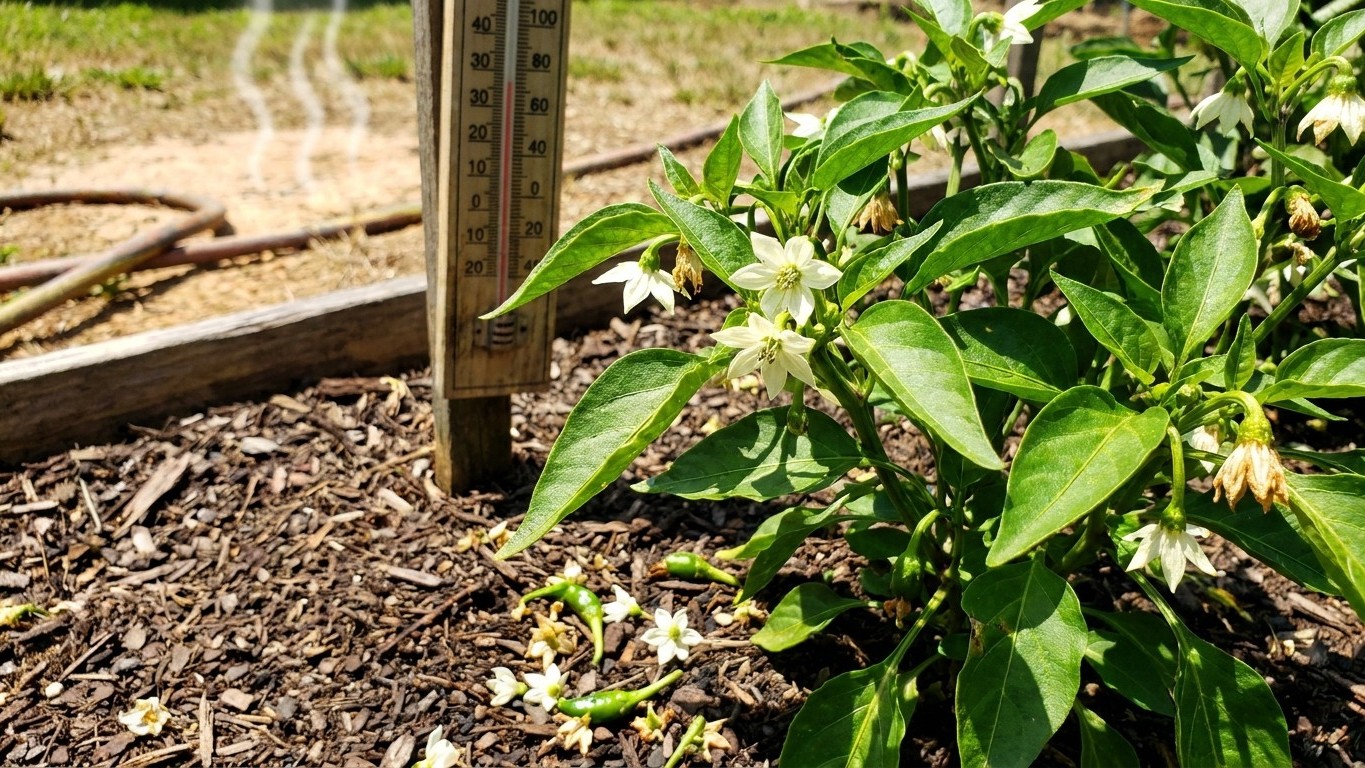

Pepper fruit set in Oregon runs into trouble at both temperature extremes. Around Portland, 11.9 days a year climb to 90 F or hotter, which is enough heat load to knock blossoms off the plant during a stretch of hot afternoons. On the other end, nights that drop below 55 F, especially early and late in the season, cause the same blossom drop for the opposite reason. This site does not track summer night lows for your area, so that half of the equation is one you’ll need to watch yourself.
The short answer
Start with the number that’s actually measured here: 11.9 days a year at or above 90 F at the Portland reference station, based on NOAA’s 1991-2020 climate normals. That’s not a dramatic figure compared to inland desert climates, but it doesn’t need to be. Pepper flowers are sensitive enough that even a handful of afternoons above 90 F, especially if they land during bloom, can cause the plant to abort flowers rather than push them into fruit. If your garden sits somewhere hotter than the Portland station, in a paved or south-facing spot with heat reflecting off concrete or siding, treat that count as a floor, not a ceiling.
The heat threshold gets most of the attention because it’s the one people notice: wilted plants, dropped flowers, a garden that looked fine in June and stalled in July. But pepper fruit set fails at both ends of the thermometer, and the cool end is just as real. Nights below 55 F interfere with pollen viability and flower retention the same way extreme heat does, just through a different mechanism. A pepper plant sitting in a garden bed on a 48-degree June night in the Willamette Valley, or in a mountain valley elsewhere in the state, can drop flowers just as readily as one baking through a 95-degree afternoon.
Here’s the catch for Oregon gardeners specifically: this site carries the days-above-90 F count for your territory, but it does not carry summer night minimums. Oregon’s geography makes that gap matter more than it would in a flatter, more uniform state. A garden in the Willamette Valley, a high-desert plot east of the Cascades, and a coastal bed near the ocean can all sit under wildly different night temperatures on the same date, even though they share a state line. Latitude tells you almost nothing useful here. Elevation, distance from the coast, and how much cold air pools in a valley bottom all matter more.
The practical move is to keep a simple outdoor thermometer or a cheap min/max unit in the part of your yard where the peppers actually grow, not on a porch or near the house where microclimates skew warmer. Track your overnight lows for a couple of weeks after transplant and again in late summer. If you’re consistently seeing nights under 55 F during what should be peak bloom, that’s very likely your fruit-set problem, whether or not the days ever cross 90 F.
When to start seed here
The timing math for pepper seed starting is the same everywhere; what changes county to county is the frost date you plug in. For the Portland area, NOAA’s 1991-2020 climate normals put the window for the last spring freeze at 32 F between March 6 and March 21, based on the 30 to 70 percent probability band. Peppers also need soil that’s reached 60 F before transplant, so the frost date is really just the earlier of two limits you’re checking against.
- Find your transplant date. In the Portland area, that’s after the last freeze risk has passed, sometime after March 21 for most years, and only once soil temperature has actually reached 60 F, which usually lags a week or two behind the air warming up.
- Count backward 8 to 10 weeks. Utah State University Extension recommends starting pepper seed indoors 8 to 10 weeks before that outdoor transplant date. If you’re aiming for a late-March or early-April transplant, that puts your seed-starting date somewhere in late January to mid-February.
- Adjust for your specific county, not the state average. Portland’s window doesn’t apply statewide. Portland sits west of the Cascades in a maritime climate with a comparatively long, mild frost-free season. Central and eastern Oregon are high desert, with a much shorter growing season and later, harder frosts in spring and earlier ones in fall. If you garden east of the Cascades, push your whole timeline later and expect a tighter window to get fruit set before fall cold arrives.
- Watch soil temperature directly, not just the calendar. A cheap soil thermometer pushed 2 to 4 inches into the bed will tell you more than any date on a seed packet. Transplanting into cold soil, even after the air has warmed, stalls root growth and delays the plant’s readiness to flower.
- Remember the 35 to 45 day gap comes after flowering. Once your plant is transplanted and growing, fruit doesn’t appear the moment flowers open. Utah State University Extension notes that maturity typically follows 35 to 45 days after flowering, not after sowing or transplanting, so build that lag into your expectations for when peppers actually show up on the plant.
What goes wrong here
- Blossom drop from a hot spell. A run of days at or above 90 F during flowering, the kind of stretch that happens on 11.9 days a year on average around Portland, can cause flowers to fall before they set fruit. The remedy is timing and shade: avoid transplanting so late that peak bloom lands in the hottest part of summer, and if a heat spell is forecast during flowering, use light shade cloth over the bed for the worst afternoon hours.
- Blossom drop from a cool night. Nights under 55 F have the same drop effect through a different cause, and since this site doesn’t track night minimums for your specific area, you’ll need your own thermometer in the garden to catch this one. If you see drop with no heat wave to blame, check your overnight lows before assuming it’s a heat problem. Row cover or a cold frame in the first few weeks after transplant can buy you protection while nights are still catching up to plant needs.
- Sunscald on exposed fruit. Where sun exposure is strong, especially in gardens with full afternoon sun and little natural leaf cover, developing peppers can get bleached, papery patches on the side facing the sun. This isn’t a fruit-set failure exactly, since it happens after fruit has already formed, but it wastes a crop that made it past the harder hurdle. Keep foliage full by avoiding heavy pruning, and consider light shade cloth over exposed rows during the hottest weeks.
- Blossom-end rot. This shows up as a sunken, leathery patch on the bottom of the fruit and usually traces back to inconsistent watering rather than a calcium shortage in the soil itself. Uneven moisture, a dry week followed by a heavy soak, interrupts the plant’s ability to move calcium into developing fruit. Steady, even watering on a schedule, rather than reactive watering when the soil looks dry, is the most reliable fix.
Common questions
Does Oregon’s coast have the same fruit-set problems as the Willamette Valley?
The mechanisms are the same, heat on one end and cold on the other, but coastal gardens tend to run cooler overnight due to marine influence. That shifts the risk more toward the cold end of the range, so watching your own night temperatures matters even more if you’re gardening close to the coast.
Can I just plant earlier to avoid the heat problem?
Only within limits. Planting before the soil has reached 60 F or before your area’s frost risk has passed, March 6 to March 21 for the Portland area, sets transplants back rather than helping them, since cold soil stalls root development regardless of air temperature.
Is central or eastern Oregon a harder place to grow peppers than the Willamette Valley?
The frost-free season is shorter in the high desert regions, which compresses the window for flowering, fruit set and the 35 to 45 day maturity period afterward. Growers there generally need to start seed earlier relative to their own local frost dates and may need season-extension tools to finish a crop before fall cold arrives.
If my peppers are flowering but not setting fruit, how long should I wait before troubleshooting?
Give it more than a week or two of active bloom before assuming a real problem, since occasional flower drop is normal. If drop continues through multiple flushes of bloom, check both ends of the temperature range in your own garden, days above 90 F and nights below 55 F, since one of those two is almost always the cause.