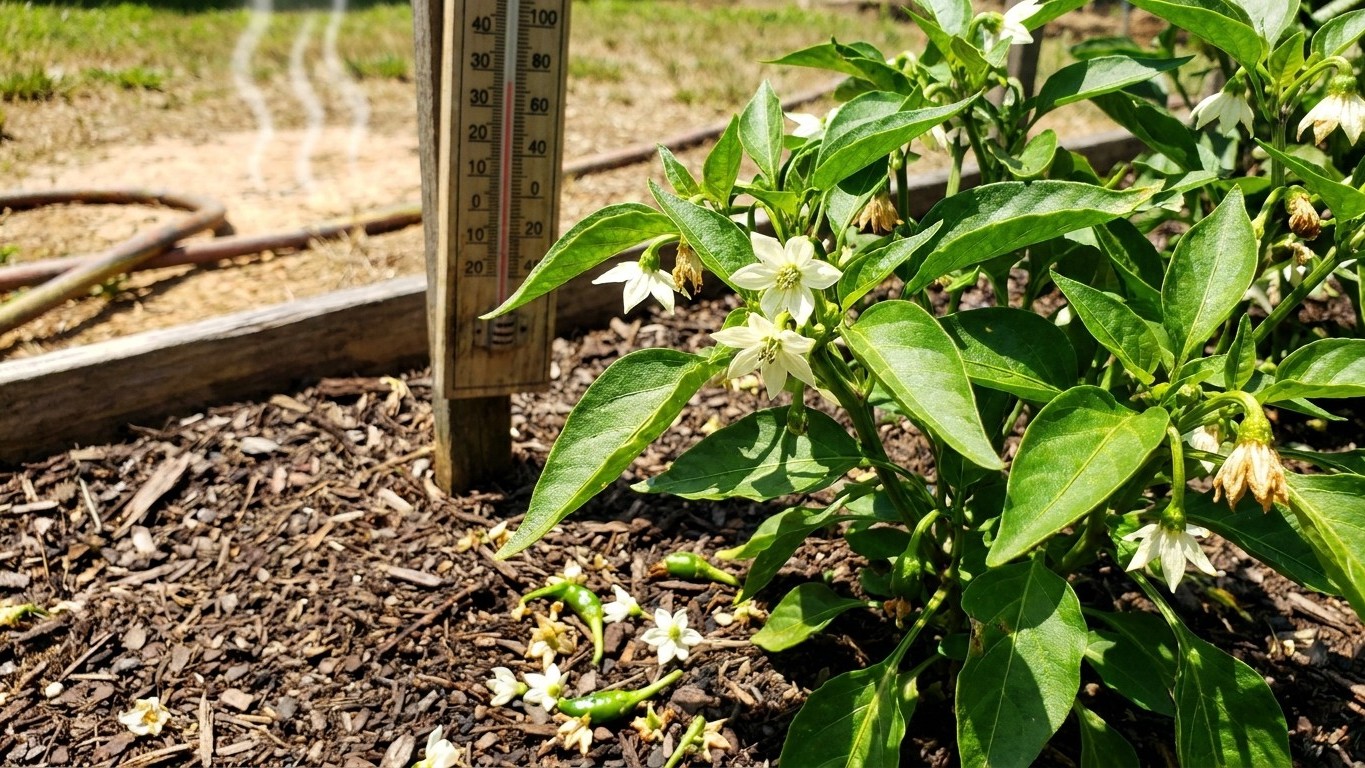

Pepper plants across Colorado often bloom heavily but never turn those flowers into fruit. The culprit is temperature swinging too far in either direction: the Denver area logs 39.6 days a year at 90 F or hotter, hot enough to stop pollen from working, while a stretch of nights below 55 F does the same thing in reverse. Getting fruit means timing the crop to dodge both edges.
The short answer
Start with the heat side, because it’s the number this site actually tracks. The reference station for the Denver area shows 39.6 days a year at or above 90 F, based on NOAA NCEI Climate Normals covering 1991-2020. That’s not an average summer temperature, it’s a count of days that cross a specific threshold, and for peppers that threshold matters more than any seasonal average. When daytime highs push past 90 F, pepper flowers often drop before they’re pollinated. The pollen itself gets sticky and less viable, and the plant, under heat stress, aborts blossoms rather than spend energy setting fruit it might not be able to support. A grower who sees healthy plants covered in flowers all July, with almost nothing to show for it by August, is usually watching this play out in real time.
The other edge of the window is cooler nights, and this is where a lot of general advice gets sloppy. Utah State University Extension is clear that pepper fruit set fails on both ends: nights below 55 F stall it just as effectively as days above 90 F. Colorado’s elevation and its dry air mean nights can drop fast even when the daytime numbers look tropical, and a plant that sailed through a 95 F afternoon can still lose its next round of blossoms to a 50 F night eight hours later.
Here’s the part worth being honest about: this site carries the daytime heat count for the reference station, but it does not carry summer night minima. There’s no published figure here for how cold a typical July or August night runs in any given Colorado county, and guessing from latitude or elevation isn’t reliable, because a valley floor, a foothills bench, and a plains suburb a few miles apart can post very different overnight lows on the same night. The practical move is to keep a min-max thermometer in the garden bed itself, not on a porch or a weather app pinned to the nearest airport. If overnight readings are dropping into the low 50s during bloom, that’s the signal to protect the crop, not the calendar.
When to start seed here
Working backward from a known frost date is the most reliable way to set a seed-starting schedule, and Colorado gives growers an actual anchor point to work from instead of a guess.
- Find the local last-frost window. For the reference station used by NOAA NCEI’s 1991-2020 Climate Normals, the 32 F freeze probability lands between May 1 and May 11, based on the 30 to 70 percent probability band. That’s a range, not a single date, and it applies to the specific station measured, not the whole state; mountain towns run much shorter seasons and can see frost into July, and the western slope has its own separate pattern.
- Wait for soil, not just air temperature. Utah State University Extension recommends transplanting peppers only after the soil itself reaches 60 F, and only after the frost risk has passed. Air temperature can feel warm on a sunny April afternoon while the soil underneath is still cold from winter, so a soil thermometer pushed a few inches down is worth more than a forecast app here.
- Count back 8 to 10 weeks for indoor starting. If soil in a given yard typically hits 60 F in mid-May, counting back 8 weeks lands seed-starting in mid-March, and counting back 10 weeks pushes it to early March. Growers in a colder microclimate, or those who’ve measured their own soil running behind that average, should shift the whole schedule later rather than starting early and holding leggy transplants indoors.
- Rebuild the math for your own county. Anyone gardening outside the Denver-area reference station should swap in their own last-frost data and their own soil-warming pattern before locking in a start date; a bench at 7,000 feet or a river-bottom lot with cold air drainage can run weeks behind or ahead of the plains average.
None of this guarantees fruit. It just puts the plant in the ground with enough size and root development to survive the transition and start flowering before the hottest stretch of days above 90 F arrives.
What goes wrong here
- Blossom drop from a hot spell. A run of days above 90 F causes flowers to yellow and fall without setting fruit, since heat-stressed plants abort blossoms rather than commit resources to them. Shade cloth over the row during the worst afternoon hours, applied only when a heat spike is forecast, can hold enough flowers through the stress window to keep fruit coming once temperatures ease.
- Blossom drop from a cool night. The same failure shows up at the opposite extreme, when overnight lows fall below 55 F during bloom. Since this site does not track summer night minima, the fix depends on the grower’s own thermometer: when a cool night is forecast during flowering, a floating row cover pulled over the bed at dusk and removed the next morning traps enough heat to protect open blossoms.
- Sunscald on exposed fruit. Colorado’s strong, high-elevation sunlight can scorch pepper skins that lose their leaf cover, leaving pale, papery patches that soften and rot. Leaving the plant’s natural canopy intact, and skipping heavy pruning of leaves near developing fruit, keeps enough shade on the pods to prevent it.
- Blossom-end rot on developing fruit. Irregular watering interrupts the plant’s ability to move calcium into the fruit, producing a sunken, leathery patch on the blossom end even when the soil has enough calcium to begin with. A consistent watering schedule, rather than a feast-or-drought cycle between waterings, is the more reliable fix than adding calcium products.
Common questions
Can peppers recover after dropping their blossoms in a heat wave?
Yes. Pepper plants keep producing new flowers through the season, so a round lost to a 90 F-plus stretch doesn’t end the crop. Once temperatures ease back under that threshold, healthy plants typically resume setting fruit from the next flush of blossoms.
Does watering more during a hot spell prevent blossom drop?
Extra water helps the plant handle heat stress overall, but it doesn’t override the core problem, which is heat itself interfering with pollen viability above 90 F. Shade during the hottest hours addresses the actual cause more directly than watering alone.
How do I know if my nights are staying above 55 F during bloom?
Since summer night minima aren’t published for Colorado on this site, the only reliable answer comes from a thermometer placed in the garden bed itself, checked at the coldest point before dawn. Don’t estimate this from elevation or from how cold the coldest month of the year runs; overnight lows during the growing season follow a different pattern.
Should I start pepper seeds earlier to beat Colorado’s short season?
Starting earlier only helps if the transplant date still respects both the last-frost window and the 60 F soil threshold that Utah State University Extension recommends. Seed started too early just means holding oversized, stressed transplants indoors longer, which tends to hurt fruiting more than a slightly later, well-timed start.