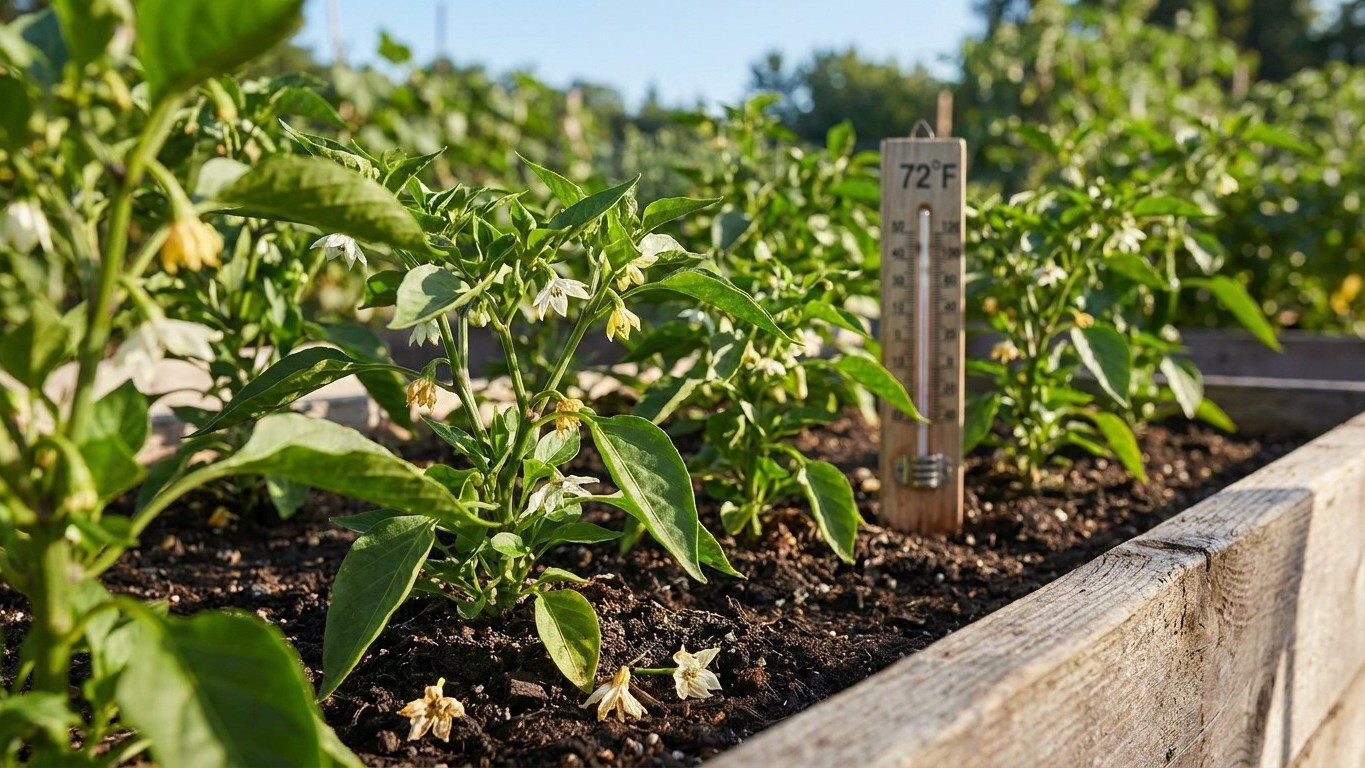

Start pepper seed indoors 8 to 10 weeks before you plan to transplant outdoors. In the New York City area, the last spring frost typically falls between March 23 and April 3, and soil needs to reach 60°F before transplants go in the ground, so most downstate gardeners sow indoors from mid-February through early March. Upstate and Adirondack growers push that window later. The math is simple, but it’s not the whole story for a New York pepper crop.
The short answer
New York City averages 12.2 days a year at or above 90°F, based on NOAA NCEI Climate Normals for 1991-2020 at the reference station in the city. That number matters more than most gardeners realize, because pepper plants stop setting fruit once daytime heat climbs into that range for any stretch of days. The flowers can still open, bees can still visit, but the pollen turns sterile and the blossoms drop instead of swelling into fruit. Twelve days a year sounds modest, but heat events cluster, a run of five or six 90°F days in late July or August can knock out a plant’s flowering cycle right when it should be loaded with green peppers.
The heat side of the equation
Because New York’s 90°F days are relatively few compared to states farther south or inland, the bigger risk here isn’t constant heat stress, it’s a short, sharp heat wave landing during peak bloom. A pepper plant that’s been setting fruit steadily can go quiet for a week or two if a heat dome parks over the region in midsummer, then resume once temperatures ease. Knowing your area’s heat load helps you time transplanting so the bulk of flowering happens before the hottest stretch, not during it.
The cold side nobody tracks
Fruit set fails at the other end too. Nights below 55°F cause the same kind of blossom drop as extreme heat, and this is where New York gardeners need to do their own homework. This site tracks daytime heat (the days-above-90°F count) but does not carry summer night minimum temperatures for New York or any other state. Don’t guess at your overnight lows based on latitude, and don’t assume the coldest month of the year tells you anything about a June or September night. Keep an outdoor thermometer or a simple min-max unit near the pepper bed during the shoulder seasons, and watch it directly instead of estimating.
When to start seed here
Working backward from your transplant date is the most reliable way to set a sowing date, and it’s a calculation any New York gardener can redo for their own county once they know their local frost window. Here’s the sequence, using the New York City area as the working example.
- Start with your last spring frost date. For the New York City reference station, NOAA NCEI’s 1991-2020 climate normals put the 32°F freeze probability in the March 23 to April 3 window. That’s a downstate, urban-heat-island figure, upstate New York and the Adirondacks see frost linger noticeably later in spring and arrive earlier in fall, so gardeners in those regions need their own local frost data rather than the city’s.
- Add a soil-temperature check. Utah State University Extension notes that pepper transplants should go into the ground only after frost has passed and once soil has warmed to 60°F. Air temperature alone doesn’t tell you this, a simple soil thermometer pushed a few inches into the bed gives a direct reading, and it’s worth checking on a few different mornings since soil warms more slowly than air.
- Set your transplant date. For most of the New York City area, that soil-temperature threshold typically lines up somewhere in the two to three weeks after the last frost date, once the ground has had time to catch up with warmer air. Colder upstate sites will see that 60°F soil mark arrive later.
- Count back 8 to 10 weeks for indoor sowing. That’s the window Utah State University Extension recommends for pepper seed started indoors before transplanting. Counting back from a late April to mid-May transplant date puts indoor sowing in mid-February through early March for the New York City area.
- Adjust for your microclimate. A south-facing city lot, a valley pocket upstate, or a high-elevation garden in the Adirondacks can each shift these dates by a week or more in either direction. Use the arithmetic above as a framework, not a fixed calendar entry.
What goes wrong here
New York’s climate creates a specific set of pepper problems tied directly to the numbers above. Each one has a workaround once you know what’s causing it.
- Blossom drop during a heat spell. When several days push past 90°F in a row, pepper flowers open and fall without setting fruit. This is the direct consequence of New York’s 12.2-day average count of 90°F-plus days landing in a cluster rather than spread evenly across the season. Remedy: provide light afternoon shade during a forecasted heat run, keep soil moisture consistent so the plant isn’t fighting drought stress on top of heat stress, and expect a lull in new fruit until temperatures ease.
- Blossom drop from a cool night. The same failure, flowers opening but not setting, happens when nighttime temperatures drop below 55°F, which can occur in New York during cool snaps in June or again in early September. Because this site doesn’t track summer night minimums, the fix starts with monitoring: keep a thermometer near the plants and watch for forecasted cool nights, especially in low-lying or upstate gardens where cold air settles. Row cover or a cold frame at night can buffer a sudden dip.
- Sunscald on exposed fruit. Peppers that ripen on a thinly leaved plant, or one that’s lost foliage to disease or aggressive pruning, develop pale, papery patches on the side facing direct sun. This shows up more in New York’s brighter, drier late-summer stretches. Remedy: let the plant keep a full leaf canopy rather than pruning it hard, and avoid removing leaves just to “let more light in”, the fruit needs the shade those leaves provide.
- Blossom-end rot. A dark, sunken spot at the base of the fruit, usually tied to uneven watering rather than a soil nutrient shortfall. New York’s mix of heavy summer downpours followed by dry stretches is a common trigger. Remedy: mulch to even out soil moisture, and water on a consistent schedule rather than letting the bed swing between soaked and bone-dry.
Common questions
Can I start pepper seed earlier than 8 weeks to get a head start?
Starting much earlier than the 8 to 10 week window recommended by Utah State University Extension usually backfires, plants get leggy and root-bound indoors long before it’s warm enough to transplant, and stressed transplants often stall rather than take off once they’re in the ground.
Does the New York City frost date apply to my part of the state?
No. The March 23 to April 3 window comes from the NOAA NCEI reference station in New York City, a dense urban site that runs warmer than surrounding areas. Upstate New York and the Adirondacks see frost arrive later in spring and earlier in fall, so use local frost records for those regions rather than the city figure.
How do I know if my nights are too cold for fruit set without a data source?
Since this site doesn’t carry summer night minimum temperatures, the only reliable method is a direct reading, place a thermometer near your pepper bed and check it in the early morning during the shoulder seasons of late spring and early fall, when a drop below 55°F is most likely.
Will a plant that drops its blossoms in a heat wave recover?
Usually yes. Blossom drop from a short heat spell or cool night is typically temporary, once conditions moderate, a healthy plant resumes flowering and fruit set within a week or two, provided it hasn’t also been stressed by drought or nutrient shortage during the same period.