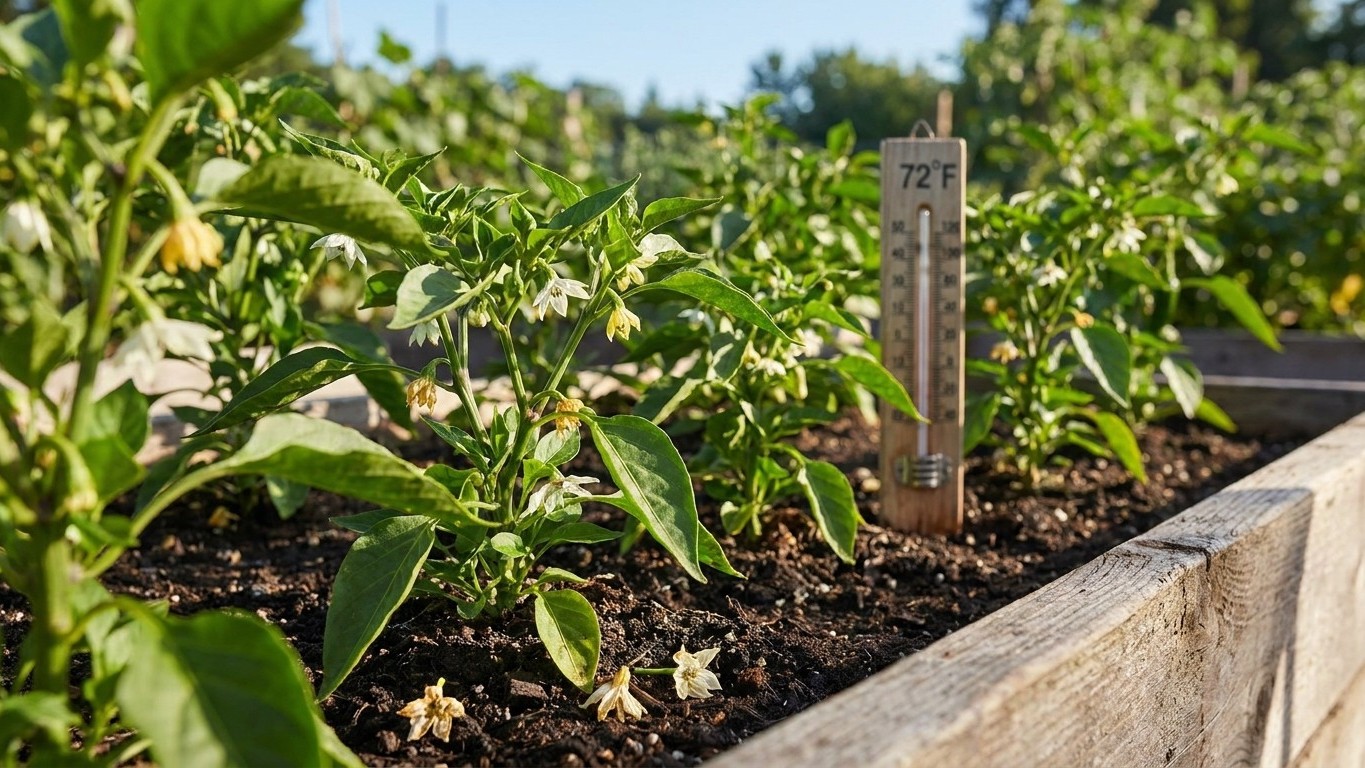

Peppers in western Oregon’s Willamette Valley need starting indoors roughly in early March, about 8 to 10 weeks before a transplant date that lands after the last frost and once soil warms to 60 F. That frost window runs March 6 to March 21 in the Portland area. Central and eastern Oregon run on a shorter, colder clock entirely.
The short answer
Start with the heat side of the equation, because it’s the one this site can actually measure for you. The Portland reference station logs an average of 11.9 days a year at or above 90 F. That’s not a brutal number compared to inland desert climates, but it’s not nothing either, and it matters more than most gardeners assume. Pepper flowers can abort when daytime highs push past 90 F, especially if that heat arrives while the plant is setting its first flush of fruit. A dozen scattered hot days spread across July and August is a manageable risk. The same dozen days bunched into one back-to-back heat wave right when your plants are flowering is a different story, and it’s the timing within the season, not just the annual count, that decides whether you get peppers or just green leaves.
Now the other end, and this is where a lot of planting advice quietly falls apart. Pepper fruit set fails just as reliably when nights drop below 55 F as it does when days climb above 90 F. Cool nights are common in the Willamette Valley in late spring and again as September turns toward fall, and they can stall a pepper plant just as effectively as a heat wave does, only more quietly. The plant doesn’t wilt or show obvious stress. It just stops setting fruit and sits there looking fine.
Here’s the catch: this site tracks days above 90 F for Oregon, but it does not carry summer night minima. There’s no reliable statewide figure here for how many nights in your area actually dip under 55 F, and giving you one would mean guessing. Don’t try to estimate it from your latitude or from how cold your winters get, either. Coastal fog belts, valley floors, and hillside sites a mile apart can have very different overnight lows even at the same latitude. Track your own nighttime temperatures through late spring and again in early fall with an outdoor thermometer or a basic weather station. That’s the only way to know if a given week is safe for fruit set or not.
When to start seed here
Working out your indoor seed-starting date is just backward math from your transplant date, and once you’ve done it once for your county, you can redo it every season in a couple of minutes.
- Find your last frost window. For the Portland area, NOAA’s 1991-2020 climate normals put the 32 F freeze probability window between March 6 and March 21. If you garden east of the Cascades or in central Oregon’s high desert, that window shifts later and the season is shorter, so don’t borrow the Portland dates for an inland county.
- Wait for soil, not just air. Frost passing isn’t the transplant signal on its own. Utah State University Extension’s guidance on peppers is specific that transplants should go into the ground once soil temperature reaches 60 F, after frost risk has passed. Cold soil stunts pepper roots even when the air feels warm enough, so check soil temperature directly with a probe thermometer rather than guessing from the calendar.
- Add roughly two to three weeks after frost. In most years, soil in the Willamette Valley reaches 60 F somewhere in the two to three weeks following the last frost date, putting a realistic transplant target in late March to early April at the earliest, and often later depending on how wet and cool the spring runs.
- Count back 8 to 10 weeks for indoor starting. That’s the window USU Extension gives for how long pepper seedlings need indoors before they’re ready to go outside. Counting back from a mid-to-late April transplant target puts your seed-starting date somewhere in early to mid February for many Willamette Valley gardens, though gardeners further inland or at higher elevation should shift everything later to match their own frost data.
- Recheck before you commit trays to the windowsill. Spring soil temperatures vary year to year more than air temperatures do, especially after a wet, cool spring. Don’t lock in a hard date months in advance. Use the frost window as your anchor, watch soil temperature as the season approaches, and count back from there.
What goes wrong here
- Blossom drop from a hot spell. When daytime highs push into the 90s during flowering, plants can drop blossoms without setting fruit, even though 11.9 days a year at or above 90 F sounds modest on paper. The fix is timing: avoid pushing transplants out so early that first flowering lands right in the hottest stretch of summer, and give plants afternoon shade cloth during any heat spike that hits while they’re in bloom.
- Blossom drop from a cool night. The flip side, and the one growers overlook, is a stretch of nights under 55 F stalling fruit set just as effectively as heat does. This shows up most often right after transplant in a cool spring, or again in early fall. Since this site doesn’t track night minima for Oregon, the only real remedy is watching your own thermometer and holding off on transplanting, or covering plants overnight, until temperatures stabilize above that threshold.
- Sunscald on exposed fruit. Oregon summer sun, particularly in the Willamette Valley’s clear-sky stretches, can scald pepper fruit that loses leaf cover to pruning, wind damage, or disease. The remedy is keeping the plant’s natural canopy intact rather than stripping foliage, and using shade cloth over exposed rows during the hottest weeks.
- Blossom-end rot. Irregular watering, common when a hot dry stretch follows a cool wet spring, disrupts calcium uptake and leaves peppers with a sunken, leathery patch on the fruit’s bottom end. Even, consistent watering through fruit development is the fix, not extra calcium sprayed on late.
Common questions
Can I direct-seed peppers outdoors in Oregon instead of starting indoors?
It’s not practical in most of the state. Pepper seed needs warm, stable conditions to germinate, and by the time outdoor soil is reliably warm enough, direct-sown plants would run out of season before producing much fruit. Starting indoors 8 to 10 weeks ahead, per USU Extension, is the standard approach for a reason.
Does the Portland frost window apply to all of Oregon?
No. The March 6 to March 21 window comes from NOAA’s climate normals for the Portland reference station, which sits west of the Cascades. Central and eastern Oregon’s high desert climate runs a shorter growing season with later frost dates, so gardeners there need their own local frost data rather than the Willamette Valley figures.
How do I know if my transplant date is too early?
Check soil temperature with a probe thermometer rather than relying on the calendar or air temperature. USU Extension’s benchmark is 60 F soil, after frost has passed. If soil hasn’t reached that mark yet, wait, even if the calendar says it “should” be warm enough by now.
What if a heat wave hits right when my peppers are flowering?
Expect some blossom drop if daytime highs push past 90 F during that window, and don’t be surprised if fruit set pauses. Shade cloth over the plants during the worst of the heat can reduce the damage, and the plants typically resume setting fruit once temperatures moderate.