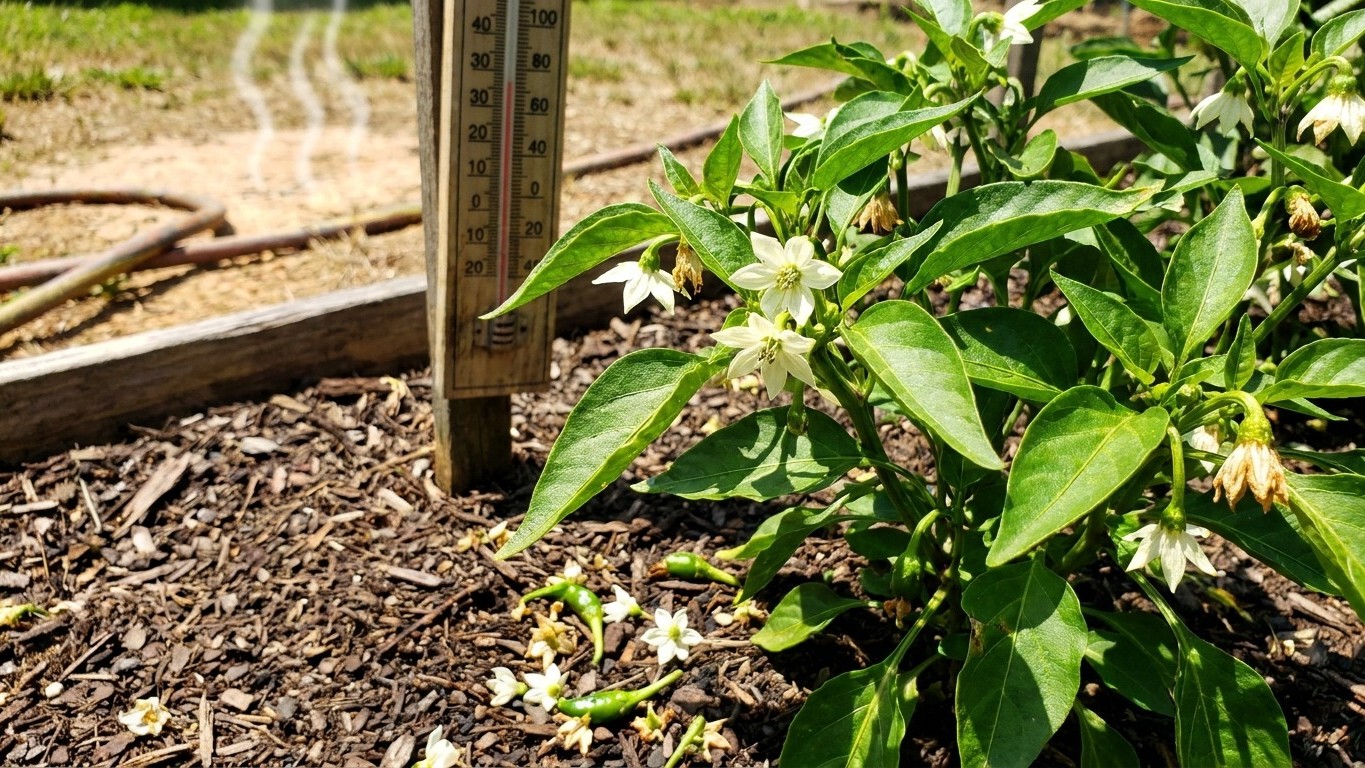

Peppers drop their blossoms in Washington gardens for one of two reasons: a run of nights below 55 F, or an afternoon that climbs past 90 F. Western Washington’s mild, often overcast summers rarely deliver that kind of heat, so cool nights near Puget Sound are usually the bigger threat. East of the Cascades, both ends of that range can show up in the same week. Getting fruit to set means timing the transplant right and then watching your own nighttime lows all summer.
The short answer
Start with the number that actually matters for heat stress: the Seattle reference station averages 3.0 days a year at 90 F or hotter, based on NOAA’s 1991-2020 Climate Normals. Three days. That’s a low heat load compared with the pepper belts of the Southwest or the Deep South, and it means most gardeners in the Puget Sound corridor are not fighting heat-driven blossom drop most seasons. When a plant looks stressed and drops flowers on a July afternoon here, it’s more often water stress, root crowding in a container, or a genuinely unusual heat spell than the routine climate.
That low number comes with a catch, though. It’s measured at one reference station, and it describes the mild, marine-influenced climate typical of western Washington. Gardeners east of the Cascades, in the Columbia Basin or the Yakima Valley, are gardening in a high-desert climate with a very different summer profile. This site does not carry a separate days-above-90 count for those areas, so if you’re east of the mountains, treat the 3.0-day figure as describing Seattle’s climate, not yours, and expect your own local heat load to run higher.
Now the other end of the range, and it’s the one that trips up more Washington pepper growers than heat ever does. Utah State University Extension notes that pepper fruit set fails on cold nights below 55 F just as surely as it fails on scorching days above 90 F. A plant can be loaded with blossoms and drop every one of them if the nights stay too cool for too long, even while the daytime highs look perfectly pleasant on a thermometer.
Here’s the gap in the data, and it matters: this site tracks days at or above 90 F for your area, but it does not carry summer night minimums. Nobody publishes a single statewide number for how cool your specific nights run in June or July, because that depends heavily on elevation, distance from water, and even which side of a hill you’re on. You’ll need to watch your own thermometer through the growing season rather than assume anything from your latitude or from how cold your winters get. A location’s coldest month tells you nothing reliable about its summer night lows.
When to start seed here
Working out a start date for pepper seed is really just counting backward from two other dates, and the arithmetic is the same no matter where in Washington you garden, even though the actual calendar dates differ sharply between the two halves of the state.
- Find your last spring frost window. For western Washington, NOAA’s 1991-2020 Climate Normals put the 32 F freeze probability window at February 27 to March 18, based on data from station USW00024233. That’s a mild, maritime frost pattern. Eastern Washington’s high-desert climate runs on a shorter, later season, and that Seattle-based window should not be applied there.
- Don’t confuse frost date with planting date. This is the trap that catches a lot of western Washington gardeners: a mild frost date does not mean an early planting date. Cold, wet soil and low late-winter light hold spring crops back for weeks after the air itself stops freezing. Peppers are especially unforgiving of this, since Utah State University Extension specifies that transplants need soil that has warmed to 60 F, not just frost-free air.
- Wait for 60 F soil, checked directly. A soil thermometer pushed a few inches into the bed, checked in the morning before the sun warms the surface, tells you more than any calendar date. In a cool, wet western Washington spring, that 60 F mark can land a month or more after the last frost has passed.
- Count back 8 to 10 weeks from that transplant date for indoor seed starting. This is the range Utah State University Extension gives for pepper transplants specifically. If your soil typically hits 60 F in mid-May, for example, count back 8 to 10 weeks from mid-May to land on your seed-starting window indoors, sometime in early to mid-March. Adjust the whole chain earlier or later based on your own soil readings from past seasons.
- Redo the math for your own county. Because the frost window and the soil-warming lag both shift with elevation, distance from the Sound, and local microclimate, the safest approach is to track your own soil temperature for a season or two and build your personal calendar from that, rather than borrowing someone else’s date.
What goes wrong here
Washington’s specific mix of mild heat and cool, damp stretches produces a fairly predictable set of pepper problems. Here’s what tends to show up, and what to do about each one.
- Blossom drop from a hot spell or a cool night. Peppers Fail to Set Fruit at both extremes: nights below 55 F and days above 90 F. In western Washington, the cool-night version is the more common culprit, since the region averages only 3.0 days a year above 90 F. If a heat wave does hit, temporary afternoon shade cloth over the plants can help; if a cold snap moves in overnight, a floating row cover pulled over the bed after sunset traps enough warmth to keep blossoms from aborting.
- Sunscald where the sun is strong. On the occasional bright, high-heat day, exposed fruit can develop soft, sunken, papery patches where direct sun hits it for hours. Avoid over-pruning the foliage that naturally shades the fruit, and if a plant has already lost a lot of leaves, drape lightweight shade cloth over the row during the hottest part of the afternoon rather than stripping more leaves for airflow.
- Blossom-end rot from uneven watering. Peppers grown in raised beds or containers, which dry out and rewet faster than garden soil, are prone to this dark, leathery patch at the fruit’s blossom end. Even, consistent soil moisture, delivered through mulch and a regular watering schedule rather than occasional deep soaks after the soil has gone bone-dry, keeps the calcium uptake steady enough to prevent it.
Common questions
Why aren’t my peppers setting fruit even though the plants look healthy?
Healthy foliage doesn’t guarantee fruit set. Peppers can look vigorous and still drop every blossom if nighttime temperatures have dipped below 55 F or a hot stretch has pushed days above 90 F. Check your own overnight lows before assuming a disease or nutrient problem.
Does Washington ever get too hot for peppers?
Rarely in the western part of the state, where the Seattle reference station averages just 3.0 days a year at 90 F or above. East of the Cascades, the high-desert climate runs hotter, though this site doesn’t carry a specific days-above-90 figure for that region, so local gardeners should track their own summer highs.
How do I know when my soil has reached 60 F?
Use a soil thermometer inserted a few inches deep, checked in the morning before the sun heats the surface layer. Air temperature and calendar date are unreliable stand-ins, especially in a cool, wet western Washington spring where soil can lag well behind the air.
Should I start pepper seeds earlier in eastern Washington?
The frost window published here, February 27 to March 18, applies specifically to western Washington’s maritime climate at the Seattle reference station. Eastern Washington’s shorter, high-desert season runs on a different calendar, and gardeners there should count back 8 to 10 weeks from their own local soil-warming and frost dates rather than using the western Washington window.