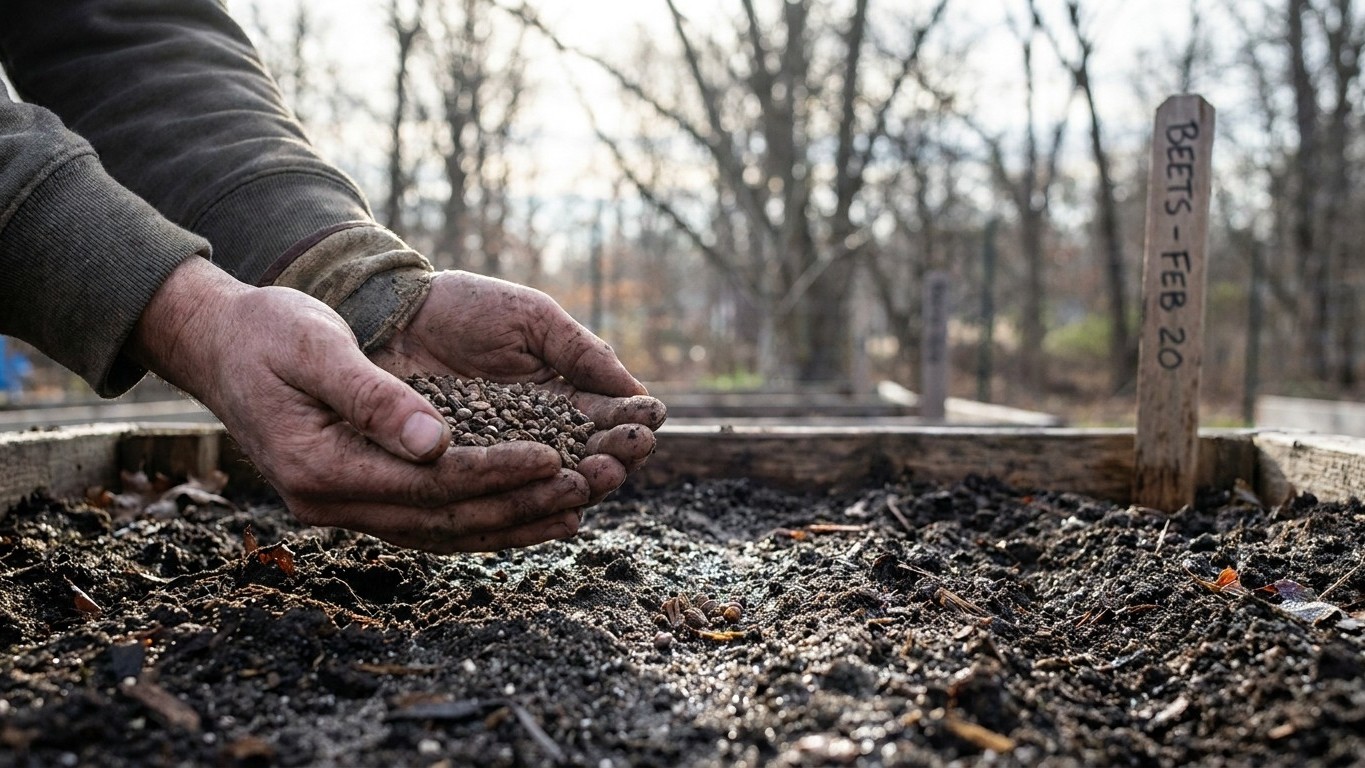

In north Florida, the sowing window for beets runs from mid-January into February, timed two to three weeks ahead of the region’s last frost, which typically falls between February 16 and March 7. Central and south Florida flip that calendar: the frost-free climate there pushes the beet season into fall and winter, with summer becoming the stretch to avoid. Get the timing right and the plant spends its first six weeks in the driest, coolest window the state has to offer.
The short answer
Florida’s official state soil, the Myakka series, is a Spodosol built from 97 percent sand, 2 percent clay and 1 percent silt in its surface layer, with a pH near 5.1 and organic matter around 2.0 percent. Despite all that sand, the series is mapped as poorly drained, because a hardpan sits beneath the surface and holds water instead of letting it pass through. Sand on top, a stalled layer below: a bed built on ground like this sheds water fast right after a rain, then can dry out hard within days once the sun comes back, or sit soggy where the water table runs high.
For a beet, that’s close to the opposite of what the plant is looking for. Utah State University Extension describes ideal beet ground as deep, sandy and well-drained, rich in organic matter, amended with no more than 1 inch of composted material per 100 square feet. A Myakka-type bed supplies the sand and, depending on how the bed was built, maybe the drainage, but almost never the organic matter or the workable pH: 2.0 percent organic matter and a pH of 5.1 both sit below what a root crop wants, and correcting that with lime and compost, within that 1-inch cap, does most of the work.
Heat is the other half of the picture. A precise count of how many days a year a given Florida city crosses 90 F isn’t published in the data behind this page, so that specific number can’t be stated here. What is documented is the threshold that actually matters for the root: Utah State’s guidance puts beet woodiness at 85 F when it lands on top of existing water stress, and Florida’s growing season crosses that mark for long stretches most years. That’s the practical reason timing sowing around the cooler months, rather than around the calendar months everyone else gardens by, is what keeps a beet root from turning fibrous.
None of this is a diagnosis for one specific yard. Florida is mapped across hundreds of soil series, and the ground under a bed near a driveway in Tallahassee or a low spot outside Ocala can look nothing like the Myakka profile above. Treat the state soil as a description of a tendency, sandy, acid, prone to a perched water table, and confirm the real numbers for a specific garden with a soil test before amending anything.
The six weeks that decide it here
Sow two to three weeks before the last frost date of February 16 to March 7, and the first six weeks of a beet’s life land somewhere in late January through March across most of north Florida. That stretch is this region’s dry season: rainfall tapers off after the fall wet months and doesn’t return in force until the summer thunderstorm pattern sets up, usually by June. A gardener sowing in that window is planting into a spring that tends to run short on rain, not one that swings wildly between soaked and parched.
That matters because Utah State University Extension is specific about where the first failure comes from: water stress in the first six weeks after sowing is what pushes a beet toward premature flowering, or bolting, before the root has had a chance to bulk up. On a dry north Florida spring, over sand that drains as fast as the Myakka profile suggests, the risk isn’t excess water sitting around the seedling. It’s the bed drying out between waterings while the young plant is still building its root system underground.
That’s a separate problem from the heat-driven woodiness that shows up later, closer to harvest, once temperatures climb past that 85 F mark on top of whatever water stress remains. The six-week window right after sowing is about keeping germination and early root growth even. The heat problem arrives afterward, as the season leans toward summer. Folding both into a single instruction to just keep the bed watered misses the point: the early failure is about steady moisture through a dry stretch, and the later one is about pulling the crop before heat and any lingering drought compound each other.
For central and south Florida, where frost isn’t part of the calculation, the same six-week logic still holds, just shifted to a different season. Sowing there lands in the fall or winter dry-to-mild stretch instead, and the six weeks after seeding still need even moisture to avoid that same early bolting risk, even though the reason for choosing that window is heat avoidance rather than frost avoidance.
What goes wrong here
Line up the ground and the calendar above against a real bed, and these are the specific ways a Florida beet crop tends to come apart.
- Bolting from a dry spring: north Florida’s February-to-March dry stretch overlaps exactly with the first six weeks after sowing, the window Utah State University Extension flags for water-stress bolting. The fix is scheduled, even watering starting the day of sowing, not a response to wilting after the fact, since sandy ground drains fast enough to look dry days before the plant shows it.
- Woodiness from late heat: once temperatures push past 85 F, any remaining water stress turns the root fibrous rather than tender. The fix is finishing the crop before that heat arrives, which means sowing early enough that the 60 to 80 days from seed to harvest end before the hot stretch sets in, since beets are sown directly in place and that clock starts at seeding, not at transplant.
- Thin, hungry sand: the Myakka profile’s 2.0 percent organic matter is low for a root crop, and a bed that’s never been amended will run the same way. The fix is composted organic matter worked in ahead of sowing, capped at 1 inch per 100 square feet so the mix stays sandy enough to drain.
- Acidic ground: a surface pH near 5.1 sits well below what beets grow best in. The fix is a soil test first, then lime applied to that specific reading rather than a guess, since the actual number in a given bed can differ from the state soil’s figure.
- A perched water table: the hardpan beneath Myakka-type sand can leave a bed sitting wet after heavy rain even though the surface looks dry days later. The fix is raising the bed or building it on a slight mound so roots don’t sit in standing water during Florida’s wetter months.
Common questions
Can beets be sown in Florida during summer?
It’s not the season to aim for. Summer heat regularly crosses the 85 F mark that, combined with any water stress, turns beet roots woody, and in north Florida it also falls well outside the frost-based spring window. North Florida gardeners are better served sowing in the cooler months around that February-to-March frost window; central and south Florida gardeners do best sowing in fall or winter instead.
How long do beets take to mature after sowing in Florida?
Beets are direct-sown, meaning the seed goes straight into the garden bed rather than being started elsewhere and transplanted, and the standard 60 to 80 days to maturity is counted from that seeding date, not from any later transplant step.
Does Florida’s sandy soil need to be amended before sowing beets?
Generally yes. The state’s representative soil runs about 2.0 percent organic matter and a pH near 5.1, both below what Utah State University Extension recommends for beets, so working in composted organic matter, capped at 1 inch per 100 square feet, and liming according to an actual soil test are the two most common corrections.
Is the last frost date the same across all of Florida?
No. The February 16 to March 7 window cited here comes from a NOAA NCEI climate-normals station in north Florida, and even there three out of thirty years saw no freeze at all. Central and south Florida are effectively frost-free, which is why their beet-growing calendar runs through fall and winter instead of spring, with summer heat standing in as the season to plan around.