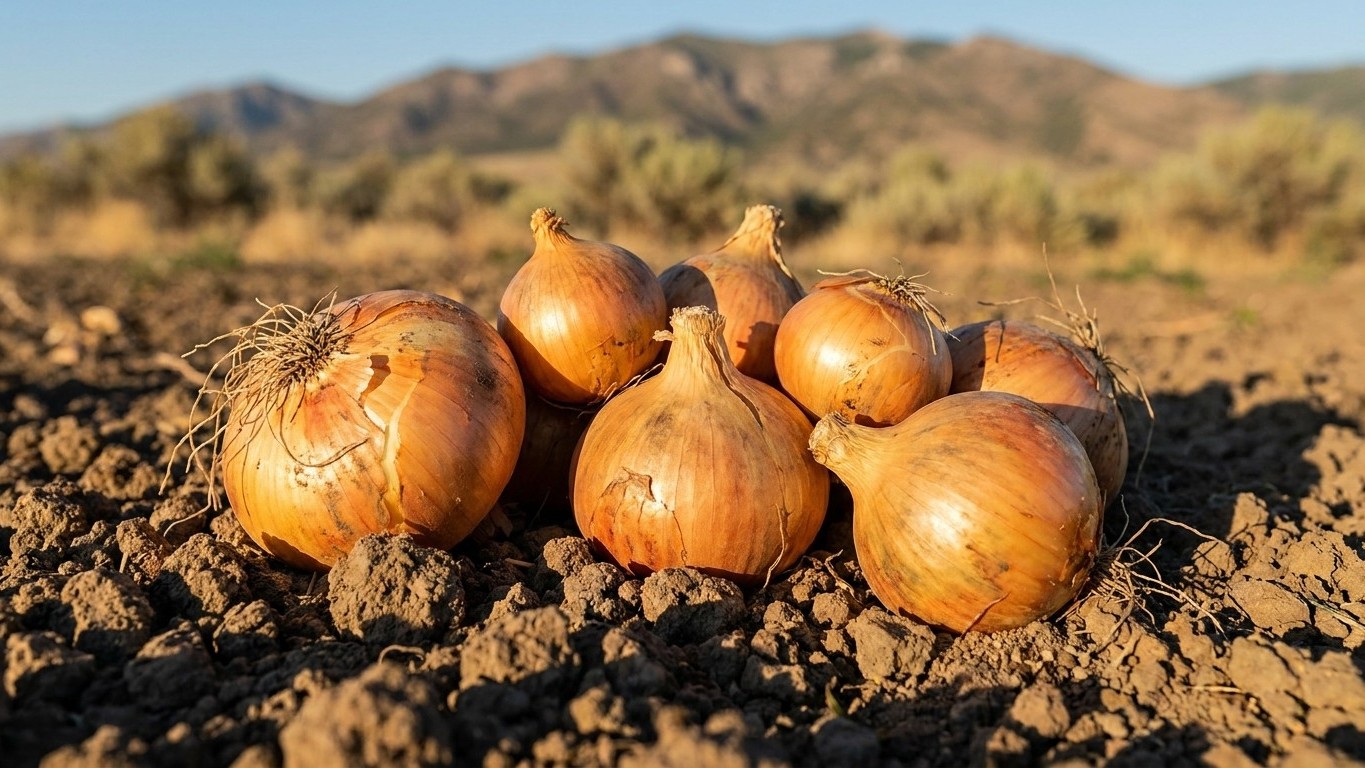

Lift onions when most of the tops have flopped over and started to yellow, then cure them before anything else. Curing means days of dry, shaded, moving air until the necks are tight and the skins turn papery. Only then do the bulbs go into storage, and onion storage is cool and dry, a different setup from the damp root cellar. In a humid Florida spring that sequence takes some planning, and the variety you grew decides how much of it pays off.
Keeping them, and for how long
Clemson Cooperative Extension’s Home & Garden Information Center states the target in a single line: “Ideal conditions are between 45 °F and 55 °F, and 50 to 60 percent humidity.” That humidity range is dry. Carrots, beets and other roots keep best in damp, which is why one cellar rarely holds both well. Onions left in a damp spot go soft at the neck and grow mold.
Treat those numbers as the ideal, and any storage time that comes with them as a ceiling. You only reach it with sound bulbs, fully cured, held in that range the whole time. A warm, muggy stretch cuts it short. Check the bin every week or two and use any bulb that feels soft at the neck.
Why do sweet onions not keep as long as pungent ones?
University of Missouri Extension (publication G6355) puts it plainly: “As a rule, ‘sweet’ onions do not store as well as the more pungent types.” The reason is chemical. The bite of an onion comes from volatile sulfur compounds, and those same compounds help protect the bulb while it sits in storage. A sweet variety carries fewer of them. It tastes better raw and gives up sooner on the shelf.
So a sweet onion that stores well doesn’t exist, whatever the seed packet hints. Eat the sweet ones first, in the weeks right after curing. Save the shelf space for the sharp ones.
Which onions can a Florida garden actually store?
Day length decides, and the numbers are tight. The reference station for this guide is in Jacksonville, at 30.48 degrees north, where the longest day of the year has 13 h 58 of daylight. (That is a geometric calculation. Atmospheric refraction adds roughly seven minutes of real light.) Clemson Cooperative Extension notes that short-day onions begin bulbing at about 12 hours of daylight. Long-day types wait for 14 to 16 hours. At 13 h 58, a long-day variety falls short and never forms a bulb. It makes leaves, then rots.
That is why southern gardens grow short-day onions, and short-day types run sweeter. A southern garden gives you onions to eat soon. A northern one, with longer summer days and long-day varieties, grows onions that last into March. If you garden in the Panhandle or in South Florida, look up your own latitude, because the daylight figure shifts as you move up or down the state. The Best Onion Varieties for Florida sorts the short-day choices, and among those, the more pungent ones are the ones worth putting away.
How do you cure onions after lifting?
Watch the tops, not the calendar. When most have fallen over and gone yellow, pick a dry day, loosen the soil with a fork and lift the bulbs. Leave the tops on. Bulbs with thick, green necks, nicks or pest damage go to the kitchen first, since they rot first. What Eats Onion in Florida, and When covers the damage to look for.
Spread the bulbs in a single layer, off the soil, somewhere shaded with air moving and a roof overhead. A porch, a carport or a screened lanai works, ideally with a fan going on humid days. Rain on bulbs that are still curing invites rot. The bulbs are cured when the neck is tight and dry, with no give when you squeeze it, and the outer skins rustle like paper. Then trim the tops to an inch or two, brush off the dirt and skip the washing.
Where in the house that actually is
A domestic refrigerator runs below the 45 °F floor and holds far more moisture than onions like. Whole bulbs in there turn soft. A heated or air-conditioned living room usually sits warmer than the 55 °F ceiling, though air conditioning does pull humidity down toward the right range. A garage swings with the weather. In a Florida summer it runs hot and damp, and a shed is worse.
The closest match is usually an interior closet, pantry or back bedroom. Choose one away from the stove, the dryer, the water heater and any outside wall or sunny window. Be realistic about the temperature, though. Most Florida homes sit above 55 °F for much of the year, so you will often land at the warm edge of the range and the bulbs will not last as long. The cooler and drier the spot, the longer they hold.
Before any onions go in, put a thermometer with a humidity readout on the shelf for a few days and read it in the morning and late afternoon. A spot that looks fine to your hand can sit well above the range. If you skip the check, you find out when the bulbs start sprouting or softening in the bin.
Once a spot passes, store the cured bulbs in mesh bags, slatted crates or open baskets, never sealed plastic. Keep them away from potatoes, which add moisture to the air around them.
Common questions
When are onions ready to lift in Florida?
They are ready when most of the tops have fallen over and started to yellow. In the Deep South, short-day onions set out in the cool season come out in spring, ahead of the summer rains. If the tops are still standing green, give the bulbs more time to size up. For the full growing picture, see Onions in Florida.
What if it keeps raining while the onions are curing?
Move them under cover. Put them on screens or slatted racks in a carport, porch or garage with the door open and a fan moving air. Avoid a closed, humid room, where the bulbs can rot before the necks dry. If the necks stay thick and wet after a long stretch, use those bulbs first and don’t store them.
Can I store sweet onions through the winter?
Not reliably. Sweet types have fewer of the sulfur compounds that protect a bulb, so eat them soon after curing. If you have more than you can use, chop and freeze some of them. Put the sharper, more pungent bulbs in your storage spot.
What should I do with onions that start sprouting?
Use them right away. Sprouting usually means the spot is warmer or damper than the 45 °F to 55 °F, 50 to 60 percent range. A sprouted onion is still edible if the bulb is firm. Move the rest to a cooler, drier shelf and check the others for soft necks.